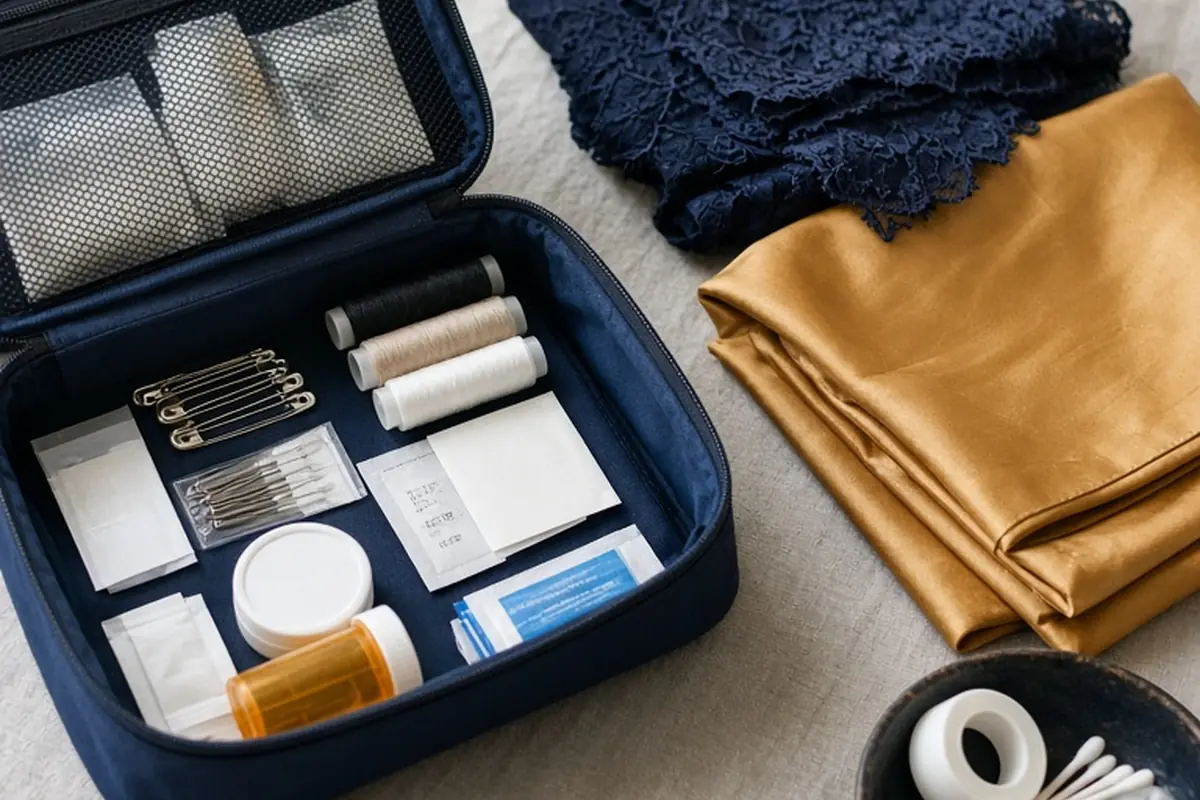
To compare wedding day emergency kit options effectively, evaluate four core factors: package style (commercial pre-assembled kit versus custom DIY collection), venue-specific exposure (outdoor elements versus indoor climate control), wardrobe fabrication requirements (delicate silks versus heavy structured fabrics), and medical or personal care compliance. High-value kits prioritize heavy-duty safety pins, clear thread, fabric-safe stain lifters, blister barriers, and individual pharmaceutical doses over decorative trinkets. Match the kit's contents against your bridal party size, vendor emergency supplies, and venue location.
Wedding mornings move rapidly, bringing together delicate textiles, tight photography schedules, emotional excitement, and dozens of moving parts across multiple locations. When a zipper catches on lace, a heel causes a blister before the processional, or foundation transfers onto a tuxedo lapel, having the right supplies within arm's reach prevents minor mishaps from derailing the timeline. Navigating the sheer variety of retail kits, bespoke bridal organizers, and DIY checklists requires looking past attractive packaging to examine the practical utility of every single item included.
Pre-Packaged Commercial Kits Versus Custom DIY Assembly
The first structural decision involves choosing between a commercially manufactured wedding kit and building a tailored kit from scratch. Commercial kits offer undeniable convenience, arriving in compact, attractive cases designed to slide into a tote bag or vanity drawer. These ready-made options curate recognizable staples like mini sewing sets, breath fresheners, hair elastics, and compact lint sheets. However, their primary limitation lies in item quantity and component durability. Retail sets frequently feature sample-sized portions, providing only two or three bobby pins, a single stain wipe, or miniature safety pins that bend under the tension of a structured bodice or heavy satin train.
Assembling a custom DIY emergency kit requires more time and upfront coordination, but it allows you to select commercial-grade tools and exact product matches. In a DIY setup, you can replace flimsy miniature scissors with precision thread snips, pack full packs of targeted blister bandages, and choose adhesive formulas specifically vetted for your skin type and garment fabrics. The trade-off is organizational volume and budget efficiency; purchasing individual multi-packs of fifty items can lead to surplus inventory and higher initial expenditures unless supplies are repurposed for general home use or shared among attendants.
Wardrobe and Fabric Care Tools: What Garment Emergencies Demand
Garment malfunctions represent the most urgent category of wedding day emergencies, making fabric care provisions the centerpiece of any serious kit evaluation. When reviewing kit specifications, look beyond generic sewing kits containing flimsy needles and thin, variegated thread. A functional bridal kit requires heavy-duty garment pins across various sizes, including large, reinforced pins that can discreetly anchor a torn bustle or severed suspender loop. Look for pre-threaded needles containing neutral ivory, pure white, and black bonded nylon or polyester thread, which provide substantially higher tensile strength than standard spun polyester when securing heavy fabrics.
Stain management requires equal scrutiny because different bridal fabrics react unpredictably to commercial stain removers. Standard chemical stain pens can lift greasy food stains from polyester, but they often leave permanent water rings or strip the natural luster on delicate mulberry silk, crepe, or matte satin. Evaluate whether a kit contains dry chalk for absorbing oil and masking dark spots on light fabrics, cornstarch for grease lifting, or gentle, residue-free wipes tested for dry-clean-only textiles. Furthermore, examine the wardrobe adhesives: gentle fashion tape is suitable for securing light neckline edges to skin, but heavy hem repairs require industrial fabric-to-fabric bonding tape or specialized fusible web tape.
Medical, Comfort, and Personal Care Supplies for Extended Timelines
A typical wedding schedule spans ten to sixteen consecutive hours, creating physical demands that standard cosmetic touch-up bags cannot adequately support. High-utility emergency kits treat physical comfort as a prerequisite for an enjoyable celebration. Blister prevention represents a prime example: basic plastic bandages slip and roll off sweaty heels within minutes of dancing. Superior kits supply hydrocolloid blister cushions, friction-reducing anti-chafing balm, and moleskin patches that form an impermeable, second-skin barrier against stiff dress shoes and new leather loafers.
Medical provisions must also adhere to practical safety standards. Ready-made kits that contain loose, unsealed tablets or ambiguous pill cases create cross-contamination risks and make dosage verification difficult during stressful moments. Opt for options that include factory-sealed, single-dose packets of essential over-the-counter remedies, such as ibuprofen, acetaminophen, antacids, antihistamines, and anti-diarrheal tablets. Personal hygiene items should emphasize products that do not compromise photographic finishes: select colorless, dye-free breath mints over colored lozenges that stain tongues, unpowdered oil-blotting papers that eliminate shine without caking foundation, and preservative-free lubricating eye drops safe for contact lens wearers.
Matching Emergency Kit Capacity to Wedding Party Size and Timeline
An emergency kit designed for an elopement or a two-person micro-wedding cannot successfully service a wedding party featuring twelve attendants, multiple flower girls, and immediate family members. When comparing kits, assess the volume ratio between single-use items and the number of people sharing the dressing suite. If a pre-packaged kit contains four hairpins, three cotton swabs, and two safety pins, it functions as an individual personal kit rather than a communal suite resource. For large parties, consumable items vanish rapidly during morning hair styling and dress adjustments.
Consider whether your logistical plan benefits from a single centralized trunk or a decentralized multi-kit strategy. In many timelines, the wedding party separates into distinct prep suites located in different hotel wings or off-site venues before uniting for portraits. In these scenarios, a single master kit forces someone to run between rooms to retrieve simple items like lint rollers or cufflink backs. Comparing options through a multi-bag lens—such as deploying a primary garment-and-beauty kit in the bridal suite alongside a compact suiting-and-grooming kit in the partner's quarters—ensures prompt access without stalling the photographer's schedule.
Environmental and Venue Hazards: Outdoor Grounds Versus Indoor Ballrooms
Your wedding venue directly dictates the environmental hazards your kit must neutralize. An outdoor ceremony on an open lawn, coastal cliff, or rustic vineyard introduces organic challenges that indoor ballroom kits never encounter. For open-air settings, an effective emergency kit must include heel protectors to prevent sinking into sod, bug-repellent wipes that do not degrade sheer fabrics or release airborne sprays around styled hair, a portable umbrella, and matte sunscreen that dries without transferring grease to cuffs and collars. Grass stains and mud splashes require specialized dry sponges and soft-bristle brushes to lift dried dirt before liquid cleaners can spread the residue.
Conversely, climate-controlled indoor spaces introduce friction, static electricity, and dry air. Synthetic lining fabrics rubbing against heavy wool or multiple petticoats generate intense static cling that distorts dress silhouettes and clings uncomfortably to legs. For ballroom and hotel settings, prioritize kits with anti-static spray, hydration mists that refresh dry skin without disturbing airbrushed cosmetics, non-slip shoe pads for polished marble or hardwood dance floors, and targeted garment steamers rather than outdoor spot-cleaning tools.
Auditing Professional Vendor Gear to Avoid Redundant Purchases
Before investing in an elaborate, commercial-grade emergency trunk, audit the contracts and standard operating kits of your hired wedding professionals. Professional, full-service wedding planners, bridal dressers, and day-of coordinators frequently transport massive professional toolkits containing heavy-duty garment steamers, industrial sewing implements, glue guns, floral wire, and multi-tools. Similarly, professional hair and makeup artists maintain vast reserves of styling sprays, setting powders, lash adhesives, and premium bobby pins calibrated for long-lasting performance.
Consulting your vendor team allows you to distinguish between structural emergencies and private personal care. While a wedding planner can expertly hem a dropped skirt lining or replace a broken boutonnire pin, professional liability insurance often prevents vendors from dispensing medications, oral care products, or specialized skincare treatments to clients. By identifying what your coordinator and stylist already carry on-site, you can narrow your emergency kit investment toward personal health, intimate hygiene, custom wardrobe hardware, and unique comfort items tailored strictly to your party's needs.
Storage Architecture, Portability, and Assigning a Day-Of Guardian
The physical architecture of an emergency kit determines how rapidly items can be located under pressure. A single-compartment cosmetic pouch forces users to dump the entire contents onto a counter to find a single earring back or safety pin, creating mess and escalating tension. When comparing kit designs, look for multi-tiered organizers, transparent vinyl pouches, or cantilevered storage cases that display inventory at a glance. Clear labeling and compartmentalized sections for wardrobe, beauty, and first aid allow any bridal attendant to identify and retrieve supplies in seconds.
Finally, even the most comprehensive emergency kit is useless if it remains locked in an empty bridal suite miles away while portraits take place in a public park. Evaluate the kit's transportability across venue transitions, including transit between hotel rooms, ceremonial sites, photo locations, and the reception hall. A well-designed system includes a compact satellite pouch containing critical essentials—such as blot paper, lipstick, travel hairspray, and safety pins—that can travel directly with the maid of honor, wedding attendant, or coordinator inside the bridal vehicle.
Frequently asked questions
What items are most commonly missing from pre-made wedding emergency kits?
Commercial pre-made kits frequently omit heavy-duty safety pins capable of holding structured bustles, clear monofilament thread, industrial double-sided fabric tape, and specific over-the-counter medications. They also rarely include fabric-safe dry stain lifters or blister cushions made from hydrocolloid material, instead supplying thin plastic bandages and generic wet wipes that can leave marks on silk.
Can I use standard double-sided tape instead of professional wardrobe tape?
Standard office double-sided tape should never be substituted for professional wardrobe tape. Office tape lacks the flexible adhesive required to anchor against moving skin and can leave a gummy, destructive residue on delicate wedding fabrics. Professional garment tape utilizes medical-grade, hypoallergenic adhesives designed to secure textiles firmly without staining or tearing fiber weaves.
Who should be responsible for holding the wedding emergency kit during the day?
Assign kit custody to a trusted attendant who is not occupied with primary ceremonial duties, such as a personal attendant, the maid of honor, or your professional day-of coordinator. Ensure this designated guardian knows where the master kit is stored in the dressing suite and carries a small satellite pouch of immediate touch-up items during travel and portrait sessions.
Your next step
Review your wedding day timeline and venue setup this week, ask your wedding planner what tools they already carry, and list the exact wardrobe and medical supplies you must purchase independently.