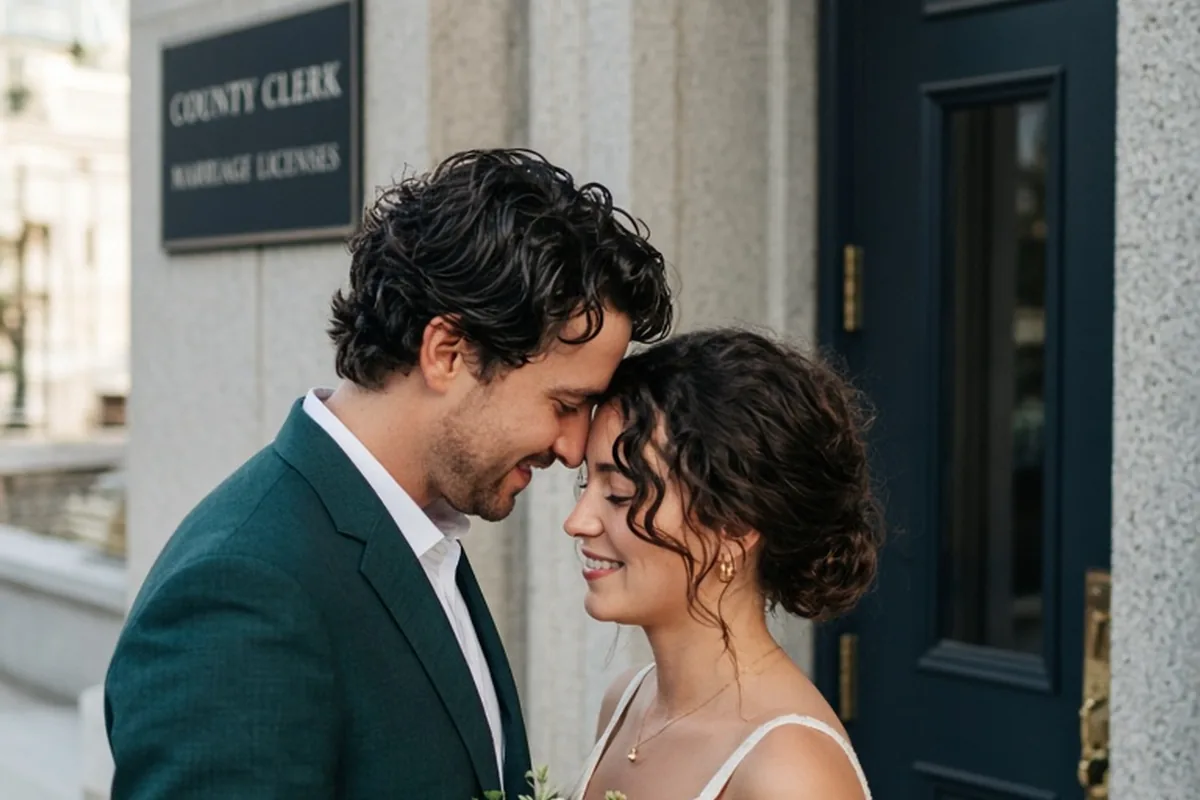
To plan a courthouse wedding, first research your county clerk or local court marriage guidelines. Obtain your marriage license within your state's validity window, observing any mandatory waiting periods. Next, book a civil ceremony appointment if required by your chosen jurisdiction, confirm witness requirements, and pay the administrative fees. Finally, decide on your attire, arrange photography or guest logistics within room capacity limits, and organize an optional post-ceremony reception or celebratory meal.
Researching Marriage License Requirements and State Waiting Periods
The fundamental legal requirement of any civil marriage is obtaining a valid marriage license from the appropriate local government office before your ceremony takes place. A marriage license serves as legal authorization from the state permitting you to wed, whereas the courthouse ceremony represents the solemnization of that union. State and county rules govern where you can apply. In several jurisdictions, couples must apply in the county where at least one party resides, while other states permit couples to apply in any county regardless of residency, provided the ceremony takes place within state borders. You should verify the specific administrative guidelines through the official website of your local county clerk, city clerk, or probate court.
Both partners must typically appear in person at the clerk's office to submit the application and present required documentation. Standard requirements include valid, government-issued photo identification such as a driver's license, state ID card, or passport, along with Social Security numbers and certified birth certificates in certain jurisdictions. If either applicant has been married previously, courts universally require certified proof of dissolution, such as a final divorce decree or a certified copy of a former spouse's death certificate. Failing to bring certified, original copies of these records can halt the application process, requiring you to reschedule your visit.
Timelines are equally critical when managing marriage documentation. Many states enforce a statutory waiting period, typically ranging from twenty-four to seventy-two hours between the moment the license is issued and the earliest time a ceremony can legally be performed. In contrast, other jurisdictions have no waiting period and allow same-day ceremonies. Furthermore, marriage licenses expire after a defined window, often between thirty and ninety days from issuance. Administrative fees for issuing the license vary widely by county. Because many municipal offices operate on cash-only policies or charge additional convenience fees for card payments, check accepted payment methods before your visit.
Scheduling Your Civil Ceremony and Understanding Venue Guidelines
Once you understand the documentation requirements, you must determine how your local courthouse handles ceremony appointments. Administrative procedures vary considerably among municipal and county courts. Some facilities operate on a walk-in basis during specific calendar days or morning dockets, while others require reservations booked weeks or months in advance through an online portal. A frequent misunderstanding among couples is assuming that applying for a marriage license automatically reserves a ceremony time slot. In many jurisdictions, the clerk's office issues the paperwork, but a separate court department or magistrate's office schedules the actual civil solemnization.
Courthouses are active government facilities handling official legal and criminal proceedings, which influences the ceremony environment. You and your guests will pass through standard building security, including metal detectors and bag inspections. Many items permitted at traditional event venues—such as open flames, sparklers, thrown rice, glitter, confetti, and outside alcoholic beverages—are strictly prohibited inside government buildings. The physical setting for the vows can range from a historic wood-paneled courtroom to a modest administrative office or a designated municipal chapel, depending entirely on the architectural layout of the specific courthouse.
Civil ceremonies are conducted by authorized public officials, such as judges, magistrates, court clerks, justices of the peace, or commissioners of civil marriages. Because these officiants manage full judicial dockets alongside wedding ceremonies, the proceedings are intentionally brief, typically lasting between five and ten minutes. The ceremony format usually follows a standardized secular script. While many judges permit couples to exchange rings and brief personal vows, others adhere strictly to statutory declarations. Contact the court coordinator in advance if you wish to confirm whether personal vows or brief readings are permissible during your assigned time slot.
Navigating Guest Limits, Witness Rules, and Courtroom Security
Legal witness requirements represent an essential factor in your ceremony planning. State laws differ significantly regarding who must be present to witness the union and sign the official marriage record. Some states require two adult witnesses who are at least eighteen years of age, several states mandate only one witness, and certain jurisdictions require no witnesses other than the officiating judge or clerk. If you plan to elope without guests in a jurisdiction that mandates witnesses, you must verify whether courthouse staff are permitted to sign the certificate or whether you will need to arrange for outside witnesses to accompany you.
Courthouse ceremonies enforce strict capacity limits that directly shape your guest list. Unlike private venues where capacity can often be adjusted, courtroom headcounts are governed by municipal fire codes and building security mandates. Many courtrooms cap guest attendance between two and ten people, which must include your photographer and any accompanying children. Before inviting extended family or friends, establish the exact headcount permitted in your assigned room to prevent loved ones from being turned away at security on the day of the ceremony.
Proper communication with your attending guests is vital for a smooth ceremony day. Because court schedules operate on strict timetables, arriving late can result in your appointment being canceled or pushed to the end of the court's daily docket. Instruct your guests to arrive at least thirty to forty-five minutes before your scheduled appointment to allow adequate time for parking, navigating downtown traffic, and clearing security checkpoints. Remind all attendees to carry government-issued identification, keep mobile devices completely silenced, and respect courthouse decorum while inside the building.
Selecting Courthouse Attire, Florals, and Photography Services
A courthouse wedding provides complete freedom regarding your attire, unbound by traditional wedding expectations. Couples can wear whatever reflects their personal taste and comfort level, from formal floor-length bridal gowns and classic black-tie tuxedos to modern tailored suits, elegant jumpsuits, vintage tea-length dresses, or smart-casual clothing. When selecting your outfit, keep the practical aspects of municipal spaces in mind. You will likely be navigating public sidewalks, granite stairs, security lines, and elevators, making comfortable footwear and functional outerwear sensible considerations, particularly during colder seasons.
Incorporating floral accents is an effective way to personalize a civil ceremony and bring vibrant color to municipal backdrops. A simple handheld bouquet and matching boutonniere photograph exceptionally well against the stone, marble, and wood textures common in historic civic architecture. When ordering from a local florist, select sturdy blooms that hold up well without immediate refrigeration during transit. Confirm that your floral arrangements comply with building rules; handheld flowers are almost universally accepted, while large standing displays or loose petals will not clear security.
Hiring a professional photographer experienced with civil weddings is one of the most rewarding investments for a courthouse celebration. Photography regulations vary widely among courts: some judges allow full photographic documentation inside the courtroom, while others permit photos only before and after the ceremony or prohibit flash equipment during official proceedings. An experienced photographer will understand how to navigate low-indoor lighting and will know the best exterior locations—such as monumental stone steps, nearby city parks, and classic architectural arches—for portrait sessions following the vows.
Building a Seamless Day-of Schedule and Managing Marriage Documents
Creating an unhurried, realistic day-of timeline ensures your courthouse wedding remains calm and enjoyable. Start by establishing a schedule for getting dressed and traveling to the venue, incorporating generous buffer periods. Add at least forty-five minutes of contingency time to your morning transit to account for downtown traffic, parking garage delays, and lines at the public security screening area. Entering the courthouse in an unhurried state sets a positive, relaxed tone for the entire day.
Upon arriving at the courthouse, proceed through security and report directly to your assigned courtroom or clerk's window. You will check in with the clerk or bailiff, present your valid marriage license alongside required photo identification, and provide any necessary administrative fee receipts. When your names are called, you, your officiant, and your designated witnesses will enter the ceremony area. The officiant will conduct the vows, administer the ring exchange if desired, and supervise the official signing of the marriage certificate.
Handling post-ceremony documentation correctly is the final legal step of the process. Once the marriage certificate is signed by the officiant and witnesses, it must be officially recorded by the county or municipal recording office. In some courts, the clerk processes and records the document immediately on-site; in other jurisdictions, the officiant holds the legal responsibility to mail the completed paperwork back to the county within a prescribed statutory timeframe. Once recorded, you must request several certified copies of the official marriage certificate, which are essential for updating legal names, altering tax filings, and modifying insurance policies.
Celebrating After the Ceremony with Receptions and Private Dinners
A civil ceremony allows couples to tailor their post-wedding celebration entirely around their personal preferences and budget. Common celebration styles include reserving a private dining room at a favorite restaurant, hosting a casual catered gathering at home, or organizing a cocktail reception at a neighborhood lounge. Some couples choose to keep the wedding day exclusively intimate with immediate family and schedule a larger party or anniversary celebration with extended friends weeks or months later.
When structuring your post-ceremony plans, consider the timing gap between your courthouse appointment and your celebration. Courthouse weddings frequently wrap up by mid-day or early afternoon. If your celebratory meal is scheduled for the evening, plan how you and your guests will spend the intervening hours. You might use this window for relaxed portrait photography around the city, a quiet coffee break with close family, or checking into a hotel to change attire and unwind before dinner.
Adding intentional personal details transforms a standard private dining experience into a celebratory wedding reception. You can enhance a reserved restaurant room or home setting with custom printed menus, small floral centerpieces, a curated playlist, and a traditional single-tier cutting cake. Designating a moment during the meal for heartfelt toasts from family and friends allows you to capture the emotional depth of a traditional wedding while enjoying the intimacy, affordability, and simplicity of a courthouse marriage.
Frequently asked questions
How far in advance should you schedule a courthouse wedding?
Booking timelines depend heavily on your specific county or municipal court. Some high-demand urban courthouses open ceremony dates several months in advance and fill up quickly, while smaller county offices operate on walk-in dockets or require only a few days' notice. Contact your local clerk's office two to three months before your desired wedding date to confirm their scheduling system.
What documents do both partners need to bring on the ceremony day?
You must bring your valid, unexpired marriage license, government-issued photo identification (such as driver's licenses or passports) for both partners, and accepted payment for any remaining ceremony fees. If your state mandates witnesses, ensure your designated witnesses also bring valid government-issued photo identification.
Can you customize your vows during a courthouse wedding?
Customization options depend on the individual judge, magistrate, or clerk officiating your ceremony. While civil ceremonies rely on a standardized legal declaration, many officiants welcome couples to exchange brief personal vows or rings. It is best to ask the court clerk about customization policies when scheduling your appointment or during day-of check-in.
How long does a courthouse wedding ceremony actually take?
The civil ceremony itself usually lasts between five and ten minutes. However, the total time spent at the courthouse—including clearing security checkpoints, checking in at the clerk's office, reviewing paperwork, and waiting for your assigned docket time—typically takes between forty-five minutes and two hours.
Your next step
Visit the official website of your county clerk or probate court today to review their exact marriage license application rules, waiting periods, and civil ceremony scheduling requirements.