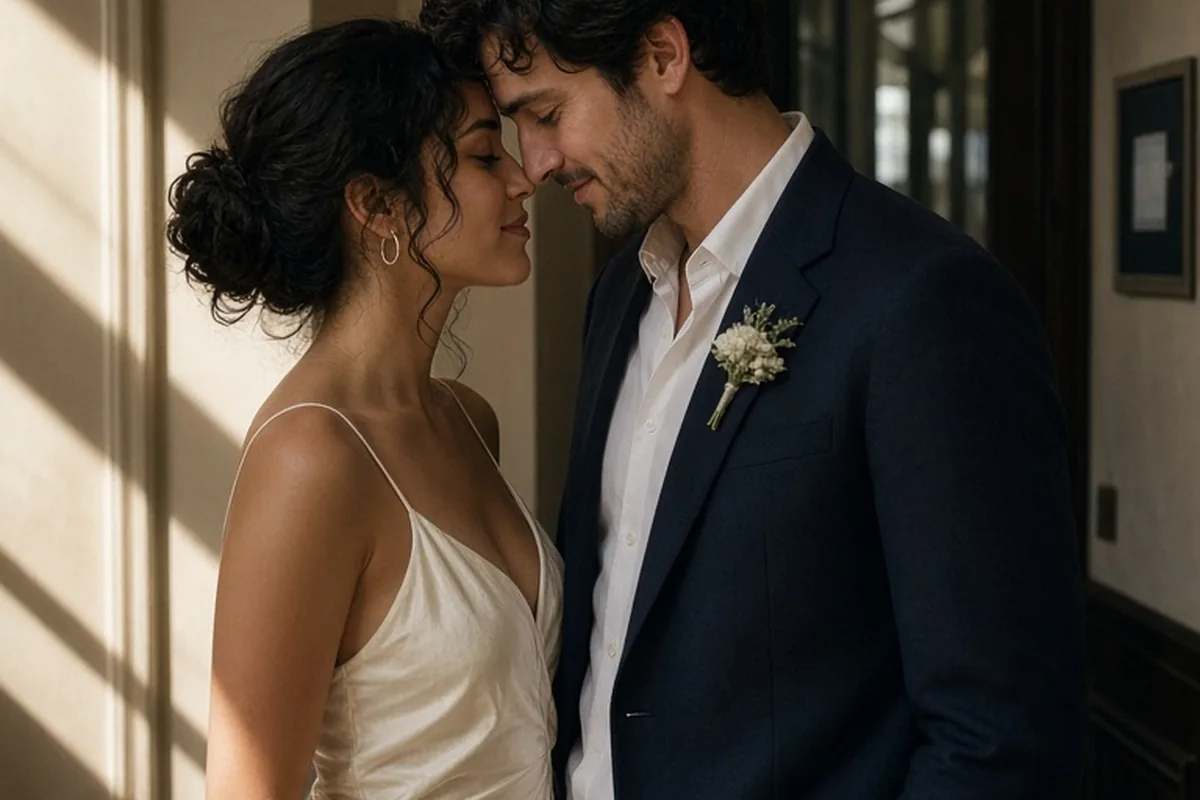
Planning a courthouse wedding involves securing your marriage license, scheduling a civil ceremony appointment, fulfilling local witness requirements, and coordinating day-of details like attire, photography, and celebration plans. Start by researching your county clerk's office for required identification, fees, and waiting periods. Book your date early, confirm guest limits, arrive with your required documents and rings, and arrange a celebratory meal or reception afterward to mark the milestone.
A courthouse wedding offers a streamlined, meaningful, and low-stress way to legalize your union without the administrative burden or extensive timeline of a traditional banquet-scale event. Whether you are eloping privately, planning an intimate gathering for immediate family, or completing legal requirements before a destination celebration, an organized approach ensures the day feels intentional and romantic rather than purely bureaucratic.
Researching Marriage License Rules and Local Court Procedures
The first phase of planning a courthouse wedding requires understanding the legal parameters of your chosen municipality. Marriage regulations in the United States are determined at the state and county levels rather than federally, which means the process can vary significantly even between adjacent towns. Some jurisdictions conduct civil ceremonies in formal county courthouses, while others host them in city halls, municipal clerk offices, or probate courts. Begin by visiting the official website of the county clerk or recorder in the county where you intend to marry, paying close attention to whether you must be a resident of that county or state to obtain a license there.
Take inventory of the specific vital records and identification items required for the initial marriage license application. Most jurisdictions require government-issued photo identification, such as a valid driver's license, state ID card, or passport, along with proof of citizenship or legal status and Social Security numbers. If either partner has been married previously, most offices require certified copies of final divorce decrees, dissolution records, or death certificates. Verifying these administrative items weeks in advance prevents sudden delays, as obtaining official replacement records from vital statistics departments can take several weeks or months.
Payment protocols at government facilities are frequently strict and specific. County offices may separate the marriage license fee from the civil ceremony fee, requiring distinct transactions for each step. While some modern clerk offices accept credit or debit cards, many still require exact cash, cashier's checks, or money orders, and card transactions often incur separate non-refundable processing surcharges. Confirm the accepted payment methods and fee structures directly on your county's official clerk portal before your appointment to avoid being turned away at the service window.
Managing the Marriage License Timeline, Validity Windows, and Waiting Periods
A critical distinction in courthouse wedding planning is the difference between purchasing the marriage license and executing the civil ceremony. In many jurisdictions, a marriage license is not immediately valid upon issuance. State laws often mandate a statutory waiting period ranging from twenty-four hours to several days between when the license is printed and when the ceremony can legally occur. Conversely, some states enforce no waiting period, allowing couples to complete the application and ceremony on the same day if appointment slots allow.
Marriage licenses also carry an expiration date, commonly spanning thirty, sixty, or ninety days from the date of issuance. If your ceremony does not occur and the signed license is not returned within that legal window, the document becomes void, requiring a full reapplication and additional filing fees. Map out your timeline carefully by scheduling your license application appointment within the validity window while accounting for any mandatory waiting period before your intended ceremony date.
Civil ceremony scheduling policies vary widely across court systems. Certain busy metropolitan halls operate strictly on online appointment schedules released on specific days of the month, while smaller county offices operate on a first-come, first-served walk-in basis during designated magistrate hours. High-demand calendar dates, such as Fridays, Valentine's Day, and summer mornings, routinely book weeks or months in advance. Contact your clerk's office early to determine exactly when ceremony appointment calendars open so you can secure your preferred date and time.
Navigating Guest Limits, Witnesses, and Security Logistics
Courthouse ceremonies operate within functioning civic and judicial facilities, which creates physical and operational constraints that traditional venues do not have. Most courthouse ceremony spaces, whether they are judicial chambers, small marriage bureau rooms, or historic courtrooms, impose strict maximum occupancy limits. Some venues permit only the couple and two witnesses, while others accommodate ten to twenty guests. Contact the clerk or magistrate directly to confirm the exact guest policy so you can set expectations with family and friends before sending invitations.
State and county laws dictate legal witness requirements for civil ceremonies. Depending on your location, you may be required to provide one or two adult witnesses who must be physically present during the ceremony to sign the marriage certificate. Verify the minimum age for witnesses in your jurisdiction, which is typically eighteen years old, and confirm whether your witnesses must bring government-issued photo identification. If you are eloping without guests in an area that mandates witnesses, ask the clerk's office in advance whether courthouse staff or other municipal volunteers are permitted to serve as legal witnesses.
Security protocols at government buildings mirror those at airports and standard court facilities. All attendees, including the couple, guests, and hired vendors, must pass through security checkpoints, metal detectors, and baggage screenings upon entry. Prohibited items frequently include pocket knives, pepper spray, scissors, outside food or drink, and certain professional lighting or tripod setups. Instruct your guests to arrive twenty to thirty minutes before the scheduled ceremony time to allow sufficient time for parking, security processing, and locating the correct room or department.
Planning Your Courthouse Wedding Attire and Personal Styling
A civil ceremony allows for broad sartorial freedom, unconstrained by traditional venue dress codes. Couples choose a wide spectrum of attire, from classic floor-length gowns and tailored formal tuxedos to modern bridal jumpsuits, short retro dresses, sharp blazers, or relaxed casual separates. The setting often lends itself particularly well to chic, city-tailored silhouettes, mid-century vintage aesthetic choices, or bold color palettes that reflect your personal taste without feeling out of place in an urban or civic environment.
Practical considerations should guide your wardrobe decisions alongside aesthetics. Courthouses often require walking up flights of marble stairs, navigating long municipal corridors, and standing in security queues. Choose footwear that balances elegance with mobility, especially if you plan to walk around nearby city streets for outdoor portraits following the ceremony. If your wedding involves outerwear due to cooler seasons, consider your coat, trench, or cape as an integral part of your styled outfit rather than an afterthought, as you will likely wear it throughout arrival and outdoor photography.
Personal styling details such as hair, makeup, bouquets, and boutonnieres can elevate a simple civil ceremony into an occasion that feels thoroughly elevated. Compact bouquets, structured floral posies, or single dramatic stems are easier to manage in tight municipal spaces and during security screening than oversized arrangements. Coordinate with your florist or styling professionals well in advance, scheduling morning prep times to align comfortably with courthouse appointment slots that frequently take place during standard business hours.
Hiring a Photographer and Documenting the Experience
Investing in professional photography is one of the most effective ways to preserve the emotion, atmosphere, and spontaneity of a courthouse wedding. Because civil ceremonies are often brief—frequently lasting five to fifteen minutes—an experienced elopement or city hall photographer brings valuable insight into working quickly within municipal spaces and making the most of unpredictable indoor lighting conditions.
Before booking a photographer, verify the photography policies of the specific courthouse or city hall where your ceremony will take place. Some facilities permit professional flash photography and video recording inside the ceremony room or judge's chambers but strictly prohibit cameras in security screening areas, public hallways, or general administrative rooms. Clarify these boundaries with the clerk's office beforehand and relay the rules to your photographer so they can plan their lenses and camera gear accordingly.
Maximize your photography coverage by building a timeline that extends beyond the ceremony room. Arrange for your photographer to capture candid moments during the initial arrival, the security check-in, and the signing of the legal register. After the ceremony concludes, plan a dedicated sixty- to ninety-minute portrait session utilizing the civic architecture, grand staircases, nearby historic neighborhoods, public parks, or favorite neighborhood cafes to create a comprehensive, artistic visual story of your wedding day.
The Master Checklist for Day-Of Essentials and Packing
Careful physical preparation ensures that your ceremony day runs smoothly without administrative disruptions. Assemble all paperwork and personal items in a dedicated, secure folder the evening before your appointment. Forgetting a single legal document, such as a state-issued ID card or the marriage license paperwork itself, can result in the forfeiture of your ceremony slot and require rescheduling the entire event.
Review this comprehensive checklist of items to bring to the courthouse: your unexpired government-issued photo IDs or passports; the original, valid marriage license document (if obtained prior to ceremony day); certified copies of divorce or dissolution decrees (if required by your clerk); cash, money orders, or specific payment cards for ceremony and certificate fees; your wedding rings in an accessible case; written personal vows if your officiant allows personal readings; legal witnesses with their valid IDs; floral arrangements; and a compact touch-up kit containing mints, blotting paper, tissues, and hairpins.
Establish a realistic schedule for the morning of the wedding that leaves generous room for traffic, parking, and administrative processing. Aim to arrive at the municipal parking area or courthouse grounds at least thirty to forty-five minutes ahead of your assigned ceremony time. Check in with the administrative clerk as soon as you clear security, presenting your paperwork and confirming that your assigned magistrate or judge is ready to proceed on schedule.
Organizing Post-Ceremony Celebrations and Reception Options
Because courthouse ceremonies typically take place during standard weekday business hours, post-ceremony celebrations can take many creative forms. A popular and seamless approach is booking a private dining room or a celebratory luncheon at a nearby fine-dining restaurant, bistro, or historic hotel. This allows you to transition smoothly from the formal legal proceedings into an intimate meal with your close guests without requiring complex setup, cleanup, or full-day vendor coordination.
If you want to include a wider circle of friends and family who could not attend the ceremony due to room capacity rules, you can host a casual evening reception, cocktail party, or backyard dinner party later that day or over the following weekend. This hybrid approach provides the best of both worlds: a completely private, stress-free legal ceremony paired with an enjoyable, low-pressure celebration where you can socialize freely with your broader community.
After the celebration concludes, complete the remaining administrative steps to finalize your marriage records. Ensure that the signed marriage license is returned to the clerk's office within the state-mandated timeframe, whether by the officiant or delivered by you in person. Order multiple certified copies of your marriage certificate once the record is officially entered into the county vital statistics database, as these official copies are essential for completing legal name changes, updating insurance policies, adjusting tax filings, and updating banking accounts.
Frequently asked questions
How far in advance should we book our courthouse wedding?
Booking timelines depend on your local county clerk's office. Some metropolitan courthouses open online appointment books thirty to ninety days in advance and fill up quickly, while smaller municipal courts operate on walk-in schedules. Research your specific county's scheduling rules at least two to three months before your desired date.
Can we write our own vows for a courthouse ceremony?
Personal vow policies vary by officiant and court. Many judges and magistrates happily allow couples to read short personal vows or exchange rings, while others follow a brief, standardized civil script due to back-to-back appointment schedules. Contact your clerk's office beforehand to ask if personal vow exchanges are permitted during your slot.
Do we have to get married in the county where we live?
In most states, you can obtain a marriage license in any county within your home state, but some jurisdictions require you to hold the ceremony in the exact county where the license was issued. If you are marrying outside your home state, check the destination state's specific nonresident marriage guidelines before traveling.
How long does a courthouse wedding ceremony usually take?
The civil ceremony itself typically takes between five and fifteen minutes. However, you should allocate at least sixty to ninety minutes total at the courthouse to account for parking, security checkpoints, checking in with the clerk, processing paperwork, and taking photos.
Your next step
Check your county clerk's official website today to download their marriage license application, verify acceptable forms of identification, and confirm ceremony appointment scheduling procedures.