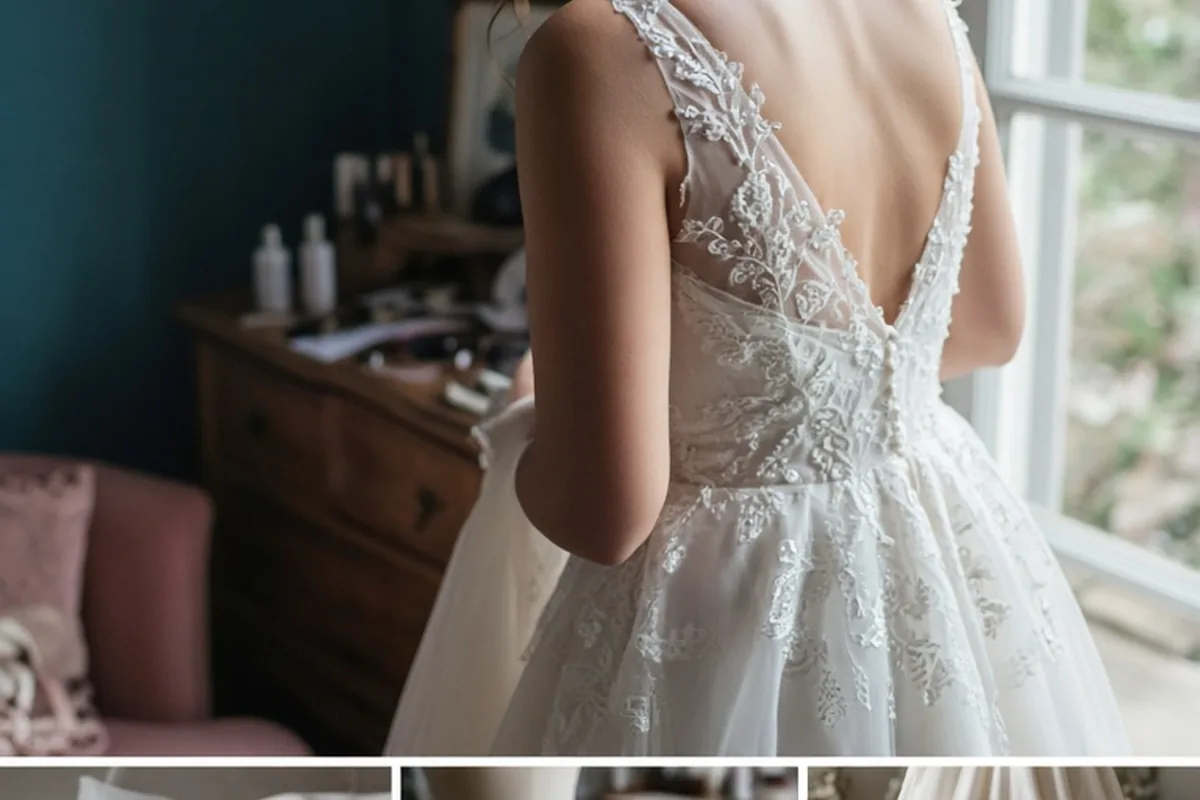
To save money on wedding dress alterations, buy a gown that closely matches your largest measurement, choose designs with simpler skirt hems and minimal bodice boning, and bring your exact wedding shoes and undergarments to the initial fitting. Compare quotes between independent bridal seamstresses and salon packages, skip cosmetic modifications like moving beaded appliques, and opt for a simple single-point or American bustle over complex multi-tier bustle designs.
Bridal alterations often surprise buyers because specialized garment reconstruction requires intensive handwork that is billed separately from the purchase price of the gown. Understanding how garment construction, timing, and tailoring choices directly drive labor hours allows you to maintain control over your total bridal budget.
Selecting Gown Construction Features That Require Fewer Wedding Dress Alterations
The overall design and fabric construction of your gown represent the single largest variable determining your eventual tailoring bill. Dresses featuring raw-edge tulle hems, simple crepe skirts, or clean unadorned satin lines require far fewer labor hours to shorten than skirts finished with scalloped lace borders, horsehair braid trim, or heavy crystal beading. When a hemline features intricate lace trim, a seamstress must carefully unpick the lace by hand, cut the underlying fabric layers to your exact height, and hand-sew the lace border back onto the shortened hem. Selecting a gown with a clean hemline or a separate lace trim placed above the hemline eliminates hours of delicate deconstruction.
Bodice construction also dictates alteration complexity. Unstructured or lightly boned tops with functional seam allowances can be taken in or let out quickly through the side seams. In contrast, fully corseted bodices with deep plunging illusion mesh, built-in bra cups, and continuous side beading require the tailor to open multiple interior layers, reconstruct the structural boning channels, and reposition delicate sheer netting so it sits flush against your chest without rippling. If your priority is keeping sewing costs manageable, look for silhouettes that fit cleanly through the torso without requiring structural re-engineering.
Ordering the Correct Initial Gown Size to Minimize Tailoring Labor
Bridal sizing runs noticeably smaller than standard ready-to-wear clothing, and attempting to guess your size without professional guidance frequently leads to expensive tailoring corrections. When ordering a standard-size gown from a designer chart, your bridal consultant will measure your bust, waist, and hip. Gowns are ordered to fit the largest individual measurement among the three, which allows the seamstress to take in the smaller areas rather than facing the complicated task of letting out tight seams where fabric allowance may be nonexistent.
Taking in a gown by one or two sizes is standard practice, but taking in a dress by three or more sizes requires entirely recutting the garment, shifting armholes, moving bust apex darts, and re-centering embellishments. This complete restructuring can easily double or triple the tailoring labor. If you fall between sizes, discuss split-sizing options offered by certain designers, where the factory cuts the bodice to one size and the skirt to another for a nominal manufacturing fee that costs significantly less than custom structural tailoring later.
Evaluating Salon Tailoring Packages Versus Independent Bridal Seamstresses
Bridal boutiques frequently offer in-house alteration packages that charge a flat fee for standard adjustments, while independent bridal tailors generally charge by the specific task or hourly rate. A flat-rate package can be cost-effective if your dress requires extensive work across every component, such as taking in the bust, shortening a five-layer skirt, taking in the hips, and adding an intricate bustle. However, if your dress only requires a minor hem adjustment and a simple strap shortening, paying for a full-service salon package means paying for labor capacity you will not actually use.
Independent bridal seamstresses who operate private studios or local tailoring shops often provide itemized estimates based purely on the work required for your specific frame. To evaluate your options, obtain a clear line-item quote from your gown retailer and compare it with initial consultations from independent specialists who focus exclusively on formal and bridal wear. When vetting independent tailors, verify their direct portfolio of bridal work, confirm their shop insurance policies, and request detailed itemizations that distinguish basic fit adjustments from specialty custom modifications.
Differentiating Functional Structural Fit from Optional Cosmetic Reworks
A successful fitting prioritizes mechanical support, secure closure, and balanced posture before any decorative updates are considered. Essential structural adjustments include tailoring the bodice to support the weight of the skirt, raising or shortening straps so the neckline does not gap, setting the hem so you can walk without tripping, and anchoring a functional bustle for the reception. These alterations ensure your gown stays in place and allows you to move safely throughout the event.
Cosmetic reworks, by contrast, represent discretionary expenses that quickly inflate an invoice. Examples include swapping out a zipper for a functional lace-up corset back, adding sleeves from scratch, re-beading sections of lace, changing the shape of a neckline, or layering additional colored tulle beneath the skirt. If you are looking to lower costs, review every line item with your tailor and eliminate decorative alterations that do not directly improve comfort, posture, or physical safety during movement.
Managing Hemlines, Crinolines, and Undergarments to Prevent Multiple Recuts
The height of your skirt hem is determined by the specific combination of your shoe heel height, your posture, and the fullness of the undergarments worn beneath the skirt. Arriving at your first alteration fitting without the exact shoes and undergarments you plan to wear on the wedding day is one of the most common causes of duplicate tailoring charges. If a seamstress pins and cuts your hem based on temporary footwear, and you later switch to a shoe with a different heel pitch or sole thickness, the entire hemline must be unpicked and recut.
Similarly, adding or removing a petticoat, crinoline slip, or shapewear bodysuit after your initial fitting changes the circumference and vertical drape of the skirt. A voluminous crinoline lifts the bottom of the skirt outward, effectively shortening the front hemline without a single stitch being sewn. By selecting your foundation garments and footwear before scheduling your initial fitting, you lock in the geometry of the skirt immediately and eliminate the labor charges associated with re-pinning, re-cutting, and re-pressing multiple layers of delicate textile.
Simplifying the Bustle Design and Train Mechanics to Lower Labor Hours
A bustle lifts the train of the wedding dress off the floor after the ceremony so you can walk, dine, and dance without having fabric dragged or stepped on. Tailors construct bustles using systems of fabric loops, clear buttons, hidden ribbons, or metal hooks and eyes. The cost of building a bustle corresponds directly to the number of connection points required to support the weight and drape of your train.
Elaborate multi-point French bustles, which tuck fabric under itself across eight to fifteen hidden ribbon ties, require extensive hand-measuring, reinforcement stitching, and labor. You can significantly reduce alteration fees by requesting a simpler design, such as an American or over-bustle with three to five sturdy pick-up points. If your gown features a lightweight fabric and a modest chapel train, a single-point or three-point bustle will secure the fabric cleanly while keeping the tailor's construction time to a minimum.
Structuring Your Fitting Timeline to Avoid Rush Surcharges and Weight Fluctuations
Bridal tailors manage strict seasonal schedules, and scheduling your appointments too close to your event date introduces costly rush fees. Most seamstresses recommend scheduling your initial consultation roughly two to three months before the wedding date, followed by a second fitting one month prior, and a final pickup fitting two weeks before the event. Booking your fitting window well in advance secures standard labor rates and prevents premium scheduling charges from being added to your final bill.
Starting alterations too far in advance, such as eight to ten months ahead of time, introduces a different financial risk: body measurement changes. If your weight, muscle tone, or posture fluctuates significantly between an early fitting and the wedding week, the tailor will need to undo completed work and adjust the side seams a second time. Maintaining consistent nutrition and exercise routines between your first fitting and the wedding day protects your initial investment and prevents emergency reconstruction sessions.
Line-Item Quote Verification Questions to Ask Your Tailor
Before handing over your dress or signing an alteration contract, request an itemized breakdown rather than a single lump-sum total. Ask the seamstress to separate base labor from material charges, such as replacement boning, cups, or custom buttons. Clarify whether the provided estimate includes a final steaming and pressing service, or if post-alteration garment pressing carries an additional separate charge.
Ask specific questions regarding what happens if further minor adjustments are needed after the second fitting. Reliable bridal tailors clarify upfront whether follow-up fit tweaks are covered within the initial quote or billed at an hourly rate. Knowing these terms before physical work begins allows you to make informed trade-offs, decline non-essential handwork, and set clear expectations for the final pickup date.
Frequently asked questions
Can I save money on wedding dress alterations by using a regular dry cleaner tailor?
Using a standard commercial dry cleaner tailor can be risky for intricate wedding gowns because formalwear uses delicate multi-layer fabrics, internal boning, and specialized hems. While simple adjustments on unadorned dresses might be manageable, complex bodice work or beaded hems are best handled by specialists with specific bridal construction experience to avoid costly repair work.
Is it cheaper to take in a wedding dress or let it out?
Taking in a wedding dress is almost always more reliable and less labor-intensive than letting it out. Letting out a gown requires sufficient interior seam allowances, which many modern designers minimize, and can leave visible needle marks or color discrepancies on delicate fabrics where previous seams sat.
How can changing my shoe choice save money on hem alterations?
Selecting your exact shoe heel height before the first fitting prevents the seamstress from having to measure and cut the hem twice. In some cases, selecting a slightly higher heel or a fuller crinoline slip can lift a marginally long dress to the proper clearance, avoiding hem cutting altogether.
Does a corset back cost less to alter than a zipper closure?
A lace-up corset back offers built-in flexibility for minor size changes, which can reduce the need for precise side-seam tailoring if your weight fluctuates. However, converting an existing zipper dress into a corset back requires significant deconstruction and added hardware, which increases alteration costs if not originally part of the gown.
Your next step
Schedule your first alteration consultation with your finalized wedding shoes and undergarments in hand, and request an itemized written quote before authorizing any structural cuts or cosmetic sewing work.