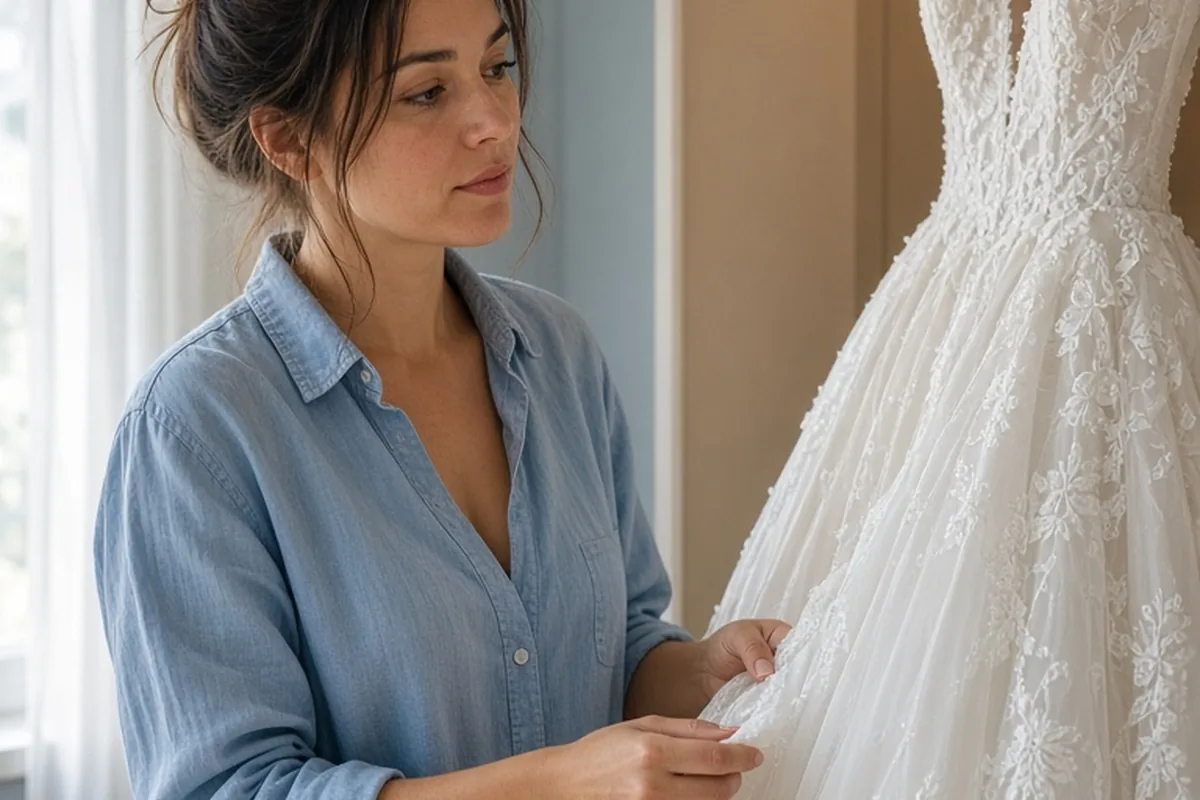
To save money on wedding dress resale value, either buy a pre-owned gown to bypass initial retail markup or purchase a high-demand designer dress with minimal, reversible alterations to maximize future return. Protect the gown's value by having it professionally cleaned immediately after the event, storing it uncompressed in a breathable garment bag, and listing it on secondary bridal marketplaces within two years of release while the silhouette remains in active demand.
A wedding gown is often one of the largest single-item expenses in an event budget, yet traditional bridal retail prices treat the garment as a sunk cost. Approaching your gown with a secondary-market mindset shifts the financial dynamic, allowing you to recover a substantial portion of your investment or acquire a luxury designer piece at a fraction of salon pricing.
Buying Pre-Owned Gowns to Bypass the First-Owner Depreciation Drop
Traditional bridal salons markup new inventory to cover overhead, personalized appointments, and custom production runs. The moment a new dress leaves the boutique and is altered, its market value drops significantly, much like driving a new vehicle off a dealership lot. By shopping directly on the secondary market for a sample gown, floor model, or once-worn dress, you bypass this steep initial depreciation curve entirely.
When you purchase a pre-owned gown that has already absorbed that primary price drop, you establish a much lower cost basis. If you maintain the garment well, avoid permanent structural cutting, and have it cleaned promptly, you can often re-list the gown after your own celebration and recoup nearly the entire amount you paid for it. This circular approach effectively reduces your net wardrobe cost to the expense of cleaning and minor alterations rather than the full retail purchase price.
Selecting Designer Labels, Fabrics, and Silhouettes with High Resale Demand
Not all wedding dresses retain value equally on resale platforms. Well-established bridal fashion houses with recognizable brand identities, signature aesthetics, and consistent sizing conventions consistently generate faster sales and stronger price retention than unbranded or private-label salon gowns. Buyers searching secondary marketplaces typically filter their searches by specific designer names and style numbers, making identifiable runway or catalog pieces far easier to sell.
Fabric choice and silhouette also dictate longevity and resale liquidity. Classic A-line, fit-and-flare, and clean architectural crepe silhouettes maintain steady year-over-year appeal compared to hyper-trendy or highly avant-garde cuts. Furthermore, durable textiles such as structured silk mikado, heavy crepe, and reinforced floral lace withstand wear, dry-cleaning solvents, and transit far better than delicate, single-layer unlined illusion tulle, which is prone to snagging and micro-tears that diminish resale value.
Managing Alterations to Preserve Sizing Flexibility for Future Buyers
Extensive, irreversible alterations are among the most common reasons a high-end dress loses its secondary market value. When a tailor cuts away excess seam allowance or significantly alters the neckline, the pool of prospective buyers shrinks to those who match your exact proportions or smaller. To protect your investment, instruct your seamstress to fold and press original seam fabric into the interior rather than trimming it away, allowing future owners to let the garment back out.
Hemming requires similar forethought. If the dress must be shortened, ask if the hem can be raised from the waist seam or basted upward with a reversible stitch if the fabric allows. Additionally, choose an American or French bustle system constructed with durable, transparent loops and reinforced anchor points. Poorly engineered bustles frequently rip the gown's train during reception dancing, creating fabric damage that requires costly repairs and forces a steep discount when you decide to sell.
Protecting the Gown During the Event and Scheduling Prompt Post-Wedding Cleaning
The physical condition of your dress directly determines its final resale listing tier, ranging from pristine condition to deeply discounted salvage. During your wedding day, take deliberate steps to prevent common high-risk stains: apply all perfume, hairspray, and spray tans well before stepping into the dress, use an underskirt or bridal towel during transit, and lift the train when walking over grass, gravel, or damp pavement during outdoor photo sessions.
Once the celebration concludes, time is of the essence. Invisible residues such as perspiration, white wine, and sugar from cake glaze caramelize over time, turning into permanent yellow or brown stains if left untreated for weeks. Take the gown to a professional cleaner specializing specifically in bridal textiles within days of the event. Request standard wet-cleaning or gentle solvent dry-cleaning rather than hermetically sealed box preservation, as secondary market buyers will need to inspect the gown's seams, linings, and hem before purchasing.
Evaluating Resale Platforms, Local Consignment, and Net Fee Structures
To maximize the cash you recover, evaluate whether a peer-to-peer bridal marketplace or a local consignment boutique best aligns with your timeline and willingness to manage customer service. Dedicated online bridal platforms typically charge a flat listing fee or a modest commission on the final sale, allowing you to retain the vast majority of the proceeds in exchange for handling photography, inquiries, packaging, and shipping directly.
Local bridal consignment shops offer a hands-off experience by merchandising the dress in a physical showroom where prospective brides can try it on in person. However, consignment boutiques generally split the final sale price, retaining a substantial percentage as their commission. Calculate your projected net payout rather than the gross list price when comparing options, factoring in platform payment processing fees, shipping insurance, and any initial cleaning prerequisites required by the consignment contract.
Building High-Converting Gown Listings with Verifiable Documentation
A compelling listing provides complete transparency, which builds buyer confidence and justifies a firm asking price. Combine professional photographs from your wedding day that showcase the dress in motion with clear, well-lit, unedited close-ups of the gown hanging in natural daylight. Include detailed photos of the train, neckline, interior corsetry, closure mechanisms, and the underside of the hemline to prove the absence of dirt or fraying.
Your written description should remove all ambiguity regarding fit and provenance. State the original designer label size, the year the dress was purchased, and precise flat-lay measurements including bust, waist, hip, hollow-to-hem, and the exact heel height worn. Disclose the professional cleaning method used, retain and photograph the cleaning receipt, and mention any included accessories such as a matching veil, removable sleeves, or an extra bustle kit to increase the overall value proposition.
Packaging, Insuring, and Shipping to Prevent Damage and Buyer Disputes
The transaction is not complete until the gown arrives safely and matches the buyer's expectations. Use acid-free tissue paper to pad the bust cups, sleeves, and delicate beadwork to prevent friction damage during transit. Fold the gown gently along its natural seams, place it inside a heavy-duty, water-resistant garment bag, and pack it securely inside a new, double-walled corrugated shipping box that prevents shifting.
Always purchase full shipping insurance covering the agreed sale price and mandate a direct signature upon delivery. Document the packing process with photos or video as proof of condition immediately prior to sealing the carton. Utilizing platform-native escrow services or verified payment gateways with buyer-seller dispute protections ensures that funds are held securely until the package tracking confirms safe delivery.
Frequently asked questions
How soon after the wedding should a dress be listed for sale?
It is best to list the gown within two to six months following the event, ideally while the design is still part of the designer's current or recent collection. Waiting longer than two years increases the risk that changing bridal trends, fabric aging, and newer style releases will reduce buyer interest.
Should a dress be dry-cleaned before or after listing it for sale?
The dress should always be professionally cleaned immediately before listing. Buyers expect a garment that is ready to wear or alter upon arrival, and listing an uncleaned dress forces you to accept significant price reductions to compensate for the buyer's cleaning risks.
Do altered wedding dresses sell as well as unaltered sample gowns?
Unaltered gowns generally sell faster because they accommodate standard sizing charts and offer full tailoring flexibility. However, altered gowns still sell successfully if you provide precise finished measurements and preserve the internal seam allowances so the next bride can adjust the fit if needed.
Your next step
Take accurate flat-lay measurements of your bust, waist, hips, and hollow-to-hem length, then compare them against current secondary market listings for your specific gown designer to set a competitive asking price.