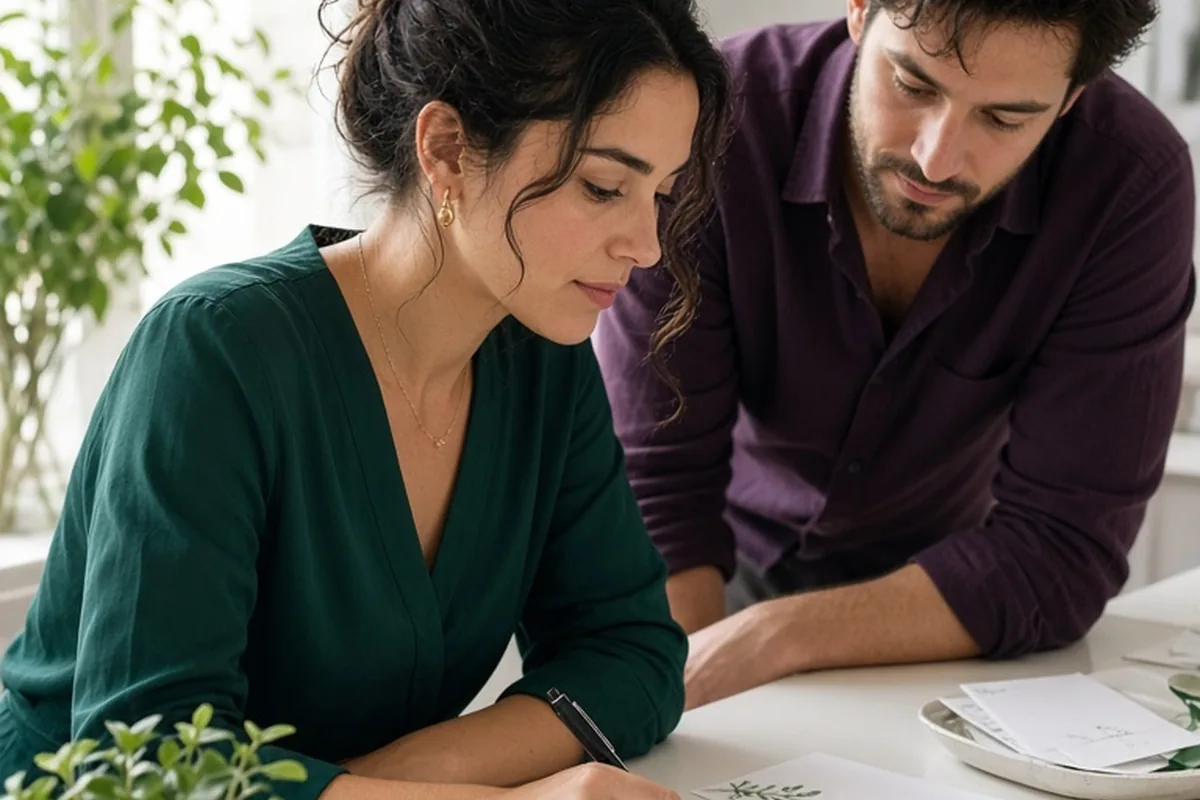
You can save money on wedding thank you note wording by using concise, three-to-four-sentence message formulas that fit smaller standard stationery like A2 flat cards or postcards. Keeping your message focused eliminates the need for expensive multi-page inserts, oversized non-machinable envelopes, and custom variable-data printing fees. Drafting and proofreading your text digitally before putting pen to paper also prevents ruined high-cost cards.
Thank you notes are an essential wedding tradition, but stationery costs, custom printing fees, and postage upgrades can quickly inflate your overall stationery budget.
Structuring Short Thank You Note Formulas to Cut Card Size and Postage Costs
The physical length of your message directly dictates the size, weight, and format of the paper you must purchase. Couples often assume that a heartfelt note requires a large, folding greeting card with ample blank space. However, expansive cards often encourage rambling drafts and require heavier cardstock to maintain structural integrity, which can push your finished mailing over the standard weight limit for domestic letter postage. Non-standard shapes, such as square greeting cards, also incur higher postal rates because automated sorting machines cannot process them.
By adopting a disciplined three-to-four-sentence wording structure, you can comfortably fit your entire message onto a standard A2 flat card (4.25 by 5.5 inches) or an A1 correspondence card (3.5 by 5 inches). Standard rectangular flat cards use less raw paper, come in more affordable bulk packs, and consistently meet standard mailing rates. A concise structure consists of an opening expression of gratitude naming the exact gift, one sentence detailing how you plan to use or enjoy it, a warm sentence recalling a shared moment from the wedding day, and a brief forward-looking closing.
Wedding Thank You Note Wording Templates That Eliminate Custom Printing Fees
Stationery vendors frequently charge premium rates for custom typography, personalized foil stamping, or variable-data digital printing where individual guest names and customized messages are printed directly onto each card. While automated printing saves handwriting time, it significantly increases per-unit production expenses, setup fees, and proofing charges. If you need to make a last-minute correction after proofs are finalized, reprint costs can double your initial investment.
A cost-effective alternative is to order standard stationery with a single, universal letterpress or flat-printed greeting at the top—such as 'With Warm Thanks' or your shared names—and handwrite the specific message below. Utilizing a standardized wording template allows you to draft genuine, personalized notes quickly without paying commercial printers for variable text runs. This hybrid approach pairs the polished look of professional stationery with the cost efficiency of handwritten notes.
Drafting Photo Postcard Messages to Replace Costly Multi-Piece Stationery
Traditional thank you suites often involve multiple paper components, including outer envelopes, custom-printed envelope liners, folding cards, and separate photo inserts. Purchasing each component separately drives up material costs and increases the assembly time required to stuff and seal every package. Many couples also spend extra to print standalone 4-by-6 wedding portraits to slip inside each envelope, doubling their print expenditures.
Choosing a two-sided photo postcard combines your wedding portrait and your thank you message into a single printed piece. The front features a professional wedding photograph, while the back contains a divided layout for your handwritten note and the recipient's mailing address. Because postcards do not require separate envelopes, liners, or inserts, you eliminate extra paper layers entirely. Postcards also qualify for lower postal rates in many jurisdictions compared to standard letters, producing immediate savings on both production and distribution.
Modular Sentence Builders That Prevent Costly Card Spoilage and Rewrites
One of the hidden expenses of wedding correspondence is paper spoilage caused by handwriting errors, ink smudges, and awkward phrasing that runs out of margins. Premium paper stocks can cost several dollars per card; discarding three or four spoiled cards out of every box quickly depletes your stationery supply and forces expensive rush reorders. Writing without a plan often leads to crossed-out words, misaligned text, and uneven line spacing.
To eliminate waste, establish a modular sentence framework and draft your text in a spreadsheet before writing on physical paper. A reliable four-part formula looks like this: Start with an appreciative opening ('Thank you so much for the beautiful stoneware serving bowl'), add a practical application ('We look forward to using it whenever we host family dinners'), include a personal memory or acknowledgment ('Having you there to celebrate with us on our wedding day made the evening unforgettable'), and finish with an affectionate wrap-up ('We hope to see you again soon'). Having the exact text ready beside you prevents mistakes and ensures clean, uniform handwriting across every card.
Combining Household and Group Messages Without Compromising Warmth
Sending separate thank you notes to every individual attendee in a single family or shared household multiplies paper, envelope, and stamp usage. For example, sending distinct cards to parents, adult children living at home, and partners who contributed to a single registry item can triple your per-household spending without adding extra sentimental value. Group gifts from co-workers or extended family circles present a similar budgeting challenge if handled with individual high-end cards.
Address your thank you note to the entire household or group using collective phrasing while explicitly acknowledging each person's unique presence. For family units, opening with 'Dear Miller Family' and referencing how meaningful it was to have everyone on the dance floor conveys comprehensive appreciation in a single card. For office groups who pooled money for a major gift, you can send one polished card to the office breakroom alongside a personalized digital email expressing individual thanks, reducing your need for dozens of individual physical stationery sets.
Strategic Wording for Cash Funds, Group Gifts, and Digital Registries
Monetary contributions, honeymoon funds, and digital registry gifts can feel awkward to address, leading couples to buy separate explanatory enclosure cards or custom registry update inserts. Adding specialized inserts to explain how cash will be spent adds printing lines, packaging bulk, and unnecessary paper weight. Extra cards also increase the risk of your mailing exceeding base postal thickness limits.
Incorporate your financial intentions directly into the main message body to keep the note self-contained. When thanking a guest for a cash gift or honeymoon fund contribution, mention the specific experience or goal the funds will support without quoting the exact dollar amount. For instance: 'Thank you so much for your generous wedding gift. We are putting it toward our honeymoon hiking excursions in Colorado, and we cannot wait to share photos with you.' This approach delivers genuine transparency and warmth in two simple sentences, avoiding the cost of additional card enclosures.
Proofreading Workflows and Layout Checks Before Ordering Bulk Paper Goods
Rushing to purchase stationery before establishing your final guest list and wording format is a common reason for budget overruns. Couples frequently order customized cards with rigid pre-printed layouts, only to discover that their preferred message length does not fit inside the printed margins. Similarly, failing to verify spelling for married names, honorifics, or venues prior to ordering custom stationery plates can leave you with unusable paper goods.
Establish a clear pre-order checklist. First, write three complete sample notes representing your longest, average, and shortest expected messages. Measure the physical space these drafts require on a sheet of scrap paper cut to your intended card dimensions. Second, verify whether your chosen ink pen bleeds through the paper stock weight you plan to buy. Finally, confirm your total card count by household rather than individual guest count, adding a modest buffer of five to ten blank cards to cover genuine handwriting slips without overpaying for massive surplus inventory.
Frequently asked questions
How long should a budget-friendly wedding thank you note be?
A budget-friendly wedding thank you note should be three to five sentences long. This concise length allows the message to fit comfortably on standard, economical card sizes like A2 flat cards or postcards without requiring multi-page inserts or extra postage.
Are postcard thank you notes considered polite for weddings?
Yes, postcard thank you notes are widely accepted and appreciated, especially when they feature a high-quality wedding photo on the front and a handwritten message on the back. They provide a modern, personal keepsake while eliminating the cost of separate envelopes, liners, and photo prints.
How can I avoid ruining expensive cards when writing thank you notes?
Draft your messages in a digital spreadsheet or on scrap paper before writing on your physical stationery. Keeping a clear sentence template beside you helps prevent spelling errors, ink smudging, and line-spacing issues that lead to wasted cards.
Do I need to send individual thank you notes to every member of a family?
No, you can send a single thank you note addressed to the entire household for gifts given collectively. Acknowledge everyone by name in the greeting or message body to ensure each family member feels recognized while conserving stationery and postage.
Your next step
Draft a three-sentence modular template in your wedding spreadsheet today and test it on a standard 4.25-by-5.5-inch sheet before ordering your stationery to ensure perfect fit and minimum postage costs.