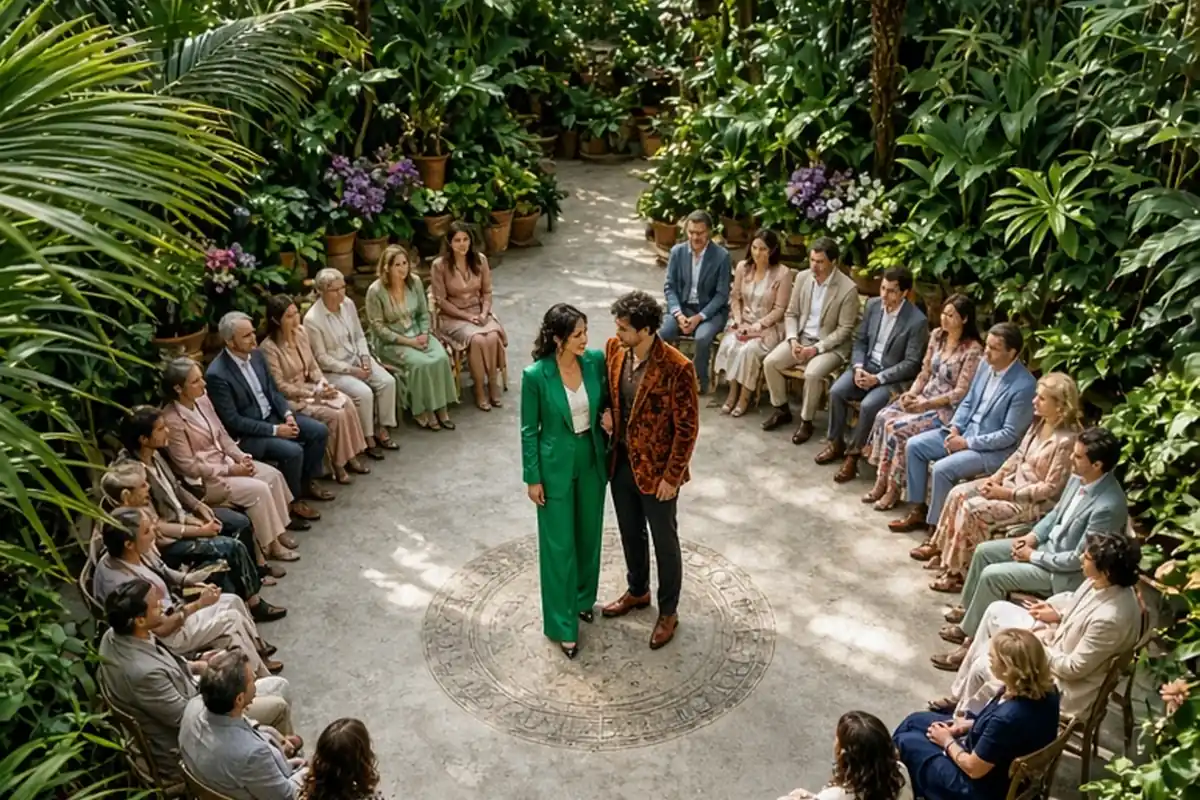
To create a non-traditional wedding that feels authentically yours, audit every standard convention against your real habits and shared values. Replace scripted rituals with personalized elements, such as wearing bold colors or separates instead of traditional formalwear, gathering guests in a circular ceremony layout, hiring food trucks or family-style dining rather than a plated banquet, and skipping gendered party roles. Anchor every decision in guest comfort and clear logistical communication so the day feels welcoming and coherent.
Couples often inherit a long list of wedding expectations before they even begin discussing what kind of gathering they actually want. Shifting away from standard scripts does not require shock value; it simply means choosing elements that reflect your real life rather than an assumed industry template.
Non-Traditional Wedding Attire Beyond White Gowns and Black Tuxedos
Traditional wedding wardrobes can feel restrictive if floor-length white lace or stiff black wool does not align with your daily aesthetic or comfort. Modern couples increasingly choose tailored suits in emerald, rust, or patterned velvet, patterned midi dresses, matching linen sets, or vibrant jumpsuits. Choosing non-traditional attire also opens the door to heirloom cultural garments, high-end vintage garments sourced over months of searching, or high-fashion separates that can be re-worn for future anniversaries and special events.
When deviating from standard bridal palettes, texture and silhouette carry the visual weight of the occasion. A jewel-toned silk suit or an embroidered botanical gown reads just as intentional and ceremonial as ivory satin when tailored to fit properly. Footwear also deserves a realistic look: swapping stiff patent leather shoes or four-inch heels for leather boots, bespoke sneakers, or structured flats allows you to stay grounded and mobile throughout a long celebration.
Your guests will take their cues from how you frame the dress code on your invitations. If you wear casual or unconventional clothing, describe the guest attire clearly so attendees do not feel underdressed or overdressed. Phrases like colorful cocktail, garden party festive, or smart casual with comfortable shoes give clear guidance without forcing guests to guess the visual tone of your event.
- Tailored velvet or linen suits in rich earth tones, deep blues, or botanical prints.
- Two-piece bridal separates, structured jumpsuits, or architectural ready-to-wear dresses.
- Vintage or repurposed designer pieces that hold personal history and can be worn again.
- Intentional, high-comfort footwear including clean leather sneakers, loafers, or ankle boots.
Redesigning the Ceremony Layout and Physical Flow
The standard theater-style seating arrangement, with rows of chairs split by a center aisle facing an elevated platform, creates a formal audience-performer dynamic. Arranging chairs in a full circle, a crescent, or a spiral places you at the center of your community rather than on display in front of them. Guests sit closer to the couple, see each other's faces, and hear the vows without relying solely on high-powered amplification.
How you enter the space can also dismantle outdated symbolism. Walking in together hand-in-hand emphasizes partnership and equality, eliminating the historical transaction implied by giving someone away. Other couples choose to enter from opposite sides of the room simultaneously, or skip a formal processional entirely by mingling with guests during a welcome drink and simply gathering everyone into the ceremony space when it is time to begin.
Non-traditional layouts require careful practical planning to ensure full accessibility. If you design a spiral or circular seating plan, maintain wide, level pathways for guests with mobility devices, strollers, or balance concerns. Ensure sightlines remain open for guests seated behind the front row, and verify that the officiant and couple rotate slightly during the remarks so no single section stares at your backs the entire time.
- Circular or semi-circular seating that surrounds the couple with their closest family and friends.
- A joint entrance where both partners walk in side by side as equal participants.
- A pre-ceremony gathering where the couple welcomes guests directly with refreshments before vows begin.
Replacing Scripted Wedding Traditions with Personal Rituals
Many ubiquitous wedding moments, including the bouquet toss, garter removal, receiving lines, and formal cake-cutting ceremonies, are leftovers from earlier eras that many couples find uncomfortable or irrelevant. You do not need an equivalent substitute for every dropped custom. Removing events that cause dread creates breathing room in your schedule, allowing you to spend actual time conversing with guests rather than staging mandatory photo opportunities.
When introducing original rituals, anchor them in actions that feel natural to your relationship. Some couples pass their wedding rings among seated guests for a quiet community blessing or silent wish before exchanging them. Others read private vows quietly during a first look, then share a brief community-focused statement of commitment during the public ceremony. Group sing-alongs, collaborative art canvases, sharing a specialty pour-over coffee, or taking a communal shot of a meaningful regional spirit can formalize your union just as effectively as a traditional unity candle.
Evaluate each activity by asking whether it adds genuine meaning or merely fills time on a coordinator's timeline. If the thought of a choreographed first dance gives you stage fright, replace it with an unannounced favorite song played later in the evening, an acoustic performance by a musical friend, or no formal spotlight dance at all. Your guests will mirror your comfort level; when you feel at ease, the room relaxes with you.
Choosing Unconventional Venues That Fit Your Actual Lifestyle
Dedicated wedding halls and hotel ballrooms provide convenience, but their standardized decor packages can feel disconnected from your everyday life. Unconventional venues, such as contemporary art galleries, public greenhouse conservatories, historic independent movie theaters, summer camps, breweries, or favorite neighborhood restaurants, provide built-in character, architectural interest, and memorable atmosphere without needing expensive draped fabric or faux greenery.
A private rental or non-traditional civic space changes the entire energy of the gathering. A weekend buyout of a small lodge or campground turns the wedding into a multi-day communal retreat with campfires and communal breakfasts. A dinner held in an intimate back room of the Italian restaurant where you had your third date centers the evening on high-quality hospitality and conversation rather than logistical grandeur.
Unconventional spaces come with operational trade-offs that require upfront verification. Unlike dedicated venues, spaces like raw lofts, public parks, or private estates rarely have commercial catering kitchens, ample trash disposal, dedicated event power circuits, or sufficient restroom counts. Before signing a lease, confirm whether you must bring in portable restrooms, obtain temporary sound and alcohol permits, or hire external power generators. A venue that seems inexpensive upfront can quickly match standard venue pricing once infrastructure rentals are factored in.
- Art galleries and sculpture parks offering high ceilings and curated visual interest.
- Botanical conservatories and greenhouse nurseries with living greenery and minimal decor needs.
- Neighborhood bistros and microbreweries with built-in culinary infrastructure and local character.
- Campgrounds and historic lodges suited for relaxed, weekend-long gatherings.
Modernizing Food and Beverage with Experiential Dining
The standard three-course plated dinner, featuring chicken, beef, or a vegetarian pasta alternative, often dominates wedding budgets while delivering unremarkable institutional meals. Reimagining reception dining allows you to showcase the foods you genuinely love to eat on weekends. Family-style platters of wood-fired flatbreads, vibrant Mediterranean mezze, slow-cooked regional barbecue, or seasonal grain bowls encourage guests to share and interact across table settings.
Food trucks, curated grazing tables, and interactive culinary stations offer another departure from ballroom formalities. A couple passionate about street food might bring in two local trucks serving Korean tacos and artisanal wood-fired pizzas, followed by an artisanal soft-serve cart or a local donut bakery drop-off instead of a towering fondant cake. Brunch weddings featuring espresso carts, breakfast sandwiches, and pastry spreads offer a vibrant, daytime alternative that also cuts bar costs naturally.
Operational planning is critical whenever you alter meal service. Food trucks require adequate parking, level ground, and dedicated high-amperage electrical hookups to avoid loud generators near guest tables. To prevent frustrating bottlenecks where hungry guests wait in forty-minute queues, ensure there is at least one serving window per fifty to seventy-five guests, or arrange pre-plated passed appetizers so no one waits on an empty stomach. Always gather dietary restrictions beforehand to ensure guests with allergies or dietary requirements receive thoughtful, substantial meals.
Rethinking Wedding Party Titles and Gendered Roles
Traditional wedding parties enforce rigid gender segregation and prescribe heavy financial burdens on close friends through mandatory dresses, matching accessories, and elaborate pre-wedding trips. Modern couples increasingly assemble mixed-gender groups that reflect their genuine friendships. Having bridesmen, groomsmaids, best people, or attendants of honor honors the actual people who have supported you, regardless of outdated gender expectations.
Alternatively, many couples choose to have no formal wedding party at all. Eliminating the bridal party removes substantial stress, eliminates awkward friendship hierarchies, saves your closest friends thousands of dollars, and simplifies morning-of logistics. Your inner circle can still get ready with you, wear clothing they already own, and sit in the front row as honored guests without standing on display during the ceremony.
If you want to involve loved ones without formal attendants, consider assigning micro-roles that fit their natural talents. A friend who is an engaging speaker can become your legally ordained officiant. An organized friend can manage the ceremony sound cues or assist as a day-of point of contact for external vendors. Another close friend can act as the official legal witness signing the marriage license, read an excerpt from a meaningful book or poem, or curate the evening's dinner playlist.
- Mixed-gender parties that align with real friendships rather than historical convention.
- No formal wedding party, allowing friends to attend as relaxed, celebrated guests.
- Micro-roles such as legal witness, readings curator, processional musician, or guest greeter.
Managing Family Expectations and Communicating Unconventional Choices
Departing from traditional wedding templates can provoke confusion or emotional pushback from parents and relatives who associate specific rituals with legitimacy, family honor, or religious piety. When explaining your vision, avoid defensive declarations or debates about modern trends. Instead, explain choices through the lens of intentionality and personal authenticity, letting them know that your goal is to host a warm, genuine celebration where you can truly connect with everyone present.
If family members are funding parts of the wedding, establish clear boundaries early regarding which decisions are collaborative and which belong entirely to the couple. If you choose not to hold a religious ceremony, you might invite a relative to offer a meaningful blessing over the meal or give a toast at dinner. Giving traditional family members a visible, dignified moment within your framework can ease anxiety without compromising the secular or non-traditional nature of the event.
Guest confusion usually stems from a lack of practical information rather than philosophical disagreement. Use your wedding website and invitations to outline realistic logistical details. Tell guests if the ceremony will take place outdoors on grass, whether seating will be informal, what type of meal they should expect, and how the timeline will flow. When guests know what to wear, when they will eat, and where to park, they approach non-traditional celebrations with enthusiasm rather than hesitation.
Frequently asked questions
Is a non-traditional wedding cheaper than a traditional wedding?
Not necessarily. While skipping custom floral arches, large wedding parties, and formal ballroom rentals can lower expenses, booking raw spaces like private farms or art lofts often introduces significant infrastructure costs for lighting, rentals, and permits. Total expenses depend on your guest count, catering format, and production requirements rather than traditional versus non-traditional labels.
How do we make sure our non-traditional wedding still feels important and ceremonial?
Ceremonial weight comes from sincere intention, shared attention, and emotional presence rather than Victorian conventions. You can ground your ceremony by writing thoughtful, specific vows, curating meaningful music, creating intentional quiet moments, and speaking directly to your gathered community about what their presence means to your partnership.
What if our parents strongly object to skipping traditional or religious elements?
Acknowledge their perspective with calm empathy while remaining clear about your shared vision. Explain that your choices represent who you are as an adult couple, and offer alternative ways for them to participate, such as delivering a meaningful toast, curating a family photo display, or selecting dinner wines.
How do we phrase an unusual wedding dress code for guests?
Use concrete descriptive terms paired with functional guidance on your invitations and website. For example, write: 'Cocktail attire in bright colors or floral patterns; please wear flat shoes or wedges as the ceremony takes place on uneven lawn.' Clear guidance prevents guest anxiety while setting expectations.
Your next step
Sit down with your partner and independently list the three wedding elements that matter most to you, then cross off every traditional item neither of you genuinely cares about before hiring vendors or signing contracts.