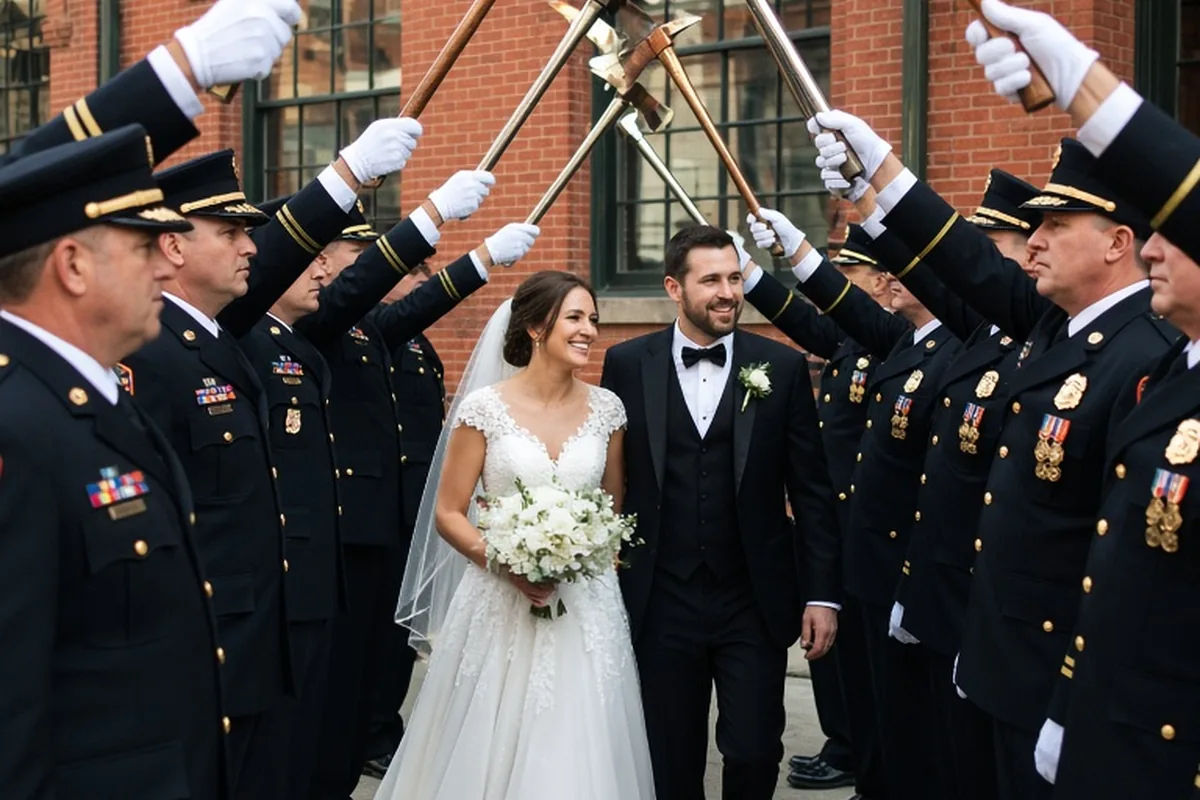
Firefighter-themed wedding ideas work best when balancing authentic department traditions—such as dress uniforms, an axe arch ceremony, or vintage engine transport—with refined celebration aesthetics. Focus on rich color palettes of navy, charcoal, and warm brass rather than novelty party decor, coordinate emergency vehicle photography permits months in advance, and establish practical contingency plans for active-duty bridal party shift rotations.
A wedding celebrating a career in the fire service honors dedication, community, and mutual resilience without needing to feel like a themed birthday party. Successfully weaving vocational pride into a formal celebration requires intentional curation, proactive coordination with local station leadership, and thoughtful consideration of both partners' personal styles.
Curating Firefighter-Themed Wedding Decor Without Clichés
The most common misstep when planning a service-themed celebration is relying on novelty party store decorations that undermine the elegance of a wedding. Plastic hydrants, caution tape accents, and neon red accessories often detract from the gravitas of a couple's vows. Instead, adopt a grounded, editorial color story that draws natural inspiration from traditional fire service materials. Deep midnight navy, charcoal slate, crisp ivory, and rich brass or copper reflect the look of classic dress uniforms and polished apparatus hardware without overwhelming the space.
Texture plays a central role in elevating the atmosphere while paying homage to the trade. Consider incorporating decommissioned fire hose material repurposed into subtle table runners, bound around the stems of floral bouquets, or converted into custom leather-stitched drink sleeves. Warm amber lighting, Edison bulbs, and clustered pillar candles in glass hurricanes can evoke the comforting warmth of fire safely and dramatically. Floral selections with organic movement—such as deep crimson dahlias, burnt orange ranunculus, dark greenery, and bronze hypericum berries—bring organic vibrancy to dining tables without requiring literal interpretations of flames.
Table markers provide another subtle avenue for meaningful personal touches. Rather than standard table numbers, name tables after significant engine companies, historic station houses where the couple served, or pivotal dates in their career milestones. Complement these markers with small, framed narrative cards explaining the significance of each station to help civilian guests connect with the family's shared history and pride.
Firefighter Wedding Attire: Dress Uniforms, Badges, and Details
Choosing between a formal civilian tuxedo and a service dress uniform is one of the earliest decisions facing a first-responder bridal party. A department Class A uniform carries deep ceremonial weight and offers an exceptionally sharp, dignified visual anchor for wedding portraits. However, dress uniforms are heavy, warm, and structured by strict administrative protocols regarding medals, ribbons, white gloves, and dress caps. If one partner or multiple attendants plan to wear Class A attire, check local departmental regulations regarding weddings, ensuring that every piece of insignia is properly mounted, polished, and regulation-compliant.
If a full dress uniform feels too warm for an outdoor summer ceremony or too formal for a relaxed reception, subtle sartorial nods work exceptionally well with traditional formalwear. Many grooms and attendants opt for custom leather suspenders stamped with their department badge numbers, subtle Maltese cross cufflinks, or collar brass pins affixed inside jacket lapels. Boutonnieres can incorporate clean elements like wrapped leather cord, miniature brass nozzles, or ribbon in department brigade colors.
Comfort during the reception deserves upfront planning. Dancing for hours in a structured wool Class A tunic and high-gloss uniform shoes can quickly become exhausting. Many firefighters elect to wear their dress uniform for the formal processional, vow exchange, and initial cocktail-hour portraits, then transition into a tailored lightweight tuxedo jacket or breathable civilian suit for dinner and dancing. Providing a secure, designated room at the venue to hang and store ceremonial dress items protects valuable department pins and badges throughout the evening.
Coordinating Apparatus Transportation and Station Photography
Including an authentic fire engine in your wedding photography or using it as a getaway vehicle creates striking imagery, but doing so demands strict logistical discipline. Couples often assume their home station can simply park a frontline engine outside the reception hall for portraits. In reality, active-duty apparatus must remain in response-ready condition at all times. If the station crew receives a call for a structure fire or medical emergency, that truck will depart instantly with sirens on, potentially cutting photo sessions short or leaving tire marks on delicate private venue lawns.
To avoid disruption, the most reliable approach is sourcing a privately owned antique or decommissioned fire engine through local historical foundations, parade clubs, or retired department networks. Vintage pumpers from the 1940s through the 1960s possess timeless craftsmanship, gleaming chrome, and rich paint that photograph beautifully against wedding attire. Because these vehicles are private and fully decommissioned, there is no risk of an unexpected emergency dispatch interrupting your schedule.
If you do arrange portraits at an active firehouse, establish explicit expectations with station officers weeks in advance. File any required town or municipal liability releases, confirm off-limits operational zones, and designate an off-duty crew member to escort your photographer safely around bays and bay doors. Always have a secondary indoor or outdoor portrait location prepared in case the company is out on a working incident when your photo bus arrives.
Ceremony Customs: The Axe Arch and Ringing the Station Bell
The crossed axe arch—sometimes performed with chrome pick-head axes, ceremonial Halligan bars, or polished pike poles—is one of the most recognizable and stirring traditions in a fire service wedding. As the newly married couple recedes down the aisle or steps out of the ceremony building, uniformed personnel form two parallel lines and cross their tools overhead, creating an arch of protection and solidarity. Executing this moment safely requires rehearsal, sufficient ceiling height, and adequate physical clearance from guests.
Before scheduling an axe arch, review venue contracts regarding tools or bladed ceremonial items. Many historical properties, churches, and private venues require written verification that axes are ceremonial dull-edge props rather than sharp operational entry tools. Position the arch outdoors on a wide terrace, church steps, or an expansive lawn where participants have stable footing and clear overhead room. If the traditional playful ceremonial tap across the rear is part of the tradition, brief both participants and attendants beforehand to ensure boundaries and timing remain joyful and comfortable for both newlyweds.
Another deeply symbolic ceremony inclusion is the ringing of a polished brass station bell. Historically used to dispatch alarms, summon crews, and mark the end of a shift, a decorative bell can be gently rung three times following the pronouncement of marriage to signal the beginning of the couple's new life together. Alternatively, a quiet, reverent toll can be incorporated during a moment of silence to acknowledge fallen department brothers and sisters or family members who passed away before the wedding day.
Reception Menus, Signature Drinks, and Meaningful Guest Favors
Food in firehouse culture represents community, camaraderie, and sharing hearty meals after challenging shifts. You can honor this hospitality through upscale interpretations of station comfort food. Instead of basic buffet trays, consider an artisanal carving station, elevated braised short ribs, gourmet wood-fired pizza ovens during cocktail hour, or an interactive slider bar featuring local craft sauces. Late-night snacks provide an ideal moment for authentic station favorites, such as gourmet breakfast burritos, warm handheld hand pies, or loaded grilled cheese sandwiches distributed as dancing winds down.
The bar offers creative possibilities for service-inspired drink menus that remain sophisticated. Design signature cocktails using smoky elements, such as a mezcal paloma garnished with charred grapefruit, a smoked maple bourbon old fashioned, or a spicy blood orange margarita. Use clean, professional drink signage rather than cartoonish puns, naming selections after real career milestones, favorite engine numbers, or the neighborhood where the couple first met.
When choosing favors, prioritize durable, practical items that guests will genuinely keep and use. Small glass bottles of locally blended hot sauce with custom labels, heavy solid-brass bottle openers shaped like traditional hydrant wrenches, or leather luggage tags stamped with the couple's monogram all make memorable tokens. Avoid plastic novelty trinkets that end up discarded, focusing instead on items that convey quality craftsmanship and appreciation for your attendees' presence.
Managing Shift Rotations, On-Call Personnel, and Station Etiquette
The practical realities of fire service work schedules present distinct planning hurdles that standard wedding timelines do not account for. Firefighters frequently operate on 24/48, 48/96, or rotating Kelly shift cycles, which means groomsmen, bridesmaids, or the couple themselves may face mandatory overtime, shift trades, or sudden vacancy coverage leading up to the celebration. Secure shift trades and submit vacation leave requests as far in advance as departmental policy permits, and establish backup arrangements with cooperative shift-mates early in the planning year.
Extend the same understanding to guests who are active first responders. Several attendees may attend the ceremony or reception while carrying department pagers or working on voluntary call-back status. Create a gracious environment by situating active-duty guests near perimeter tables or outer exits so they can step out discreetly to handle radio calls or emergency notifications without interrupting pivotal moments like the first dance or toasts. Providing a quiet foyer space for quick communications ensures they can fulfill professional obligations while still sharing in your celebration.
Inviting station officers, crew members, and their partners also warrants careful social consideration. In close-knit departments, a whole engine crew often feels like extended family. If venue budgets and capacity caps prevent you from inviting every shift member to the full plated dinner, communicate honestly with your company officer. It is completely acceptable and common within fire service culture to invite off-duty crew members to join for drinks and dancing during the later reception hours, or to host an informal post-wedding backyard barbecue at the station house to celebrate together.
Illustrative Scenarios
Resolving Conflicting Aesthetic Visions for Reception Styling
Marcus, a career lieutenant, wanted his wedding to visibly reflect his station pride, proposing firefighter helmets on every dining table and a novelty red-and-yellow cake. His partner, Elena, preferred an understated, black-tie botanical reception and worried the venue would look like a children's party. Rather than forcing one partner to concede, they collaborated with their florist to blend both styles. They established an elegant palette of midnight navy linens, copper tableware, and dark floral arrangements illuminated by warm hurricane lanterns. They channeled Marcus's dedication through a custom leather guest book bound in turnout jacket canvas, a private first look outside a historic 1920s brick firehouse, and an axe arch exit. Both partners felt their personal tastes were celebrated with dignity.
Key point: Thematic wedding details are most impactful when interpreted through refined textures and authentic ceremonies rather than bright novelty decor.
Navigating Frontline Apparatus Restrictions for Ceremony Portraits
Jordan and Chloe hoped to feature Jordan's active-duty ladder truck in their formal bridal party photos at a metropolitan venue. Two weeks before the event, the municipal fire chief reminded them that city policy prohibited parking frontline emergency vehicles on private venue property for personal photography due to district coverage requirements. Instead of abandoning the vision, the couple contacted a local fire museum and arranged a two-hour private portrait session with a restored 1956 open-cab Mack engine. The vintage truck provided timeless character, remained parked safely without time limits, and carried no risk of an emergency call interrupting their photo schedule.
Key point: Securing private antique apparatus eliminates operational conflicts and guarantees dedicated time for wedding portraits.
Frequently asked questions
Is it appropriate to wear a Class A dress uniform to the reception?
Wearing a Class A uniform throughout the entire reception is acceptable, but many members choose to change after formal dances. The heavy wool fabric and structured tailoring can become uncomfortably warm during hours of dancing. Transitioning into a dark suit or tuxedo preserves the uniform's appearance while allowing you to enjoy the party comfortably.
Can our local fire department legally provide an active truck for a send-off?
Most municipal fire departments have strict regulations against using frontline emergency apparatus for private wedding transportation. Frontline vehicles must remain available for dispatched emergencies and cannot carry non-department passengers due to city liability restrictions. Sourcing an antique or decommissioned truck from a private collector or non-profit museum is the legal and dependable solution.
How can we honor fallen or deceased firefighters during our wedding ceremony?
Meaningful options include reserving a designated chair in the front row with a dress cap or service rose, lighting a dedicated memorial candle beside the altar, or incorporating a single, quiet toll of a brass station bell during the invocation. Printing a brief memorial tribute in the ceremony program offers a respectful tribute without shifting the celebratory tone of the day.
What permissions are required to perform a traditional crossed axe arch?
Always request written approval from your ceremony venue to ensure bladed tools or ceremonial instruments are permitted on the premises. Axes should be ceremonial versions with blunted edges, and the participants should conduct a brief walk-through before guest arrival to confirm overhead clearance and spacing.
Your next step
Review your department's standard operating procedures regarding ceremonial uniform wear and contact a local vintage apparatus owner or museum this week to verify vehicle availability.