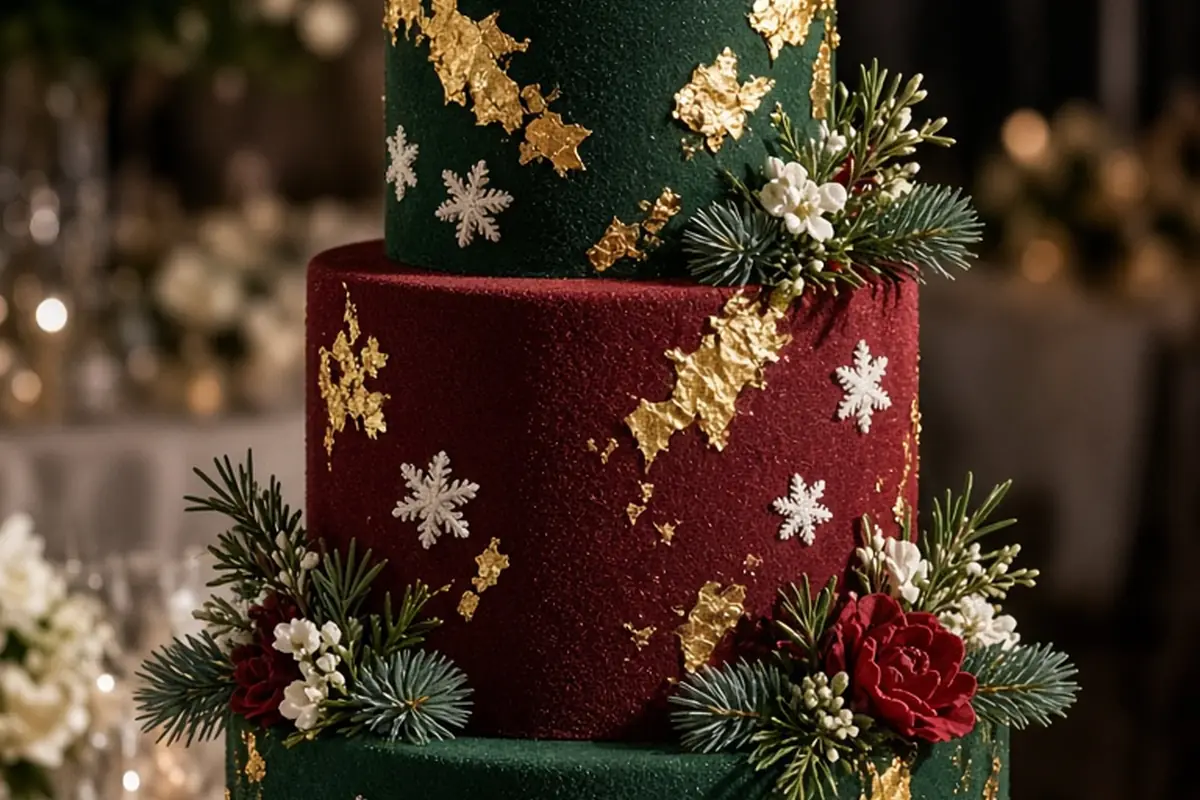
Christmas-themed wedding cakes balance holiday warmth with wedding elegance by pairing seasonal aesthetics—such as velvet-textured fondant, fresh evergreen sprigs, candied cranberries, metallic leaf accents, or rustic birch textures—with rich seasonal flavors like spiced gingerbread, dark chocolate orange, and vanilla chai. Couples can select styles ranging from minimalist white-on-white designs with frosted pinecones to dramatic crimson-and-emerald tier arrangements, ensuring the cake harmonizes with the overall winter reception setting without resembling an ordinary holiday novelty.
Designing a centerpiece dessert for a December reception offers a rare opportunity to weave comforting winter textures, botanical accents, and festive flavors into an elevated celebratory design. Rather than relying on overt holiday novelties, modern couples look toward intentional artistry that celebrates the warmth, romance, and sensory richness of the season.
Selecting Your Holiday Aesthetic: Rustic Woods, Moody Elegance, or Classic White
The first step in planning a winter centerpiece is determining which aesthetic direction best reflects your venue and overall reception styling. A rustic woodland theme fits naturally in lodge spaces, mountain resorts, or barn venues, featuring textured buttercream resembling birch bark, wood grain tiers, rough-sawn tree slab cake stands, and accents of fresh pine needles, miniature pinecones, and cinnamon sticks. This direction highlights unpolished textures, earthy tones, and cozy organic elements that evoke a cabin gathering.
For ballroom receptions or black-tie evening events, a moody Victorian or festive jewel-tone palette brings dramatic luxury to the dessert table. Rich burgundy, forest green, deep plum, and navy blue can be introduced through hand-painted fondant, cascading sugar flowers, edible velvet spraying, or rich velvet ribbon around the base of each tier. These deep tones establish immediate contrast against traditional wedding whites, creating an opulent focal point under dim reception lighting.
Alternatively, a classic winter wonderland aesthetic relies on monochromatic whites, creams, silvers, and pale icy blues to evoke fresh snow. Bakers can introduce visual depth without relying on contrasting colors by combining different surface finishes, such as a smooth satin fondant tier stacked between tiers decorated with delicate bas-relief lace, white sugar pearls, piped royal icing snowflakes, or translucent pulled-sugar icicles. This approach feels timeless, bright, and distinctly bridal while honoring the chill of the season.
Using Winter Greenery, Pinecones, and Berries Safely on Fresh Cakes
Botanical elements are the quickest way to root a cake in the holiday season, but food safety must guide every fresh floral decision. Common Christmas greens like holly leaves, mistletoe berries, and certain varieties of ivy contain compounds that can cause illness if consumed or if their juices seep into edible icing. When consulting with your florist and baker, clarify that all fresh foliage placed directly onto or against the tiers must be non-toxic, thoroughly washed, and pesticide-free.
Safe greenery options include culinary rosemary, which closely resembles miniature evergreen branches, as well as blue spruce, Fraser fir, and olive branches. Even when using safe botanicals, professional decorators usually prepare each sprig by wrapping the cut stems in floral tape and placing them inside food-safe plastic flower picks before inserting them into the cake structure. This extra step prevents sap, moisture, and plant fibers from contaminating the interior sponge or melting the surrounding buttercream.
Fresh fruit and berries offer color and organic shape alongside evergreens. Fresh cranberries tossed in simple syrup and fine granulated sugar produce an authentic frosted ice effect, adding tart contrast and glistening texture. Blackberries, dark cherries, and pomegranate arils can be clustered around the base of tiers to introduce jewel tones. If you prefer inedible decor like natural pinecones, ask your baker whether thoroughly sanitized cones or custom gum paste replicas will better protect the cake surfaces.
Designing Semi-Naked and Buttercream Christmas-Themed Wedding Cakes
Semi-naked cakes remain a favored choice for relaxed winter weddings because their exposed sponge layers suggest warmth and artisanal craftsmanship. For a Christmas celebration, a dark gingerbread, spiced carrot, or rich chocolate sponge provides dramatic contrast against scraped white vanilla buttercream or cream cheese frosting. The subtle peek of dark cake beneath a light dusting of frosting naturally mimics tree bark dusted with light winter snow.
Textured buttercream techniques offer another tactile way to introduce the season without the formality of fondant. A decorator can use palette knives to create heavy stucco sweeps, horizontal ribbed grooves, or swirling drifts across the tiers, catching reception candlelight like sculpted snowbanks. Adding a dusting of powdered sugar over textured buttercream immediately before guests enter the room adds an ephemeral, fresh-fallen dusting effect that complements the aesthetic.
When opting for buttercream rather than fondant during the winter, consider indoor climate control. Heated reception halls can dry out exposed sponge or soften delicate butterfat faster than anticipated if the display sits directly in the path of hot-air vents or near working fireplaces. Discuss with your baker whether an Italian meringue buttercream, which holds sharp lines and withstands ambient warmth with stability, suits your venue conditions better than a traditional American buttercream.
Incorporating Metallic Finishes, Velvet Textures, and Frosted Glass Details
Holiday celebrations naturally invite metallic accents, but integrating them into a wedding cake requires balance so the design stays refined rather than gaudy. Edible gold leaf applied in torn, organic patches across a stark white tier adds an antique, handcrafted shimmer. Alternatively, a single tier painted entirely in metallic champagne, pale gold, or brushed antique silver provides a bold architectural anchor when stacked between matte white tiers.
Velvet texture is an increasingly popular contemporary technique achieved by spraying chilled fondant or set chocolate ganache with tempered cocoa butter using an airbrush tool. The resulting matte, micro-textured finish absorbs light similarly to heavy winter fabrics, giving the cake an unmistakably luxurious appearance. Deep crimson, hunter green, or ivory cocoa butter velvet transforms standard tiers into sophisticated sculptural pieces.
Translucent design elements also mimic natural winter ice formations with striking clarity. Sugar artists can use isomalt—a sugar substitute derived from beet sugar that resists yellowing when heated—to create clear spun sugar domes, delicate shards that evoke broken lake ice, or detailed translucent snowflakes. Arranged along the sides of tiers or as a delicate crown on top, isomalt structures reflect pin spots and string lights, reinforcing a crisp winter atmosphere.
Pairing Seasonal Flavors: Spices, Citrus, and Indulgent Winter Creams
While visual design captures attention upon arrival, the flavors of a Christmas wedding cake should evoke the comfort and indulgence of the holiday season. Winter menus allow couples to move away from light summer berries and citrus curds toward deeper, more complex profiles featuring warm baking spices, roasted nuts, dried fruits, and fortified spirits.
Gingerbread and molasses sponge paired with cream cheese frosting, salted caramel, or candied ginger buttercream remains a perennial holiday favorite that delivers bold seasonal spice. For couples seeking something slightly more understated, brown butter sponge infused with cardamon or cinnamon provides a nutty warmth that harmonizes beautifully with poached pear compote or vanilla bean Swiss meringue buttercream.
Rich chocolate pairings fit evening holiday receptions especially well. A dark chocolate stout cake or molten devil's food sponge can be layered with dark chocolate ganache, blood orange curd, or espresso buttercream for sophisticated depth. Alternatively, a spiced chai sponge layered with white chocolate mousse offers a lighter visual profile inside the slice while still delivering comforting seasonal warmth to your guests.
Staging Your Winter Display: Lighting, Stands, and Coordinated Dessert Tables
A Christmas-themed cake deserves a display environment that highlights its textural details and complements the reception room decor. Lighting plays a primary role during shorter winter days when natural daylight fades well before dinner service. Position your cake table away from harsh overhead downlights and instead ask your lighting vendor for a warm pin spot focused directly on the tiers, which brings out the shimmer of edible luster dust and the depth of textured frosting.
The base of the display helps ground the holiday concept within the venue space. Consider alternatives to standard silver round pedestals, such as a heavy marble riser, an aged copper plateau, or a solid walnut tree slice trimmed with fragrant cedar boughs and pillar candles of varied heights. If candles are used around the cake base, ensure open flames sit inside tall glass hurricane cylinders to keep heat from softening the icing and to eliminate the risk of catching fresh greenery on fire.
If you want to expand beyond a single traditional cake, a curated winter dessert table allows you to introduce multiple holiday traditions simultaneously. You can surround a smaller two-tier focal cake with complementary treats such as decorated gingerbread tiles, miniature cups of spiced Mexican hot chocolate, peppermint French macarons, frosted fruit tartlets, and powdered sugar snowball cookies. This setup provides variety for guests with different dietary preferences while multiplying the festive visual impact.
Handling Cold-Weather Logistics: Transport, Cutting Timing, and Baker Consultations
Winter weddings present distinct logistical hurdles that require proactive coordination between your baker, venue coordinator, and caterer. Road conditions during December can be unpredictable, with early snow, icy streets, and holiday traffic leading to delays. Ensure your baker delivers the cake well ahead of guest arrival, allowing adequate buffer time for careful driving and on-site assembly of multi-tiered designs.
Temperature management inside the venue also requires careful monitoring. If your reception takes place in a historic building, drafty estate, or glass conservatory, ambient temperatures can fluctuate dramatically between daytime setup and evening festivities. Fondant can sweat and develop an unwanted sheen if moved rapidly from cold delivery vans into high-humidity rooms, while pure buttercreams can crack if exposed to prolonged dry drafts from industrial heating blowers.
During your initial bakery consultation, discuss how your cake will be stored between delivery and the ceremonial cutting. Confirm whether the kitchen has walk-in refrigeration space capable of holding a tall assembled cake box, or whether the tiers are engineered to sit safely at stable room temperature throughout the evening. Establishing these technical details early ensures your winter design remains structurally sound, visually pristine, and delicious when served.
Frequently asked questions
How far in advance should we book a baker for a December wedding cake?
Bakers experience heightened demand during December due to corporate holiday gatherings, private parties, and weddings occurring simultaneously. It is advisable to reach out and secure your date six to nine months ahead of your wedding. This timeline ensures your preferred cake artist has availability and ample preparation time to source specialty seasonal ingredients or custom decorative supplies.
Can we use real evergreen branches on our wedding cake?
You can use fresh evergreen cuttings, but only if they are confirmed non-toxic varieties such as rosemary, Fraser fir, or blue spruce that are free from synthetic pesticides. Toxic winter botanicals like holly berries and mistletoe should never touch edible surfaces. Cut stems must always be individually wrapped or placed in floral picks so that raw sap and plant moisture do not seep into the cake.
What are the most popular winter wedding cake flavors?
Spiced cakes such as gingerbread, spiced chai, and cardamom carrot paired with cream cheese or vanilla bean buttercream are widely favored for winter celebrations. Other enduring combinations include dark chocolate paired with orange curd or espresso ganache, as well as brown butter sponge complemented by poached pear compote or salted caramel.
How do we prevent a Christmas-themed wedding cake from looking like an office holiday party cake?
Focus on subtle seasonal textures, sophisticated palettes, and refined botanical accents rather than overt novelty characters. Choosing subdued tones like forest green, ivory, and champagne gold alongside frosted natural greenery and handcrafted sugar details maintains an elevated, romantic bridal aesthetic while still celebrating the festive holiday season.
Your next step
Schedule a seasonal tasting with your wedding baker to sample winter spice profiles and bring photos of your venue floral arrangements to align the cake design with your reception greenery.