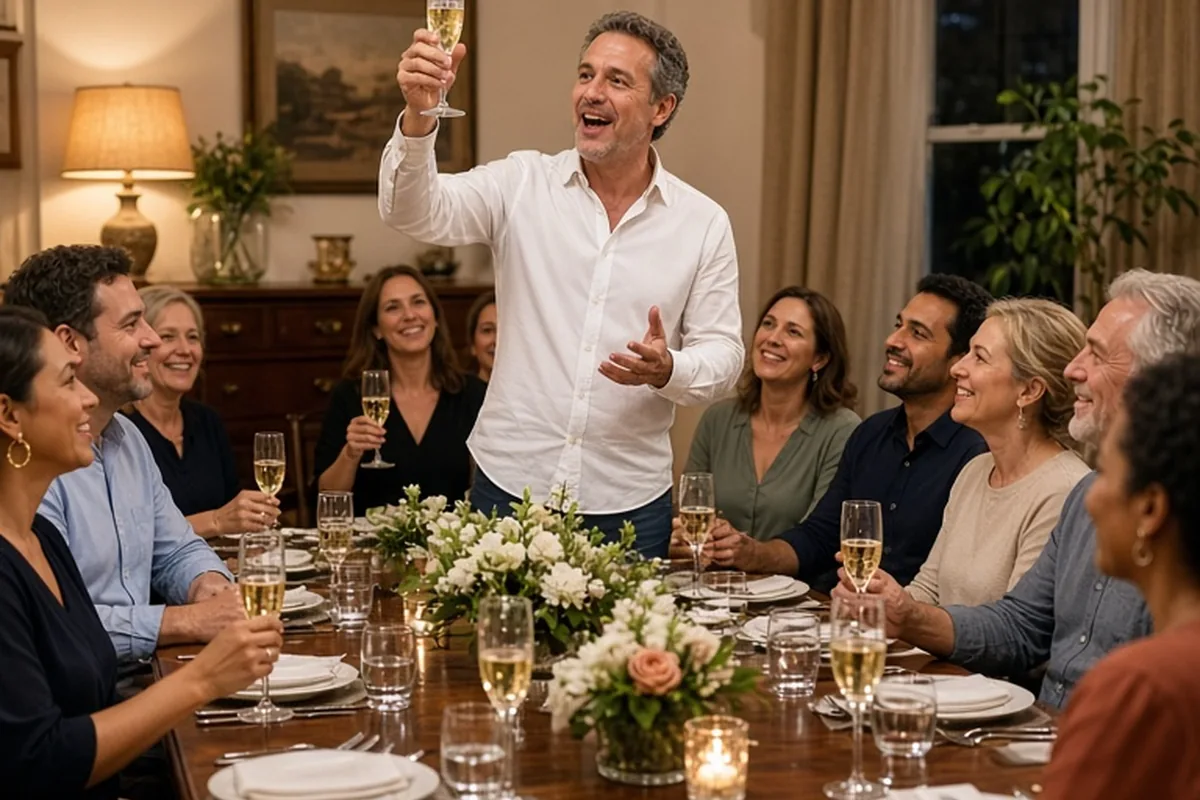
To master the art of rehearsal dinner toasts, keep your speech between two and four minutes, focus equally on both partners, and balance warm storytelling with light, inclusive humor. Open with how you know the couple, share one specific story highlighting their character or relationship, express genuine appreciation for their partnership, and close with a clear, celebratory toast that invites everyone to raise a glass.
The rehearsal dinner sets the emotional tone for the entire wedding weekend. Unlike the formal reception, this gathering offers a relaxed, intimate environment where personal memories, heartfelt gratitude, and laughter take center stage.
Understanding How Rehearsal Dinner Toasts Differ from Wedding Day Speeches
A rehearsal dinner toast serves a distinctly different purpose than a formal wedding reception speech. While reception speeches are presented to the entire guest list and often follow strict ceremonial traditions, the rehearsal dinner brings together immediate family, the wedding party, and closest friends. This intimacy creates space for personal anecdotes, conversational delivery, and gentle humor that might feel too detailed or private for a larger ballroom.
The tone at a rehearsal dinner should feel natural, warm, and inviting rather than rehearsed or stiff. Because the audience is smaller and already shares a close connection with the couple, you do not need grand theatrical flourishes or dramatic punchlines. Instead, aim for sincere reflections on the couple's journey, appreciation for the families hosting the gathering, and excitement for the ceremony ahead. Recognizing this shift in setting helps you relax your delivery and choose stories that resonate deeply with the room.
The Core Structure and Ideal Timing for a Memorable Toast
A well-crafted rehearsal dinner speech typically lasts between two and four minutes, which translates to roughly 300 to 500 spoken words. This timeframe is long enough to tell a meaningful story without losing the attention of hungry guests or delaying the evening meal. Pacing is essential: speaking at an unhurried rate of around 130 words per minute allows your audience to absorb each sentiment and gives room for natural pauses and laughs.
To build a speech that flows effortlessly from start to finish, organize your thoughts around a reliable four-part framework. Begin with a clear introduction that states your name and your relationship to the couple, especially for guests who may be meeting you for the first time. Transition into a central narrative—a single, vivid anecdote that illustrates who they are as individuals and how they complement one another. Follow this with a direct message of love and welcome to both partners, acknowledging their shared future. Finally, signal the end of your speech clearly by inviting everyone in the room to raise their glasses for a concise, uplifting blessing or well-wish.
Step-by-Step Toast Examples for Parents, Wedding Party Members, and Friends
If you are a parent or host welcoming guests, your speech should emphasize hospitality, gratitude, and pride. For example: 'Good evening, everyone. For those I haven't had the pleasure of meeting yet, I am David, Jordan's dad. Looking around this room tonight, I am overwhelmed by the love and support surrounding our two families. When Jordan first introduced us to Alex three years ago, we noticed immediately how easily they laughed together and how grounded Jordan became in Alex's presence. Alex, seeing the care, patience, and kindness you bring to my child's life has been the greatest gift as a parent. We could not be prouder to welcome you into our family tomorrow. Let's all raise our glasses to Jordan and Alex: may your marriage be filled with laughter, adventure, and unwavering companionship.'
If you are a maid of honor, best man, or close sibling, your toast can lean into shared memories while spotlighting how the partner has positively influenced your loved one. Consider this structure: 'Hello everyone, I'm Maya, Taylor's lifelong best friend since seventh grade homeroom. Over the years, I've watched Taylor tackle college degrees, new cities, and marathon training, always with fierce determination. But the happiest and most at peace I have ever seen Taylor was the evening after their first date with Sam. Taylor called me and talked for two hours straight about Sam's quick wit and how effortless the conversation felt. Sam, thank you for loving my best friend with such generosity and joy. You make an extraordinary team, and standing by your side tomorrow is an honor. Please join me in toasting Taylor and Sam—here is to a lifetime of shared dreams and unconditional love.'
If you are a close friend or extended family member giving an impromptu or shorter toast, keep the focus centered on a specific moment of hospitality or observation. For instance: 'Hi everyone, I'm Chris, who met Morgan during our first year in Chicago. When Morgan and Jamie first started dating, Jamie joined our regular Tuesday trivia group. Within twenty minutes, Jamie wasn't just helping us win; Jamie was making sure everyone had a drink and felt included in the conversation. That generosity of spirit defines who they are together. You two bring out the best in everyone around you, and we cannot wait to celebrate your wedding tomorrow. Cheers to Morgan and Jamie!'
Selecting Stories That Engage the Room and Avoiding Common Toast Pitfalls
The difference between a delightful toast and an awkward one usually comes down to story selection. A great story highlights positive character traits such as kindness, loyalty, shared humor, or resilience during everyday challenges. Focus on relatable scenarios—like navigating a disastrous camping trip, assembling flat-pack furniture together, or adopting a stubborn pet—that show teamwork and compatibility in action.
Conversely, certain topics should remain completely off-limits regardless of how humorous they may seem to your immediate circle. Never mention past romantic relationships, dating history, ex-partners, or wild nights out that might embarrass the couple in front of grandparents, colleagues, or in-laws. Avoid long strings of private inside jokes that exclude the broader audience, and refrain from making jokes about the financial cost of the wedding or cynical remarks about marriage. If a story requires more than two sentences of background context for a stranger to understand the punchline, choose a different memory.
Handling Delivery, Microphone Technique, and Public Speaking Nerves
Even confident speakers experience nervousness when addressing an audience of peers and elders. To manage stage fright, ground yourself physically before speaking: stand with your feet shoulder-width apart, take two slow breaths from your diaphragm, and hold your notes at chest height rather than looking down toward your waist. If your hands shake, hold a single heavy index card instead of a thin sheet of paper, which amplifies physical trembling.
Proper microphone technique makes an enormous difference in how your message is received. Hold the microphone about two inches away from your mouth, angled slightly toward your chin rather than pointed directly at your lips to prevent harsh popping sounds on consonant words. Speak at a consistent conversational volume rather than shouting, letting the audio system do the work. If you are using your smartphone for notes, turn on airplane mode to prevent incoming calls or alerts, set the screen timeout to stay awake, and increase the text size so you can glance down without losing your place.
Coordinating the Toast Schedule and Managing Open Floor Speaking Sessions
A successful rehearsal dinner relies on thoughtful scheduling to prevent speeches from running excessively long or interrupting dinner service. The designated hosts, typically the groom's parents or the couple themselves, should establish a clear running order beforehand. Speeches work best when spaced naturally throughout the event—such as a welcoming toast by the hosts before the main course, followed by wedding party toasts between courses or during dessert.
If the hosts decide to open the floor to spontaneous toasts from other guests, setting gentle ground rules is essential to keep the evening on track. The host or wedding coordinator should explicitly invite guests to keep remarks under two minutes. Having an informal emcee hold the microphone ensures that the mic can be politely reclaimed after a speaker finishes, preventing single individuals from dominating the evening and ensuring everyone can transition smoothly to socializing or resting before the big day.
Frequently asked questions
How long should a rehearsal dinner toast be?
A rehearsal dinner toast should last between two and four minutes, which is roughly 300 to 500 spoken words. This allows you to share a meaningful personal story, thank the hosts, and toast the couple without delaying food service or causing guests to lose focus.
Who traditionally gives a toast at the rehearsal dinner?
Traditionally, the dinner hosts (often the parents of the groom or the couple themselves) open the evening with a welcome toast. Additional speeches are frequently given by the maid of honor, best man, siblings, close friends, or other parents who may not be speaking at the wedding reception.
Can I read my rehearsal dinner toast from my phone?
While using a phone is acceptable, printed index cards are generally better because they eliminate the risk of screen lockouts, incoming notifications, and reflective glare. If you do use a phone, turn on airplane mode, enlarge the font, and lock the screen on.
What should I do if I start crying or get emotional while speaking?
If emotion takes over, pause, take a deep breath, and take a sip of water to reset your composure. The audience understands the sentiment behind your tears; smiling and taking a brief five-second pause allows you to gather your voice and continue smoothly.
Your next step
Draft your rehearsal dinner speech onto index cards using the four-part structure, time yourself reading it aloud at a steady pace, and practice once in front of a mirror or friend before the dinner.