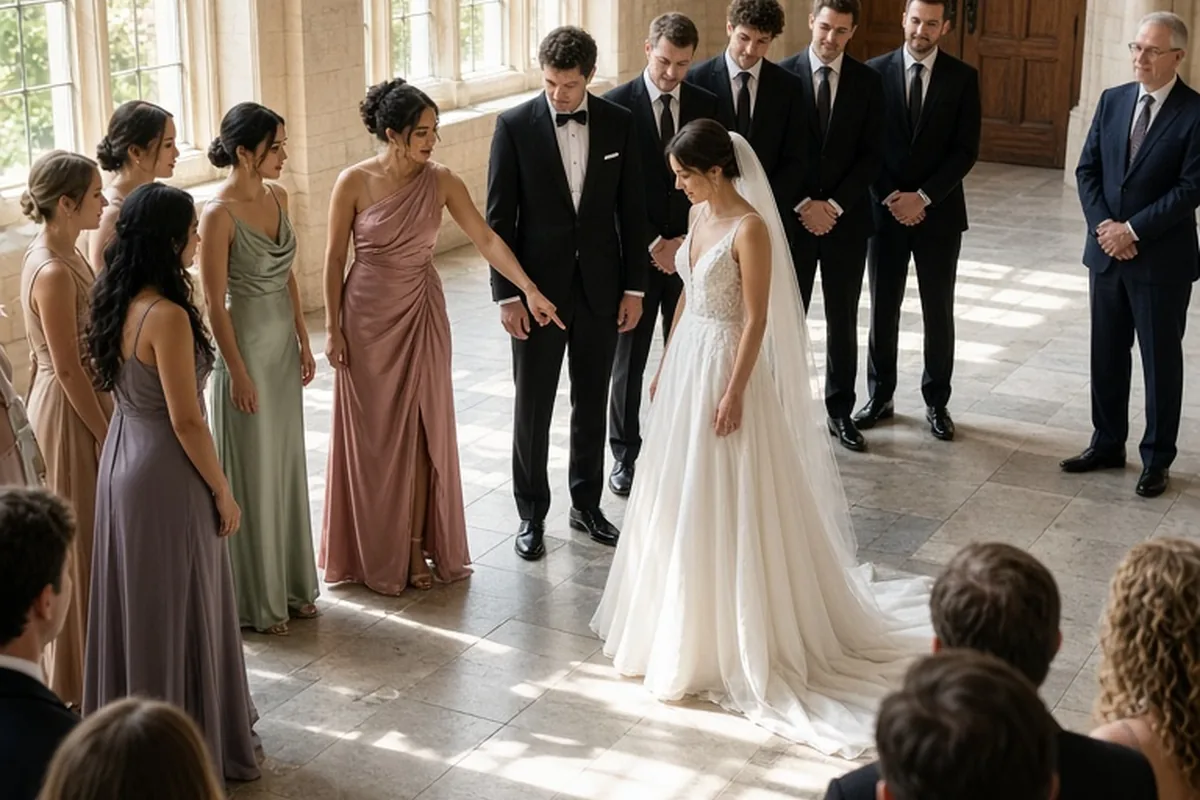
Mastering a wedding rehearsal means practicing key spatial transitions and cues rather than reading through the entire script. Start by placing the wedding party at the altar exactly where they will stand during vows so everyone visualizes their final position. Then, practice the recessional walk-off, followed by running the processional entrance twice with real walking pacing and music cues. Keep the run-through under forty-five minutes to maintain focus, assign one clear director, and confirm hands-free responsibilities before leaving.
A wedding rehearsal often becomes chaotic when family members treat it as an informal cocktail hour while the couple attempts to memorize every spoken word. The goal of this gathering is not to perform the emotional elements of the ceremony, but to build muscle memory for spatial movements, timing, and handoffs.
Establishing Clear Leadership Before the Walk-Through Begins
A rehearsal unravels quickly when three different people attempt to give directions at once. Before anyone steps down the aisle, establish who holds executive authority on the floor. If a professional wedding coordinator or venue manager is present, that person should direct the spatial blocking, line spacing, and timing, while the officiant focuses on ceremonial cues and wording. If a friend or family member is coordinating, the couple must explicitly grant that person the floor so attendants do not question directions or debate minor layout choices during the run-through.
Set the tone at the start by gathering everyone near the altar for a brief two-minute overview. Explain the sequence: you will set the standing arrangement first, rehearse the exit, and then walk the entrance twice before releasing everyone. Giving the group a clear endpoint prevents restless attendants from wandering off, checking phones, or initiating side conversations. If family dynamics are delicate or opinionated relatives attempt to alter the arrangement, the designated leader can gently protect the couple's plan by saying, 'We are following the couple's pre-approved diagram today to ensure photography sightlines stay clear.'
The Reverse Rehearsal Method: Why Starting at the Altar Saves Time
The most common mistake couples make is starting the rehearsal at the back of the venue with the processional entrance. When attendants walk down an empty aisle without knowing where to stand, they arrive at the front, bunch together awkwardly, block sightlines, and spend ten minutes shifting back and forth. By reversing the order and setting the final altar positions first, every attendant immediately learns their visual reference points, such as standing one arm's length from the next person or aligning their heels with a specific floor seam or architectural marker.
To execute this reverse method, bring the couple, officiant, wedding party, and immediate family straight to the altar area. Arrange attendants in order of height or pre-assigned pairings, staggering them slightly in an inward curve rather than a flat straight line. An angled semi-circle allows guests on both sides of the aisle to see faces clearly rather than just the backs of attendants' shoulders. Once everyone stands comfortably, have them take note of who stands directly beside them and which visual landmark marks their personal spot on the floor.
Mastering Stage Presence, Posture, and Bouquet Positioning
Once the altar layout is set, spend three minutes reviewing physical presence. Attendants frequently default to holding floral bouquets high against their collarbones, which creates tense shoulders and hides the neckline of their attire in photos. Instruct anyone carrying flowers to rest their forearms lightly against their hip bones, pointing the bouquet stems toward the floor and angling the blooms outward. This lower position relaxes the upper body and produces natural, balanced posture throughout the ceremony.
Address hands and foot placement for attendants without bouquets as well. Having groomsmen or attendants rest their hands loosely clasped in front of their waist or gently resting at their sides creates a uniform appearance. Remind everyone to keep a slight bend in their knees rather than locking their joints. Standing completely still with locked knees during an extended ceremony reduces blood circulation and often leads to lightheadedness or fainting. Practicing this relaxed stance during the rehearsal ensures everyone feels physically steady before the ceremony begins.
Mapping the Processional Order and Real-Time Walking Intervals
With the altar layout memorized, send everyone to the staging area to rehearse the processional entrance. The primary failure point during the walk-in is pacing. Attendants often walk too quickly due to nervous energy, bunching up behind one another and giving photographers only a split second to capture individual shots. Establish a clear pacing interval: the next person or pair should not begin walking until the preceding party is at least halfway down the aisle, or roughly four to five pews ahead.
Walking should feel deliberate and relaxed, matching a natural strolling tempo rather than a rigid march. Remind attendants to look up toward the officiant or smiling guests rather than staring down at their shoes. If children such as flower girls or ring bearers are participating, place a trusted parent in an aisle seat near the third row. Instruct the child to walk toward that specific parent rather than trying to stand motionless at the front for thirty minutes. Rehearsing this handoff gives young participants a clear, achievable target and reduces anxiety.
Practicing the Micro-Moments That Trip Up the Ceremony Flow
A ceremony feels seamless when the small, functional handoffs happen without awkward pauses or spoken reminders. The rehearsal is the exact moment to walk through these micro-actions physically. The first critical moment is the presentation of the partner walking down the aisle. Clarify who lifts the veil if one is worn, whether a hug or handshake occurs, and exactly when the escort takes their seat in the front row so nobody is left lingering awkwardly in the aisle.
The second transition involves handling the bouquets and wedding rings. Practice the handoff where the partner hands their bouquet to the maid of honor just before the vows begin, freeing their hands to hold their partner's hands. Run through the ring exchange mechanics as well: confirm who holds each band, practice retrieving it smoothly from a pocket or pouch, and demonstrate stepping to the side if the officiant asks attendants to step back to give the couple space during formal vows. These physical run-throughs eliminate second-guessing during the emotional peaks of the service.
Executing the Recessional and Immediate Post-Ceremony Dispersal
The ceremony concludes with the recessional, which must move briskly to maintain energy and clear the space efficiently. Once the officiant introduces the newly married couple, the couple exits first, walking all the way through the back doors without stopping. Attendants should exit in reverse order by pairs or individuals, waiting roughly two to three seconds between each departure. When attendants hesitate, the exit stalls, creating an awkward vacuum where guests are unsure whether to stand, clap, or leave their seats.
Crucially, the rehearsal must establish where everyone walks after passing the back row of seats. Without an explicit exit plan, attendants stop right outside the ceremony doors to hug the couple, creating an immediate bottleneck that traps remaining guests inside the aisle. Direct the wedding party to walk completely into a secondary staging room, holding suite, or designated photo lineup area far enough away from the aisle doors. This keeps foot traffic flowing smoothly and protects the couple from being overwhelmed before planned family portraits take place.
Wedding Rehearsal Logistics: Timelines, Paperwork, and Physical Items
A productive rehearsal should rarely exceed thirty to forty-five minutes. Running through the ceremony movements twice is generally sufficient; repeating it four or five times produces diminishing returns, exhausts participants, and triggers frustration before the rehearsal dinner. Focus on physical movement rather than reading complete vows or listening to entire musical tracks. Have the officiant read only the opening and closing transition sentences so the group recognizes their audio cues without turning the rehearsal into a full-length performance.
Use the final ten minutes of the gathering to handle administrative tasks so ceremony morning remains calm. Collect the legal marriage license, designated pens, and envelopes for vendor gratuities or official fees, handing them directly to the coordinator or officiant. Confirm who is responsible for transporting personal items like the ring box, guest book, unity candles, or programs to the venue. Handling these physical handoffs in person the evening before prevents misplaced items and frantic morning text messages.
Frequently asked questions
Do we need to read our full vows out loud during the rehearsal?
No, you should keep your personal vows private until the actual ceremony. Have the officiant read only the introductory and transition phrases so you recognize your cues without spoiling the emotional impact of your promises.
What should the wedding party wear to the rehearsal?
Comfortable, neat daytime clothing is standard unless the rehearsal dinner requires formal attire. Attendants who plan to wear high heels or formal dress shoes on ceremony day should wear those specific shoes during the rehearsal to practice walking and balance on the actual venue flooring.
How long should a standard wedding rehearsal take from start to finish?
A well-organized rehearsal typically takes thirty to forty-five minutes. Running the entrance and exit twice while confirming altar spacing provides complete clarity without draining the energy of the wedding party.
Who should attend the wedding rehearsal?
Attendance should include the couple, the officiant, the wedding attendants, parents, escorts, readers, and any children participating in the processional. Avoid inviting extended family or non-participating guests to the floor so the coordinator can keep the group focused.
Your next step
Draft your ceremony walking order and altar spacing diagram today, then share it with your officiant and coordinator so everyone enters the rehearsal on the same page.