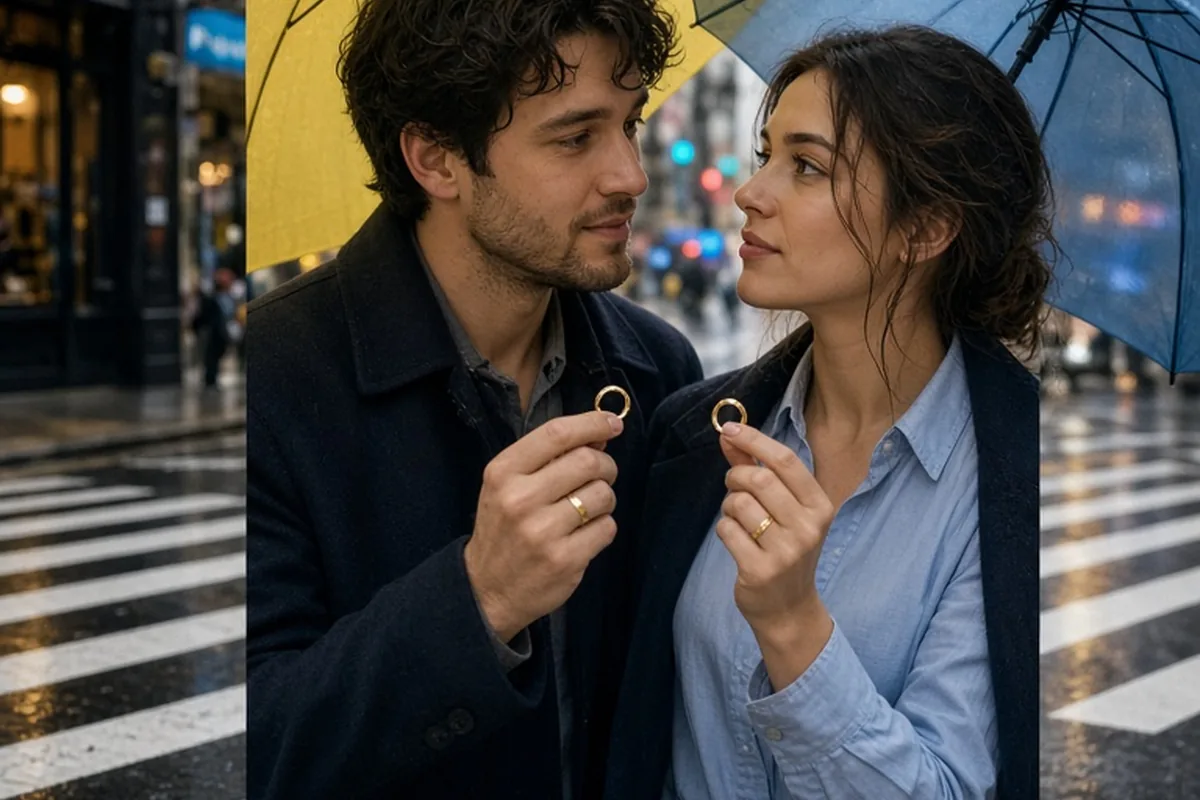
Matching wedding bands are paired rings designed for couples to wear as symbols of their marriage, unified through identical designs, shared precious metals, complementary profiles, or matching engravings. Couples can choose exact twin bands, cohesive mixed-width sets, or complementary rings that share subtle design motifs while accommodating individual daily wear requirements, skin sensitivities, personal aesthetics, and finger proportions.
Selecting wedding bands is one of the few shared purchases from wedding planning that you will interact with every single day. While historic tradition often favored identical, plain gold bands, modern couples have access to an expansive range of coordination options, custom fabrication methods, and distinct purchasing channels.
Identical Pairs Versus Coordinated Sets: Which Approach Fits Your Routine?
Identical wedding bands feature the exact same metal alloy, profile shape, surface finish, and detailing, differing only in finger size and sometimes slight variations in millimeter width. This traditional route offers clean visual harmony and a clear symbolic connection. For couples who share similar design sensibilities, metal preferences, and everyday work environments, choosing identical bands simplifies the selection process and creates an unmistakable aesthetic link.
However, identical rings often present practical compromises when partners have vastly different daily routines, skin tones, or comfort preferences. For example, a partner who works in manual labor, healthcare, or heavy athletics may require a low-profile, highly durable metal without delicate stones, while the other partner might prefer a slender band contoured around an intricate engagement ring. In these instances, forcing an identical match can leave one person with a ring that feels uncomfortable or unsuited to daily tasks.
Coordinated sets solve this tension by incorporating shared design DNA rather than exact duplication. Partners might choose the same metal—such as warm yellow gold or cool platinum—while adopting distinct band widths, bevels, or interior comfort profiles. Alternatively, couples can pick completely different metals while sharing an identical hammered texture, milgrain border, or hidden interior engraving. This method honors personal comfort and practical wear while retaining meaningful visual unity.
Precious Metals Compared: Durability and Maintenance for Paired Rings
Choosing the right metal alloy is a foundational decision when curating matching bands. Platinum is widely regarded for its exceptional density, natural hypoallergenic composition, and longevity. Over years of wear, platinum develops a soft, satin-like patina rather than losing metal volume from scratches. Because it does not require rhodium re-plating, platinum represents an excellent choice for couples seeking cool-toned rings that require minimal routine maintenance beyond regular cleaning.
White gold offers a bright, silvery look similar to platinum but behaves differently over time. Standard white gold alloys are plated with rhodium to achieve a bright reflective surface, which gradually wears away and requires periodic re-plating depending on your body chemistry and friction exposure. Yellow gold and rose gold provide warm, classic alternatives that hold their natural color indefinitely without plating, though lower-karat options (such as 14k) provide greater scratch resistance than softer 18k options for individuals with active lifestyles.
Alternative metals, such as titanium, tungsten carbide, and tantalum, have gained substantial popularity for couples seeking contemporary, highly scratch-resistant options at lower price tiers. Tungsten is exceptionally hard and scratch-resistant, though brittle under extreme impact, while titanium is lightweight and corrosion-resistant. A critical trade-off to consider before buying alternative metals is that most cannot be resized using traditional jeweler torches; if your finger size changes significantly over time, these rings typically must be completely replaced rather than adjusted.
Design Elements That Create Unity Across Different Ring Profiles
If you and your partner want complementary rings without identical silhouettes, subtle decorative techniques can bridge distinct styles seamlessly. Texture is one of the most effective unifying tools. Applying a matching brushed, satin, sandblasted, or hammered finish across different band widths creates an immediate visual connection, even if one ring is a flat four-millimeter band and the other is a curved two-millimeter diamond-accented ring.
Engraving and hidden accents provide another discreet way to unify rings that appear completely distinct on the outside. Many couples engrave matching dates, coordinates, handwriting scripts, or phrases along the interior shank. Others choose matching flush-set gemstones or birthstones placed on the inside band surface, resting directly against the skin. These intimate details establish a private match that allows the exterior rings to follow completely independent aesthetic preferences.
Edge detailing and structural contours also help create cohesion. Incorporating matching milgrain—a row of tiny, beaded metal detailing along the edges—or matching beveled edges allows both rings to catch light in the same manner. When one partner is pairing a wedding band with an existing engagement ring, a curved or chevron band can be shaped to nest against the center stone while mirroring the finish and metal of the other partner's classic flat or domed band.
Online Jewelers Versus Brick-and-Mortar Stores: Evaluating Buying Channels
Online direct-to-consumer jewelers have transformed the ring shopping landscape by offering broad inventories, transparent spec comparisons, and competitive pricing due to lower overhead costs. Leading online platforms provide 360-degree high-definition video, detailed metal millimeter comparisons, and virtual try-on tools. Many established digital retailers also provide home try-on kits with brass or silver replica bands, allowing couples to test various widths and profiles over several days before committing to fine metals.
The primary drawback of shopping purely online is the inability to feel the real weight, edge softness, and comfort-fit curves of actual precious metals on your finger before buying. While digital measurements provide precise dimensions, the tactile experience of how a ring sits alongside an engagement ring or between adjacent fingers cannot be fully replicated on a screen. Additionally, managing returns, resizings, or warranty adjustments requires shipping valuable items through the mail.
Traditional brick-and-mortar jewelers and local independent storefronts excel in tactile evaluation and personalized consultation. Visiting a showroom allows both partners to test multiple millimeter widths, flat versus high-dome profiles, and standard versus comfort-fit interiors simultaneously. In-person jewelers can also inspect existing engagement rings for structural wear, evaluate flush-fit clearances, and provide professional ring sizing under stable indoor temperatures. However, local stores may carry a more limited on-hand inventory and often carry higher retail markups compared to online specialists.
Custom Design Studios and Independent Artisans for Bespoke Matching Sets
For couples unable to find pre-fabricated matching sets that align with their vision, custom design studios offer a collaborative path. Working with a custom bench jeweler allows you to select specific metal mixtures, incorporate heirloom materials, and design interlocking or thematic motifs from scratch. The process typically involves initial design consultations, computer-aided design (CAD) renderings, physical wax or resin model try-ons, and final metal casting and hand-finishing.
Independent craft platforms and local artisan jewelers often specialize in unique fabrication techniques, such as Mokume Gane (a Japanese metalworking technique that creates wood-grain patterns from fused metal layers) or rough-hewn organic textures. Choosing an artisan allows couples to acquire truly one-of-a-kind sets that tell a specific personal story. It also allows direct communication with the person fabricating your jewelry, ensuring complete transparency regarding metal sourcing and fabrication timelines.
The trade-offs with custom jewelry center primarily on lead times and return limitations. Custom fabrication typically requires between four and eight weeks, and complex adjustments can extend that timeline further. Furthermore, because bespoke rings are made to exact individual specifications, custom pieces are almost universally non-refundable. Couples opting for custom matching sets should plan well ahead of their wedding date and carefully review CAD models and wax prototypes before giving final casting approvals.
Comfort Fit, Millimeter Widths, and Everyday Wear Considerations
Beyond appearance, the physical geometry of your wedding bands determines how comfortable they will feel during decades of daily wear. Ring interiors are generally categorized into standard fit (flat on the inside) and comfort fit (slightly domed and rounded on the inside). Comfort-fit bands slide more smoothly over knuckles and create less friction against the skin, making them the preferred standard for wider bands and individuals unaccustomed to wearing jewelry.
Band width significantly alters both the appearance and the sensation of a ring. Traditional feminine bands typically range between 1.5 and 3.5 millimeters, while masculine bands commonly range between 4.0 and 7.0 millimeters. When aiming for visual balance, couples often choose widths that correlate with their finger lengths and hand sizes rather than identical millimeter dimensions. A four-millimeter band can look substantial on a smaller hand, whereas that same width may appear very slender on a larger finger.
Accurate sizing requires evaluating temperature, time of day, and band width before placing an order. Fingers naturally expand in warm conditions or after exercise and contract in cold weather. Wider bands (typically those above 5 millimeters) displace more skin and fit tighter than narrow rings of the same numerical size, often requiring a half-size adjustment. Ensuring both partners obtain professional sizing with dedicated wide-band or narrow-band sizing gauges prevents costly resizing headaches after the rings arrive.
Frequently asked questions
Do wedding bands have to match exactly?
No, wedding bands do not need to match exactly. Many modern couples choose complementary rings that share a common metal, texture, or finish while selecting widths and profiles that suit their personal styles and daily comfort.
Which metal is best for everyday durability in matching bands?
Platinum and 14k gold are widely considered the most practical choices for long-term daily wear because they offer exceptional structural strength, resist daily abrasion well, and can be professionally resized and serviced by most jewelers over time.
How far in advance should we order matching wedding bands?
It is best to purchase standard matching bands at least two to three months before your ceremony to allow time for sizing checks and minor adjustments. For bespoke or custom-cast sets, begin the process four to six months in advance.
Your next step
Determine which shared elements matter most to both of you—such as metal type, finish, or a subtle engraving—and get your finger sizes professionally measured using the specific band widths you plan to purchase.