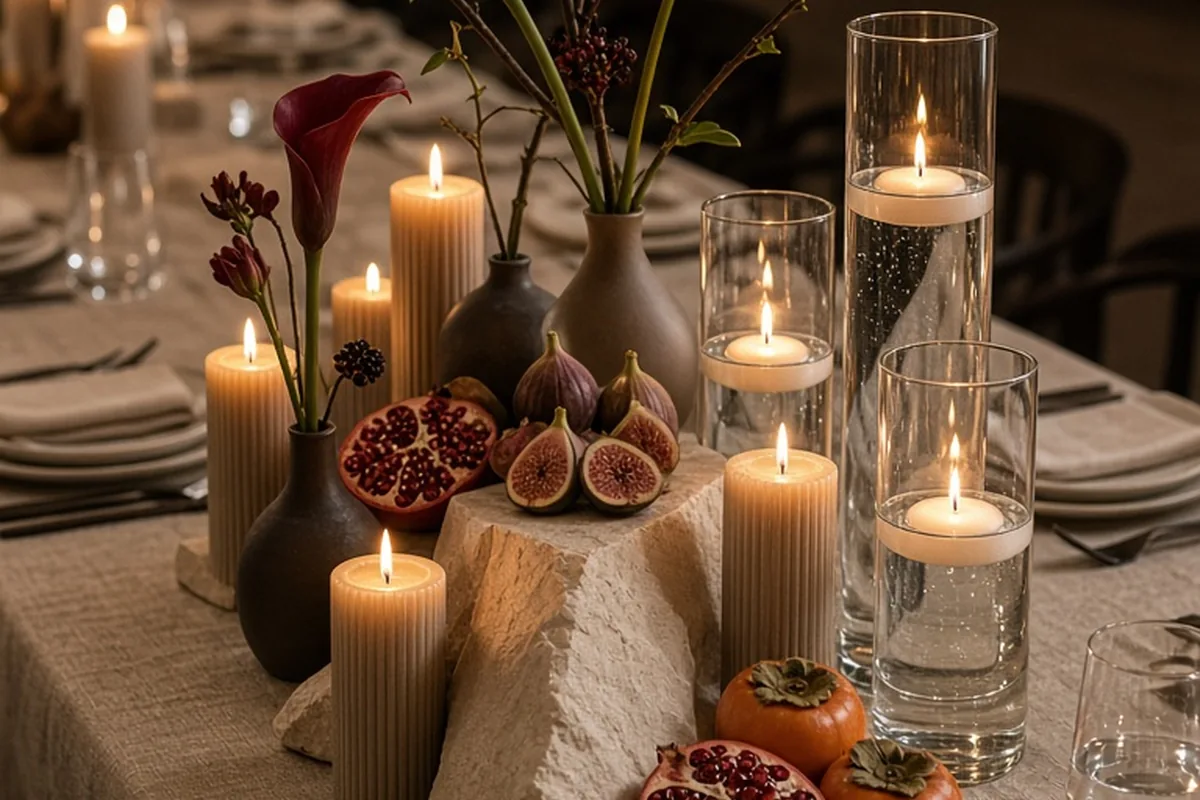
Modern wedding centerpieces focus on intentional design, clean lines, and curated textures rather than crowded floral mounds. Key approaches include minimalist ikebana-inspired single-stem groupings, low sculptural arrangements in matte ceramic vessels, monochromatic color blocking, and artful combinations of fruit, stone, and clustered candlelight. Modern designs prioritize sightlines, balance negative space with striking focal points, and adapt directly to specific table shapes and venue architecture.
Designing reception tablescapes has shifted away from uniform, tightly packed floral spheres toward expressive, architectural styling. Modern wedding styling embraces variety, intentional empty space, and unique material pairings that make a dining room feel curated rather than mass-produced.
Minimalist Ikebana and Architectural Single-Stem Groupings
One of the most defining movements in contemporary wedding decor is the adoption of Japanese ikebana principles. Instead of dense bouquets where individual flowers lose their identity, ikebana-inspired styling celebrates the natural curve, stem line, and silhouette of each bloom. Florists achieve this look using shallow ceramic compotes fitted with brass pin frogs (kenzan), or by distributing delicate, varying-height bud vases across the length of the table. A single bent calla lily, an arching branch of flowering quince, or an asymmetric pairing of anthuriums creates immediate visual drama through deliberate negative space.
To make this style work across large banquet tables or standard rounds, avoid spacing bud vases at perfectly even intervals, which can look rigid or sparse. Instead, create asymmetrical clusters of three to five vessels of differing heights and textures, leaving deliberate breathing room between groupings. Pair fragile blooms with sturdy, architectural foliage like monstera leaves, dried palms, or structural branches to add dimension. This approach not only creates an art-gallery aesthetic but also allows guests to appreciate the delicate details of premium focal flowers that might otherwise be buried in traditional arrangements.
Monochromatic Color Blocks and High-Impact Textures
Monochromatic styling offers a sleek, high-fashion alternative to multi-hued garden palettes. Modern couples frequently select one distinct color family—such as warm alabaster, deep burgundy, rich espresso, or saturated ochre—and execute the entire centerpiece within that strict spectrum. The visual impact comes not from contrasting colors, but from contrasting physical textures. Smooth, waxy petals like orchids and anthuriums are set alongside ruffled garden roses, velvety carnations, feathery grasses, and matte foliage, all within the exact same shade.
A successful monochromatic centerpiece relies heavily on vessel selection to reinforce the tone. Placing white florals in stark white ribbed ceramic vessels creates an ultra-clean, minimalist sculpture, while pairing deep plum and espresso blooms with smoked glass or black iron vessels produces a moody, modern ambiance. If you choose an all-white or single-tone palette, ensure your linens and dinnerware coordinate intentionally. A monochromatic white arrangement on an identical polyester tablecloth can look flat; pairing it with a textured linen runner, stoneware plates, and ribbed glassware provides the depth needed to make the single-hue florals stand out.
Fruit, Stone, and Earthy Sculptural Objects as Centerpiece Anchors
Modern tablescapes increasingly incorporate edible and mineral elements to build texture and storytelling without relying solely on cut flowers. Whole and sliced fruits—such as ripe figs, halved pomegranates, bunches of dark concord grapes, persimmons, and Meyer lemons—add rich organic shapes and painterly colors to the table. These elements can be arranged directly on the tabletop alongside raw travertine tiles, stacked terracotta plinths, or sculpted marble candle bases, creating a multi-layered, tactile landscape.
When integrating fruit and natural objects, practical execution is critical. Sliced fruits should be prepared close to event start time to prevent browning, and highly acidic or staining fruits like dark berries or citrus should never rest directly on porous table linens or unsealed wood surfaces without a protective base. Balance organic elements with structured items: pair soft, textured stone slabs with sleek glassware, or nestle smooth, polished stone candleholders among clusters of organic produce and delicate sprigs of olive or rosemary. This technique creates a rich, sensory dining environment that feels modern and relaxed.
Curated Candle Landscapes and Modern Lighting Installations
Lighting transforms a centerpiece from a daytime floral display into an immersive evening environment. Contemporary tablescapes move beyond standard tea lights scattered around a vase, opting instead for architectural candle groupings that serve as the primary centerpiece. Clusters of ribbed pillar candles at varying heights, thin taper candles in modern ceramic holders, and clean cylinder glass hurricanes containing submerged floating wicks create a warm, dynamic glow that defines the room's atmosphere after sunset.
When designing a candle-heavy centerpiece, safety and venue regulations must guide your decisions. Many indoor venues require open flames to be fully enclosed in glass hurricanes that extend at least one to two inches above the top of the candle flame. For drafty indoor spaces or outdoor receptions, high-quality, realistic LED pillar candles with moving wicks offer a reliable alternative that will not blow out in a breeze or drip hot wax onto rented linens. If using real taper candles, choose unscented, dripless varieties made from high-melting-point wax blends to prevent smoke from interfering with the dinner service.
Aligning Modern Centerpiece Scale to Table Shapes and Sightlines
A common design challenge in wedding receptions is balancing visual impact with guest comfort and conversation. A classic design guideline is to keep centerpieces either below 14 inches so guests can easily converse across the table, or elevated above 24 inches on slender, transparent, or open-frame pedestals that keep sightlines clear at eye level. Modern styling leans heavily into low, sprawling horizontal arrangements or airy elevated stands, completely avoiding bulky mid-height arrangements that act as physical walls between seated guests.
Table shape dictates the architecture of the centerpiece. Long rectangular banquet tables (or king tables) benefit from continuous runner-style designs, rhythmic groupings of low ceramic vessels, alternating candle clusters, and shallow fruit accents that lead the eye down the length of the room. Round tables, by contrast, require a centralized focal point. Rather than a single domed bouquet, modern round tables look best with an asymmetrical trio of coordinating vessels or a central stone pedestal surrounded by layered votives, ensuring the centerpiece looks dynamic and intentional from every seat.
Sustainable Floral Mechanics and Budget Allocation Strategies
Modern floristry is increasingly defined by sustainable, foam-free mechanics. Traditional green floral foam contains microplastics and harmful chemical compounds that do not biodegrade. Contemporary florists utilize reusable metal chicken wire, brass pin frogs, bio-based water wraps, and weighted stone bases to secure stems. Choosing a florist who specializes in foam-free techniques ensures your modern design aligns with environmentally conscious practices while often allowing stems to drink water more naturally, extending the freshness of delicate blooms throughout a warm reception.
Maximizing a centerpiece budget in modern design requires strategic spending on high-impact focal points rather than spreading resources thinly across every surface. One effective strategy is repurposing ceremony installations—such as ground floral meadows or freestanding floral pillars—as framing around the head table or sweetheart table during dinner. Additionally, mixing high and low centerpieces across the venue creates architectural variety in the room while keeping floral production costs balanced. Investing in high-quality rental vessels, unique flatware, and specialty linens can also elevate simple, lower-cost floral arrangements into sophisticated modern focal points.
Day-of Logistics, Vessel Stability, and Environmental Controls
A flawless centerpiece design requires careful planning for setup timelines, climate conditions, and structural stability. Heavy ceramic or stone vessels must be weighed and balanced so they cannot tip over when guests bump the table or reach for bread baskets. For outdoor weddings, wind is a primary hazard; lightweight bud vases can easily blow over if not secured with floral adhesive putty (museum wax) to the table surface or placed within weighted decorative trays.
Temperature and air circulation directly affect how long modern centerpieces maintain their crisp appearance. Delicate focal flowers like sweet peas, poppies, and ranunculus can wilt rapidly if placed directly under venue air conditioning vents, heating drafts, or in direct afternoon sunlight. Coordinate with your florist and venue coordinator to ensure florals remain in temperature-controlled holding areas until the room is fully set, and verify that tables are positioned away from exterior doors that let in sudden temperature swings during guest arrival.
Frequently asked questions
How do modern centerpieces differ from traditional wedding centerpieces?
Modern centerpieces emphasize clean lines, negative space, asymmetrical forms, and unconventional materials like stone, fruit, and architectural ceramics. Traditional centerpieces typically rely on dense, symmetrical floral spheres packed with greenery and multiple flower varieties in classic glass or metal compotes.
What is the best centerpiece height to allow easy conversation between guests?
Keep low centerpieces under 14 inches tall, or use elevated stands that lift floral elements at least 24 inches above the tabletop. This leaves the sightline between 14 and 24 inches completely open, allowing seated guests to see and talk to each other without leaning around bulky arrangements.
Can I achieve a modern centerpiece look without fresh flowers?
Yes. Highly effective non-floral modern centerpieces utilize layered groupings of taper and pillar candles in sculptural holders, architectural stone slabs, smoked glass hurricanes, and artfully placed whole fruits like pomegranates and figs. These elements provide rich texture, warmth, and visual interest without floral stems.
How many bud vases or candle holders are needed for a standard 8-foot banquet table?
A standard 8-foot rectangular table typically accommodates 7 to 11 bud vases arranged in organic clusters, interspersed with 6 to 10 taper or pillar candles. This provides balanced coverage along the table runner while leaving adequate space for place settings, glassware, and shared serving platters.
Your next step
Measure your venue's table dimensions and draft a mock place setting to determine your exact centerpiece footprint and height limits before ordering vessels or booking your floral package.