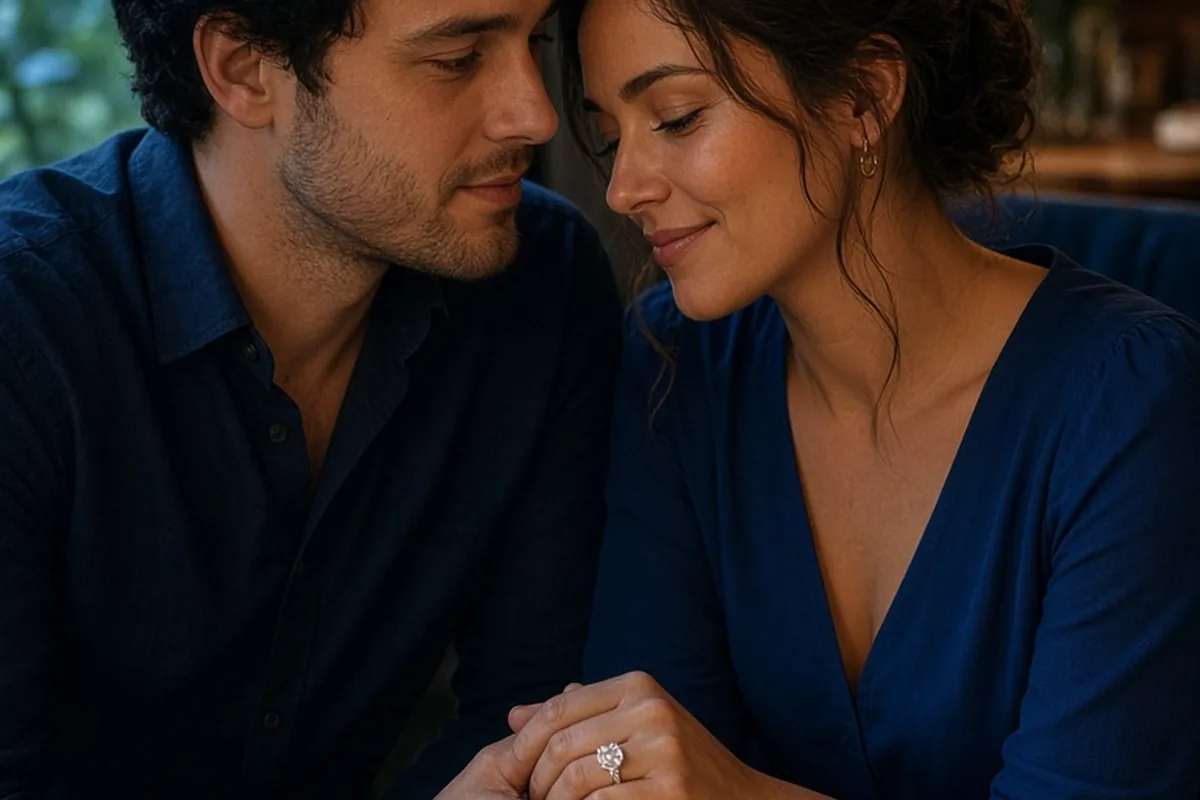
Choosing a moissanite engagement ring for a 200-guest wedding allows couples to balance fine jewelry aesthetics with large-scale hospitality costs. Because a 200-person headcount significantly amplifies per-plate catering, floral, and venue minimums, allocating funds toward silicon carbide gemstones preserves capital without sacrificing durability or visual impact. Moissanite provides an exceptional 9.25 Mohs hardness rating and intense brilliance that holds up beautifully under venue lighting, offering a practical, elegant compromise for large wedding budgets.
Planning an event for two hundred guests quickly reveals how fast hospitality math compounds, forcing couples to evaluate where their shared resources create the most lasting value.
Balancing High Headcounts With Fine Jewelry Budgets
A wedding hosting two hundred guests occupies a distinct threshold in event logistics. At this volume, baseline costs do not scale linearly; they compound across every line item. Every table added to a floor plan demands not merely additional dinner service, but larger linen rentals, more centerpiece arrangements, extra service staff, expanded beverage packages, and wider venue footprints to accommodate circulation. When couples evaluate standard wedding budgets against a two-hundred-person guest list, the hospitality expenses alone routinely consume the vast majority of available capital. In this financial environment, allocating ten to twenty thousand dollars to a mined diamond center stone often creates direct tension with the scale and quality of the celebration itself.
Choosing a moissanite engagement ring reframes this financial trade-off entirely. Moissanite, a lab-created form of silicon carbide, offers the optical presence, scale, and clarity of high-tier traditional gemstones at a fraction of the cost. By reallocating capital away from traditional diamond markups, couples can direct meaningful funds toward per-person catering upgrades, premium bar packages, live musical entertainment, or professional photography coverage that directly benefits every attendee. This approach is not about compromise or settling for less; it represents an intentional philosophy of resource allocation where couples prioritize shared, memorable guest experiences alongside an enduring piece of heirloom-quality fine jewelry.
Moissanite Optical Performance Under Reception and Event Lighting
One common question among couples planning large celebrations is how a moissanite center stone visually behaves in diverse event spaces. Modern wedding receptions involve constantly shifting lighting conditions, moving from bright outdoor ceremonies or sunlit chapel glass to dimmed banquet halls lit by pin spots, candelabras, and uplighting. Moissanite possesses a refractive index between 2.65 and 2.69, which is higher than that of diamond at 2.42. Additionally, its dispersion rating of 0.104 is more than double that of a diamond. In practical terms, this scientific difference means moissanite separates white light into spectral colors with remarkable intensity, creating what gemologists describe as fire.
Under direct banquet spotlights or flash photography, this high dispersion can produce distinct rainbow flashes. In intimate candlelit settings, however, moissanite yields a rich, warm sparkle that draws admiration across a dinner table. For couples wanting a classic aesthetic that blends seamlessly among conventional bridal jewelry, selecting specific facet patterns can help moderate this optical fire. Brilliant cuts maximize rainbow dispersion, while step cuts such as emerald or asscher shapes emphasize clear, crisp geometric flashes of white light. Knowing how different cuts interact with venue illumination allows you to choose a ring that complements your specific event environment without feeling out of place in your wedding photography.
Selecting Stone Proportions and Cuts for Formal Gathering Visibility
Because moissanite is priced primarily by millimeter measurement and manufacturing craftsmanship rather than scarce natural availability, couples frequently have the freedom to select larger center stones than would otherwise fit their budgets. However, selecting stone proportions for a formal event with two hundred guests requires an eye for visual balance rather than simply maximizing carat-equivalent weight. In a crowded ballroom or during a receiving line, an engagement ring is viewed from a variety of distances and angles. A stone that overwhelms the wearer's finger can appear disproportionate or draw unwanted scrutiny, whereas a thoughtfully balanced stone delivers timeless elegance.
Diamond Equivalent Weight, or DEW, is the standard metric used by jewelers to compare moissanite dimensions with traditional diamond weights, because silicon carbide is approximately ten percent lighter than diamond. For most hand sizes, center stones ranging from 1.5 to 2.5 carats in diamond equivalent weight offer an ideal balance of visual presence and understated luxury. Elongated shapes, such as oval, marquise, and radiant cuts, provide substantial surface coverage on the finger and create an elegant, lengthening effect that reads beautifully in close-up ring photographs and bridal portraits. When paired with a tailored setting, these proportional choices deliver an aesthetic that feels entirely organic to a formal celebration.
Setting Architecture and Metal Durability for an Intense Wedding Day
A wedding day with two hundred guests places unexpected physical demands on bridal jewelry. The bride will spend hours greeting attendees, shaking hands, hugging loved ones, carrying heavy bouquets, adjusting attire, and dancing late into the night. Throughout this activity, an engagement ring faces continuous physical contact with fabrics, metal chair backs, door frames, and other jewelry. The structural integrity of the setting is just as vital as the stone itself to ensure the ring survives the celebration undamaged.
On the Mohs scale of mineral hardness, moissanite rates at 9.25, making it the second-hardest gemstone commonly used in fine jewelry and exceptionally resistant to surface scratching, chipping, or fracturing. However, the metal holding that stone must be equally dependable. Choosing fourteen-karat gold or platinum provides superior structural strength compared to softer eighteen-karat alloys. For active wedding weekends, six-prong settings or secure basket settings offer critical redundant protection: if one prong catches on a lace gown or decorative rental and bends slightly, the remaining prongs keep the center stone securely seated. Low-profile settings also reduce the risk of snagging during receiving lines, allowing the wearer to move comfortably through crowds of well-wishers.
Managing Social Visibility and Guest Inquiries with Ease
A gathering of two hundred guests represents a broad cross-section of your community, typically encompassing multiple generations, extended relatives, coworkers, and long-time family friends. In this setting, your engagement ring will inevitably be admired and discussed. While modern couples increasingly celebrate lab-grown stones and alternative minerals for their ethical sourcing and financial rationality, differing generational attitudes toward bridal traditions can occasionally produce unsolicited questions or outdated opinions regarding diamond authenticity.
Navigating these conversations requires no defensive justification. If a guest compliments your ring during table visits, a simple and gracious thank you is entirely sufficient. You are never obligated to disclose mineral specifications, retail receipts, or budget details in a receiving line. Conversely, if you take pride in choosing an ethical, technologically advanced gemstone that made your generous reception possible, speaking openly about moissanite can demystify the option for other engaged couples in your circle. Approaching your choice with quiet confidence ensures that social interactions remain focused on love and hospitality rather than gemstone debates.
Purchase Verification, Warranties, and Insurance Before the Big Day
Securing a high-quality moissanite ring involves the same due diligence as purchasing any other piece of luxury jewelry. The commercial market contains wide variances in silicon carbide synthesis, ranging from cheap, poorly cut industrial imports to precision-faceted, colorless gems from reputable international manufacturers. Before completing a purchase, verify that the vendor provides an official certificate of authenticity or gemological grading report documenting the stone's color grade, clarity, and specific cut parameters. Established brands generally back their stones with limited lifetime warranties covering optical brilliance and clarity over time.
Equally important is establishing proper insurance coverage well before two hundred guests arrive at your venue. High-density events present higher risks of accidental loss, whether a ring slips off during hand washing in a restroom or prongs suffer damage on a crowded dance floor. Standard homeowners or renters insurance policies typically enforce strict sub-limits on unscheduled jewelry. Contact your insurance provider to add a personal property endorsement, or purchase a dedicated jewelry policy that includes mysterious disappearance and repair coverage. Having verified documentation and active coverage in place guarantees peace of mind throughout your wedding festivities.
Frequently asked questions
Will guests at a 200-person reception notice that my ring is moissanite instead of a diamond?
To an untrained eye at typical conversational distances, moissanite closely resembles a high-clarity diamond. Under concentrated reception lighting, guests may notice slightly more colorful fire or rainbow flashes, but few people possess the gemological training to distinguish between stones during casual social interactions.
How does choosing moissanite affect my overall wedding budget for 200 guests?
By choosing moissanite, couples often redirect thousands of dollars toward their reception expenses. In a two-hundred-guest scenario, these savings can comfortably cover per-person catering minimums, an open bar upgrade, or floral installations that elevate the entire event experience.
Which moissanite cut looks the most understated and classic in a large gathering?
Step cuts, such as emerald or asscher cuts, along with antique cuts like the Old European Cut, offer the most subdued and vintage-inspired appearance. These cuts produce broader flashes of white light rather than intense rainbow dispersion, giving them a traditional, understated aesthetic.
How should I clean my moissanite ring before greeting guests and taking reception photos?
Soak the ring for ten minutes in warm water mixed with mild liquid dish soap, then gently brush around the prongs and pavilion with an extra-soft toothbrush. Rinse thoroughly with clean warm water and pat dry with a lint-free microfiber cloth to remove oils and restore maximum sparkle.
Your next step
Order sample loose stones or view moissanite settings in person under warm incandescent and direct lighting to confirm your preferred cut and size balance before finalizing your wedding budget allocations.