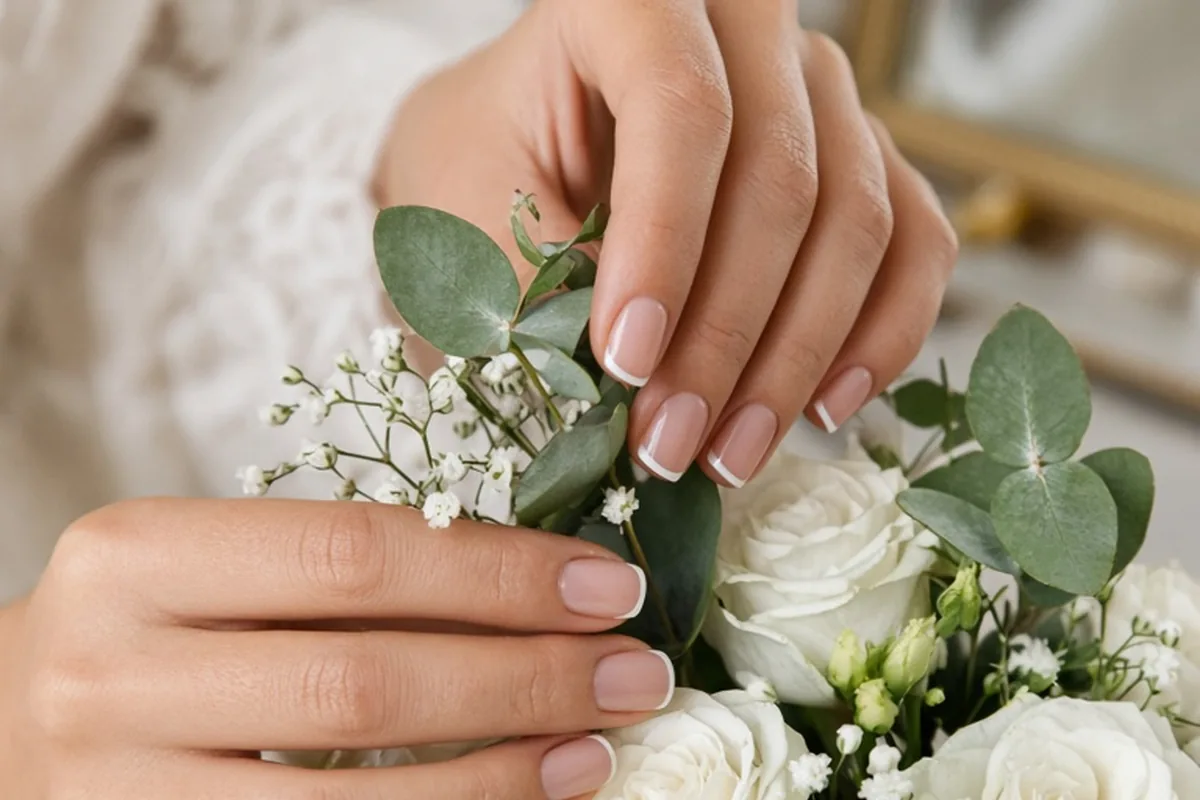
The best bridesmaid nail styles balance personal polish with the bridal party aesthetic. Classic choices include sheer milky nudes, glazed donut finishes, micro-French manicures, and soft blush tones that complement any bouquet. For bolder weddings, jewel tones or muted earth shades like terracotta and sage green provide intentional contrast. Choosing a long-wearing formula like soft gel or dip powder two days before the ceremony ensures chip-free results through photos and dancing.
Serving as a bridesmaid means your hands will be on display throughout the wedding weekend, from adjusting the bridal veil and holding floral bouquets to raising champagne flutes during dinner toasts. Selecting a manicure that honors the overall wedding aesthetic while suiting your individual skin tone and dress hue can feel surprisingly tricky, but thoughtful coordination makes the decision straightforward.
Coordinating with the Bride and the Wedding Color Palette
Before booking your salon appointment, clarify the level of uniformity the couple envisions. Some brides prefer an identical look across the entire wedding party, typically requesting a sheer neutral or soft pink. Other brides give bridesmaids complete freedom within a broad seasonal palette, or simply ask that nails look tidy and understated. To avoid miscommunication, ask for a couple of photo examples or check whether there are any shades the bride wants everyone to avoid, such as bold neons or pitch black.
When matching your nails to your bridesmaid dress, exact monochromatic matching is rarely necessary. In fact, wearing nail polish in the exact shade of your dress can sometimes look dated or visually flat against fabric in photos. A better approach is to consider complementary undertones. If your dress is warm-toned, such as rust, champagne, or olive green, reach for warm nudes, soft peach, or creamy terracotta. If your dress features cool tones like slate blue, lilac, or silver-gray, cool pinks, milky whites, or soft dove grays offer a refined, harmonious balance.
Sheer Nudes, Milky Whites, and Glazed Finishes for Timeless Elegance
Translucent neutrals remain the gold standard for wedding attendants because they flatter every skin tone and never compete with flowers or accessories. A classic sheer nude creates an elongated, clean look on bare nail beds. To find the right sheer, look at your cuticles under natural daylight. If a sheer pink makes your cuticles appear reddish or irritated, swap it for a warm beige or sandy sheer. Conversely, if beige makes your hands look washed out, a translucent rose or porcelain white will add healthy vibrancy.
Milky white nails offer a slightly more opaque update to sheer lacquer without appearing as stark as bright white, which is traditionally reserved for the bride. A milky manicure diffuses the light softly and hides slight discoloration on the natural nail. If you want a touch of modern radiance, ask your nail technician for a subtle chrome powder overlay, often called a glazed finish. Applied over an ultra-sheer base, chrome adds a pearlescent, mirror-like glow that catches candlelight during evening receptions without appearing glittery or distracting.
Modern French Manicures with Subtle Twists and Micro Tips
The standard wide-band French manicure from decades past has evolved into much softer, more contemporary interpretations. The micro-French manicure is leading this trend, featuring an ultra-thin line painted along the very edge of the free edge. This delicate strip defines the nail tip without overwhelming shorter nail lengths. Paired with a dewy, translucent pink or sheer beige base, micro-tips provide an effortlessly polished appearance that looks pristine in close-up bouquet photos.
Another elevated option is the ombré French fade, frequently referred to as baby boomer nails. This style seamlessly blends a soft white or cream tip into a blush pink base, eliminating the harsh horizontal smile line entirely. The result is a gradient that lengthens the fingers and photographs exceptionally well under both indoor reception lighting and bright outdoor sun. If the bride welcomes a dash of personality, you can also replace the classic white tip with a metallic rose gold, champagne shimmer, or a soft tone drawn from the bridesmaid gown color.
Rich Jewel Tones and Moody Shades for Autumn and Winter Celebrations
While light shades dominate summer garden parties, late autumn and winter celebrations create the perfect setting for deeper, saturated tones. Deep burgundy, bordeaux, forest green, warm espresso, and midnight navy bring an air of luxury to velvet, satin, or heavy crepe bridesmaid dresses. These moody shades ground the overall look and provide striking contrast against ivory bridal gowns and lush greenery in bridal party portraits.
When opting for dark nail polish, proper nail shape and prep work become twice as important because deep pigments highlight edge chipping and uneven application immediately. Keep nail lengths moderate to short, as long, dark nails can sometimes read more dramatic than intended for a formal bridal party. Additionally, ensure the shade has rich depth rather than looking purely black; for instance, a deep blackened plum or dark cherry reveals its true color when hit by flash photography, whereas flat black polish can absorb light and appear harsh in wedding albums.
Soft Pastels and Botanical Accents for Spring and Summer Ceremonies
Warm-weather weddings invite playful yet understated color choices. Soft pastel hues such as butter yellow, muted sage, dusty cornflower blue, and pale lavender bring fresh energy to outdoor garden ceremonies and coastal venues. To keep pastels looking sophisticated rather than casual, select shades with gray, chalky, or dusty undertones rather than bright candy pigments. A muted pistachio or powdery sky blue feels elevated, timeless, and intentional against pastel chiffon or floral-print dresses.
For bridal parties that embrace subtle nail art, botanical and minimalist accents offer a gentle creative outlet. Consider a bare negative-space nail featuring a single tiny hand-painted botanical vine on the ring finger, or micro-dot accents near the cuticle line in gold leaf. You can also experiment with velvet cat-eye gel in a very soft champagne or rose gold tint, which mimics the multi-dimensional shimmer of silk fabric without relying on chunky glitter particles.
Manicure Formulas Compared: Gel, Dip Powder, Regular Lacquer, and Press-Ons
Choosing the right nail formula depends on your budget, natural nail health, and how early before the wedding you need to get your nails done. Soft gel polish remains the most common wedding choice because it dries instantly under a lamp, holds a high-gloss finish for up to three weeks, and offers enough flexibility to prevent splitting. Gel is ideal if your natural nails are reasonably strong and you want a worry-free service that will survive rehearsal dinners and suitcase packing.
Dip powder provides maximum structural reinforcement, making it an excellent choice for bridesmaids with brittle, peeling, or weak nails that tend to break under pressure. Dip powder builds a thick, durable layer that resists chips even when lifting heavy luggage or helping with venue decor. However, dip can look bulky if the technician applies too many layers, so ask for a slim, natural contour.
Traditional regular lacquer is the most affordable choice and allows for easy at-home touch-ups, but it takes hours to cure fully and can smudge within minutes of application. If you choose regular polish, paint your nails no earlier than the night before the wedding to minimize chip risks. High-quality salon-grade press-on nails have also surged in popularity as an emergency-friendly alternative; modern press-ons come in curated sizes, take ten minutes to apply with strong nail glue, and allow you to remove them immediately after the wedding weekend without damaging your nail beds.
Selecting the Right Nail Shape and Length for Practical Wear
A bridesmaid plays an active, hands-on role throughout the wedding day, from zipping intricate gowns and fastening tiny jewelry clasps to arranging ceremony train fabric and carrying reception items. For this reason, nail length and shape should balance beauty with practical functionality. Excessively long extensions can make delicate tasks frustrating and increase the likelihood of catching a nail on delicate silk or lace fabrics.
Almond and oval shapes are widely regarded as the most universally flattering contours because they elongate the fingers while keeping the tips smooth and rounded, preventing accidental snagging on bridal fabrics. If you prefer keeping your nails at natural fingertip length, a squoval shape—a square silhouette with softly rounded corners—provides clean lines and substantial strength at the sidewalls. Stiletto and sharp square shapes require greater care, as pointed or sharp edges are more prone to chipping and catching on delicate tulle.
Salon Scheduling, Emergency Touch-Up Kits, and Cuticle Care
Timing your manicure appointment is essential for achieving pristine wedding day results. The sweet spot for getting professional gel or dip nails done is two days prior to the main ceremony. Visiting the salon 48 hours in advance ensures the polish looks fresh with zero visible cuticle regrowth, while giving you plenty of time to fix an unexpected chip or bubble before formal festivities begin. Avoid booking your appointment on the wedding morning, as schedule delays and drying times can cause unnecessary stress.
Even with a durable manicure, having an emergency care kit in the bridal suite will save the day if an unexpected snag occurs. Pack a dual-sided glass nail file, which smooths accidental rough edges without peeling the polish layer, along with a bottle of brush-on nail glue for quick extension repairs. Include a nourishing cuticle oil pen in your clutch; rubbing a tiny drop of oil over your nails and cuticles immediately before bridal portraits revives the glossy shine and eliminates dry, chalky skin around the nail beds.
Frequently asked questions
Should all bridesmaids have matching nail colors?
Not necessarily. While some brides request uniform sheer or nude manicures for a cohesive look, many prefer letting bridesmaids choose complementary shades within the wedding color scheme. Asking the bride for her preference or a reference photo clarifies whether uniformity or individual coordination is desired.
How many days before the wedding should bridesmaids get their nails done?
The ideal time to get your nails done is one to two days before the wedding ceremony. This timeline ensures the polish looks freshly applied with zero visible cuticle regrowth, while allowing time to fix unexpected smudges or chips before the rehearsal dinner.
Can bridesmaids wear bright or dark nail polish?
Yes, provided the shade harmonizes with the overall wedding aesthetic and the bride approves. Moody tones like plum, emerald, and burgundy look sophisticated for autumn and winter weddings, though bold neons are generally avoided unless explicitly encouraged by the couple.
What is the best nail shape for a bridesmaid?
Short almond, soft oval, and squoval shapes are the best choices because their rounded edges prevent snagging on lace, tulle, or delicate gown fabrics. These shapes also lengthen the appearance of the hands in photos while leaving your fingers nimble for helping with dresses and jewelry.
Your next step
Reach out to the bride with two preferred shade options that match your dress undertones, then schedule your salon manicure for two days before the ceremony.