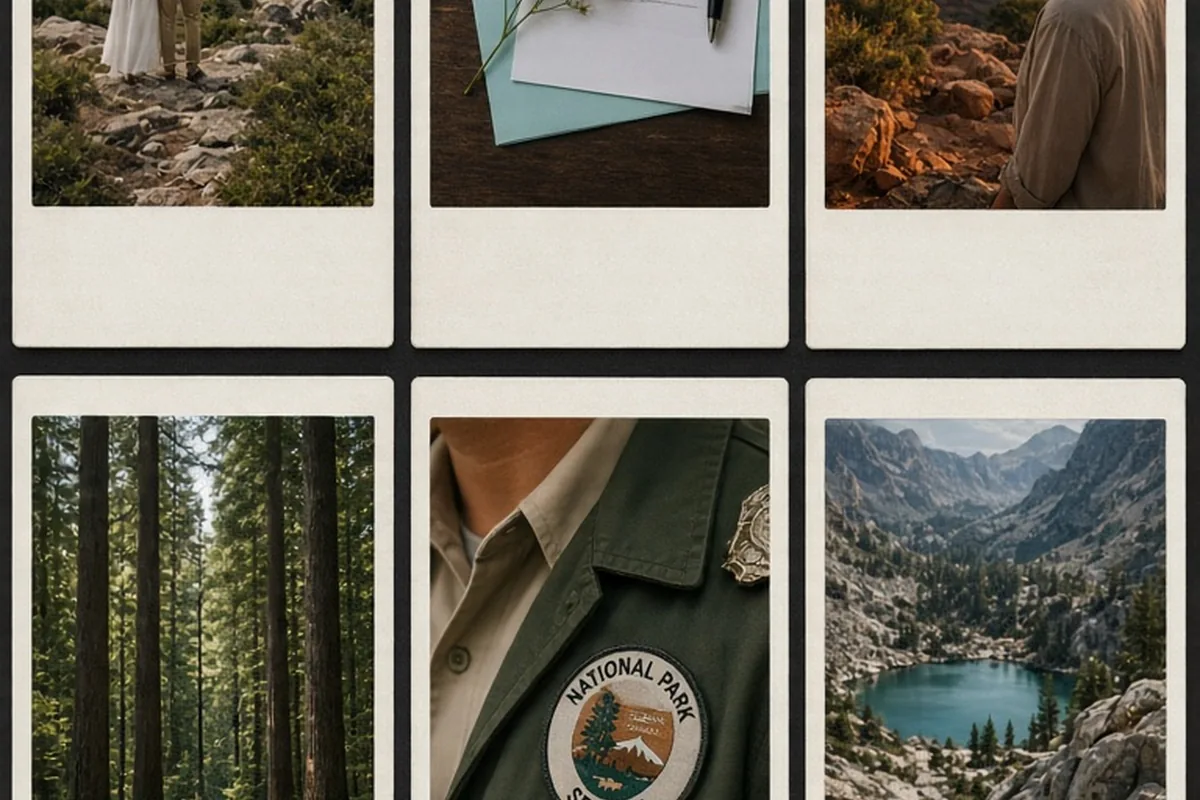
To hold a wedding or elopement in a U.S. National Park, you must obtain a Special Use Permit directly from the specific park administration. Each park establishes its own application schedule, designated ceremony locations, maximum guest caps, and nonrefundable application fees. Commercial photographers may also need an additional commercial use or photography permit depending on local park rules. Applying several months in advance ensures park rangers can review your itinerary and establish environmental preservation guidelines.
Exchanging vows against dramatic granite peaks, desert vistas, or ancient forest groves requires careful administrative coordination alongside personal celebration planning. Because the National Park Service balances visitor enjoyment with resource conservation, private wedding ceremonies are regulated through formal permitting systems that safeguard fragile ecosystems.
How the Special Use Permit System Regulates Park Weddings
The National Park Service operates under a conservation mandate that requires all non-standard, organized gatherings to undergo an administrative review. When you plan a marriage ceremony, commitment gathering, or vow renewal on federally managed park lands, the activity falls under the category of a Special Use Permit. This formal legal instrument authorizes an individual or private group to use designated public park land for a specific, temporary event under strictly defined operational parameters.
Park staff evaluate each submitted request to determine whether the proposed ceremony location, timing, and group size could cause environmental degradation, impede wildlife movement, or displace standard visitor traffic. Even a micro-wedding involving only the couple, an officiant, and a photographer can cause cumulative soil compaction on subalpine meadows or sensitive cryptobiotic crusts. The permit process establishes enforceable boundaries around where people may walk, park, and assemble, ensuring the landscape remains undamaged.
Permits are issued per specific geographic location within a park rather than granting open-ended access across the entire park territory. If you receive approval for a sunrise ceremony at an established overlook, that permit does not grant permission to hold your ceremony at a different scenic pullout if parking is full. Understanding this site-specific structure allows couples to select viable locations that match their vision while respecting federal land management priorities.
Comparing Ceremony Special Use Permits and Commercial Photography Filming Permits
A common point of confusion for couples is the distinction between a ceremony Special Use Permit and a commercial photography or filming permit. A ceremony Special Use Permit authorizes the personal gathering itself, granting your party the legal right to assemble at a designated spot for a specified window of time. In contrast, commercial photography permits regulate independent vendors who generate business revenue through media production on park grounds.
Federal policies and court rulings regarding commercial still photography on public lands have evolved, leading different national parks to manage vendor photography requirements under differing local guidelines. In many park units, portrait photography directly connected to an approved Special Use Permit is covered under the master ceremony authorization, provided the photographer uses handheld equipment and does not bring extensive lighting rigs, external power generators, or physical props.
However, some parks require wedding photographers and videographers to submit their own separate commercial permit application or hold a valid Commercial Use Authorization. Before booking creative vendors, couples should confirm whether their chosen park requires independent vendor filings. If separate documentation is required, your photographer must submit proof of commercial general liability insurance naming the federal government as an additional insured well before the ceremony date.
- Ceremony Special Use Permit: Covers the gathering, vows, guests, and scheduled presence at a specific landmark.
- Commercial Photography Permit / CUA: Regulates paid media production, extensive equipment setups, and commercial operations.
- Dual-Permit Scenarios: Occur when park policy mandates separate filings for the couple and their independent vendor team.
Cost Structure and Fee Breakdown for National Park Weddings
The cost of obtaining a national park wedding permit varies significantly across different park units because fees are established based on individual park cost-recovery policies. Unlike standard commercial venues that charge thousands of dollars for facility rentals, national parks only charge fees intended to recover the actual administrative and operational expenses required to process paperwork and manage the event.
Every applicant must pay an initial nonrefundable application fee, which covers the staff time required to review dates, evaluate site feasibility, conduct environmental assessments, and prepare the permit document. This nonrefundable fee is charged regardless of whether your requested date or location is ultimately approved, so selecting acceptable backup locations on your initial application is an important practical step.
- Application Processing Fee: A nonrefundable administrative charge paid upon application submission to fund the ranger review process.
- Site Management and Monitoring Fees: Hourly rates billed if park staff must be physically present during the event to manage traffic, oversee parking, or protect sensitive natural resources.
- Location Impact Fees: Fixed recovery fees applied to heavily visited or sensitive historical sites, outdoor amphitheaters, and developed pavilions.
- Standard Park Entry Fees: Entrance fees paid per vehicle at the entrance station for guests and vendors, which are separate from the permit fee unless explicitly included.
Comparing National Park Wedding Formats: Backcountry, Overlook, and Amphitheater
Choosing the format for a national park wedding involves balancing scenic isolation against guest accessibility, regulatory scrutiny, and group size restrictions. Different location categories within a park offer contrasting advantages and constraints that dictate how your event must be structured.
Backcountry elopements appeal to couples seeking rugged scenery and complete privacy. These events generally involve hiking to remote wilderness areas, rocky crags, or alpine lakes with a minimal party of five or fewer people. While backcountry settings provide dramatic natural beauty, they carry strict logistical challenges: high physical effort, no vehicle access, absence of restroom facilities, and stringent bans on any non-essential gear. Rangers evaluate backcountry applications carefully to avoid high-impact activity in wilderness zones.
Roadside scenic overlooks and pullouts represent a balanced middle ground. These sites provide expansive panoramic views with minimal walking required, making them suitable for gatherings of ten to twenty-five people, including elderly relatives or children. However, roadside overlooks are open to general visitors, meaning complete acoustic or visual privacy is impossible. Parks rarely close public viewing platforms for private weddings, so tourists will continue walking nearby during your ceremony.
Developed amphitheaters, historic structures, and designated park pavilions provide the highest capacity and the most structured amenities. These sites often accommodate larger groups of thirty to one hundred attendees and may offer bench seating, dedicated parking spaces, and nearby restroom facilities. In exchange for this convenience, developed venues have the most rigid reservation calendars and higher permit fees, and they must be booked many months in advance through administrative reservation windows.
- Backcountry Trek: Lowest guest capacity, highest physical effort, zero built amenities, maximum visual solitude.
- Scenic Overlook: Moderate guest capacity, easy foot access, shared public space, limited parking capacity.
- Developed Amphitheater: Highest guest capacity, formal seating and parking, predictable logistics, less wild aesthetic.
Step-by-Step Application Timeline and Submission Process
Navigating the permit process successfully requires adhering to a structured schedule. National park special park uses offices handle hundreds of recreational, scientific, and private event requests each season, making late submissions one of the primary causes of permit denial.
Twelve to nine months before your target date, review the official website of the specific national park where you plan to marry. Locate the Special Park Uses section to download the current application form (often a standard Form 10-930 or park-specific variant). Review the list of authorized ceremony sites, maximum allowable guest counts, seasonal closures, and application submission windows, as some parks do not accept applications more than one year or less than sixty days in advance.
Six to four months prior, submit your completed application along with the required nonrefundable processing fee and clearly listed alternate dates or backup locations. Ensure your application includes an exact itinerary, an accurate headcount including vendors, vehicle counts, and a complete list of any equipment you intend to carry, such as acoustic instruments or handheld flowers.
Two months to thirty days prior, park staff will process your paperwork and email a draft permit outlining specific conditions of use. You must carefully review these terms, sign the document, provide proof of vendor insurance if requested, and return the executed contract with any remaining monitoring or location fees. Once the superintendent or authorized permit coordinator signs the document, keep a hard copy and digital copy on hand during your ceremony.
Environmental Regulations, Prohibited Items, and Leave No Trace Rules
National park wedding permits are contingent upon strict adherence to Leave No Trace principles and environmental preservation laws. Holding a permit does not grant special exemptions from general park regulations; rather, it outlines the strict parameters within which your private event must operate without degrading public land.
Decorative additions common at traditional wedding venues are almost universally prohibited within national parks. You cannot scatter natural or artificial flower petals, toss rice or birdseed, erect freestanding arches, stake tents into the soil, set up commercial sound systems, or use open-flame candles. These restrictions prevent soil disturbance, eliminate foreign seed introduction that could threaten native plants, and protect wildlife from harmful foreign debris.
Live florals are strictly regulated across many ecosystems. Parks often mandate that bouquets contain only non-seeding, dried arrangements or florist-inspected stems to prevent non-native plant species and pests from taking root in delicate habitats. Additionally, throwing any object into thermal features, canyons, or water bodies constitutes a federal violation that can result in immediate permit revocation and administrative fines.
- Prohibited Decor: Rice, birdseed, flower petal throwing, arches, ground-staked gazebos, confetti, smoke bombs, and open candles.
- Acoustic Rules: Amplified speakers, microphones, and loud public address systems are prohibited to maintain natural soundscapes.
- Wildlife and Flora: Trampling off-trail vegetation is prohibited; all participants must stay on marked paths or durable rock surfaces.
Contingency Planning for Weather, Trail Closures, and Seasonal Hazards
Outdoor environments in national parks present dynamic, unpredictable conditions ranging from sudden afternoon thunderstorms and high alpine snowpacks to wildfire smoke and rockfalls. Because park permits approve a specific outdoor area at an assigned time, having a robust contingency strategy is critical for a smooth wedding day.
Park superintendents retain the legal authority to close roads, trail networks, or entire park sectors on short notice due to safety hazards, severe weather, search and rescue operations, or active wildfire activity. If your designated ceremony site becomes inaccessible due to a park-ordered closure, permit offices typically work with couples to reassign the event to an open, authorized alternative location, but refunds for application processing fees are generally not issued.
When designing your wedding itinerary, build flexibility into your timeline and discuss alternative indoor or sheltered locations outside park boundaries for your reception or backup ceremony. Monitor local National Weather Service forecasts and the park's official alerts page daily leading up to your date. Ensuring your guests and vendors are equipped with appropriate footwear, cold-weather layers, and reliable offline communication tools ensures that sudden weather shifts remain manageable adjustments rather than safety emergencies.
Frequently asked questions
Can I reserve a scenic overlook exclusively for our private ceremony?
No. Special Use Permits authorize your gathering at a specific location, but they do not grant exclusive territorial rights or allow you to block public access. Standard park visitors are still permitted to walk along trails and view public overlooks during your ceremony.
How far in advance should we submit our national park permit application?
Most national parks recommend submitting permit applications between six and twelve months in advance. Highly popular parks often have strict filing windows and cap total daily ceremonies, while smaller units may accept applications up to thirty days prior.
Do our wedding guests still need to pay regular park entrance fees?
Yes. A wedding permit covers event authorization but does not waive individual vehicle entrance fees or national park passes for attendees and vendors, unless your specific permit explicitly includes bundled group entrance arrangements.
What happens if we hold a ceremony in a national park without a permit?
Holding an unpermitted ceremony can lead to park rangers immediately halting the event, issuing federal citations, and assessing monetary fines to the couple, officiant, or commercial vendors.
Your next step
Visit the official website of your chosen national park, navigate to the Special Park Uses page, and download the current Special Use Permit application guidelines to confirm specific site lists and filing windows.