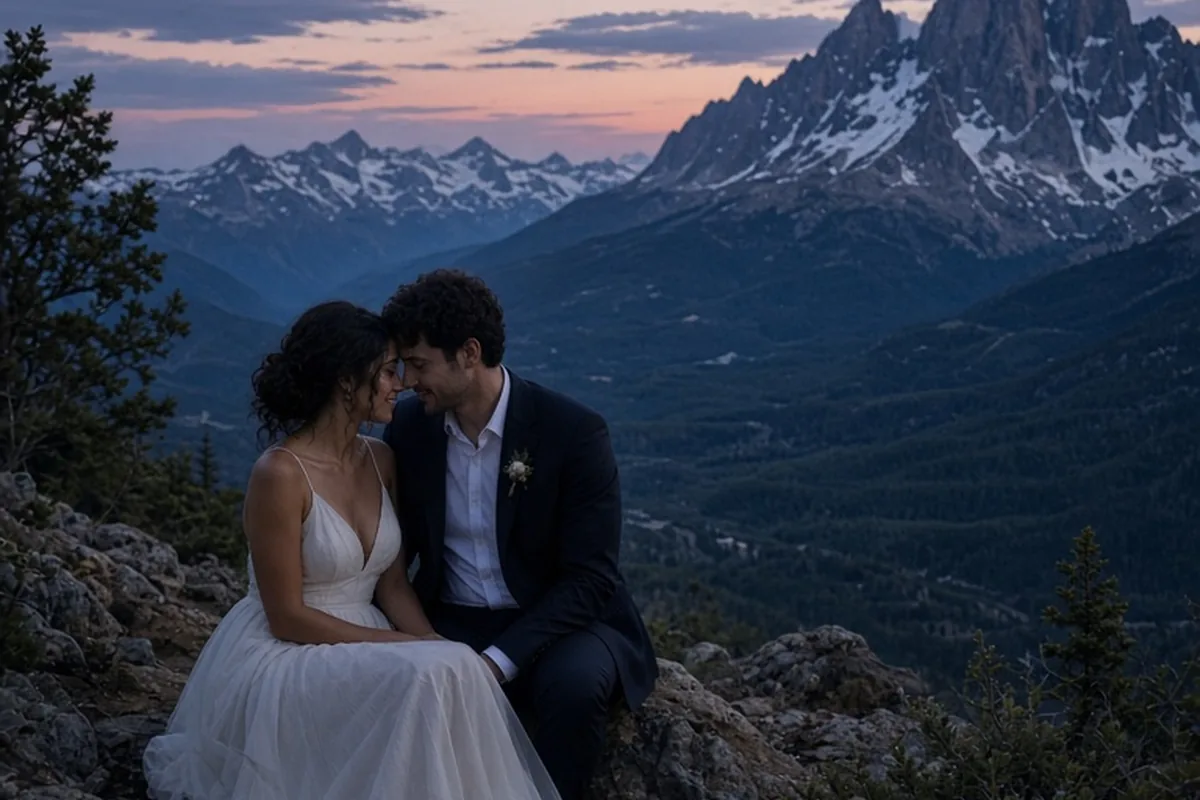
National park wedding permit hidden costs extend far beyond the initial application fee. Couples often encounter mandatory National Park Service cost-recovery charges, including hourly ranger monitoring fees, commercial use authorizations for photographers, individual guest entrance fees, special event liability insurance policies naming the federal government, refundable environmental performance bonds, and logistical expenses driven by strict park infrastructure limits and Leave No Trace rules.
A wedding in a national park offers dramatic scenery and an unforgettable atmosphere, but the administrative price tag rarely stops at the base permit fee. Because public lands operate under strict conservation mandates, hosting a private gathering requires navigating layered federal cost-recovery policies, vendor licensing rules, and rigorous logistical requirements.
Base Special Use Permit Fees Versus Mandatory Cost Recovery
When planning a wedding on federal land, your first direct transaction is typically a Special Use Permit application fee. Many couples assume this initial payment represents the total administrative cost of securing their ceremony location. In reality, National Park Service policy differentiates between an initial non-refundable processing fee and subsequent cost-recovery billing. The application fee merely initiates the staff review to determine whether your proposed date, location, guest count, and setup comply with the specific park's superintendent compendium and environmental management plan.
Under federal statutory authority, parks are legally required to recover all operational costs associated with private events rather than subsidizing them with taxpayer funds. If reviewing your application requires extensive administrative work, consultation with park cultural resource specialists, or dedicated route planning by law enforcement staff, you may receive a secondary invoice for administrative overhead before the permit is officially issued. These secondary fees depend entirely on the complexity of your event, the season, and the specific site chosen. A brief standing ceremony with ten guests at a designated amphitheater carries minimal administrative burden, whereas a fifty-person gathering near an environmentally sensitive overlook can trigger substantial staff review hours that are billed directly to the permit holder.
Park Ranger Monitoring Rates and Mandatory Staffing Overtime
Among the most common unexpected expenses on a national park wedding budget is the requirement to pay for dedicated on-site staff. Depending on the size of your party, the sensitivity of the natural habitat, and the presence of general park visitors, the park's Special Park Uses coordinator may mandate that one or more uniformed rangers monitor your event from setup through final cleanup. These monitoring assignments ensure that guests stay on designated trails, do not disturb wildlife, adhere to noise restrictions, and leave no trace behind.
Ranger monitoring is billed on an hourly basis, and rates are set by the individual park based on actual personnel costs, including benefits and administrative overhead. If your ceremony takes place outside standard park operating hours, such as during sunrise or sunset, or falls on a federal holiday, overtime rates often apply. Furthermore, the billed time generally includes the ranger's transit time from the district station to the remote ceremony site and back, not just the duration of your ceremony. If your event runs late or the teardown process takes longer than scheduled, you will be billed for the additional time, which can quickly add hundreds of dollars to your final venue expense.
Commercial Use Authorizations and Professional Vendor Surcharges
Couples frequently hire professional photographers, videographers, officiants, florists, and hair or makeup artists to accompany them into the park. However, any individual or business earning income by providing services within a national park unit must hold an active Commercial Use Authorization or a commercial filming and photography permit. These permits are legally separate from your ceremony's Special Use Permit, and securing them introduces an entirely separate layer of fees and compliance paperwork.
If a photographer does not already hold an annual Commercial Use Authorization for that specific park, they must apply for one, which carries its own non-refundable application fee and commercial liability insurance requirement. Most vendors pass these administrative fees directly to the client as an itemized travel or park compliance surcharge. If your chosen vendor attempts to work inside the park without the proper authorization, they risk citations, equipment confiscation, or being turned away at the gate, which can leave your ceremony without documentation. Verifying whether your vendors already possess valid park permits during the hiring process helps prevent unexpected budget increases.
Guest Vehicle Entrance Fees and Transit Logistics
A Special Use Permit grants your group permission to assemble at a specific location, but it almost never waives the standard per-vehicle or per-person park entrance fees for your guests. Unless your permit explicitly includes a prepaid commercial vehicle arrangement, every vehicle carrying guests, bridal party members, and hired vendors must pay the standard gate fee upon arrival. For a gathering of thirty to fifty people arriving in separate personal vehicles, entrance costs accumulate rapidly, creating either an unexpected expense for your guests or an added bulk expense if you choose to prepay their admission.
Parking limitations introduce another layer of logistical expense. Many iconic national park overlooks and historic sites have small parking areas that cannot accommodate more than a few vehicles without blocking general visitor access. As a condition of issuing your permit, the park may require your entire group to arrive via an approved chartered shuttle or commercial passenger van. Hiring private transit compliant with federal commercial vehicle standards adds substantial transportation costs that far exceed the price of the wedding permit itself, while also requiring strict scheduling coordination to match your permitted time window.
Special Event Liability Insurance and Environmental Damage Bonds
Federal regulations require event organizers to protect the government against property damage, environmental degradation, and third-party injury claims. For private events above a certain guest threshold, or those taking place in heavily trafficked zones, national parks often require proof of a comprehensive general liability insurance policy. The policy must typically provide substantial coverage, usually one million dollars per occurrence, and must explicitly list the United States of America, the Department of the Interior, and the specific National Park Service unit as additional insured entities with exact legal wording.
Purchasing a one-day event liability rider through an insurance broker adds a distinct out-of-pocket expense that must be finalized weeks before your event date. In addition to insurance certificates, some parks require couples to submit a refundable environmental performance bond or damage deposit. This deposit is held by the federal government until after your event concludes. If staff discover litter, crushed native vegetation, discarded flower petals, or unauthorized equipment at your site, the park retains part or all of the bond to fund environmental restoration, turning a temporary deposit into a permanent loss.
Site Adaptation Expenses Driven by Leave No Trace Restrictions
Holding a ceremony in a wild landscape means you cannot bring standard rental venue equipment. National parks enforce strict Leave No Trace principles and local compendium rules that prohibit items commonly used at private weddings. Prohibited items frequently include arches, arbors, amplified sound systems, portable generators, rice, birdseed, confetti, real or faux dropped flower petals, freestanding signage, and ground stakes. These restrictions mean you cannot simply rent a standard decor package and set it up outdoors.
Working within these limitations often increases your indirect expenses. Because you cannot bring generators or plug into park electrical outlets, you may need to invest in silent battery power stations or hire acoustic musicians rather than electric sound performers. If your guest list includes elderly relatives who require seating, the park may limit you to portable folding chairs placed only on durable surfaces like gravel or rock, prohibiting seating on alpine meadows or cryptobiotic soil. You may also need to hire additional vendor staff specifically to hand-carry lightweight equipment to and from the site without using motorized carts, increasing overall labor billing.
Steps to Audit Your National Park Wedding Expenses Before Applying
To avoid unexpected financial surprises, establish direct communication with the Special Park Uses coordinator at your chosen park before submitting non-refundable paperwork. Request a comprehensive breakdown of all mandatory fees associated with your proposed site, including expected staff monitoring hours, overtime triggers, and site-specific restrictions. Because regulations and cost-recovery schedules vary widely between parks like Yosemite, Great Smoky Mountains, Zion, and Acadia, generic wedding planning advice cannot substitute for current local park guidance.
When assembling your initial budget, create separate line items for administrative processing, prospective ranger billing, insurance premiums, vendor commercial permits, guest transit, and contingency funds for weather shifts. Ask the coordinator whether your ceremony site has an alternate bad-weather location covered under the same permit fee or if weather relocations require a second permit application. Clarify payment deadlines, refund policies in the event of wildfire closures or government shutdowns, and whether commercial shuttle passes can be bundled under your primary authorization. Taking these investigative steps early ensures your wilderness wedding remains financially predictable and fully compliant with federal land management laws.
Frequently asked questions
Are national park wedding permit fees refundable if extreme weather cancels the event?
Base permit application fees and administrative review costs are virtually never refundable, as they cover staff time already spent processing your paperwork. However, if a park is closed entirely due to wildfires, natural disasters, or federal government shutdowns, cost-recovery deposits and unspent ranger monitoring fees are usually refunded or credited toward a rescheduled date.
Can wedding guests use their America the Beautiful interagency passes to enter for our ceremony?
Yes, individual guests who already own an active America the Beautiful pass or senior pass can use their card for vehicle entry at standard gate checkpoints. However, possessing an interagency pass does not waive Special Use Permit fees, monitoring charges, or commercial shuttle entrance fees required for your organized group.
Do intimate elopements with no guests still incur hidden park fees?
Even two-person elopements incur expenses beyond the application fee, such as Commercial Use Authorization fees for your photographer, personal vehicle park entrance fees, and potential ranger monitoring charges if your chosen ceremony site sits in a fragile or restricted management zone.
How far in advance should we contact the park to clarify all wedding costs?
You should reach out to the park's Special Park Uses office six to twelve months prior to your target wedding date. This timeline allows park staff to review your specific site request, clarify mandatory insurance requirements, determine whether ranger staffing is required, and outline all vendor compliance steps before you pay non-refundable deposits.
Your next step
Contact the Special Park Uses coordinator at your specific destination park to request their current cost-recovery fee schedule and commercial vendor rules before paying non-refundable permit deposits.