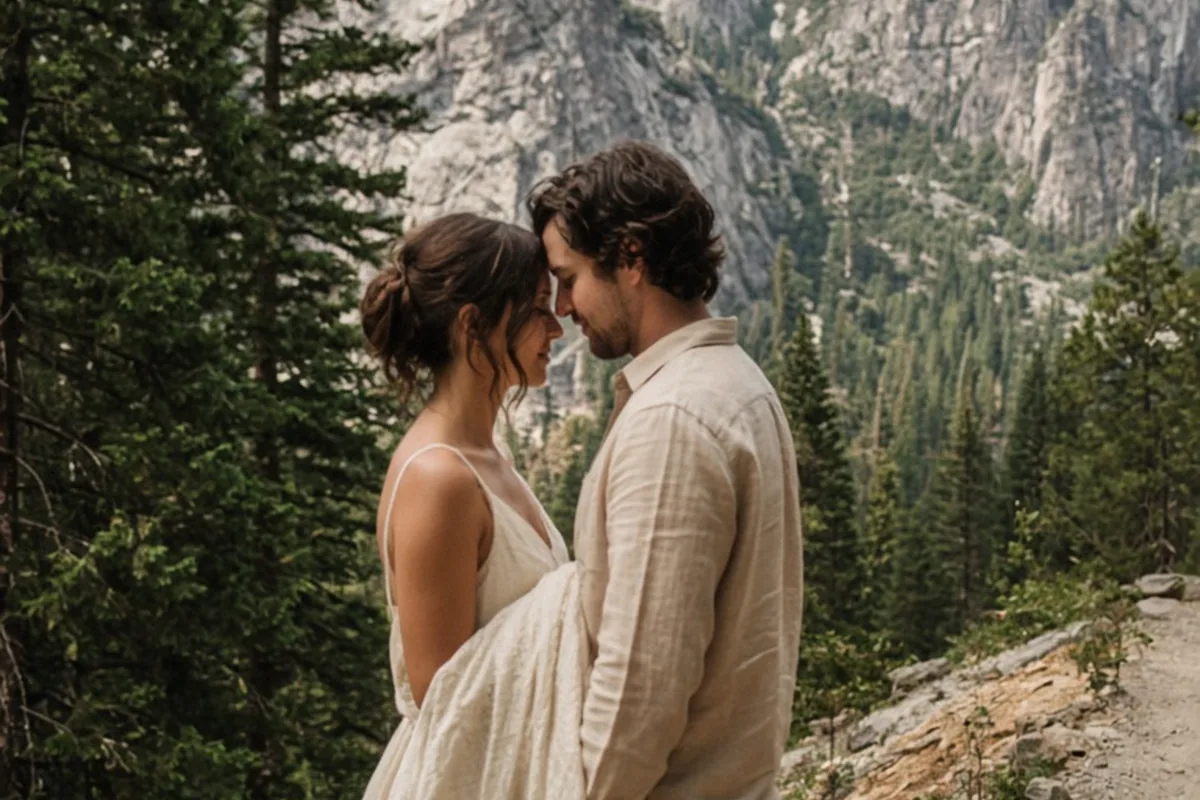
To hold a small wedding in a US national park, you must secure a Special Use Permit from the specific park administration, choose an officially designated ceremony location that matches your guest count, and comply with strict environmental regulations. Applications typically require a non-refundable processing fee, advance notice ranging from several weeks to a year, and adherence to Leave No Trace principles, which restrict decor, amplified sound, and off-trail access.
Exchanging vows surrounded by towering granite cliffs, ancient forests, or vast desert basins offers an unforgettable setting for an intimate gathering. However, public lands are protected ecosystems managed under precise federal and local conservation mandates, making permit research your most important early planning step.
Navigating the National Park Service Special Use Permit Process
Every national park operates as an independent administrative unit under the National Park Service, which means permit guidelines, processing timeframes, and fee schedules are never identical across different parks. A Special Use Permit is legally required for any organized event, including elopements with just an officiant and couple, as well as seated gatherings of twenty to fifty guests. The permit grants temporary, non-exclusive permission to occupy a specific zone of public land for a designated time window, but it does not close the area to other park visitors or grant private ownership of scenic overlooks.
To initiate the process, identify the Special Park Uses or Concessions office on the official website of your chosen park. Most parks provide downloadable permit application forms that require you to state the requested date, alternative backup dates, exact start and end times, estimated guest counts, vehicle counts, and planned equipment. Processing fees cover the administrative cost of reviewing and monitoring your event. Because park offices handle thousands of land-use requests annually, submission windows can range from twelve months in advance to a mandatory cutoff of forty-five or sixty days prior to your date. Contacting the specific park permit coordinator before mailing your application helps confirm current site capacities and avoid preventable administrative rejections.
Matching Approved Ceremony Sites to Your Guest Count and Mobility Needs
National parks categorize wedding sites according to ecological sensitivity, parking capacity, and trail congestion. Popular parks publish a finite roster of pre-approved ceremony locations, specifying maximum allowable attendees for each spot. In high-traffic parks like Yosemite, Rocky Mountain, or Grand Canyon, intimate sites along narrow ridge trails may cap attendance at ten or fifteen individuals, while developed amphitheaters or paved overlooks can comfortably accommodate groups of thirty to fifty. Deviating from these designated zones into open wilderness requires special administrative review and is often declined to prevent habitat degradation.
When evaluating permitted locations for a small wedding, look closely at physical accessibility and transit practicalities rather than relying solely on promotional landscape photos. An overlook that involves a two-mile rocky approach over uneven granite may delight adventurous couples, but it presents serious safety risks for elderly relatives, young children, or guests with limited mobility. Paved scenic pullouts, historic park chapels, and accessible boardwalk overlooks provide panoramic vistas while remaining fully compliant with the Americans with Disabilities Act. Factoring in elevation changes, altitude sickness risks at high-elevation parks, and available restroom facilities ensures all guests can safely experience your ceremony.
Designing a Low-Impact Ceremony Setup Within Strict Decor Rules
National park wedding permits are built around preserving natural conditions and protecting local wildlife from human disturbance. As a result, standard wedding decor elements are universally restricted. Most park superintendents prohibit the installation of temporary structures, including floral arches, ground stakes, canopies, arches, freestanding backdrops, and runner rugs over natural soil or vegetation. Seating is typically limited to a small number of folding chairs reserved exclusively for guests with documented medical or mobility needs, with all other attendees standing on durable surfaces.
Floral and celebration choices also carry strict ecological limitations. Releasing non-native substances into the environment—such as tossing rice, dried confetti, paper hearts, birdseed, or flower petals—is strictly forbidden because it introduces invasive plant seeds or hazardous foreign food sources to native wildlife. Many desert and forest parks prohibit live cut flowers that could shed seeds, encouraging locally sourced native arrangements or artificial faux florals that are thoroughly secured against wind gusts. Open flames, candles, battery-powered sparklers, lanterns, and loud sound systems or amplified acoustic equipment are generally banned to prevent wildfire hazards and maintain natural soundscapes for surrounding visitors.
Managing Commercial Use Authorizations for Photographers and Vendors
Hiring professional vendors for a national park ceremony introduces an additional layer of regulatory compliance beyond your personal Special Use Permit. Photographers, videographers, officiants, mountain guides, and private shuttle drivers operating inside park boundaries are conducting commercial business on federal property. In many parks, commercial service providers must hold an active Commercial Use Authorization, maintain proof of commercial general liability insurance naming the US Government as an additional insured party, and pay an independent vendor processing fee.
Before signing binding contracts with wedding professionals, verify whether your target park requires vendors to possess an existing Commercial Use Authorization or if your personal Special Use Permit covers hired service providers under your group umbrella. Some parks permit a couple's still photographer to operate under the event's single permit provided the photographer uses handheld gear, natural lighting, and no freestanding tripods, light stands, or reflectors that block foot traffic. Clarifying these expectations early prevents situations where an uninsured or unauthorized vendor is stopped by uniformed law enforcement rangers on your wedding day.
Scheduling Permits Around Peak Tourist Seasons and Weather Extremes
Securing a permitted slot requires strategic alignment between public visitation patterns, seasonal park infrastructure, and regional climate patterns. During peak tourist months from June through August, popular parks experience heavy vehicle congestion, crowded trails, and limited parking spaces. Selecting a shoulder season—such as late spring or early autumn—often yields cooler temperatures, reduced foot traffic, and easier permit approval. However, shoulder seasons also bring rapid weather transitions, such as early snowstorms in high-alpine environments or flash-flood risks in desert slot canyons.
Timing your permitted ceremony block for sunrise or early morning offers substantial advantages for small weddings. Morning hours experience significantly lighter trail traffic, calm wind conditions, soft natural lighting for photography, and ample available parking at trailheads. By contrast, sunset ceremonies coincide with peak evening tourist gatherings at famous viewpoints, making it harder to maintain intimacy and clear sightlines. Always research seasonal road closures; high-elevation pass roads in parks like Glacier, Mount Rainier, or Rocky Mountain often remain closed by snow well into late June or early July, which could cut off access to your chosen site.
Establishing Reliable Transportation and Parking Strategies for Guests
Vehicle access is one of the most strictly regulated elements of national park wedding permits. Scenic pullouts and permitted trailheads frequently have parking lots limited to ten or fifteen spaces that are shared with the general public. Park permits explicitly state that a permit does not guarantee reserved parking spots for your bridal party or guests. If twelve separate guest cars arrive at an overlook with only five open stalls, your ceremony timeline will experience severe delays, and illegally parked vehicles risk being ticketed or towed by park rangers.
To eliminate transit stress, require all attendees to carpool in one or two larger vehicles or hire a licensed commercial passenger van that holds the necessary commercial park credentials. In parks with mandatory internal shuttle networks, such as Zion Canyon or parts of Grand Canyon, private vehicles may be barred entirely during peak operational months. In those locations, your group must ride the public shuttle system or arrange specialized authorized transport. Include detailed driving instructions, park entrance fee information, digital pass requirements, and offline maps in your guest communications, as cellular reception inside park boundaries is rarely dependable.
Building Practical Weather and Environmental Contingency Plans
Outdoor public land environments expose your wedding day to unpredictable natural forces, including sudden rainstorms, high winds, wildfires, heavy smoke, rockfalls, and sudden temperature plunges. Because national park permits apply to specific dates, times, and designated GPS coordinates, you generally cannot relocate your ceremony to a different covered pavilion or indoor visitor facility on a moment's notice without violating your permit terms. Most park offices do not issue refunds or allow last-minute location modifications if severe weather renders your outdoor spot inaccessible.
Developing a robust contingency plan means securing a private, off-park backup venue nearby—such as a rented mountain cabin, a covered lodge veranda, or a private event room in an adjacent gateway town—where you can seamlessly pivot your reception and ceremony if needed. If your permit allows the ceremony to proceed in light rain, instruct guests in advance to bring clear umbrellas, sturdy waterproof footwear, and warm, earth-toned outerwear that complements the natural landscape. Preparing your guests for shifting conditions keeps the focus on your celebration rather than discomfort or environmental exposure.
Frequently asked questions
Can we set up a small arch and chairs for our national park wedding?
Most national parks prohibit structural arches, freestanding arbors, rugs, and decorative aisles to protect fragile terrain and prevent trail obstructions. Folding chairs are generally restricted to a limited quantity reserved strictly for guests with physical mobility or medical needs.
How far in advance should we apply for a national park wedding permit?
Application windows vary by park, but most permit offices accept requests between six and twelve months before the event date, with a typical minimum deadline of thirty to sixty days prior. High-demand parks fill their designated ceremony allocations quickly, so early submission is strongly advised.
Does a wedding permit give us private, exclusive use of the scenic overlook?
No. A Special Use Permit allows you to hold your ceremony in an approved area, but it does not grant exclusive territory or allow you to close public trails, viewpoints, or parking lots. General park visitors are still entitled to share the space respectfully.
Your next step
Visit the official National Park Service website for your intended park, navigate to the Special Park Uses section, and download the current Special Use Permit application along with the list of approved ceremony locations to verify current deadlines and group capacity limits.