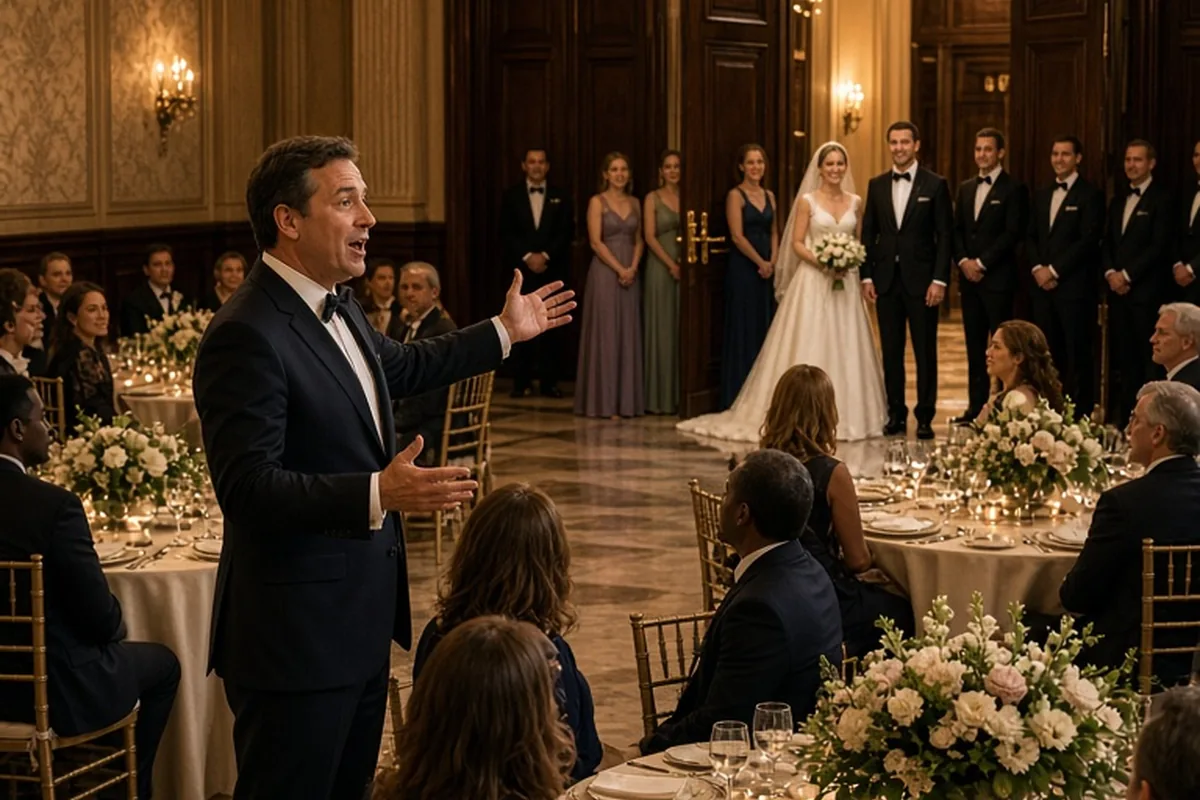
To plan your wedding reception timeline, start by anchoring non-negotiable times: dinner service, venue curfews, and sunset for photography. From there, organize the flow into distinct phases: cocktail hour, grand entrances, meal service, toasts, formal dances, open dance floor, and the final send-off. Build in ten to fifteen minutes of buffer time across the evening to absorb minor kitchen or photo delays without cutting into dancing.
A wedding reception is both a celebratory party and a complex live production involving dozens of moving parts, multiple independent vendors, and scores of excited guests. Without a clear chronological blueprint, an evening can quickly feel rushed, chaotic, or disjointed, leaving guests waiting in confusion while key moments get squeezed against strict venue curfews.
Anchor the Fixed Points: Sunset, Catering Service, and Venue Curfew
Every functional reception schedule is built backwards from firm operational boundaries rather than an abstract wishlist. Before you pencil in specific moments like the cake cutting or first dance, identify the three immovable anchors of your evening: your venue's contracted end time, your caterer's exact service window, and the local sunset time if outdoor photographs are planned. Venues strictly enforce sound limits and teardown windows, which means your music often needs to cut off thirty to sixty minutes before your rental contract concludes so staff can clean without incurring expensive overtime penalties.
Your catering service constitutes the second major anchor. Kitchens require specific timing to ensure food quality, proper temperature, and coordinated plate delivery. Plated meals demand strict synchronicity between servers and culinary staff, while buffets require crowd management to prevent bottlenecking. Once your caterer confirms how long meal preparation and service take, lock that block in place. Similarly, if your photographer plans golden-hour portraits during the reception, consult a seasonal ephemeris for sunset times on your date. By establishing these non-negotiable points first, you prevent the common logistical mistake of planning an unrealistic sequence of events that the kitchen or venue cannot accommodate.
When calculating these anchors, always ask your venue coordinator about neighborhood noise ordinances and facility turnover rules. A venue located in a residential area may require all amplified sound to move indoors or lower in volume earlier in the evening than a commercial ballroom. Knowing these hard limits at the outset gives you a reliable framework, ensuring that any adjustments made later do not trigger municipal fines or unexpected vendor fee adjustments.
Transitioning from Cocktail Hour to the Grand Entrance and First Dance
Cocktail hour serves as the primary social bridge between your ceremony and the formal reception, typically running sixty minutes. This window provides your guests with drinks, hors d'oeuvres, and comfortable mingling while giving your photographer time to complete formal family portraits and wedding party photos. If your photography plan requires travel between distant locations, you may consider extending this window slightly, but keeping it focused ensures guests remain engaged rather than growing restless or overly hungry before dinner.
Moving a hundred or more people from a cocktail patio or lounge into a main dining room always takes longer than couples anticipate. Schedule at least ten to fifteen minutes simply for guests to find their assigned tables, locate place cards, and sit down. Your master of ceremonies or band leader should make a clear, upbeat announcement directing guests to take their seats before the wedding party lines up behind closed doors. Attempting to execute an entrance while half the room is still waiting in line at the bar or searching for their table creates awkward pauses and diminishes the celebratory impact of your arrival.
Once everyone is seated, you face a strategic sequencing decision: whether to roll directly from your grand entrance into your first dance, or to postpone the first dance until after dinner. Transitioning straight from the entrance onto the dance floor focuses all eyes on you while guests are already attentive, and it checks off a major spotlight moment before dinner begins. Conversely, saving the first dance until the end of dinner works well if you prefer to change into a secondary outfit, freshen up, or use the dance to formally open the floor for general dancing. Choose the flow that best matches your personal comfort and dress logistics.
Structuring Wedding Reception Meal Formats and Seating Flow
Dinner service shapes the central block of your reception and dictates the pacing of the entire midpoint of the evening. The meal format you select directly controls how long this portion lasts. Plated multi-course meals generally offer the most formal atmosphere, but they require substantial operational coordination. In a plated setup, service often runs between seventy-five and ninety minutes from the first course to dessert, depending on guest count and staffing ratios. Because guests remain seated throughout, this format creates a natural, captive setting for gentle background music and low-volume conversation.
Buffets, family-style platters, and interactive food stations introduce very different scheduling requirements. Buffets necessitate phased table release to avoid long, stagnant lines that frustrate guests. A common practice is having your event coordinator, planner, or band leader quietly invite two tables at a time to approach the buffet line. This process requires roughly forty-five to sixty minutes for an average-sized guest count to move through the line and receive their food. Family-style meals deliver rapid service to all tables simultaneously but require ample table space and attentive dish clearing before subsequent activities can begin.
Regardless of the service style, plan the order of service so that you and your partner eat first. Couples often make the mistake of greeting guests table-by-table while their own food sits cold on the head table. Serving the couple and the immediate wedding party first ensures you finish eating early, giving you a comfortable window to step away for sunset photos, visit with guests while they finish their entrees, or take a private five-minute breather together before the high-energy portion of the evening starts.
Timing Toasts, Cake Cutting, and Parent Dances Without Losing Momentum
Formal reception traditions—such as toasts, parent dances, and cake cutting—add deep sentimental value, but grouping them poorly can drag out the timeline and stall the room's energy. A reliable approach is placing brief toasts near the conclusion of the meal. Scheduling speeches toward the end of dinner, when guests already have food and a fresh drink in hand, keeps the room seated and attentive without delaying meal service. Give each speaker a clear, respectful recommendation to keep remarks under three to four minutes, and limit the total number of speakers to three or four to preserve the evening's flow.
Cake cutting functions best as an operational transition rather than a standalone event that stops the party. Many experienced planners recommend holding the official cake-cutting moment right as dinner wraps up or immediately after toasts. This allows your photographer to capture the ceremonial cut, after which catering staff can wheel the cake into the kitchen to slice and distribute it alongside coffee while formal dances begin. Halting a packed, energetic dance floor an hour into the party just to watch someone cut dessert invariably deflates the room's momentum.
Parent dances, such as the father-daughter or mother-son dances, fit naturally right before the general dance floor opens. Positioning these spotlight dances back-to-back creates a cohesive emotional crescendo. To prevent guests from feeling like spectators for an extended stretch, consider having your band or DJ fade parent dance tracks out around the two-minute mark rather than playing full four-minute album cuts. Following the final parent dance, your musical host should immediately invite everyone to join you on the floor with a universally recognized, high-energy track to kick off open dancing with maximum crowd participation.
Sustaining Dance Floor Energy and Managing Late-Night Momentum
Once general dancing begins, avoid micro-managing the timeline with constant announcements or interruptions. The most successful parties allow dancing to build organic momentum over a continuous block of ninety minutes to two hours. If you plan to include traditions such as a bouquet toss or garter toss, execute them swiftly about halfway through the dancing block. Better yet, evaluate whether those traditions genuinely fit your personal style, as many couples now opt to skip them entirely to keep the musical set uninterrupted.
A common point of friction during late-night dancing involves the open bar and guest fatigue. If your reception extends past four or five hours, guests naturally burn off dinner energy and appreciate a secondary burst of fuel. Introducing late-night snacks—such as sliders, flatbreads, fries, or street tacos—about an hour or ninety minutes before the final song provides welcome revitalization. Coordinate with your caterer so food is served in easy, hand-held portions directly near the dance floor or perimeter lounge rather than requiring guests to sit back down at dining tables.
Keep open communication with your DJ or band leader throughout this phase. A skilled entertainer reads the room, shifting tempos to bring people together and knowing when to play sing-along anthems versus current dance hits. Trust your musical professionals to read the crowd dynamics rather than strictly adhering to a rigid minute-by-minute playlist, as real dance floor energy requires responsive adaptation to the room's mood.
Managing the Grand Exit, Vendor Wrap-Up, and Teardown Logistics
The conclusion of your reception requires clear operational oversight to ensure a safe, organized departure that avoids venue overtime penalties. If you are planning a formal send-off—such as sparklers, bubbles, or ribbon wands—decide whether you prefer a true final exit or a staged send-off. A staged exit involves stepping outside with immediate family and enthusiastic guests thirty to forty-five minutes before the party ends, taking photos, and then returning to the dance floor. This allows your photographer to capture the iconic exit photos and depart before their contracted hours expire, saving you overtime costs.
If you prefer a true final exit where everyone departs simultaneously, schedule the last call at the bar for thirty minutes before the music ends, and have the DJ play the penultimate and final songs clearly announcing the conclusion of the evening. Designate a trusted friend, family member, or day-of coordinator ahead of time to collect personal belongings, gifts, cards, and sentimental decor items. You and your new spouse should not spend the final thirty minutes of your wedding night packing centerpieces, loading card boxes into vehicles, or searching for misplaced coats.
Finally, ensure your timeline provides your rental companies, florist, and catering staff adequate teardown time. If your venue contract specifies that everyone must be off the premises by eleven o'clock at night, the music must stop by ten o'clock to provide rental crews sixty minutes to dismantle audio setups, clear tables, and pack glassware. Reviewing these contractual teardown parameters with your venue manager during final walkthroughs guarantees a stress-free finish without security deposit deductions.
Frequently asked questions
How long should an average wedding reception last?
Most standard wedding receptions last between four and five hours, typically including a one-hour cocktail period, a ninety-minute dinner and toast segment, and two to two-and-a-half hours of open dancing. Expanding beyond five hours often leads to guest fatigue unless you incorporate distinct late-night entertainment or an after-party venue.
Where should we build buffer time into the reception schedule?
The most effective places for five to ten-minute buffers are immediately after the cocktail hour seating call and right after dinner service concludes. These transitions routinely take longer than expected as guests visit the restrooms, freshen drinks, and find their seats.
Should we do table visits during the reception or host a receiving line?
Table visits during dinner are popular, but visiting fifteen to twenty tables often leaves the couple with no time to eat their own meal. Many couples find success either greeting guests as they exit the ceremony, mingling during cocktail hour, or spending ten minutes visiting older relatives right after finishing their entrees.
When should the photographer depart if our reception runs late?
Photographers rarely need to stay until the very last song unless you require photo coverage of teardown. Most couples schedule their photography package to wrap up roughly thirty minutes into open dancing or immediately following a staged send-off, capturing all major formalities without paying for unused late-night hours.
Your next step
Draft a preliminary one-page timeline that lists your venue curfew and meal service window, then email it to your caterer and photographer to verify realistic transition times before printing final schedules.