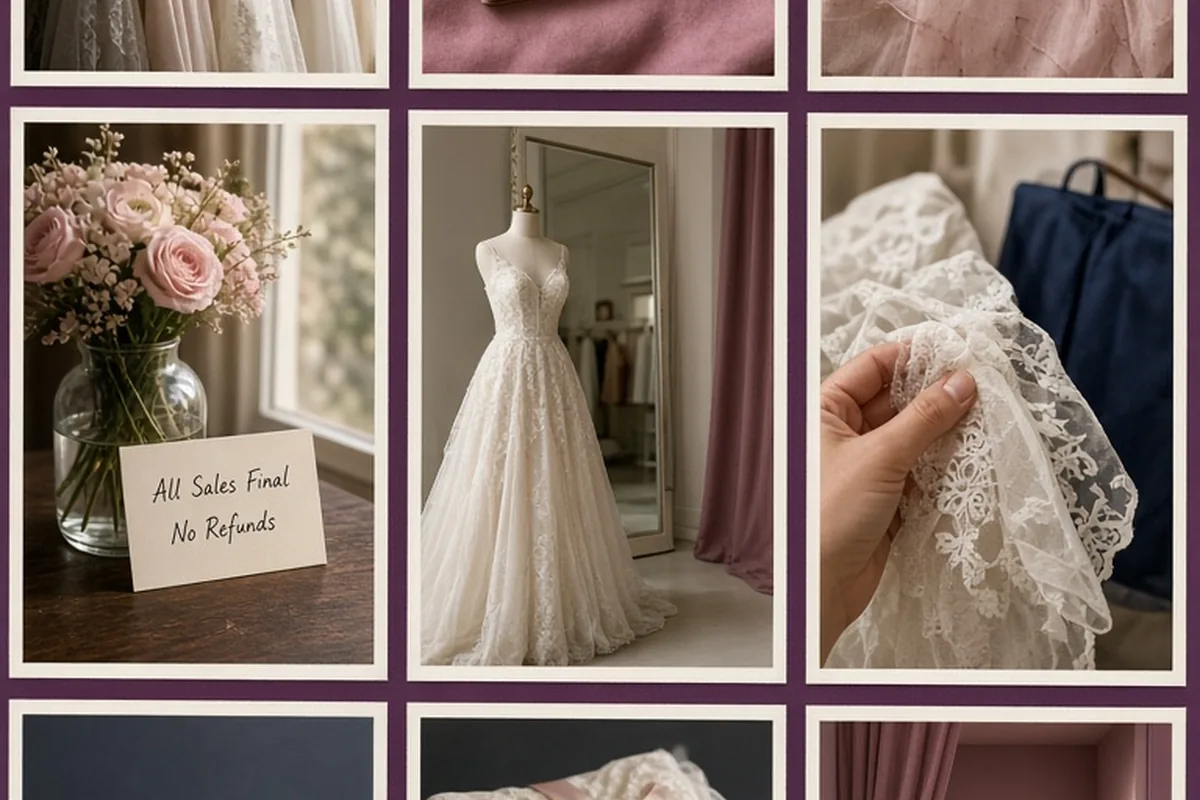
Before booking an appointment to shop sample wedding dresses for sale, ask the boutique about appointment fees, available sample sizes and designers, current dress conditions, payment requirements, and take-home timelines. Inquire whether alterations are handled in-house and whether gowns are sold strictly as-is with all sales final. Clarifying these logistics in advance ensures the boutique carries styles fitting your proportions, prevents unexpected costs for cleaning and tailoring, and protects your wedding budget before you commit.
Shopping for sample wedding dresses offers an effective way to purchase high-end designer bridal gowns at a fraction of their original retail price. Because sample gowns are floor models that have been tried on by previous shoppers, the purchasing process differs significantly from ordering a brand-new gown made to your exact measurements.
Navigating a sample sale successfully requires clarity before you ever step into a fitting room. Knowing what questions to ask before booking your appointment helps you avoid non-refundable consultation fees, incompatible size selections, and unbudgeted repair expenses.
Confirming Salon Appointment Policies, Fees, and Time Limits
Bridal boutiques handle sample appointments differently than traditional bridal consultations. When booking, ask whether the appointment requires a non-refundable booking fee and whether that fee is applied toward a dress purchase if you find your gown. Some boutiques charge higher fees for weekend slots or private VIP appointments, while offering complimentary or discounted weekday consultations. Clarifying the fee structure in advance prevents surprise charges on your card and helps you schedule on a day that maximizes your budget.
You should also ask about the duration of the appointment and guest capacity rules. Traditional bridal fittings often last 90 minutes or two hours, but dedicated sample sale appointments can be compressed to 45 or 60 minutes due to high demand. Knowing the exact time limit allows you to plan your decision-making strategy. Additionally, sample sale rooms can be compact, prompting boutiques to restrict guest counts to one or two trusted companions. Asking about guest limitations beforehand ensures you do not arrive with an entourage that the boutique cannot comfortably accommodate.
Inquire about cancellation and rescheduling windows. Life events or schedule changes can arise, and sample sale policies are often stricter than standard bridal consultations. Ask how many days or hours of notice are required to cancel or transfer your appointment time without forfeiting your booking deposit.
Inquiring About Sample Wedding Dress Inventory and Designer Sizing
Bridal sizing runs differently from standard ready-to-wear street sizing, frequently running one to two sizes smaller than everyday apparel. Before reserving an appointment, ask the boutique what range of bridal sample sizes they currently have on the sales floor. If a salon primarily carries sample sizes 8 and 10, those gowns will generally fit someone who wears a street size 4 or 6. If you wear a street size 12 or higher, you need to confirm that the boutique has a dedicated curve or plus-size sample selection available to try on.
Ask if specific designers, silhouettes, or collections are included in the sample inventory. Boutiques periodically rotate floor samples when designers discontinue styles or when new seasonal collections arrive. If you have your heart set on a specific fabric, such as silk crepe, or a particular silhouette like a structured ballgown or sleek column dress, ask the stylist if those categories are well-represented in the discounted inventory. This prevents spending time and booking fees at a salon whose sample selection does not match your personal aesthetic.
Request information on how often the boutique updates its sample rack. Some shops maintain an ongoing off-the-rack section that is refreshed weekly, while others host concentrated, seasonal inventory clear-outs where hundreds of gowns are added at once. Understanding where the boutique stands in its inventory cycle helps you gauge the variety of options you can expect to browse.
Evaluating Physical Wear, Tear, and Repair Feasibility on Floor Gowns
Because sample gowns are handled, clipped, and tried on by numerous shoppers, they inevitably experience varying levels of wear. When speaking with the salon coordinator, ask about the general condition standards of their sample inventory. Are the gowns gently used runway samples, or have they been on the sales floor for multiple seasons? Understanding the baseline condition helps set realistic expectations for your fitting.
Ask whether the boutique identifies and documents existing defects prior to purchase. Critical areas prone to damage include delicate illusion mesh, zipper seams, hook-and-eye closures, beaded applique edging, and bottom hemlines that sweep the floor. Inquire whether the salon has a formal inspection checklist they review with you at checkout, ensuring you are fully aware of any missing buttons, loose threads, or makeup marks along the neckline before finalizing your transaction.
Clarify whether the shop offers professional cleaning services prior to release or if the gown must be cleaned independently. Some boutiques steam and spot-clean their sample dresses before placing them on the rack, while others sell them directly as-is, leaving professional dry cleaning to the buyer. Because specialized bridal dry cleaning involves solvent testing on delicate lace and beading, knowing this responsibility in advance allows you to factor cleaning quotes into your overall dress expenditure.
Asking About In-House Alterations, Tailoring Limits, and Realistic Timelines
Sample dresses are rarely an exact fit off the rack and will almost certainly require tailoring to match your proportions. Ask the boutique whether they offer in-house alteration services for sample purchases or if you will need to outsource tailoring to an independent bridal seamstress. In-house departments familiar with specific designer construction can often evaluate complex structural modifications right in the fitting room, whereas outside seamstresses will require separate consultation appointments.
Ask what general alteration boundaries they recommend for their sample dresses. As a general tailoring standard, gowns can comfortably be taken down up to two full sizes without distorting the bodice proportions, side seams, or cup placement. However, letting a dress out is severely limited by the seam allowance left inside the gown by the manufacturer. Asking the stylist to check internal seam allowances on prospective dresses protects you from buying a gown that cannot physically be expanded to your measurements.
Inquire about alteration lead times, especially if your wedding date is approaching quickly. Off-the-rack sample shopping is ideal for short engagement timelines, but skilled bridal seamstresses often book out several months in advance during peak wedding seasons. Ask the shop for realistic turnaround times and whether they maintain a vetted referral list of experienced bridal tailors who take rush projects.
Clarifying Payment Terms, Final Sale Policies, and Same-Day Take-Home Logistics
Financial terms for sample sales differ dramatically from custom gown orders. Traditional special-order dresses usually require a partial deposit upon ordering, with the balance due upon arrival months later. Sample gowns, by contrast, almost always require 100 percent payment in full at the time of purchase. Ask the boutique about their accepted payment methods, processing fees, and whether split-payment options or financing arrangements are available.
Confirm the store's policy regarding returns, exchanges, and cancellations. Sample bridal gowns are almost universally sold under strict final-sale terms with no returns, refunds, or store credits permitted under any circumstance. Understanding this policy underscores the importance of being completely confident in your choice before signing the sales contract and swiping your payment card.
Ask about the physical handover logistics: do you take the dress home with you on the day of the appointment, or can the boutique store it temporarily? If you must transport the gown immediately, ask if the purchase includes a breathable bridal garment bag or if you need to purchase one separately. If you live in an apartment with limited closet space or want to keep the gown hidden from your partner, asking if the boutique offers short-term storage or preservation boxing is an essential logistical step.
Distinguishing Between Dedicated Flash Sales and Everyday Sample Racks
The environment in which you shop can significantly influence your comfort level and decision-making clarity. Inquire whether your appointment falls during a high-volume flash sample event or if you will be browsing an everyday sample rack during regular business hours. Flash sales are typically fast-paced, competitive events with strict limits on the number of dresses you can bring into the fitting room at one time, creating an energetic but intense atmosphere.
Everyday sample appointments, conversely, offer a more relaxed, consultative environment similar to standard bridal shopping. You receive dedicated attention from a stylist who can assist with clipping, unzipping, and exploring veil pairings. Asking the boutique to clarify the format of your appointment allows you to prepare mentally, assemble the right decision-makers, and choose the shopping setting that best matches your temperament.
Ask whether temporary gown holds are permitted during your appointment. While dedicated flash sales strictly prohibit holds to keep inventory moving among competing shoppers, some boutique sample sections may allow a courtesy hold of 24 to 48 hours for a small fee while you consult an outside tailor. Knowing the hold policy in advance prevents the heartbreak of leaving to think over a decision only to have the gown purchased by another bride an hour later.
Frequently asked questions
How far in advance should I ask these questions before booking an appointment?
Contact the bridal boutique at least one to two weeks before your desired appointment date. High-demand sample sale slots often fill up quickly, and clarifying policies early ensures you secure a time that aligns with your schedule and shopping goals.
Can I negotiate the price of a sample wedding dress at a boutique?
Price flexibility depends on the boutique and the condition of the specific gown. While major flash events usually feature non-negotiable fixed clearance prices, salons selling ongoing floor samples may consider reasonable offers if a dress exhibits noticeable wear, missing beading, or broken fasteners.
What undergarments and shoes should I bring to a sample dress fitting?
Bring seamless nude undergarments, a strapless bra or adhesive cups, and heels similar in height to what you plan to wear on your wedding day. Proper undergarments help you accurately evaluate the fit, neckline support, and hemline length of each floor gown.
Are alterations typically more expensive on a sample wedding dress?
Alteration costs can be higher if the sample dress requires substantial resizing, lace re-positioning, or structural repairs to zippers and boning. Always factor potential tailoring and dry cleaning expenses into your total sample dress budget.
Your next step
Call your target bridal boutique with your street size, wedding date, and maximum total budget to confirm their current sample inventory and appointment policies before paying a booking fee.