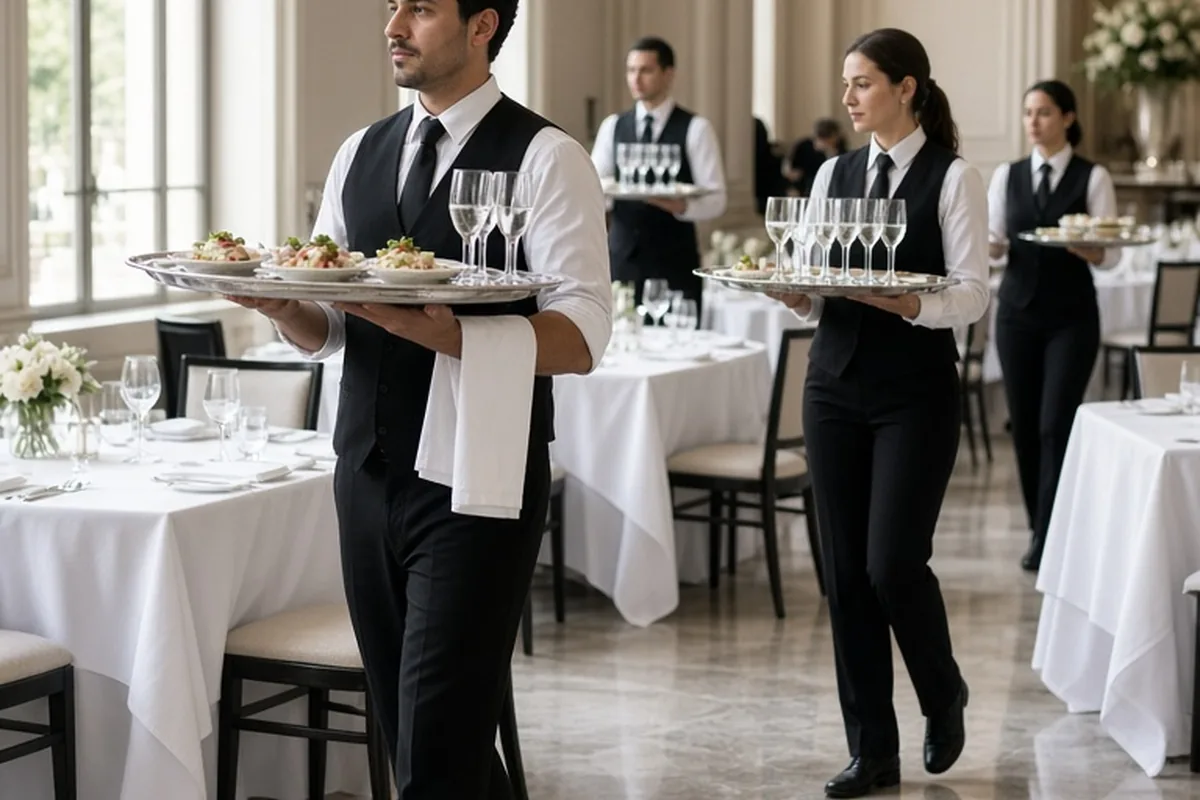
A wedding reception is the celebratory gathering held after a marriage ceremony to host, feed, and entertain guests. Planning a successful reception involves selecting a catering format, establishing a realistic schedule of events, arranging a room layout that supports movement and conversation, and coordinating key moments like toasts, dances, and meal service so guests feel welcome and engaged throughout the event.
While the ceremony represents the legal and emotional commitment of a marriage, the reception is where hosts and guests spend the majority of their time, attention, and hospitality budget.
Choosing Your Reception Style: Plated, Buffet, Family-Style, or Cocktail
Your choice of meal service establishes the pacing, formality, and physical movement of your reception. A traditional plated dinner offers the most structured timeline because venue staff serve every guest simultaneously, allowing you to predict almost down to the minute when speeches or special dances can begin. However, plated service requires higher staffing ratios, precise RSVP meal counts gathered weeks in advance, and designated place cards indicating each guest's protein selection to ensure servers deliver plates accurately without pausing the room's momentum.
Buffet service provides guests with varied portion sizes and menu flexibility, making it an appealing option for diverse dietary preferences. The operational challenge lies in queue management. Without deliberate table release schedules managed by a coordinator or band leader, buffets create extended bottlenecks where some tables finish dessert before the last tables have received their first course. Stations and heavy cocktail-style receptions offer a modern, informal alternative where guests mingle continuously throughout the evening. This approach encourages high energy and social movement, though it requires ample lounge seating and continuous clearing by venue staff to prevent empty glassware and discarded small plates from cluttering cocktail tables.
Building a Realistic Wedding Reception Timeline
A well-structured reception timeline balances planned events with unstructured social time, preventing guests from feeling either rushed or bored. The sequence typically opens with a cocktail hour, which provides a comfortable buffer for photography, arrival transitions, and early socializing while light bites and beverages are served. Once guests transition into the main dining area, the transition from welcoming remarks to dinner service should happen promptly. If toasts are scheduled, grouping them during the salad or entree course helps maintain energy without halting service for an extended period.
The midpoint of the evening marks the shift from formal dining to open celebration. Introducing the first dance immediately after dinner or right after the grand entrance sets an early tone, but holding the parent dances until the dance floor officially opens creates a natural bridge into high-energy dancing. Build ten to fifteen minutes of quiet padding into the overall schedule before major transitions like cake cutting or late-night snacks. Caterers occasionally face kitchen delays, speeches routinely run longer than anticipated, and unexpected weather shifts can require quick schedule pivots. Having buffer time built into the plan protects the evening from feeling frantic.
Designing the Floor Plan for Acoustics, Sightlines, and Crowd Flow
Room layout dictates how easily guests interact, navigate the space, and experience the program. Placing the dance floor in a central position between dining tables ensures everyone feels connected to the celebration, but it requires careful speaker positioning. High-volume speakers pointed directly at tables where older guests or families with infants sit can make conversation uncomfortable and drive guests away from the room early. Directing sound toward the active dance area while keeping dining zones slightly quieter preserves comfortable conversation for those who prefer to remain seated.
Traffic paths demand equal consideration. Clear pathways of at least four to five feet should connect dining tables to the bar, restrooms, and buffet lines so that catering staff carrying heavy trays and guests walking between stations do not collide. The head table or sweetheart table should have an unobstructed sightline to both the entrance and the dance area. When arranging tables, leave adequate space between chair backs when chairs are fully pulled out, ensuring servers can move freely behind seated guests to pour water and clear finished courses without bumping elbows.
Structuring Bar and Beverage Service to Avoid Bottlenecks
Beverage service is one of the most frequent sources of guest frustration when understaffed or poorly positioned. Placing a single bar directly next to the reception room entrance creates an immediate traffic jam as arriving guests stop for a drink and block the entryway. Setting up two separate bar stations on opposite sides of the room, or offering pre-poured signature drinks and sparkling wine on trays during the initial rush, distributes the crowd evenly and eliminates long opening lines.
The operational ratio of bartenders to guests directly influences wait times. A general standard is one dedicated bartender per fifty to seventy-five guests for full open bars, or one per seventy-five to one hundred guests for limited beer-and-wine menus. Providing a clearly printed drink menu on the bar face helps guests make quick decisions before they reach the front of the line. Additionally, ensure bar setups include a dedicated water station where guests can self-serve ice water without waiting behind someone ordering a complex mixed drink.
Coordinating Toasts, Entrances, and Parent Dances Seamlessly
Formal programmatic elements shine brightest when they are brief, well-rehearsed, and clearly communicated to the vendors capturing them. Grand entrances establish the celebratory mood, but they lose impact if the wedding party spends ten minutes sorting out pairing orders in a drafty hallway while guests wait in silence. Have your coordinator or emcee line up the group five minutes prior to the announcement, confirm the phonetic pronunciation of every name, and cue the sound technician for the exact audio track before opening the doors.
Speeches and toasts are most memorable when kept between two and four minutes per speaker. Giving speakers clear guidance in advance about time limits and providing a handheld wireless microphone rather than a fixed stand allows them to address both the couple and the room comfortably. Coordinate with the catering team to ensure champagne or wine is poured before toasts begin so speakers are not waiting for glasses to be filled mid-speech, and alert your photographer and videographer several minutes before each key moment so they can adjust lighting and angles without causing delays.
Managing Venue Logistics, Load-In Rules, and Sound Curfews
The operational foundation of every reception rests on venue policies, municipal regulations, and load-in timelines. Many historic properties, residential neighborhood venues, and municipal parks enforce strict sound curfews that require amplified music to end by a specific hour, often between 10:00 PM and 11:00 PM. Knowing these limits early dictates your overall schedule, helping you decide whether to start earlier in the afternoon or plan an official after-party at a nearby lounge with later operating hours.
Load-in and strike windows must be verified directly with your venue contract before booking decorators, florists, and rental companies. If a venue only permits two hours of setup before guest arrival, elaborate floral installations or complex lighting rigs may require additional labor crews to finish in time. Similarly, check the venue's policy regarding end-of-night load-out. Some spaces require all personal belongings, gifts, and rented furniture to be removed within sixty minutes of the event ending, which requires assigning trusted helpers or hiring a breakdown coordinator so you are not handling boxes at midnight.
Handling Day-Of Reception Surprises and Guest Comfort
Even thoroughly planned receptions experience occasional unexpected developments, such as fluctuating room temperatures, audio feedback, broken glassware on the dance floor, or unexpected weather shifts for outdoor tents. Preparing a small hospitality kit with basic essentials, including safety pins, stain remover, adhesive bandages, and flat shoes for dancing, allows the couple and wedding party to resolve minor clothing or comfort issues immediately without leaving the celebration.
Designate a trusted point person—such as an experienced wedding coordinator, a professional banquet manager, or a reliable family friend not in the immediate wedding party—to handle vendor questions, timeline nudges, and facility requests during the event. When the hosting couple is shielded from routine logistics like replenishing restroom supplies or coordinating taxi pickups for departing guests, they can remain fully present with their family and friends throughout the reception.
Frequently asked questions
How long should an average wedding reception last?
Most standard wedding receptions run between four and five hours, which typically includes a one-hour cocktail period, one to two hours for dinner and toasts, and two hours of open dancing. Expanding beyond five hours often requires additional late-night catering, bar extension fees, and overtime staffing payments.
When is the best time to cut the wedding cake?
Cake cutting is traditionally done toward the end of dinner service or immediately after the main meal before open dancing begins. This allows the catering team sufficient time to slice and distribute the cake to dessert stations or tables while guests are active on the dance floor.
Do we need an assigned seating chart for our reception?
Assigned tables are strongly recommended for receptions with more than fifty guests or any event featuring a plated meal. An assigned seating chart prevents awkward table gaps, keeps friend groups and families together, and ensures guests with mobility needs or dietary restrictions are seated in accessible locations.
How do we politely signal to guests that the reception has ended?
Having the DJ or band announce the final dance of the evening, turning up the ambient room lighting gradually, and organizing a planned send-off with sparklers, ribbon wands, or bubbles provides a clear and celebratory conclusion without feeling abrupt.
Your next step
Draft a preliminary five-hour reception timeline with your caterer and venue manager to confirm that your preferred meal style, setup windows, and music curfew align seamlessly.