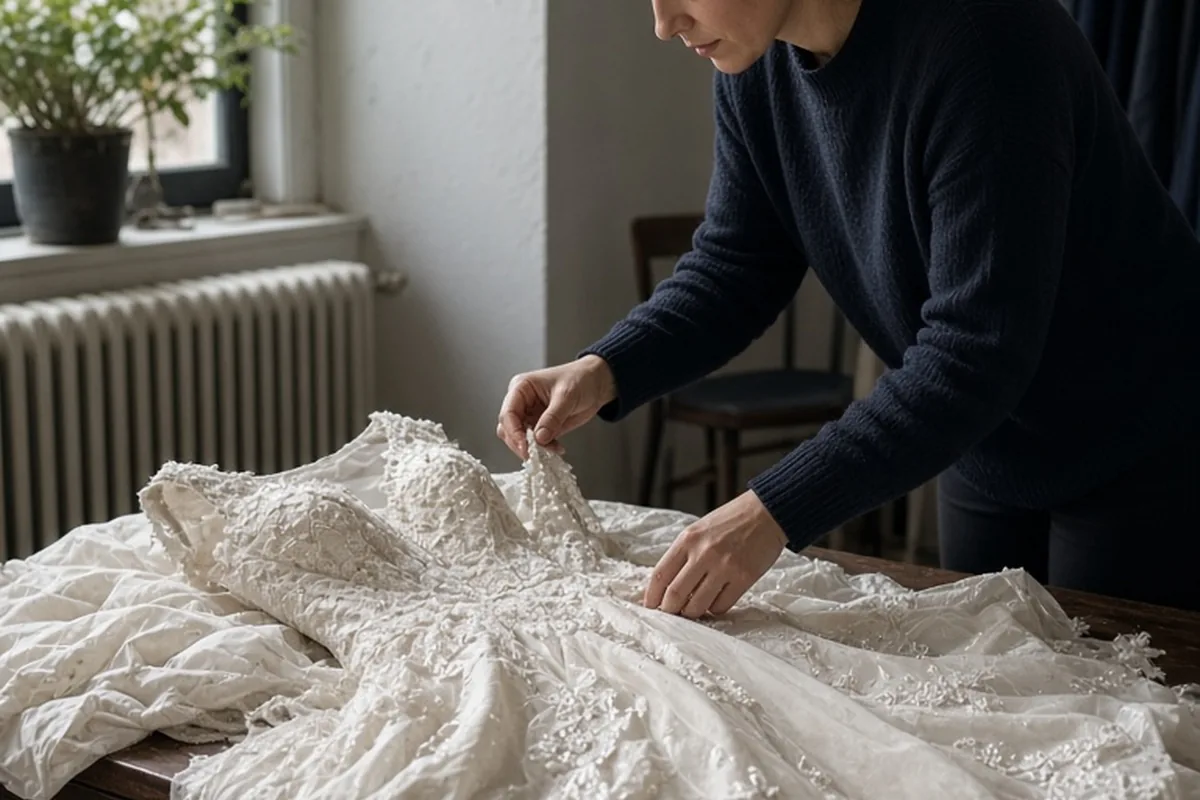
A sample wedding dress checklist helps brides evaluate floor-model gowns sold off the rack at a discount. Because sample gowns are sold as-is with final sale terms, your inspection must focus on structural integrity, fabric tears, broken zippers, missing fasteners, makeup or floor stains, sizing tolerances, and alteration viability. Evaluating repair and cleaning costs before purchasing ensures the discounted sample remains a genuine bargain.
Bridal sample sales offer an appealing route to wearing a designer wedding gown without paying full retail or waiting standard production lead times. Because these floor models have been tried on by dozens of prospective brides, they require a methodical inspection process before committing to a purchase.
Understanding How Sample Sales Function and What Buying As-Is Entails
Bridal boutiques regularly host sample sales or maintain permanent discount racks to clear floor inventory, make room for incoming designer collections, and retire discontinued styles. When purchasing a sample dress, you are buying the exact floor model you try on in the salon, rather than ordering a brand-new garment produced to your measurements. This arrangement allows you to take the dress home immediately, eliminating typical four-to-nine-month manufacturing timelines and offering significant savings off the original retail price.
The trade-off for immediate availability and lower pricing is that sample sales almost universally operate under strict as-is, final-sale terms. The bridal salon assumes no responsibility for existing wear, cosmetic imperfections, or fit discrepancies once the transaction is complete. You cannot return the dress, exchange it for another size, or request boutique-funded repairs. Approaching the appointment with a clear understanding of these conditions helps you evaluate each gown objectively rather than getting swept up in the perceived discount.
Inspecting Structural Elements, Closures, and Support Hardware
Begin your physical assessment with the gown's internal framework, as structural repairs represent some of the most intricate and expensive tailoring work. Open the bodice completely to examine the internal corset, boning channels, and built-in bra cups. Boning can warp, bend permanently, or pierce through the lining fabric after repeated fitting sessions. Run your fingers along every channel from underarm to waistline to confirm the stays remain flat against the body without buckling or sharp edges poking through delicate inner fabrics.
Next, test every closure multiple times to verify smooth mechanical operation. Zip the back zipper up and down fully while holding the fabric taut, checking for missing teeth, separated tracks, or sticking points where the pull catches on adjacent lace or beading. Inspect eyelet hooks, covered buttons, and elastic loops along the spine. Stretched, frayed, or missing button loops are common on sample gowns and will require custom hand-stitching by a seamstress to restore their aesthetic and hold.
Evaluating Gown Fabric, Delicate Overlays, and Embellishments
Floor samples endure constant handling, making textile snags, pulls, and thread fraying frequent issues. Examine high-friction zones such as the underarm seams, side ribcage panels, and hip curves where previous shoppers adjusted the fit. On tulle, organza, or silk chiffon skirts, hold individual layers up against salon backlighting to spot hidden punctures, heel catches, or horizontal runs that blend into gathered folds when hanging relaxed.
Intricately embellished gowns require special scrutiny around beaded appliques, sequin motifs, and lace placements. Check whether designer appliques are lifting away from the base mesh, which indicates deteriorating adhesive or broken anchor threads. Lightly sweep your palm across beaded patterns to check for loose strings where seed beads or crystals are slipping off. Ask the boutique consultant if the dress comes with an original spare packet of matching beads, thread, and fabric swatches, as sourcing identical replacements for discontinued designer lace can be exceptionally difficult.
Identifying Surface Stains, Floor Soil, and Scent Transfer
Because salon samples are handled during appointments, they frequently collect cosmetic residues, body oils, and environmental dust. Examine the neckline, straps, and inner bodice edge under bright natural light for foundation streaks, bronzer marks, and self-tanner residue. While professional dry cleaning often removes standard cosmetic markings from synthetic fibers like polyester and crepe, silk satin and delicate laces can hold stubborn water or oil rings that require specialized treatment.
Inspect the hemline and train meticulously by turning the bottom edge inside out. Long trains accumulate dust, dark gray floor scuffs, and dirt from salon carpeting. Determine whether the discoloration is limited to the surface of the crinoline lining or has penetrated the exterior face fabric. Additionally, check for noticeable perfume transfers or underarm odor in the lining. Strong fragrances may require multiple ozone treatments or wet-cleaning protocols by a professional wedding dress preservationist.
Assessing Sizing Tolerances and Alteration Feasibility
Bridal sizing generally runs smaller than standard ready-to-wear fashion, and standard sample sizes on salon racks usually range from bridal size 8 to 14, with select boutiques carrying dedicated plus-size sample inventories. A general rule in bridal tailoring is that a gown can comfortably be altered down up to two full bridal sizes without distorting the design balance, cup placement, or original proportions. Attempting to reduce a gown by more than two sizes often requires rebuilding the entire bodice and resetting the sleeves.
Taking a sample dress out to fit a larger frame is significantly more restrictive and depends entirely on the existing seam allowances. Turn the gown inside out and inspect the vertical side seams, back zip allowance, and princess seams to see how much excess fabric the manufacturer left inside. If the seam allowance is trimmed to a quarter-inch, the dress cannot be widened without inserting contrast gussets, matching side panels, or converting a zip closure into a lace-up corset back. Confirm with an experienced alterations specialist whether your desired fit adjustments are structurally viable.
Calculating Total Ownership Costs Beyond the Sample Price Tag
A heavily discounted sample gown is only a financial win if the combined cost of the dress, professional cleaning, and custom alterations remains within your total wardrobe budget. Before committing, obtain realistic estimates for tailoring, which typically includes hemming multi-layered skirts, adjusting bodice seams, shortening straps, and building a multi-point bustle system for the train. Complex details like scalloped lace borders or horsehair braid hems require significantly more labor to shorten.
Factor in specialized bridal dry cleaning, which handles delicate appliques and removes set-in floor dirt without damaging fragile weave structures. When you tally the purchase price, professional dry cleaning, structural repairs, and comprehensive alterations, the final figure represents your true investment. If the total still leaves you comfortable within your wedding budget while providing the designer style you desire, the sample purchase represents a genuine value.
Crucial Inquiries to Make Before Signing the Bridal Purchase Agreement
Before presenting payment, request specific background information from the boutique stylist regarding the dress history. Ask how long the gown has been active on the showroom floor and whether it has undergone prior in-house alterations, such as temporary bodice darts, shortened straps, or removed crinoline layers. Knowing whether a dress was altered for a photo shoot or salon trunk show helps your seamstress understand how the current fit deviates from factory specifications.
Inquire whether the boutique provides an itemized condition report noting all existing flaws, tears, or missing fasteners directly on the sales receipt. This document creates a clear baseline record before the gown leaves the salon doors. Additionally, ask if the boutique partners with trusted local bridal seamstresses who specialize in sample restorations, or if they offer garment bag storage while you coordinate your alteration appointments.
Frequently asked questions
Can every sample wedding dress be cleaned successfully?
Most standard cosmetic marks, dust lines, and floor soil can be lifted by experienced bridal dry cleaners. However, deep water stains on raw silk, ground-in heel oil on delicate tulle, or yellowed oxidation on aged synthetic fabrics may resist complete restoration.
How far in advance should I purchase a sample wedding dress?
Even though you take a sample gown home the day of purchase, you should secure the dress six to eight months before the wedding. This timeline provides ample time for professional dry cleaning, sourcing matching replacement fabrics if needed, and completing multiple fitting stages with your seamstress.
What tools should I bring to an off-the-rack sample sale appointment?
Bring appropriate seamless nude undergarments, a pair of heels close to your planned wedding shoe height, hair ties, a small soft measuring tape, and a smartphone with a working flashlight. The flashlight helps you spot fine snags, pin tears, and faint stains under salon lighting.
What happens if a sample dress is missing essential beads or buttons?
You will need to consult your seamstress about sourcing compatible replacements from textile suppliers or harvesting excess embellishments from the dress hemline during shortening. Bridal salons occasionally have spare designer repair kits on hand, so always ask the stylist before purchasing.
Your next step
Take full-length and macro photos of every seam, zipper, and fabric flaw on your chosen sample gown, then consult a qualified bridal seamstress with those images to get a realistic repair and alteration quote before signing the final sale contract.