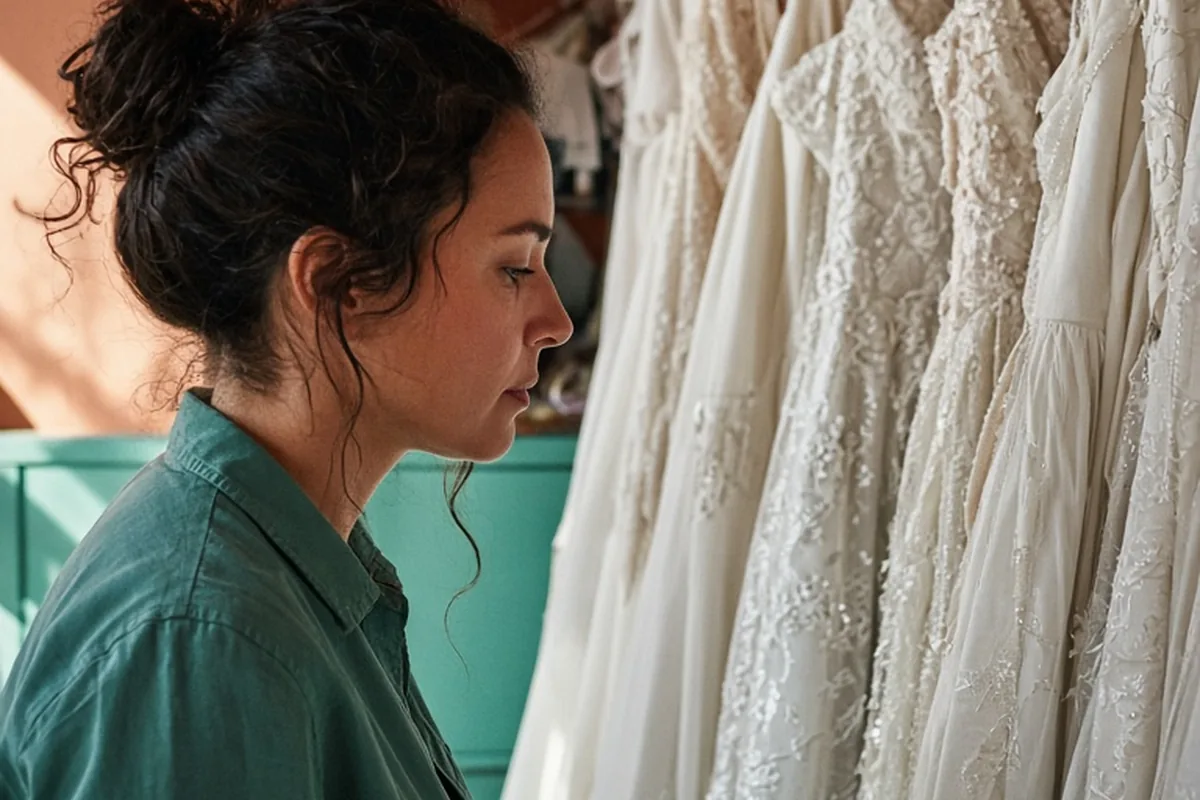
While buying a floor sample bridal gown offers substantial immediate markdowns off retail prices, several hidden expenses can quickly erode your savings. Common unexpected costs include extensive structural alterations, specialized fabric dry cleaning, repairing torn illusion mesh or missing beadwork, replacing broken zippers, and sourcing missing accessories like matching veils or off-the-shoulder straps. Factoring in tailoring complexity and restoration fees before purchasing ensures the final total remains comfortably inside your wedding attire budget.
Stepping into a bridal sample sale can feel like uncovering a treasure chest of high-end designer gowns at accessible price points. Brides often encounter racks filled with runway-worthy silhouettes marked down significantly from their original special-order retail tags. However, purchasing a floor sample operates under an entirely different financial equation than ordering a brand-new gown made to your approximate standard measurements. Because sample gowns are sold off-the-rack in as-is condition, the sticker price on the hanger rarely represents the total amount you will invest to make the garment walk-down-the-aisle ready.
The Reality of Sizing and Structural Alteration Complexity
Bridal sample dresses are typically manufactured in standard sample sizes, which commonly range between bridal sizes eight, ten, and twelve. Because bridal sizing notoriously runs one to two sizes smaller than standard everyday ready-to-wear clothing, finding a sample that matches your exact proportions without modification is exceptionally rare. Taking a sample gown down more than two full sizes or attempting to let out a tight bodice requires far more than simple side-seam adjustments. When a gown must be significantly reduced, a master tailor must deconstruct the garment entirely, recut the armholes, reposition structural internal boning, adjust the bust cups, and realign intricate surface patterns.
The structural architecture of the gown dictates the labor intensity and ultimate expense of these changes. An unlined crepe sheath presents vastly different tailoring challenges than an eight-layer ballgown featuring horsehair-braid hemlines, crinoline understructures, and heavily beaded bodice overlays. If a sample dress has an illusion tulle neckline or sleeves, taking in the shoulders often requires carefully detaching individual lace motifs by hand, trimming the transparent mesh base, and re-stitching the lace back into a balanced composition. Before committing to a gown that is multiple sizes too large, it is critical to consult an independent bridal seamstress to determine whether the garment can maintain its intended proportions without a prohibitively expensive structural overhaul.
Professional Restoration, Spot Cleaning, and Fabric Delicacy
Floor sample gowns spend months—and sometimes years—being handled, clipped, and tried on by dozens of prospective brides in busy boutique environments. As a result, sample dresses routinely exhibit varying degrees of shop wear that require professional intervention before your wedding day. Common cosmetic issues include makeup stains along the neckline, self-tanner transfer inside the armholes and bodice lining, dust and floor grime ground into the train, and general fabric dullness from handling. Standard dry cleaners are rarely equipped to handle complex bridal gowns with mixed textile constructions, delicate horsehair trims, and heat-sensitive embellishments.
Sending a wedding dress to a specialized bridal preservationist or couture cleaner involves specialized wet-cleaning or solvent techniques designed to protect fragile fibers. The cost of this specialized service varies depending on the gown's volume, fiber content, and the severity of the staining. Natural fibers like pure silk mikado, silk organza, and silk chiffon require gentler, more labor-intensive stain removal processes than polyester blends. Additionally, if the gown features glued-on crystals or delicate plastic sequins, standard dry cleaning solvents can dissolve adhesives or melt embellishments, requiring manual hand-cleaning methods that increase the labor involved.
Hardware, Zipper, and Fastener Replacements
The hardware on a sample gown undergoes tremendous stress during boutique try-ons, as salon stylists frequently clamp, stretch, and pull closures to simulate different body fits for various clients. Hidden mechanical damage is one of the most frequent surprises brides encounter after purchasing an off-the-rack gown. Invisible zippers are particularly susceptible to split teeth, jammed sliders, or weakened seams caused by aggressive zipping on gowns that were slightly too snug for previous shoppers. Replacing a zipper in a bridal gown is rarely straightforward, as it often requires unpicking multiple layers of outer lace, inner lining, and structural interlinings.
Beyond central zippers, minor fasteners frequently require complete overhaul or reinforcement. Elastic button loops along the back of a gown often become stretched, frayed, or snapped from repeated fastening. Internal waist stays, hook-and-eye closures, and modesty snaps may be torn away from their anchor points in the bodice. While replacing individual hooks or repairing a single button loop is a minor task, replacing thirty stretched elastic loops or rebuilding an internal corset support system adds measurable labor time to your seamstress invoice.
Embellishment Repairs and Sourcing Matching Materials
Intricately detailed bridal gowns often shed loose beads, sequins, and dimensional lace appliqués while hanging on sample racks and rubbing against neighboring garments. When you purchase a sample, boutiques sell the dress in its present condition without providing replacement bead packs or extra lace yardage from the designer. If your gown has loose threading, missing crystal clusters, or torn three-dimensional floral elements, your seamstress must source complementary components from third-party textile merchants or harvest matching details from an inconspicuous area of the train during the hemming process.
Illusion mesh tears represent another delicate and potentially costly restoration challenge. Unlike solid woven fabrics, torn illusion tulle cannot be seamlessly stitched back together without creating an obvious, puckered seam line. If a sample gown has a snagged or torn illusion back, chest panel, or sleeve, the entire mesh section must be carefully removed and replaced with a fresh piece of matching illusion net. Finding an exact skin-tone match and identical mesh elasticity can require extensive fabric sourcing, followed by meticulous hand-sewing to transfer the original lace appliqués onto the new panel.
Missing Components, Modesty Panels, and Detachable Accessories
Modern bridal designs frequently feature modular elements, such as detachable off-the-shoulder straps, removable puff sleeves, snap-in modesty panels, matching belts, or coordinating overskirts. In the fast-paced environment of a busy bridal salon, these small detachable accessories often become separated from the main gown or misplaced entirely over time. When buying an off-the-rack sample, the listed price may only include the base gown, leaving you responsible for sourcing or custom-fabricating any missing elements that originally completed the runway look.
Commissioning a custom-built accessory to replace a missing component introduces both material and craftsmanship costs. If you want matching detachable tulle sleeves or an unlined lace topper, your tailor will need to purchase compatible materials at retail fabric pricing and build the piece from scratch to fit your arms. Even small components, such as a missing matching satin ribbon belt or a modesty panel designed to soften a plunging neckline, require dedicated pattern drafting, lining construction, and precision attachment hardware.
Non-Refundable Policies, Storage, and Timeline Rush Fees
Almost all bridal salons sell floor samples under strict as-is, final-sale policies with zero return, exchange, or store credit options once the payment is processed. When you purchase a new custom-ordered gown, the boutique typically inspects the delivered dress for manufacturer defects, stores the gown in a climate-controlled room until your fittings begin, and provides a breathable garment bag. With sample sales, brides almost always take the gown home the exact same day, shifting the complete responsibility for safe storage, climate protection, and transportation entirely to you.
Storing an untreated sample gown at home introduces minor secondary expenses, including the purchase of an archival, acid-free garment bag and proper non-slip, heavy-duty bridal hangers capable of supporting dense beadwork without stretching the shoulder seams. Furthermore, if you purchase a sample gown close to your wedding date, you may encounter substantial rush fees from independent bridal tailors. Because extensive sample restorations demand additional labor hours, bringing a complex sample dress to a seamstress with less than standard turnaround time can trigger expedite surcharges that cancel out the upfront discount.
In-Boutique Inspection Steps Before Finalizing a Sample Purchase
To protect your wedding budget, conduct a methodical physical audit of the sample dress before presenting your payment method. Step out of the boutique fitting room into bright, natural lighting if possible, as soft salon spotlighting can easily mask water spots, foundation smudges, and subtle fabric yellowing. Examine the hemline along the entire circumference, flipping the skirt to inspect the condition of inner horsehair braiding, lining fabrics, and train edges for fiber fraying or asphalt stains.
Next, test every mechanical element by zipping and unzipping the closure multiple times to feel for sticking teeth, misaligned tracks, or strained stitching. Check the stability of internal boning channels by running your fingers along each stay to verify that the plastic or steel boning has not warped, kinked, or poked through the fabric casing. If you are shopping with a friend or family member, take high-resolution, close-up photos of any visible tears, missing beadwork, or loose seams. You can immediately send these photos to a local bridal seamstress to obtain a rough estimate of repair costs before signing the non-refundable purchase agreement.
Frequently asked questions
Can every sample wedding dress be altered to fit my body?
Most bridal tailors recommend altering a dress down by no more than two full bridal sizes to maintain the gown's original proportions and structural integrity. Taking a dress down three or more sizes often requires completely rebuilding the bodice and resetting the sleeves, which can alter the overall design and substantially increase labor fees. Always confirm with an experienced seamstress before purchasing a gown that differs significantly from your current measurements.
Is it safe to try cleaning a stained sample wedding dress at home?
Attempting to spot-clean a sample wedding gown at home with commercial detergent, water, or household stain removers can create permanent water rings, cause delicate silk fibers to shrink, or dissolve delicate adhesive glues. Because bridal gowns often combine multiple synthetic and natural fibers with complex interfacings, having the garment evaluated by a specialized bridal dry cleaner is the safest way to remove stains without damaging delicate textiles.
Why are bridal sample sale dresses sold under final-sale conditions?
Bridal boutiques use sample sales to clear out discontinued floor models, make room for incoming seasonal inventory, and recoup investment on gowns that have experienced cosmetic wear. Because these garments are priced at significant discounts and are no longer in pristine factory condition, salons operate under strict as-is policies that transfer all future maintenance, repair, and alteration responsibilities directly to the buyer.
How can I estimate total alteration costs before buying a sample gown?
Ask the boutique stylist if you can take detailed photos and video clips of the gown while wearing it, paying close attention to excess fabric, hem length, zipper condition, and damaged embellishments. Call two or three independent local bridal seamstresses, share the gown details and photos, and request their baseline labor rates for complex adjustments like multi-layer hemming, bodice resizing, and beadwork repair.
Your next step
Photograph all damaged seams, zippers, and stains on the sample gown during your fitting, and contact a trusted local bridal seamstress for a line-item alteration estimate before signing the final sale contract.