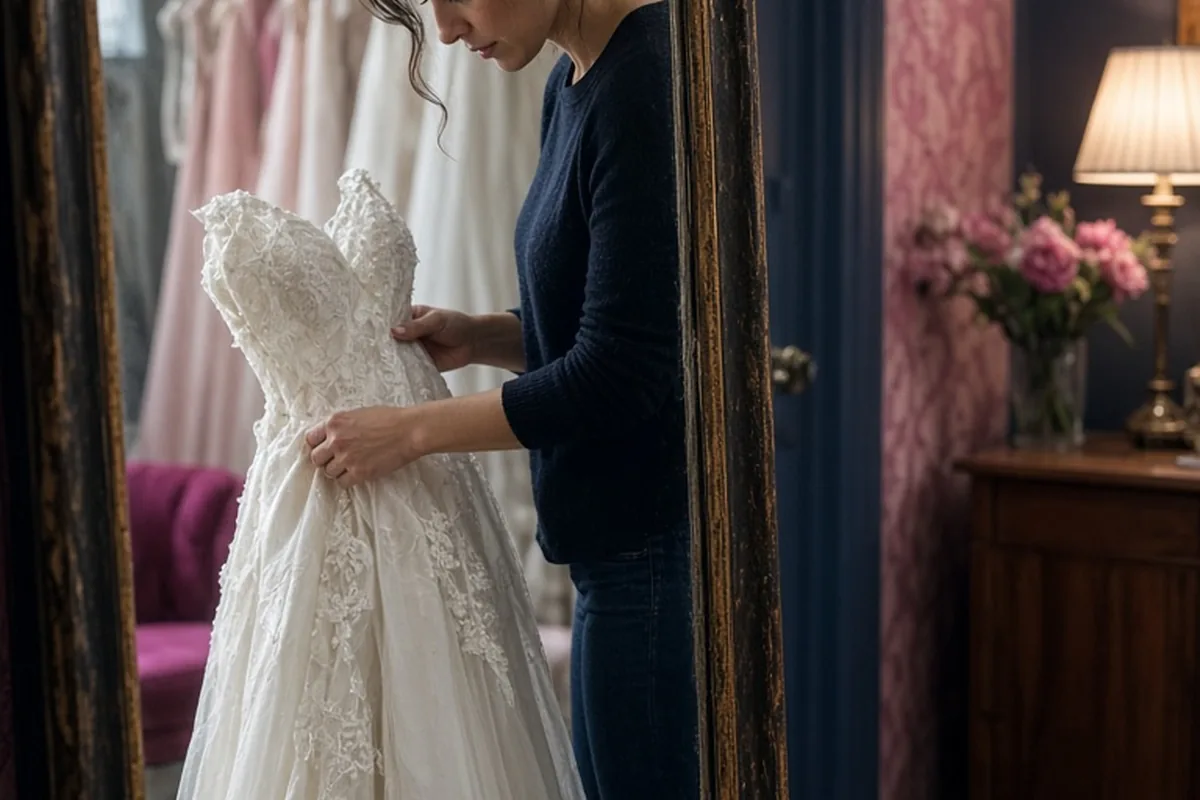
Buying a sample wedding dress allows you to purchase a floor-model designer gown off the rack at a substantial discount compared to ordering new. To succeed on a budget, look for salon clearance events, bridal consignment boutiques, and designer sample sales. Inspect the garment closely for fabric tears, zipper damage, makeup stains, and missing hardware. Factor professional dry cleaning and tailor alterations into your overall budget before making a final, nonrefundable purchase.
Bridal salons display floor samples so appointments can try on various styles before placing made-to-order requests with manufacturers. When designers release new collections or discontinue specific silhouettes, boutiques sell these floor gowns off the rack directly to brides.
Where to Find Sample Wedding Dresses for Sale
The most direct way to locate discounted sample gowns is by contacting independent bridal boutiques in your region to ask about their clearance inventory. Many salons maintain a small, ongoing selection of discontinued floor samples year-round in the back of the store, while others host concentrated seasonal clearance events in summer and winter to clear out space before new fashion cycles arrive. Reaching out ahead of time allows you to confirm what sizes and styles are currently on the floor before booking an appointment.
Bridal consignment boutiques and dedicated off-the-rack bridal outlets offer another steady avenue for budget-conscious shoppers. Unlike standard salons that require a multi-month ordering timeline, these shops exclusively stock pre-owned or surplus inventory ready to take home the same day. In addition, charity bridal organizations and bridal non-profits receive surplus floor models donated directly from high-end designers and boutiques, offering an opportunity to save money while supporting a philanthropic mission.
Online bridal sample liquidators and peer-to-peer bridal marketplaces also host extensive sample listings from boutiques across the country. When shopping online, prioritize listings created by verified salons rather than individual resellers to ensure authentic descriptions of garment wear. Always review high-resolution photographs of the actual sample rather than stock catalogue photos to assess condition accurately before committing.
Bridal Sizing Realities and Alteration Allowances
Bridal sizing typically runs one to two sizes smaller than standard ready-to-wear street sizing, meaning a bridal sample labeled size ten often fits closer to an everyday street size six or eight. Most salon sample racks are populated by sizes eight, ten, twelve, and eighteen, reflecting standard manufacturer production runs for showroom displays. Understanding this sizing discrepancy prevents frustration and helps you target gowns that have the structural capacity to be tailored to your proportions.
As a general tailoring guideline, a skilled bridal seamstress can usually take a dress in by up to two full sizes without compromising the structural integrity of the bodice, neckline, or skirt silhouette. Taking a gown down more than two sizes often requires completely deconstructing the side seams, boning channels, waistline, and darting, which significantly increases labor costs and may distort delicate lace placement. Letting a sample gown out is far more restricted, depending entirely on the interior seam allowances left by the designer.
Before purchasing a gown that feels tight in the bust, ribs, or hips, examine the interior seams alongside a consultant to determine whether extra fabric allowance exists. High-end couture samples often contain one-half to one full inch of interior seam allowance that can be released, whereas mass-manufactured gowns may have minimal excess fabric inside the lining. If a gown cannot be expanded through interior seams, you may need to budget for custom modifications such as inserting a lace-up corset back in place of a zipper.
Comprehensive Inspection Checklist for Off-the-Rack Gowns
Because sample dresses have been tried on by dozens of prospective brides, they naturally sustain minor surface wear that requires careful evaluation. Begin your examination at the neckline and armholes, checking for makeup transfer, self-tanner residue, and deodorant marks. While most surface smudges lift easily during professional cleaning, heavy foundation or oil-based products embedded deep in raw silk, velvet, or fine mikado can be challenging to eradicate completely without altering fabric sheen.
Examine the delicate structural elements of the gown, paying particular attention to the illusion mesh, lace appliques, and beading. Run your hands over embroidered sections to detect loose threads, missing crystals, or detached sequins, and inspect the illusion neckline and sleeves for fingernail tears or stretching. Mesh tears along seam junctions are difficult to patch invisibly, so any structural compromise in sheer fabrics should be weighed carefully against the cost of replacing entire panels.
Inspect the mechanical and support components, including zipper teeth, hook-and-eye closures, internal waist stays, and boning channels. Broken zipper coils and bent hooks are inexpensive and straightforward to replace, but warped or broken plastic boning that has punctured the bodice lining will require rebuilding the garment foundation. Finally, check the hemline and train for heel snags, tread marks, or fraying; if the gown is slightly long on you, a standard hem alteration will conveniently trim away any bottom-edge damage.
Budgeting for Specialized Cleaning and Tailoring
The price tag on an off-the-rack sample gown represents only the first portion of your total garment expenditure. Every sample dress requires professional cleaning and custom alterations to achieve a flawless fit on your wedding day. To avoid exceeding your wedding wardrobe budget, calculate the expected quotes for specialty bridal cleaning and alterations before finalizing your gown purchase.
Standard dry cleaners are generally not equipped to handle the specialized solvents, delicate hand-pressing, and fragile embellishments found on wedding dresses. Specialty bridal gown cleaners treat distinct fiber contents, such as silk, polyester crepe, organza, and tulle, with customized spot-treatment techniques that prevent beading from melting or lace from shrinking. Cleaning costs fluctuate based on the volume of fabric layers, the presence of intricate beadwork, and the severity of hemline dirt.
Alteration complexity drives the final cost of preparing a sample gown for your ceremony. Simple adjustments like taking in basic side seams and shortening a plain crepe skirt require less time than altering multi-layered tulle skirts, repositioning hand-sewn lace motifs, or adding custom bust support. Request an initial consultation or estimated breakdown from an independent bridal seamstress to confirm that your alteration requirements remain aligned with your overall spending limit.
Negotiating and Finalizing a Sample Sale Transaction
Bridal salons recognize that sample gowns carry visible wear, giving buyers reasonable room to ask questions about pricing flexibility. If you discover a broken zipper, missing buttons, or noticeable dust on the hemline during inspection, politely point these issues out to your consultant and inquire whether the boutique can offer an additional adjustment or include complimentary garment bag storage. While deep promotional discounts during flash sales are usually firm, year-round floor samples often have room for modest negotiation.
Clarify all shop policies before paying, as sample sales are almost universally treated as final sale transactions. You will not be able to return the gown, exchange it for another style, or receive store credit if you change your mind later in your planning process. Ensure you receive a written itemized receipt detailing the designer name, style number, original tag size, and any noted defects observed at the time of purchase.
Before walking out of the salon with your gown, confirm that the dress is placed inside a sturdy, breathable fabric garment bag rather than a clear plastic storage wrap. Plastic wraps can trap ambient moisture and cause off-gassing, which may yellow delicate ivory and white fabrics over time. Store the bagged gown hanging by its reinforced internal hanging loops rather than its delicate shoulder straps to prevent stretching the bodice.
Balancing Timeline Advantages Against Design Compromises
One of the greatest benefits of buying a sample wedding dress is the immediate elimination of standard manufacturing lead times. Traditional bridal gown orders frequently take six to nine months from order placement to delivery, leaving little room for error if your wedding date is approaching rapidly. Purchasing off the rack allows you to transport your gown home immediately, giving you ample time to schedule alterations and coordinate matching accessories.
The trade-off for this speed and cost savings is the need for flexibility regarding exact design preferences. You may find a gown with your ideal silhouette and bodice structure that features silver beading instead of your preferred gold accents, or a zipper back instead of decorative covered buttons. Entering the shopping process with an open mind regarding minor styling elements allows you to recognize great values that can be personalized later through clever tailoring.
Evaluate the overall value by measuring your emotional connection to the dress alongside the practical renovation work it requires. A deeply discounted gown that demands extensive rebuilding, fabric replacement, and intensive stain treatment may end up matching the cost of a brand-new order without delivering the original designer proportions. Focus your search on gowns that fit your core body shape well and require only routine fit refinement and freshening.
Frequently asked questions
Can a sample wedding dress be altered if it is too big or too small?
Yes, a sample wedding dress can usually be tailored down by up to two sizes without distorting the design. Expanding a dress is more challenging and depends on available interior seam allowances, though seamstresses can often gain room by inserting a lace-up corset back.
Do sample wedding dresses always need to be dry cleaned?
Most sample gowns require professional cleaning before wedding day wear because they have been handled and tried on by numerous shoppers. Always use a professional cleaner specializing in bridal garments to safely remove makeup marks, dust, and handling residue without damaging delicate trims.
Are sample sale wedding dresses returnable if I change my mind?
Nearly all bridal salons and clearance outlets sell sample gowns as final sale items with no returns, exchanges, or refunds allowed. Inspect the gown thoroughly, check repair requirements, and confirm your commitment before completing the transaction.
What is the difference between a trunk show sample and a clearance sample?
A trunk show sample is a temporary loaner from a designer showcasing a new collection, usually ordered brand new at a standard price or minor promotional discount. A clearance sample is a salon-owned floor gown sold directly off the rack at a reduced price to make room for new stock.
Your next step
Call local bridal salons this week to ask about upcoming sample clearance dates and schedule an inspection-focused try-on appointment.