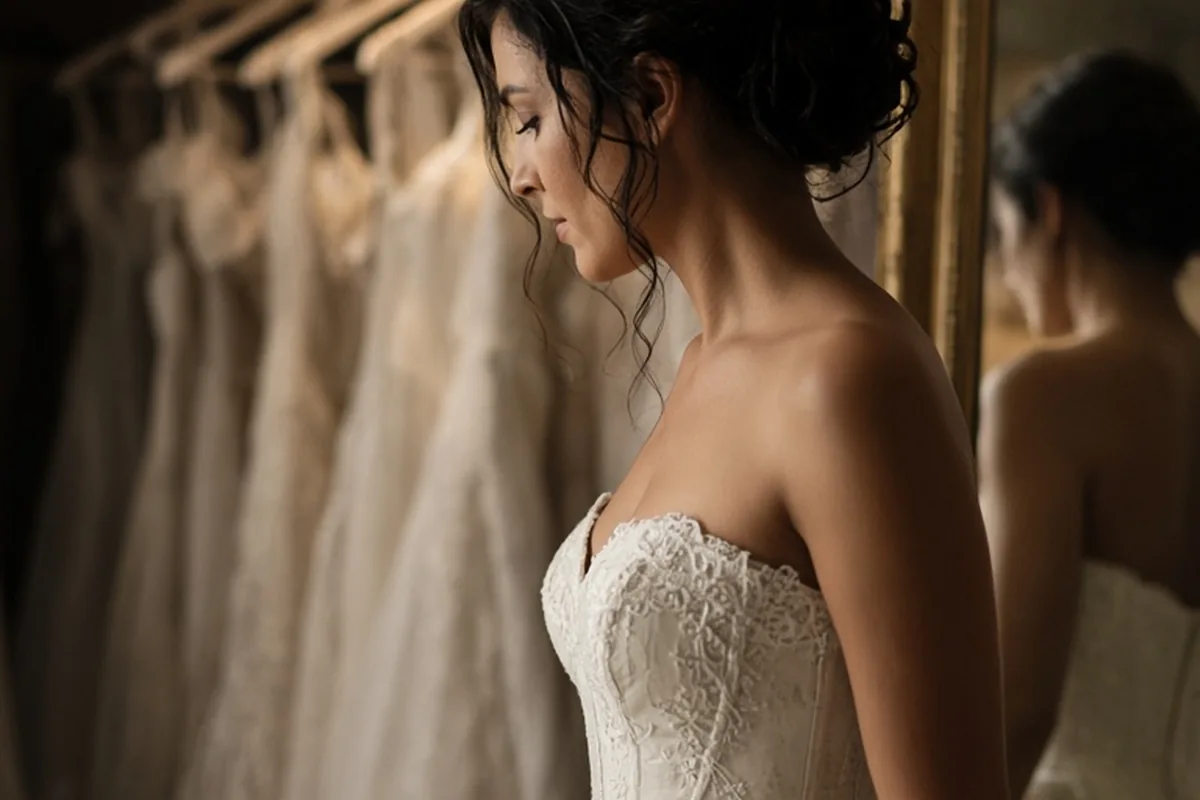
Buying a sample wedding dress offers immediate ownership, designer craftsmanship at reduced pricing, and relief from long manufacturing lead times. However, the trade-offs include visible floor wear, limited size availability, non-refundable final sales, and potentially higher alteration costs to mend tears, fix broken zippers, or resize structured bodices. Evaluating a sample sale dress requires balancing immediate financial savings against the realistic cost, effort, and timeline needed for professional cleaning and custom tailoring.
In traditional bridal shopping, a customer tries on a shop floor display gown and then places an order for a brand-new replica crafted to standard manufacturer measurements. When boutiques host sample sales or rotate discontinued display pieces out of inventory, those exact try-on gowns are sold directly off the rack, creating a vastly different purchasing dynamic with specific financial and logistical advantages and hazards.
Immediate Possession and Skipping Production Timelines
One of the most compelling advantages of purchasing a sample wedding dress is the complete elimination of manufacturing lead times. Traditional bridal gowns ordered from a designer typically require four to nine months to be cut, sewn, and delivered from overseas production facilities. For brides planning an accelerated wedding, arranging an elopement, or managing an unexpected change in venue or styling, waiting half a year for a dress to arrive is simply not a viable option. Buying an off-the-rack sample allows you to pay at the register and walk out of the salon with your physical gown that very day.
Beyond accommodating tight deadlines, immediate possession brings profound peace of mind regarding supply chain uncertainties. When ordering a factory-produced gown, unexpected textile shortages, shipping bottlenecks, customs delays, and factory closures can disrupt the delivery schedule, occasionally leaving brides without a dress mere weeks before their ceremony. With an off-the-rack sample, the dress is already in your hands, eliminating tracking anxiety and enabling you to immediately book fitting appointments with an independent tailor on your own schedule.
Designer Quality Within More Accessible Price Ranges
Bridal boutiques regularly mark down their showroom samples to clear floor space for incoming seasonal collections, trunk show rotations, or lines from newly contracted designers. Because these dresses have served as try-on models for previous appointments, salons offer them at substantial reductions from their original retail tags. For shoppers who appreciate luxury dressmaking, this price adjustment opens doors to couture labels, intricate hand-beading, structured internal corsetry, and premium natural textiles such as silk mikado or French lace that might otherwise exceed their intended expenditure.
Investing in a high-end sample often yields superior structural garment construction compared to buying a lower-tier brand brand-new at full retail. Premium design houses build their gowns with reinforced internal waist stays, multi-layer canvas support, and hand-sewn appliques that maintain their shape and drape elegantly. Acquiring that level of craftsmanship through a sample sale allows you to wear an architecturally sound, photographically stunning garment without committing the full capital outlay demanded by made-to-order couture.
Visible Showroom Wear and Fabric Vulnerabilities
The primary drawback to sample dress shopping is that floor gowns have endured hands-on handling from dozens, sometimes hundreds, of prospective clients. Even in boutique settings with white-glove service, frequent dressing room try-ons expose delicate fabrics to friction, stretching, and accidental damage. Common floor-model flaws include snagged tulle, loose beading, compromised hook-and-eye closures, split seams near the zipper base, and compromised illusion netting that cannot easily be smoothed or stretched back into shape.
Cosmetic blemishes are also a regular reality of sample inventory. Gowns frequently accumulate self-tanner residue along the interior bodice, liquid foundation smudges around the neckline, dust along the train from floor sweeps, and natural body oils around the armscyes. While some superficial marks lift with professional treatment, certain stains can set permanently into porous fibers like raw silk or crepe. Purchasing a sample requires an honest willingness to accept that the garment is not pristine and may retain minor quirks even after conservation efforts.
Strict Sizing Boundaries and Tailoring Limitations
Showroom sample inventory is generally ordered in single, standard boutique sample sizes, typically corresponding to bridal industry sizing charts that run significantly smaller than regular everyday clothing. Because bridal sizing does not mirror standard street fashion, a sample gown labeled size ten or twelve may fit closer to an everyday street size six or eight. If you fall well outside the specific dimensions of the available floor sample, modifying the gown to fit your body can become a complex engineering puzzle.
While tailoring a dress down by one or two sizes is standard practice, taking a heavily embellished, corseted gown down more than two full sizes often ruins its proportions. Reducing an oversized bodice can shift bust apexes into the underarm area, force side seams unnaturally forward, and disrupt symmetrical lace patterns across the waist. Conversely, letting a sample gown out is limited by the physical seam allowances left inside the dress by the manufacturer. If a previous bride tried on a gown that was too small, the internal boning or zipper teeth may have warped, requiring full structural rebuilding that drives up the final tailoring bill.
Inspecting a Bridal Sample Dress in the Dressing Room
Evaluating a sample gown requires a meticulous, systematic physical inspection before committing your funds. Begin your evaluation at the most vulnerable structural points: the zipper and the internal corsetry. Unzip the gown completely, examine the teeth for warping or missing segments, and pull gently on the slider to confirm it glides smoothly without catching on surrounding tulle or lining. Inside the bodice, run your fingers along the channels of boning to confirm that none of the plastic or steel stays have cracked, bent sideways, or poked through their fabric casings.
Next, step out of the dressing room lighting and inspect the dress under natural or bright task lighting to check the exterior fabrics. Examine the armscye seams for tension rips, check the bustline and collar for makeup transfer, and carefully scrutinize the delicate illusion mesh on the back, sleeves, or neckline for pinholes or tears that cannot be patched invisibly. Finally, lift the hemline and train to inspect the hem edge; check whether the horsehair braid support has pulled free or if the outer lace border is frayed from walking. Knowing the precise condition of these elements allows you to assess whether a seamstress can realistically repair them.
Calculating Cleaning, Restoration, and Tailoring Variables
A common oversight during sample shopping is focusing exclusively on the slashed price tag while disregarding the peripheral expenses required to get the dress aisle-ready. Because sample purchases are almost universally non-refundable final sales, every repair expense falls squarely on your shoulders. Before finalizing the sale, obtain preliminary quotes from an independent bridal dry cleaner and an experienced seamstress to gauge how these necessary post-purchase services will impact your overall expenditure.
Specialist bridal dry cleaning relies on variables such as fabric composition, beading fragility, and stain severity. Natural silks and gowns covered in crystal appliques demand labor-intensive hand-spotting, solvent baths, or specialized organic cleaning techniques rather than standard commercial laundering. In addition, tailoring charges scale with the complexity of the gown: adjusting a plain crepe sheath is dramatically less labor-intensive than hem-shortening a multi-tiered horsehair tulle ballgown or resizing an intricately beaded bodice. If the combined quotes for restorative cleaning and heavy structural tailoring approach the price difference between the sample and a fresh order, the financial benefit of the sample disappears.
Balancing Timeline Pressure Against Style Flexibility
Choosing between an off-the-rack sample and a made-to-order gown ultimately hinges on your timeline flexibility, personal comfort with garment imperfections, and design expectations. A sample dress represents an ideal pathway for brides working on shorter timelines, those with an adaptable vision who enjoy the thrill of a discovery, or shoppers who prioritize luxury textile construction over having an untouched, factory-fresh garment. If your ceremony is happening quickly, the immediacy of a sample provides security that custom manufacturing simply cannot match.
Conversely, if you have a non-negotiable vision that hinges on an exact shade of ivory, require specific structural customizations like an elongated bodice or raised neckline from the factory, or feel intense distress over pre-existing minor flaws, purchasing off the rack may produce needless anxiety. Made-to-order gowns afford you the time to collaborate directly with the boutique on factory-authorized alterations, ensure the hemline is cut to your height, and guarantee that nobody else has ever zipped up your gown. Evaluating your personal tolerance for uncertainty is just as vital as reviewing your bottom-line budget.
Frequently asked questions
Can a bridal sample dress be altered if it is too small?
A sample dress can only be let out if the original manufacturer included sufficient seam allowance inside the gown, which rarely exceeds one full inch or roughly one dress size. In some cases, a skilled tailor can insert side gussets, add modesty panels, or convert a traditional zipper back into a corset lacing system to gain extra breathing room. However, expanding a dress is always significantly more restrictive than taking in a gown that is slightly too large.
Are sample wedding dress sales typically non-refundable?
Yes, nearly all bridal boutiques operate sample sales strictly under 'as-is' and 'final sale' policies, meaning returns, exchanges, or store credits are not permitted once the transaction is complete. Salons use sample sales specifically to clear out discontinued floor stock and balance inventory, shifting full responsibility for repairs, dry cleaning, and alterations to the buyer immediately upon payment.
Should you clean a sample wedding dress before alterations or after?
It is generally advisable to have a sample dress cleaned by a reputable bridal dry cleaner before your tailor begins major alterations. Cleaning removes showroom dust, oils, and makeup that could otherwise be ironed into the fabric during steam pressing, while also refreshing the fibers so they lay naturally. Furthermore, a clean gown ensures your seamstress works with the fabric in its true, restored state without transferring floor grime across fresh stitching.
How do you know if a sample dress was altered previously?
Check the interior side seams, zipper tape, and hemline for double needle holes, mismatched thread colors, or unevenly trimmed seam allowances that indicate past alterations. While most salon floor models are left untouched by tailoring, some samples originate from trunk show tours or borrowed inventory where temporary basting stitches or pinned hems may have left minor fabric marks or shortened original measurements.
Your next step
Before visiting a sample sale, contact a local independent bridal alterations specialist to learn their typical project turnaround times and request an itemized checklist of common repair costs so you can accurately assess dress tags in the showroom.