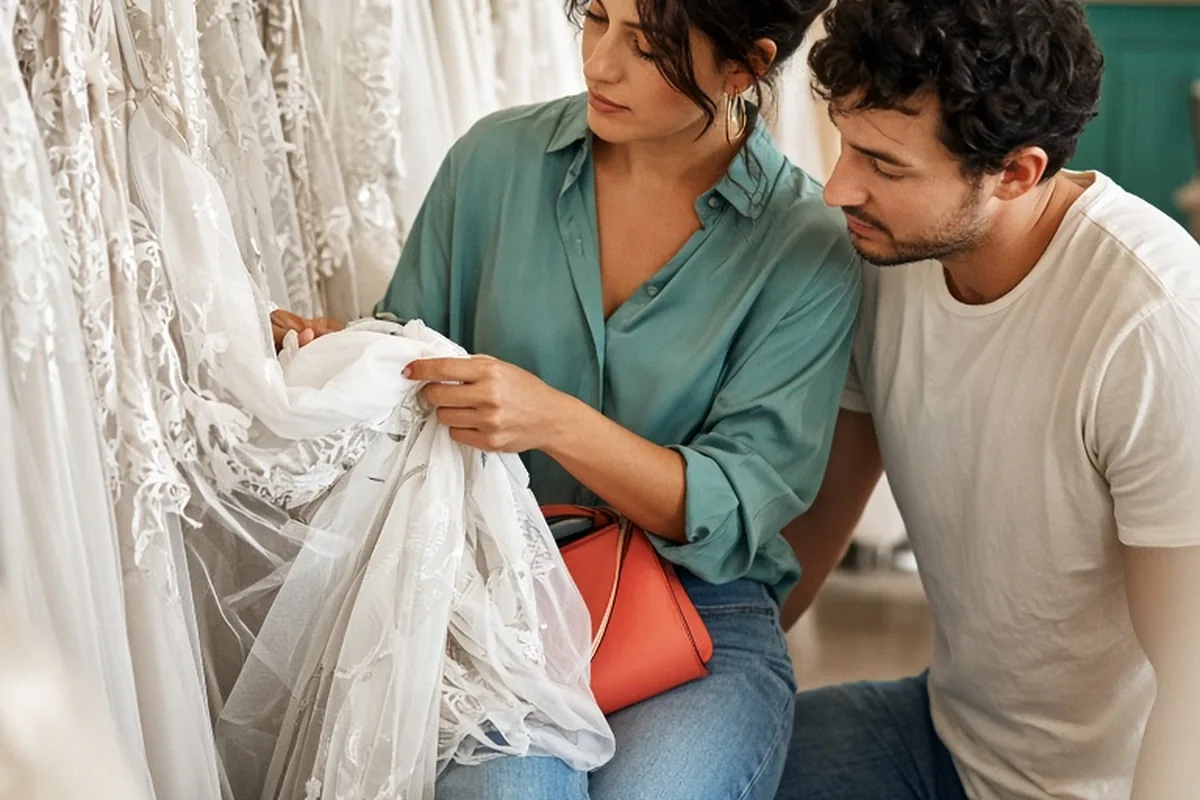
When shopping sample wedding dresses for sale, couples should ask about the gown's physical condition, alteration limits, cleaning history, and transaction policies. Specifically, ask whether the zipper and boning are intact, how many sizes the dress can safely be altered, whether delicate beadwork or lace can be matched, whether the garment has been professionally cleaned, and what costs for restoration or missing accessories will add to the final budget.
Navigating a bridal sample sale requires balancing excitement with practical evaluation. Because floor samples have been tried on by dozens of prospective brides, asking direct, targeted questions ensures you leave with a dress that fits your wedding timeline, body, and overall wardrobe budget.
Inspecting Sample Wedding Dresses for Sale for Physical Wear and Structural Flaws
Floor samples endure repeated handling, pinning, and dressing room movement, which means physical wear is practically inevitable. Before committing to a purchase, ask the stylist to point out all known flaws and request permission to thoroughly examine the gown in full lighting. Inquire specifically about high-stress structural areas: Is the internal corsetry intact, are the boning channels warped, and does the zipper glide smoothly without catching or separating under light tension? A broken invisible zipper or cracked boning requires skilled reconstruction, which adds unexpected labor expenses.
Delicate decorative elements demand equal scrutiny. Ask whether loose beading, missing pearls, or frayed lace motifs can be easily secured, and whether the salon has matching remnants or replacement appliques from the designer. Pay close attention to illusion mesh near the neckline and armholes, where stretch and makeup transfer commonly occur. Inquire whether micro-tears in tulle or mesh can be mended invisibly or if entire panels must be replaced. Checking the hemline and train for dirt, heel snags, and torn horsehair braid will give you an accurate picture of the garment's baseline condition.
Evaluating Sizing Realities and Seam Allowance Limits Before You Buy
Bridal sizing operates on proprietary designer charts that typically run smaller than standard ready-to-wear street sizing. When looking at a sample dress, ask the consultant for the exact designer label size and the specific body measurements that size corresponds to. Follow up by asking how much room exists inside the side seams: Has the seam allowance already been trimmed by a previous tailoring session, or is the original manufacturer margin still present? Knowing whether a dress can be let out or must only be taken in is critical for determining if your target silhouette is achievable.
As a general tailoring guideline, skilled seamstresses can usually reduce a gown by one to two sizes without distorting the design lines, but significant reductions can fundamentally alter the balance of the bodice, neckline, and cup placement. Ask the salon team whether the gown's specific architecture—such as an intricately beaded bodice, deep plunge neckline, or low back—can realistically withstand your anticipated alterations. If you fall in love with a sample that is three or four sizes too large, ask if restructuring the armholes or cup apex will compromise the original aesthetic.
Clarifying Professional Cleaning Histories and Delicate Fabric Care
Sample dresses collect self-tanner marks, makeup around the collar, and dust along the hemline from boutique floors. Always ask the salon staff whether the gown has undergone any professional dry cleaning while on the floor or if it is being sold entirely as-is. Inquire about the fiber content listed on the care label: Is the dress composed of synthetic polyester crepe, or is it crafted from delicate silk organza, dupioni, or raw mikado? Synthetic fibers generally tolerate stain removal more predictably, whereas natural silks can watermark or discolor if treated with improper solvents.
Ask the boutique if they recommend a specialized bridal preservation cleaner in your geographic area who understands how to treat intricate sample garments. Certain embellishments, such as glued-on rhinestones or heat-sensitive metallic threads, can melt or dissolve during standard commercial dry cleaning cycles. Asking upfront whether the cleaning process requires removing and re-stitching trims helps couples account for specialized cleaning expenses before finalizing the purchase transaction.
Verifying Designer Provenance, Style Discontinuation, and Component Availability
Boutiques frequently rotate samples out of inventory when a designer discontinues a particular style or introduces a seasonal collection refresh. Ask the boutique staff to confirm the style name, style number, and collection year of the dress you are evaluating. Ask directly if the style is currently active in the designer's catalog or officially retired. If a dress is discontinued, ordering supplemental materials directly from the design house—such as extra lace appliques, matching covered buttons, or yards of identical tulle—may no longer be possible.
Similarly, inquire whether the sample comes with its original coordinating components, such as detachable sleeves, removable overskirts, modesty panels, or matching belts that originally shipped with the design. If these modular accessories have been misplaced or sold separately from the floor sample, ask whether the boutique can source them or if you will need a custom seamstress to recreate those pieces from scratch. Verifying provenance also ensures you are buying an authentic designer sample rather than an unbranded duplicate.
Understanding Purchase Policies, Timelines, and Post-Sale Logistics
Almost all sample wedding dress sales are strictly final, meaning boutiques do not allow returns, exchanges, store credits, or cancellations once payment is processed. Ask the retailer to review the exact wording of their purchase agreement with you before handing over a credit card. Clarify whether full payment is mandatory immediately—as is typical for cash-and-carry off-the-rack inventory—or if they offer short-term layaway options while you consult an independent tailor for an alteration quote.
Logistical questions about storage and transport are equally vital. Ask whether the purchase price includes a breathable fabric garment bag or if you need to supply your own archival transport bag on the spot. Inquire if the salon offers on-site storage until your wedding date or if you must take physical possession of the dress the same day. If your wedding is happening on a tight timeline, an off-the-rack sample eliminates standard four-to-nine-month production delays, but you must immediately verify local tailor availability to ensure your alteration schedule fits your calendar.
Calculating Total Gown Investment and Navigating High-Pressure Sales as Partners
Sample sales can feel intense, fast-paced, and competitive, which sometimes tempts buyers into making hasty emotional decisions. Couples shopping together can establish clear roles to keep the evaluation objective. While one partner focuses on how the dress looks and feels, the other can systematically ask the financial and condition questions. Inquire with the boutique about local alteration averages and combine that estimate with potential dry cleaning costs and any needed accessories to determine the actual total investment of the sample compared to a brand-new order.
Before stepping up to the cash register, take a collective pause outside the fitting room to verify that the gown meets both stylistic preferences and functional comfort. Ask yourselves whether you genuinely love the design or if you are solely drawn to the marked-down price tag. A sample dress that requires extensive structural overhauls, major sizing reductions, and intensive spot cleaning can quickly match the cost of ordering a made-to-order gown in your exact size, making an honest budget calculation essential.
Frequently asked questions
Can every sample wedding dress be successfully altered to fit my body?
Not every sample can be tailored to fit every body shape. Most seamstresses can safely take a gown in by one to two sizes, but taking a dress down more than that can distort the bodice geometry, cup placement, and neckline. Letting a dress out is only possible if sufficient original seam allowance remains inside the garment.
Are sample wedding dresses always cheaper than made-to-order gowns?
While the initial sticker price of a sample dress is usually discounted, the total cost may rise significantly after factoring in professional bridal dry cleaning, structural repairs, and complex alterations. Always calculate the combined total of the purchase price, restoration fees, and tailoring before deciding if it represents a true discount.
What should I bring with me when shopping for off-the-rack sample gowns?
Bring appropriate seamless nude undergarments, proper shapewear, and shoes with a heel height similar to what you plan to wear on the wedding day. It is also helpful to bring a small measuring tape and a critical, trusted partner who can help inspect seams, hems, and closures under boutique lighting.
What happens if a sample dress has makeup stains on the neckline or bodice?
Minor surface makeup can often be removed by a professional bridal dry cleaner, but delicate fabrics like unsealed silk or vintage laces can be permanently damaged by incorrect spot treatments. Ask the boutique staff for their assessment of the specific fabric and stain type before making an irreversible purchase.
Your next step
Schedule a preliminary consultation with a local, independent bridal tailor to discuss typical alteration turnaround times and labor rates before attending your first sample sale appointment.