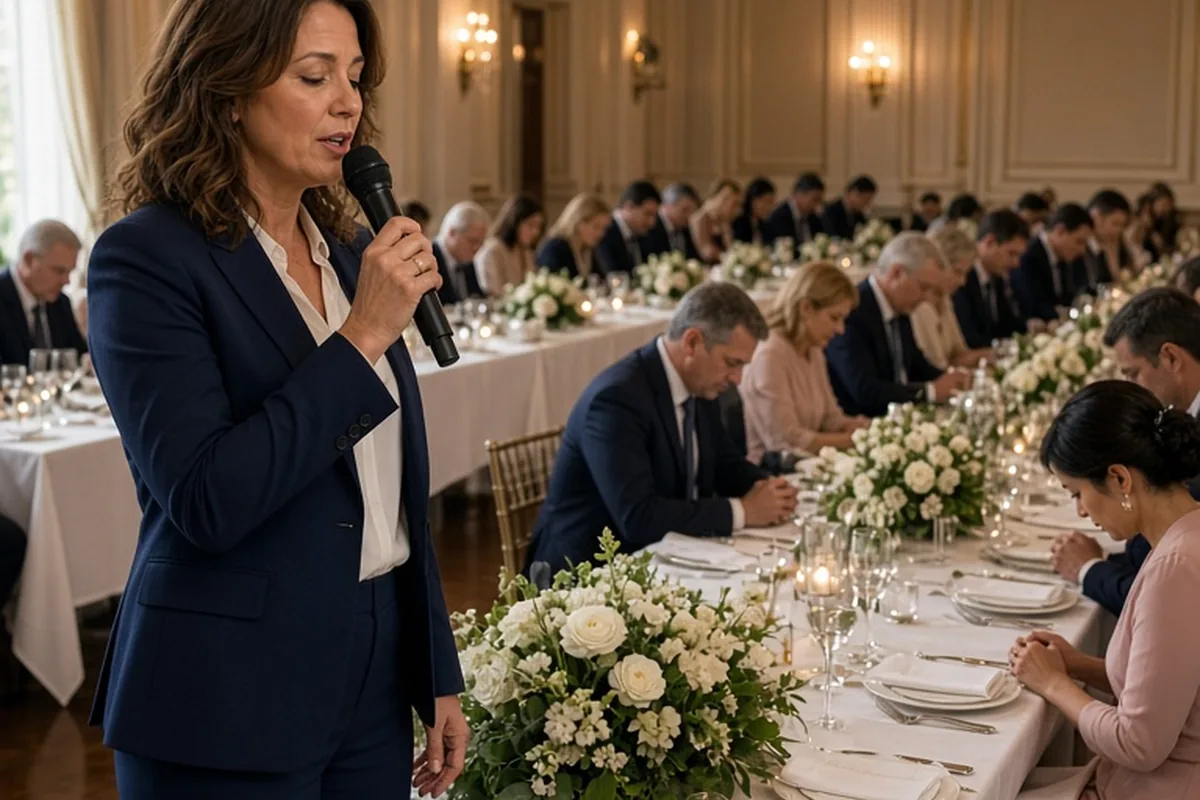
A wedding reception dinner prayer, or grace, is a brief blessing offered right before the meal to welcome guests, express gratitude for the couple, and give thanks for the food and shared community. An effective prayer typically lasts between one and two minutes, reflects the couple's personal beliefs and comfort level, and keeps the room focused and comfortable. It should directly acknowledge the gathering, bless the meal being served, and warmly transition guests into dinner.
Stepping up to deliver a dinner blessing at a wedding reception can feel daunting whether you are an officiant, a parent, a close friend, or the newlyweds themselves. Crafting words that feel authentic, respectful of diverse backgrounds, and appropriately paced sets a welcoming tone for the rest of the evening.
Traditional and Faith-Based Wedding Dinner Blessings
Faith-centered dinner prayers typically focus on spiritual commitment, divine guidance over the new marriage, and thanksgiving for the food provided. When delivering a traditional Christian blessing, it is common to reference covenant, love, patience, and community support while keeping the language uplifting and easy to follow for everyone present. If the couple requested a distinctly religious blessing, honoring their specific theological tradition gives the moment meaningful depth.
Here is a sample Christian dinner prayer you can adapt: 'Heavenly Father, we come before You today with hearts full of gratitude and joy as we celebrate the marriage of [Partner A] and [Partner B]. We thank You for bringing their paths together and for the sacred vows they made today. We ask that You bless their home with peace, patience, understanding, and deep love that grows stronger with every passing year. Bless the family and friends gathered around these tables who surround them with encouragement and care. We also thank You for the hands that prepared this wonderful meal and the abundance before us. May this food nourish our bodies as this joyous celebration nourishes our spirits. In Your holy name, we pray. Amen.'
When tailoring a traditional prayer, confirm in advance whether the couple prefers specific phrasing, closing invocations, or references to particular scriptures. Keeping the reading centered on love, hospitality, and blessing prevents the blessing from turning into a sermon, ensuring it remains an inviting prelude to dinner.
Interfaith and Universally Inclusive Reception Dinner Prayers
Many modern weddings bring together families and guests from varied religious, cultural, and philosophical traditions. An interfaith or universal blessing acknowledges a higher presence, universal love, or shared human values without relying on language exclusive to a single denomination. The goal is to unite the room in collective goodwill and warmth so that every guest feels invited into the moment.
Here is an inclusive sample script suitable for multi-faith gatherings: 'We pause together in this sacred and joyful moment to express our deepest gratitude for the love that unites [Partner A] and [Partner B]. As two distinct paths join to form a shared future, we ask for blessings of wisdom, resilience, kindness, and joy over their home. May their partnership be a sanctuary of comfort and a source of light to everyone who knows them. We give thanks for the beauty of this gathering, for the journeys traveled to be here, and for the shared bond of family and friendship across all traditions. May the food we share tonight sustain us, and may the fellowship around these tables remind us of the power of community and mutual respect. Let us celebrate this union with open hearts. Amen.'
Using universal words such as love, grace, peace, fellowship, and gratitude ensures that the prayer serves its primary social and spiritual function: bringing distinct groups of people together into one supportive circle of celebration.
Secular and Humanist Dinner Blessings Focused on Gratitude
For couples who do not observe religious customs, a secular dinner blessing or toast of gratitude honors the significance of the meal and the gathering without spiritual terminology. Secular blessings celebrate the tangible elements of the day: human connection, personal commitment, hospitality, memory-making, and the shared table. They function smoothly as a graceful transition from ceremonial proceedings to the evening feast.
Here is a practical secular script focused on appreciation and community: 'Welcome, everyone. Before we enjoy this meal together, let us take a quiet moment to reflect on the joy that brings us into this room. Today we witnessed [Partner A] and [Partner B] make a lasting promise to support, cherish, and grow alongside each other through every season of life. Building a strong marriage takes not just the dedication of two partners, but also the love, laughter, and wisdom of the community surrounding them. We are so grateful to sit at these tables together, share stories, and celebrate this remarkable milestone. Let us extend our sincere appreciation to the chefs and staff who prepared and served this meal for us tonight. May this dinner be the start of an evening filled with laughter, great conversation, and unforgettable memories. Please enjoy your meal, and cheers to the happy couple!'
A secular blessing resonates best when delivered with warmth, deliberate pacing, and clear eye contact across the room. It acknowledges the collective effort required to bring everyone together and invites guests to savor both the food and the company.
Short and Simple Blessing Scripts for Quick Transitions
When reception timelines run tight or the couple prefers a minimalist approach, a short prayer lasting thirty to forty-five seconds is often the best choice. Brief blessings provide dignity and focus without delaying catering service, which is especially helpful when hot food is already plated or when a large buffet line awaits release.
Consider this short faith-oriented option: 'Gracious God, thank You for this wonderful day of celebration and for the union of [Partner A] and [Partner B]. Bless their new life together with lasting happiness and health. Bless the meal we are about to share, the hands that made it, and the company at our tables. In Your name, Amen.'
If a non-denominational or secular short option is needed, use this template: 'Friends and family, let us give thanks for the love and happiness we celebrate today with [Partner A] and [Partner B]. We are grateful for safe travels, good health, and the pleasure of sharing this feast together. Let us enjoy this delicious meal and continue celebrating a long, beautiful future for our hosts.'
Short scripts are also ideal backups if you experience sudden public speaking nerves. Memorizing two or three clear sentences or having them printed on an index card allows you to speak with confidence and step down gracefully.
Sentimental Family and Heritage-Centered Blessings
A wedding dinner prayer can also honor family heritage, past generations, and the blend of family cultures taking place. When a parent, grandparent, or longtime mentor delivers the blessing, weaving in a gentle nod to ancestors or family values adds sentimental resonance without overshadowing the bride and groom.
Here is a sample heritage-focused blessing: 'As we gather around these tables, we recognize that the love between [Partner A] and [Partner B] stands on the shoulders of the families, mentors, and loved ones who guided them to this day. We remember with fondness those who are with us in spirit, whose examples of kindness, devotion, and resilience continue to inspire us. May [Partner A] and [Partner B] carry forward the finest traditions of their backgrounds while creating a vibrant, joyful home entirely their own. May their table always be open to friends, their days filled with shared laughter, and their hearts anchored in mutual respect. We thank the caterers and hospitality team for preparing this feast, and we ask for blessings of peace, health, and prosperity over this couple and everyone gathered here tonight. Amen.'
When including memories of departed loved ones or cultural references, keep the focus uplifting. Mentioning loved ones in spirit should evoke warmth and legacy rather than somber grief, maintaining the joyful energy of the celebration.
Coordinating Prayer Timing with Caterers and the Reception Emcee
The timing of the dinner blessing directly influences the flow of the reception. A blessing delivered too early can leave guests waiting while food cools, while a blessing delivered after plates arrive can interrupt people who have already begun eating. Seamless execution requires simple communication between the speaker, the master of ceremonies (emcee) or DJ, and the banquet captain.
For a plated dinner, the optimal moment for the prayer is immediately after the bridal party grand entrance and any opening welcome toasts, just before servers begin carrying out the first course. For a buffet or family-style dinner, the prayer should happen right after the general welcome and before the first table is dismissed to the buffet line. This ensures everyone understands the formal meal has officially commenced.
Confirm beforehand who will introduce you. A standard introduction from the DJ—such as, 'Please welcome [Name], who will now offer a blessing before dinner'—gives the room notice to quiet down, pause conversations, and turn their attention to the microphone. Always verify whether the couple wants guests to remain seated or be asked to stand, as keeping guests seated is generally preferred for ease and comfort.
Practical Tips for Confident and Respectful Public Delivery
Delivering a wedding dinner prayer requires a balanced tone: audible, clear, warm, and composed. Even experienced speakers can feel nervous in front of a banquet hall, so practicing your delivery ahead of time ensures you speak naturally without rushing through the words.
First, write your blessing on a clean index card or discreet piece of paper rather than reading from a glowing smartphone screen. A phone screen can cause glare in photographs, lock unexpectedly, or cause distracting pauses. Hold the microphone two to three inches from your mouth, speaking slightly slower than your normal conversational rate to account for room echo and acoustic delay in large reception spaces.
Second, keep your posture open and make brief eye contact with the couple and the room before inviting everyone into reflection. You can use standard inviting phrases like, 'Please join me for a moment of thanks before dinner,' or 'Let us bow our heads in gratitude.' Keep your total speaking time under two minutes; brevity ensures guests remain engaged and attentive while dinner service stays on schedule.
Frequently asked questions
Who usually gives the dinner prayer at a wedding reception?
The dinner blessing can be delivered by the wedding officiant, a parent of either partner, a close family member, a respected friend, or the couple themselves. The decision rests entirely with the couple based on who they feel best represents their values and spiritual background.
How long should a wedding reception dinner prayer be?
A standard reception prayer should last between one and two minutes, roughly 100 to 250 words spoken at a calm pace. Keeping it concise prevents meal delays and maintains the room's attention.
Should guests be asked to stand for the dinner blessing?
In most modern receptions, guests remain seated for the dinner blessing to avoid scraping chairs, spilling drinks, or causing discomfort for elderly attendees. The speaker can simply ask guests to bow their heads or join in a moment of quiet reflection.
How do you handle a dinner prayer if guests have diverse religious beliefs?
Focus the language on universal human values such as gratitude, love, health, family, and shared community. Avoid sectarian theological arguments or exclusionary phrasing, ensuring the words invite everyone present into a shared moment of celebration.
Your next step
Review the chosen sample script with the couple to confirm their preferred tone, write the final text clearly on an index card, and verify the microphone cue with the reception emcee before dinner begins.