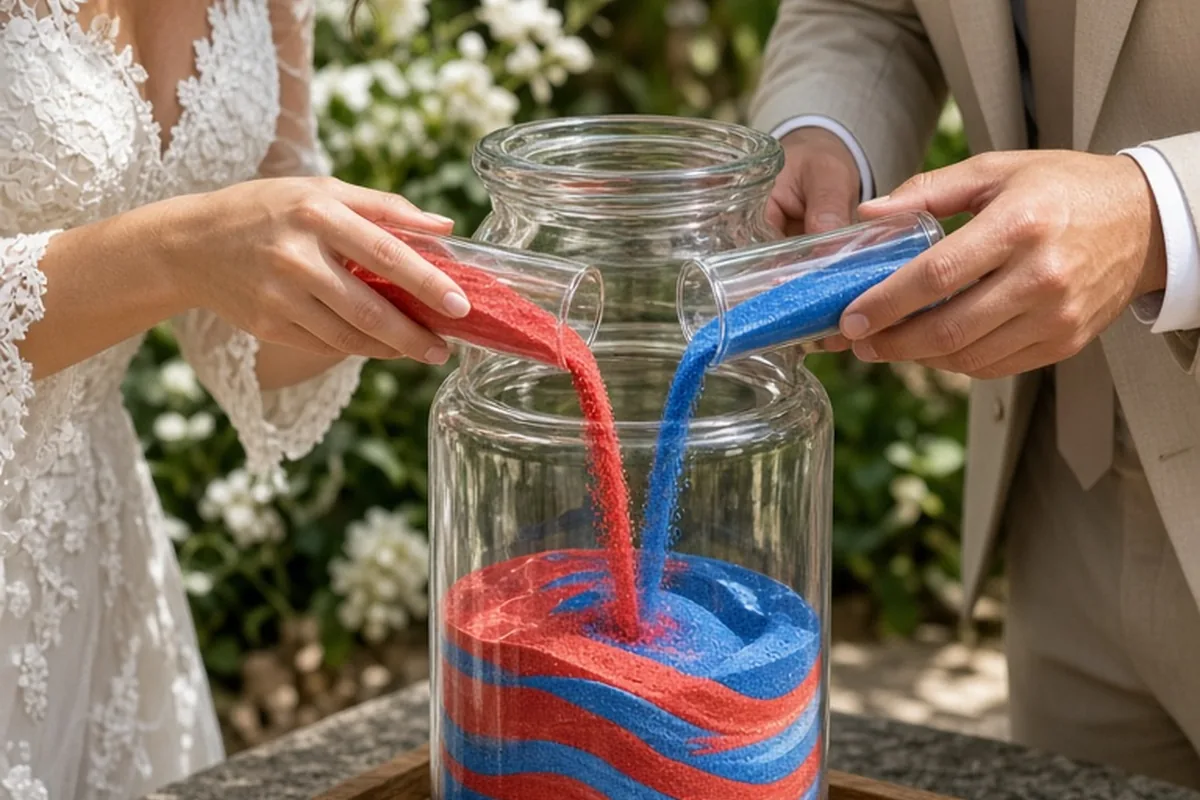
A sand ceremony is a contemporary unity ritual where partners pour distinct colored sands into a single vessel, symbolizing the inseparable joining of their lives. It emerged as a weather-resistant alternative to outdoor unity candles and has evolved into an inclusive ritual for blended families, couples from different cultural backgrounds, and secular ceremonies. The resulting layered sand container doubles as a lasting decorative keepsake that remains preserved long after the wedding day ends.
Couples planning modern weddings frequently look for rituals that reflect their personal dynamics while avoiding logistical headaches during the ceremony. The unity sand ritual provides a flexible, visual alternative to older traditions, adapting easily to open-air venues, multi-generational families, and custom ceremony scripts.
How the Unity Sand Ritual Differs from Traditional Unity Candles
The unity candle long served as the standard symbol of two lives joining together in American wedding ceremonies, but it brings practical limitations that do not suit every couple or venue. Open flames pose hazards in historic chapels, dry summer gardens, and waterfront settings where a steady breeze frequently extinguishes the wick before the partners can finish reciting their vows. Relighting a blown-out candle can derail the emotional flow of a ceremony, turning what should be a quiet, reflective milestone into an awkward troubleshooting exercise. Sand ceremonies eliminate this environmental vulnerability entirely, as wind, humidity, and drafty air conditioning have no negative impact on the pouring process.
Beyond the immediate logistical benefits, the two rituals communicate subtly different messages through their physical artifacts. A unity candle is designed to burn down over time; couples often store the unburned pillar in a box or burn it on milestone anniversaries until it disappears. A sand vessel, by contrast, creates an immediate, permanent sculpture where individual grains interlock in waves and striations that cannot be separated back into their original containers. This visual metaphor of irreversible union appeals strongly to couples seeking a tangible representation of shared commitment that immediately transitions from an altar centerpiece into permanent home decor.
Selecting Vessels, Sand Types, and Colors for Sand Ceremonies
The physical mechanics of your sand ceremony depend on the geometry of your pouring vessels and the consistency of the grains you choose. The central vessel requires a wide enough mouth to prevent sand from spilling over the rim during simultaneous pours, but it should not be so cavernous that the sand level looks sparse or sunken when the ceremony finishes. Narrow-necked carafes, shadow boxes with top loading slots, and vintage glass decanters with fitted stoppers are reliable choices. For the individual pouring containers, small glass vials or slender beakers with defined spouts offer far better pour control than broad drinking tumblers or heavy ceramic mugs, which tend to dump material in uncontrolled clumps.
Sand selection also demands careful evaluation because grain density and coloring agents behave differently under pressure. Fine craft sand offers vibrant pigmentation, but extremely fine powders can kick up micro-dust clouds if poured hastily or caught in a stiff crosswind. Medium-grain quartz sand or natural beach sand pours with a steady, rhythmic stream and settles evenly without creating air pockets. If you gather natural sand from a meaningful location, such as a hometown beach or a favorite hiking trail, rinse it thoroughly in fresh water and bake it at low heat to remove moisture, organic matter, and residual odors before the ceremony. Test your color combinations under warm lighting prior to the big day; high-contrast pairings like navy and soft ivory or terracotta and slate gray create crisp, distinct layers, whereas adjacent shades like blush pink and champagne can easily blur into a muddy, monochromatic stripe once poured.
Integrating Children and Extended Family into Blended Households
One of the strongest reasons modern couples select a sand ceremony is its natural ability to involve children, stepchildren, and parents without forcing awkward roles or manufactured dialogue. In traditional ceremonies, children often stand passively as ring bearers or junior attendants, leaving their transition into a newly blended family unacknowledged in the actual vows. A multi-color sand pouring gives each child an active physical role, a distinct color representing their individuality, and a direct visual stake in the newly formed family unit. Seeing their specific sand color woven alongside their parents demonstrates belonging in a concrete, age-appropriate manner.
To execute this smoothly, structure the order of pouring so every participant understands their cue without needing mid-ceremony coaching from the officiant. A common approach involves the couple pouring a shared foundation layer at the bottom of the vessel to symbolize the commitment anchoring the household. Each child then pours their personal color in succession, creating visible bands of color in the middle tier, followed by a final simultaneous pour where everyone contributes to the top layer. Giving younger children smaller, lighter glass bottles with manageable necks prevents dropped glassware and helps them pour steadily at their own pace without feeling rushed.
Structuring Officiant Scripts and Meaningful Spoken Vows
A sand ceremony requires thoughtful spoken framing from the officiant to ensure guests understand the meaning of the actions unfolding before them. Without a clear narrative, the pouring can feel like an extended pause in the service where guests watch glass containers being manipulated in silence. An effective script introduces the symbolism before the first pour begins, describes the significance of individual identity and mutual devotion, and concludes with an observation on how the combined grains can never be separated back into their solitary vessels.
Consider this adaptable script excerpt designed for a couple pouring two colors: 'Alex and Jordan come before us today as individuals, represented by these two distinct sands, each shaped by their own histories, values, and experiences. As they pour their individual vessels together into this single container, the grains interlock to form an entirely new design. Just as these individual grains can never be separated back into their original vessels, so too shall their lives, promises, and futures remain bound together in lifelong partnership.' When including children or parents, the officiant can expand this framing to emphasize that while each family member retains their personal color and identity, their combined presence strengthens the collective whole.
Managing Wind, Spills, and Setup Logistics at the Venue
Even though sand ceremonies excel in outdoor conditions, uncontrolled breezes and unstable surfaces can still cause unexpected mishaps if basic precautions are ignored. Place the ceremony table on a firm, level surface away from direct foot traffic where wedding attire or wandering guests might bump the legs. If your altar setup sits on grass, uneven beach sand, or a decorative rug, use a rigid wooden tray beneath the glassware to create a flat, steady foundation. A decorative tray also serves a practical secondary purpose: it catches stray grains that bounce off the rim during pouring, keeping the altar linens clean.
Wind control requires attention to pouring height and vessel orientation. Instruct your wedding party or practice briefly beforehand so partners know to hold their pouring spouts close to the rim of the main vessel—ideally no more than two to three inches above the opening—rather than pouring from dramatic heights. High pours increase the likelihood of cross-breezes carrying colored dust onto suits and wedding gowns. Keep a small dry microfiber cloth hidden behind the ceremony table so the officiant or wedding coordinator can quickly wipe the glass exterior after pouring if any static-charged sand clings to the outer surface.
Sealing, Transporting, and Preserving the Finished Keepsake
The most critical moment for preserving the visual integrity of a sand vessel happens immediately after the ceremony ends. When the container moves, car vibrations, tilting, and physical jolts can cause the distinct layers to collapse into a uniform gray or brown mixture. To prevent shifting, the central vessel must be filled completely to the brim before it undergoes any road transport. If the ceremony pours leave empty space at the top of the container, pack clean cotton batting, florist foam, or neutral wax paper snugly into the neck to immobilize the sand column until you reach your permanent display area.
For long-term home preservation, seal the container permanently once it is settled. For glass jars with cork stoppers, run a bead of clear jeweler's silicone or melted sealing wax around the seam where the cork meets the glass collar to lock out ambient moisture and prevent loosening over time. For shadow boxes, ensure the top loading flap is screwed tightly and sealed with archival adhesive. Display the completed piece away from direct sunlight; prolonged exposure to intense ultraviolet light can fade colored craft dyes over several years, whereas natural beach sand and mineral-dyed quartz retain their authentic tones indefinitely when shielded from extreme environmental shifts.
Frequently asked questions
Can we use sand gathered from our hometown beaches instead of store-bought sand?
Yes, natural sand adds deep personal significance, but it must be prepared properly before the ceremony. Rinse the sand in fresh water to eliminate salt, sift out debris with a fine mesh screen, and spread it on a baking sheet at low heat until bone-dry so moisture does not cloud the glass or foster mold inside a sealed vessel.
At what point in the ceremony schedule should the sand ritual happen?
The sand pouring typically takes place immediately following the exchange of vows and rings, serving as the physical culmination of the verbal promises. Placing it near the end of the ceremony allows it to lead naturally into the final blessing, pronouncement, and celebratory recessional.
How do we transport the vessel home from the reception without ruining the layers?
Pack the top void of the vessel firmly with cotton balls, soft foam, or tissue paper to eliminate any air gap that would allow the sand to shift during transit. Transport the piece upright in a padded box wedged on the floorboard of a car rather than on an inclined vehicle seat.
Your next step
Measure the interior volume of your chosen centerpiece vessel with water in advance, then divide that exact volume into equal portions for each participant's pouring container to guarantee a full, balanced finish on your wedding day.