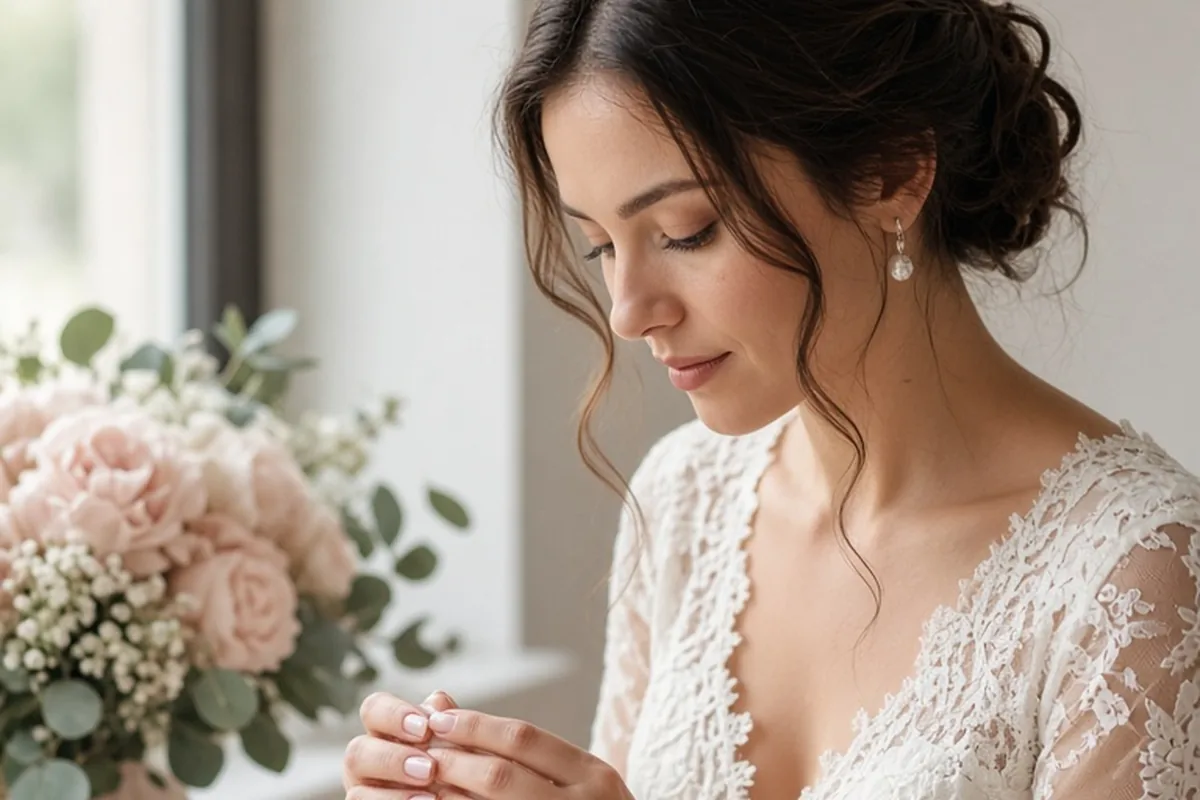
Short nail designs for a wedding offer an elegant, low-maintenance aesthetic that highlights fine jewelry and stays chip-resistant throughout the day. Popular choices include micro-French tips, glazed chrome washes, milky sheer pinks, and delicate negative-space accents. Selecting a natural shape like soft squoval or round, combined with professional prep and gel or structured overlays, ensures your manicure looks polished and photograph-ready without snagging delicate bridal fabrics.
While dramatic extensions have long held a place in bridal beauty, short manicures have become a preferred choice for brides, bridesmaids, and wedding guests seeking understated sophistication. A shorter length emphasizes clean lines, feels comfortable for all-day celebrations, and reduces the stress of accidental breaks during outfit changes or ring exchanges.
Timeless Sheer Washes and Milky Neutral Foundations
A sheer or milky neutral base remains the gold standard for wedding nails because it enhances your natural nail plate without competing with intricate dress details or engagement bands. Soft rose, translucent beige, and clouded alabaster shades create an illusion of healthy, elongated fingers while keeping the overall aesthetic clean and modern. Because short nails have a smaller surface area, opaque white can sometimes appear blunt or stark; semi-translucent formulas soften the visual perimeter and blend seamlessly with any skin tone.
To achieve the best finish, manicurists often apply two thin coats of a sheer builder gel or jelly polish, curing thoroughly between layers to build subtle depth. For example, a bride wearing an ivory silk crepe gown might choose an ultra-sheer pink with a warm undertone, which brings warmth to the hands in close-up ring photography. One limitation to keep in mind is that highly translucent shades expose the natural free edge of your nail. If your natural tips are uneven, your technician may need to lightly shape the smile line or use a semi-opaque neutral base coat first to establish uniform color coverage across every finger.
The Micro-French Manicure and Modern Line Accents
The traditional French manicure can overwhelm a short nail bed if the white tip is drawn too wide, creating an optical illusion that shortens the finger. The micro-French manicure solves this by applying an ultra-fine, hairline stroke along the absolute edge of the nail. This delicate line frames the fingertip cleanly, preserving the natural proportions of the nail bed while delivering the classic bridal contrast that photographers capture so well during detail shots.
Executing a crisp micro-French on short lengths requires precision tools, such as a fine striping brush, and a steady hand. You can personalize this look by swapping traditional stark white for soft cream, warm champagne, or a subtle metallic silver that matches your jewelry. For instance, a bride wearing yellow gold heirlooms could feature a micro-line of reflective gold foil along the free edge over a blush foundation. Keep in mind that on very short or bitten nails where the fingertip extends past the nail plate, a micro-line may sit slightly above the actual finger edge, so allowing two to three weeks of gentle growth before the wedding will provide the cleanest canvas.
Glazed Chrome Powders and Soft Pearlescent Sheens
Chrome powders and fine pearl pigments offer a luminous, light-catching finish that feels festive without relying on chunky glitter. When buffed over a nude or sheer white base, chrome creates an iridescent, glass-like sheen that shifts softly under reception lighting and natural daylight. This finish is particularly striking on short nails because it adds dimension and brightness across the entire plate without requiring extra length or elaborate art.
The application involves sealing your base color with a non-wipe gel top coat, curing it partially, and immediately buffing a micro-fine chrome pigment over the surface using an applicator. For example, a soft vanilla chrome over a pale pink base produces an ethereal glow that complements satin and tulle wedding attire. The primary trade-off with chrome applications is their vulnerability to edge chipping if not sealed correctly. To prevent the chrome from lifting at the tips during your reception, ensure your technician thoroughly caps the free edges with a durable, high-gloss top coat and cures it completely.
Subtle Botanical Art and Negative-Space Details
Short wedding nails provide an ideal foundation for minimalist, negative-space nail art, where parts of the bare or sheer base show through delicate hand-painted motifs. Dainty botanical illustrations, such as tiny leafy vines, single-petal blossoms, or soft white foliage painted along the cuticle line, add romantic flair without cluttering the nail. Concentrating the art on one or two accent fingers, like the ring finger or thumb, keeps the look balanced and refined.
When planning hand-painted designs on shorter lengths, scale is essential. Large floral stamps can overpower the nail, whereas micro-dotting tools and ultra-fine liner brushes allow for controlled, lightweight patterns. A practical approach is placing a single sprig of white botanical art along the outer corner of the ring fingernail, leaving the remaining fingers in a clean neutral. Be aware that intricate hand-painted designs add time to your salon appointment, so schedule an extra fifteen to thirty minutes with your technician rather than rushing through the application.
Delicate 3D Embellishments and Metallic Foil Accents
For those who want a touch of texture, miniature flat-back pearls, microscopic crystal studs, and flecks of gold or silver leaf can elevate a short manicure into a bespoke bridal accessory. Placing a single tiny pearl at the center base of each cuticle creates an understated, jewelry-inspired aesthetic that echoes beaded gowns or pearl earrings. Gold foil flecks pressed into a sheer milky base give an organic, gilded effect that feels luxurious yet grounded.
Placement is critical when working with raised elements on short nails. Placing embellishments too close to the free edge increases the likelihood of them catching on lace veils, chiffon sleeves, or textured bouquets. Manicurists typically anchor 3D pieces with a dedicated gem gel, cure them thoroughly, and encapsulate the edges with top coat so the surface feels smooth to the touch. If your wedding dress features delicate open-weave lace or netted tulle, opt for smooth metallic foil instead of raised crystals to avoid accidental snags during dress changes.
Selecting the Best Nail Shape for Shorter Nail Beds
The perimeter shape of a short nail significantly influences how long and slender your fingers appear in photographs. The three most flattering shapes for short bridal nails are soft round, squoval (square with rounded corners), and short oval. Round shapes mirror the natural curve of the fingertip, making them exceptionally durable and chip-resistant. Squoval shapes provide a modern, structured frame that works well for wider nail beds, while short oval shapes gently elongate shorter fingers.
Choosing between these shapes depends on your natural cuticle line and the width of your nail bed. If your cuticles are curved, a soft round or oval shape creates natural harmony. If your cuticles are straight, a squoval contour often looks more intentional. For example, a bride with petite hands and narrow nail beds might choose a short oval to visually extend the fingers, whereas someone with wider nail beds may prefer a soft squoval to maintain symmetry. Avoid sharp square edges on short nails, as sharp corners are more prone to chipping and catching on delicate bridal fabrics.
Preparation, Salon Timing, and Day-of Maintenance
Achieving a flawless short manicure requires healthy skin and cuticle prep in the weeks leading up to the ceremony. Dry cuticles and frayed sidewalls are more noticeable on short nails because the surrounding skin frames the nail plate closely. Applying a high-quality jojoba-based cuticle oil twice daily starting four weeks before the event keeps the eponychium supple and prevents hangnails. Regular gentle filing with a glass nail file also prevents microscopic tears along the free edge.
Book your final bridal nail appointment two to three days before the ceremony. This timeframe allows your polish to look freshly cured and glossy while leaving room in your schedule for other preparations. Opting for a structured gel manicure or hard gel overlay provides reinforcement that shields natural nails from splitting under the pressure of opening boxes, pinning boutonnieres, or handling luggage. On the wedding morning, keep a small bottle of non-greasy hand serum and a glass file in your bridal emergency kit to address any sudden snags or dry skin before photography begins.
Frequently asked questions
Can I do a French manicure if my nails are very short?
Yes, you can wear a French manicure on very short nails by requesting a micro-French design. A manicurist paints an ultra-fine line along the natural edge rather than a thick band, preserving natural proportions and keeping the fingers looking elongated.
Which nail formula lasts best for a wedding weekend?
Soft gel or structured gel overlays offer the best balance of flexibility and strength for short wedding nails. These formulas resist chipping through multiple days of rehearsals, ceremonies, and receptions while maintaining a high-shine finish.
Should my wedding nail color match my bouquet or my dress?
Bridal nails do not need an exact match to your flowers or gown; instead, coordinate undertones with your jewelry and dress fabric. Warm undertones like champagne and peach suit yellow gold and ivory, while cool pinks and soft whites complement platinum, silver, and crisp white fabrics.
How far in advance should I schedule a bridal nail trial?
Schedule a bridal nail trial roughly three to four weeks before your wedding date. This timeline gives you the opportunity to test your chosen design, shade, and shape against your dress swatches and confirm how well the formula holds up on your natural nails.
Your next step
Schedule a bridal nail trial three to four weeks before your wedding to test your preferred shade, shape, and finish against your dress fabric and jewelry.