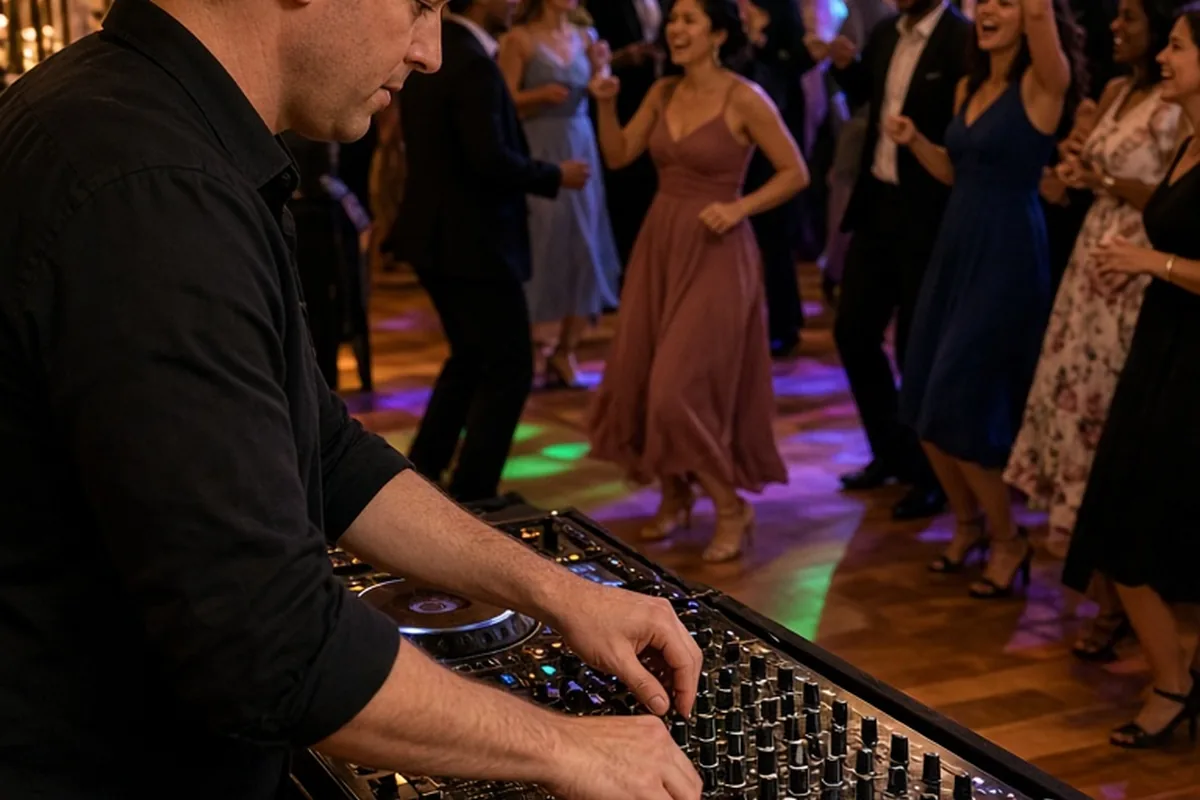
The songs you should avoid playing at your wedding generally fall into three categories: tracks with lyrics celebrating infidelity, obsession, or bitter breakups; divisive novelty line dances that clear the floor; and songs with jarring tempo drops or explicit content that clash with your guest dynamic. Curating a clear 'Do Not Play' list prevents awkward moments during formal dances and keeps your reception energy high.
Wedding playlists require a careful balance between personal taste and collective energy, yet many popular reception staples feature surprisingly dark, bitter, or awkward themes upon closer inspection. Building an intentional list of musical exclusions gives your DJ or live band clear boundaries while ensuring your celebration feels joyful, cohesive, and comfortable for every generation in the room.
Breakup Ballads and Obsession Anthems Disguised as Romance
A surprising number of timeless hits sound romantic at first listen due to sweeping orchestral arrangements or soulful vocals, but their actual lyrics tell stories of heartbreak, surveillance, or painful separation. Whitney Houston's iconic rendition of 'I Will Always Love You' is one of the most frequent ceremony mistakes; despite its vocal power, the narrator is explicitly saying goodbye because they recognize they do not belong together. Similarly, Sam Smith's 'Stay With Me' is not a declaration of lifelong devotion, but a poignant plea following a one-night stand between two people who share no deeper connection.
Perhaps the most misunderstood track in modern music history is 'Every Breath You Take' by The Police. Written by Sting during a contentious divorce, the track depicts obsessive surveillance and jealousy rather than romantic protection. Playing tracks like this during a first dance, cake cutting, or processional can produce an unintended sense of irony for guests listening closely to the words. Other slow staples with mismatched themes include 'Careless Whisper' by George Michael, which chronicles the shame and aftermath of cheating on a partner, and Adele's 'Someone Like You', which centers on the lingering grief of watching an ex-lover move on with someone else.
When reviewing potential slow songs for your special moments, look past the melodic hook and read the full lyrical verses. If the narrative describes parting ways, unrequited longing, or secret torment, substitute it with tracks that celebrate mutual commitment, partnership, and shared joy.
Upbeat Party Tracks That Celebrate Cheating, Divorce, and Cynicism
High-energy dance tracks can be just as problematic as slow ballads if their core message contradicts the spirit of a wedding. OutKast's mega-hit 'Hey Ya!' is a prime example of an infectious rhythm masking deeply cynical commentary on modern romance. The lyrics explicitly question why people stay in unhappy marriages and point out that nothing lasts forever, even delivering the meta-commentary: 'Y'all don't wanna hear me, you just wanna dance.' While the song undoubtedly gets crowds moving, couples who value thematic consistency often prefer to omit it.
Revenge and infidelity anthems also create jarring moments during a wedding celebration. Songs like 'Before He Cheats' by Carrie Underwood, 'You Oughta Know' by Alanis Morissette, and 'Mr. Brightside' by The Killers deal heavily with betrayal, property destruction, and agonizing jealousy. While 'Mr. Brightside' has evolved into an energetic late-night indie-rock singalong in many social circles, songs like Hinder's 'Lips of an Angel'—which details a man whispering on the phone to an ex while his current partner sleeps in the next room—feel distinctly out of place at a union founded on fidelity.
Similarly, Bruno Mars's 'Marry You' is often added to wedding playlists based on the title alone, yet the lyrics describe an impulsive, alcohol-fueled decision to find a quick chapel rather than an intentional commitment. Evaluating whether an upbeat track matches your values allows you to maintain high energy without inadvertently celebrating marital failure.
Polarizing Novelty Dances and Overplayed Reception Clichés
Group participation dances represent one of the most divisive categories in event entertainment. Songs like 'The Macarena' by Los Del Rio, 'The Chicken Dance', 'The Cha Cha Slide' by DJ Casper, 'The Cupid Shuffle', and 'Y.M.C.A.' by The Village People are viewed by some couples as harmless icebreakers that encourage hesitant guests to join the crowd. However, for many modern couples and their peers, these structured routines feel dated, repetitive, and disruptive to organic dance floor momentum.
The primary risk of mandatory line dances is that they halt the musical flow your DJ has established. If a vibrant set of soul, funk, or pop has naturally drawn guests to the floor, dropping in an instructional group routine can cause experienced dancers to leave for the bar. Additionally, novelty tracks like Rednex's 'Cotton Eye Joe' or 'Baby Shark' introduce a novelty-fair atmosphere that clashes with sophisticated or modern reception aesthetics.
If you enjoy participatory dances, you do not have to eliminate them entirely. A common middle ground is limiting your reception to a single, carefully timed group dance rather than several. If you dislike them, explicitly listing them on your 'Do Not Play' roster ensures your DJ does not default to easy participation tropes when building energy.
Explicit Content and Lyrically Inappropriate Tracks for Mixed Crowds
A wedding reception is rarely a monoculture; it brings together extended family, colleagues, grandparents, and often young children. Songs with overtly graphic sexual lyrics, violent themes, or frequent profanity can create genuine discomfort among older relatives or guests with conservative backgrounds. Tracks like Robin Thicke's 'Blurred Lines' carry controversial connotations surrounding consent, making them unsuitable for celebrations aiming to keep all guests comfortable.
Modern hip-hop, R&B, and pop tracks frequently feature explicit language that sounds natural in a club or private listening setting but stands out sharply during an open reception dinner or early dance set. Songs such as Cardi B and Megan Thee Stallion's 'WAP' or unedited versions of early 2000s rap staples can draw complaints from family members if dropped into the playlist while multi-generational guests are mingling.
The standard solution is not necessarily banning entire genres, but instructing your DJ to utilize clean, radio-edited versions of your favorite modern tracks. Alternatively, you can designate an 'after-hours' window—typically the final 45 to 60 minutes of the evening—where the music shifts to late-night club favorites after older relatives and children have departed.
Pacing Traps: Overlong Jams, Tragic Ballads, and Floor-Clearing Transitions
Not every song on an exclusion list is there because of offensive or sad lyrics; some tracks simply derail the physical pacing of an evening. Progressive rock anthems, extended jam-band recordings, and tracks exceeding five or six minutes—such as the full studio cut of 'Free Bird' or 'Stairway to Heaven'—often leave guests feeling fatigued or unsure how to dance through lengthy instrumental solos. While meaningful for casual listening, their arrangement works against steady dance floor participation.
Another pacing risk involves tracks associated with grief, tragedy, or solemn cinema. Celine Dion's 'My Heart Will Go On' is indelibly linked with a maritime disaster, and Eric Clapton's 'Tears in Heaven' is a profound meditation on bereavement. Inserting deeply somber ballads into a reception dampens the emotional atmosphere and makes it difficult for the DJ to rebuild upbeat momentum without an awkward tonal jump.
Furthermore, stacking multiple slow songs in immediate succession almost always clears a crowded dance floor. Most professional DJs recommend limiting slow dances to one or two per set before transitioning back into higher-tempo selections, ensuring that the room remains active and engaged throughout the night.
Crafting Your Wedding DJ Do-Not-Play List with Clear Boundaries
A well-structured 'Do Not Play' list is one of the most effective tools you can give your wedding entertainment. When creating this document, clarity and prioritization matter far more than sheer volume. Handing a DJ a list of 200 banned songs restricts their professional ability to read the crowd and respond to guest engagement in real time. Instead, aim for a targeted list of 10 to 25 specific tracks or narrow stylistic parameters that represent your true deal-breakers.
To make your instructions practical, divide your musical preferences into distinct categories: hard bans, soft bans, and contextual restrictions. A hard ban means the song should never be played under any circumstance, even if a beloved bridal party member requests it. A soft ban indicates that you personally dislike the song, but the DJ may use discretion if the dance floor is lagging and a specific group genuinely wants it. Contextual rules define parameters like 'radio edits only' or 'no line dances before 9:00 PM.'
Review this list with your DJ or bandleader at least three to four weeks before the wedding. Discuss why certain tracks are excluded so they understand your overall vision and can select appropriate substitutes that maintain the energy level you want.
Managing Guest Requests and Protecting Your Curated Atmosphere
Even with a comprehensive exclusion list in place, guests will frequently approach the DJ booth to request tracks you deliberately sought to avoid. Without clear pre-established rules, your DJ is left in the difficult position of deciding whether to honor a pushy guest's request or risk disappointing someone who claims to speak for the couple.
Protect your entertainment team by giving them explicit authorization to act as your buffer. Instruct your DJ to politely decline banned songs by saying, 'The couple has given me a specific curated playlist for tonight, but I'd love to play another song you enjoy from their preferred genres.' This approach deflects awkward social friction away from both you and the DJ while preserving the musical continuity of the night.
If you have close family members with strong musical preferences that conflict with your taste, consider offering them an alternative outlet. Dedicating a specific, pre-approved song during cocktail hour or dinner allows you to honor a parent or relative without disrupting the high-energy flow of the main dance reception.
Frequently asked questions
How many songs should we include on our wedding Do Not Play list?
A focused list of 10 to 20 songs is ideal for most receptions. Keeping the list concise ensures your deal-breakers are strictly respected while leaving your DJ enough creative freedom to read the room and maintain dance floor energy.
Is it acceptable to ban traditional line dances completely?
Yes, it is entirely acceptable to exclude line dances if they do not align with your style. Professional wedding DJs are accustomed to this preference and can easily keep the dance floor packed using mainstream pop, Motown, funk, hip-hop, and classic rock.
What if a song with sad or breakup lyrics holds personal meaning for us?
If a specific track has sentimental value despite its lyrical theme, you can still include it in a private setting, such as your cocktail hour or dinner background music. For focal moments like your first dance, however, choosing a song with universally supportive lyrics usually prevents confusing or awkward guest reactions.
How should we handle explicit music during the reception?
You can request that your DJ play clean radio edits for the majority of the evening to accommodate mixed generations. If you want unedited club or hip-hop tracks, designate the final 45 minutes of the reception for explicit versions once older relatives and children have left.
Your next step
Sit down with your partner to identify your top ten absolute deal-breaker songs, categorize them by lyrical mismatch or genre fatigue, and provide that finalized exclusion guide to your DJ during your timeline planning meeting.