Planning a spectacular fall wedding on a budget focuses on leaning into autumn's natural assets: seasonal foliage, rich textures, cozy ambient lighting, and hearty comfort foods. You can achieve an elevated aesthetic without high floral bills by substituting costly blooms with dried grasses, heirloom pumpkins, and branch installations, choosing off-peak dates or Sunday afternoon slots, and serving family-style autumnal meals that feel intentional rather than restrictive.
Autumn naturally provides rich color palettes, crisp air, and scenic backdrops, offering an organic atmosphere that requires far less artificial staging than other seasons. With thoughtful planning, couples can channel the charm of the harvest season into an unforgettable celebration while keeping overall expenses completely manageable.
Selecting Scenic Venues and Strategic Autumn Dates
The venue often represents the largest single expense in a wedding budget, but autumn weather makes alternative spaces particularly attractive. Public parks, state forest lodges, municipal botanical gardens, and community orchards frequently rent open-air pavilions or historic barns at a fraction of the cost of commercial event venues. When searching for these spaces, prioritize sites with established tree canopies featuring maple, oak, or birch trees, which provide vibrant natural decor that eliminates the need for expensive backdrop rentals.
Timing plays an equally critical role in overall pricing. October is traditionally one of the most competitive months in the wedding industry, often commanding peak rates. Couples can secure significant discounts by considering late November dates, Friday evenings, or Sunday midday slots. A Sunday late-morning ceremony followed by an afternoon cider and pie reception reduces venue fees, staffing rates, and catering expectations while still providing guests with a complete, warm seasonal experience.
Before signing any contract with an alternative or public venue, verify site-specific logistics that could introduce hidden expenses. Inquire about electrical capacity for space heaters or lighting, whether outdoor sound permits require municipal fees, and what rules apply to open flames or alcohol service. Choosing a venue that already includes basic tables, chairs, and indoor shelter options prevents last-minute tent rentals if late-autumn weather turns cold or rainy.
- State and regional park pavilions with stone fireplaces
- Community cider mills, working orchards, and rustic farm cooperatives
- Historic public library courtyards and municipal greenhouse spaces
Designing Fall Floral Displays with Foraged Branches and Dried Botanicals
Traditional wedding floristry relies heavily on imported out-of-season blooms, which quickly drives up total costs. Autumn offers a distinct opportunity to pivot toward structural, long-lasting botanical materials. Tall branch cuttings showing amber, rust, and crimson leaves can be placed in large terracotta urns or thrifted glass demijohns to frame the ceremony space. Because branches provide significant volume and height, you need far fewer individual stems to create an impactful visual statement at the alter and entrance.
Dried botanicals, including pampas grass, wheat sheaves, seed pods, preserved eucalyptus, and bunny tails, offer an elegant aesthetic that can be assembled weeks in advance without refrigeration or wilting concerns. Sourcing dried florals in bulk allows you to construct bouquets, boutonnieres, and floral arches well ahead of the wedding day, eliminating the premium labor fees associated with early-morning fresh flower delivery and styling.
For areas where living flowers are preferred, consider potted blooming plants instead of cut stems. Hardy chrysanthemums, ornamental cabbages, and flowering kales purchased in bulk from regional nurseries can line the aisle or flank the entryway. After the event, these hardy plants can be taken home by guests as sustainable favors or planted in home gardens, ensuring that no part of the decor budget is wasted on single-use items.
- Foraged dogwood, birch, or maple branches for dramatic altar height
- Potted garden mums and ornamental kale to define walkways and steps
- Bunches of dried lavender, oats, and wheat for textural bridesmaid bouquets
Styling Warm Autumn Tablescapes with Produce and Ambient Candlelight
A full dining room looks luxurious when tables are styled with depth, color, and varying heights rather than expensive floral centerpieces. Autumn harvest produce provides an affordable and sculptural decor foundation. Heirloom pumpkins in muted slate green, creamy white, and soft terracotta, interspersed with dark figs, pomegranates, Bosc pears, and miniature squash, create a layered runner down the center of farm tables. Because these items do not spoil quickly, you can purchase them locally in the days leading up to the celebration.
Layering soft textiles underneath your centerpiece items adds warmth to bare wood tables. Inexpensive cheesecloth dyed in shades of walnut, sage, or cinnamon functions as a flowing runner that softens the table line without the cost of floor-length satin or linen rentals. Combining these textiles with thrifted brass candlesticks, dark glass bud vases, and simple ceramic stoneware gives the reception an intimate, curated feel without relying on uniform commercial party rentals.
Candlelight provides the most flattering and cost-effective lighting for an evening autumn meal. Grouping mismatched glass votives with tall taper candles down the center of each table establishes a continuous glow that enhances the warmth of your seasonal color palette. Always check with your venue regarding open flame rules; if open flames are restricted, high-quality wax-dipped LED tapers with flickering wicks offer the same ambient appeal without safety violations.
Creating an Autumn Comfort Food and Seasonal Beverage Menu
Catering costs decrease substantially when moving away from formal multi-course plated dinners toward hearty, seasonal comfort foods served family-style or through interactive stations. Autumn ingredients such as root vegetables, winter squash, apples, and braised meats are inherently budget-friendly for caterers to prepare in volume, allowing you to negotiate a lower per-person food cost without sacrificing flavor or portion size.
Consider offering interactive food stations that double as guest entertainment. A gourmet soup and artisan bread bar featuring butternut squash bisque and rustic potato leek soup served in demitasse cups during cocktail hour provides immediate warmth. For the main meal, slow-roasted cider-braised pork shoulder, herb-roasted chicken, and roasted root vegetable medleys deliver rich flavors while keeping protein costs significantly lower than prime cuts of beef.
Beverage programs can be streamlined by skipping a standard full open bar in favor of focused seasonal offerings. A signature bar featuring hot mulled cider, local craft stout, a crisp apple wine, and one signature bourbon-based cocktail gives guests a cohesive experience while keeping alcohol line items predictable. For non-drinking guests, a self-serve hot cocoa and spiced apple cider station complete with cinnamon sticks and flavored syrups adds hospitality at minimal expense.
Setting the Scene with Cozy Lighting and Outdoor Fire Elements
Because daylight fades earlier in the autumn months, strategic lighting transforms an ordinary space into an enchanting environment. Commercial string bistro lights suspended in a crisscross pattern across an outdoor patio or barn ceiling define the gathering area and cast a golden hue over the entire event. String lights can be purchased in bulk or rented for minimal cost, yet they provide the primary visual ambiance once the sun goes down.
Supplement overhead string lights with low-level ground illumination. Metal lanterns housing long-burning pillar candles or amber LED lights can illuminate gravel pathways, deck steps, and restroom walkways, simultaneously serving safety and decorative roles. Amber or warm-white uplights positioned around the perimeter of a dining tent or against exposed venue walls add dimensional color that coordinates with fall palettes.
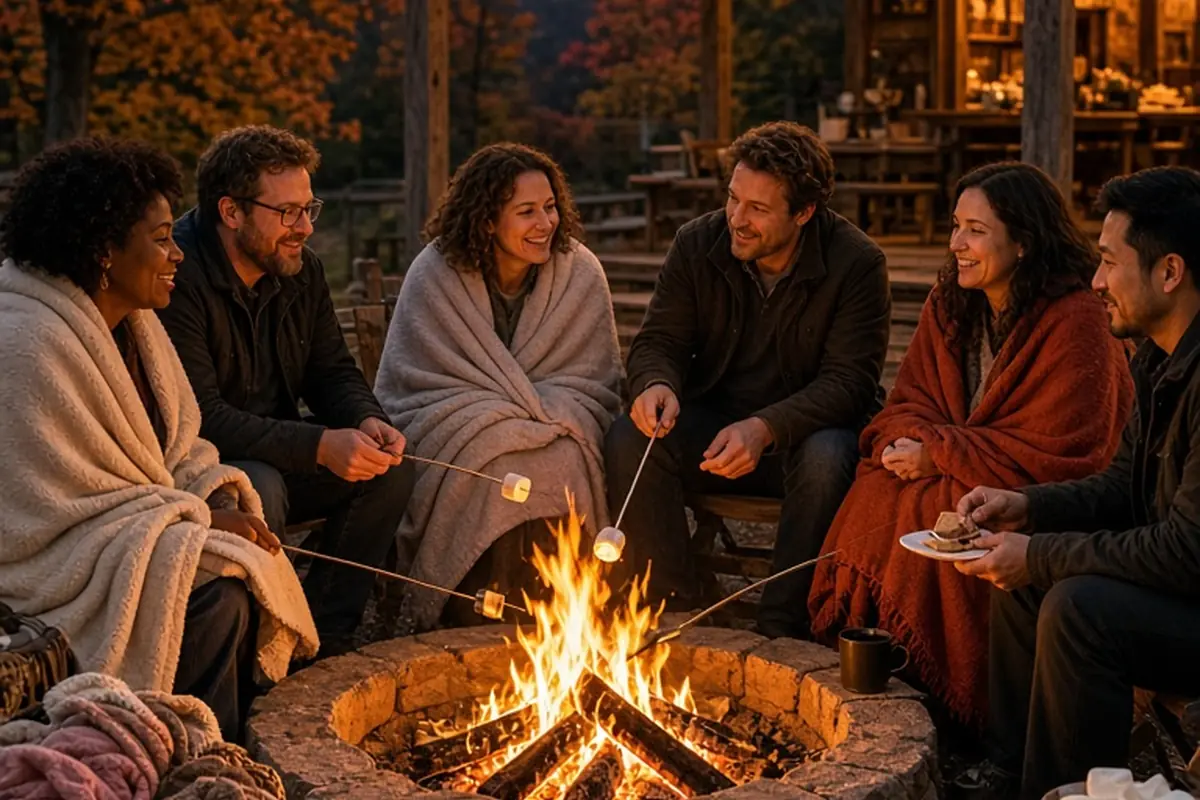
If your venue allows it, incorporating outdoor fire pits creates a natural gathering hub for the evening hours. Providing baskets of inexpensive fleece blankets near the fire alongside a simple s'mores station invites guests to mingle outside even as the temperature drops. This cozy atmosphere extends your usable venue space into the evening without requiring expensive patio heating tower rentals across the entire grounds.
Curating Layered Autumn Wedding Attire and Second-Hand Textures
Fall wedding style naturally lends itself to tactile fabrics and layered accessories that are both photogenic and practical. Grooms and wedding party members can opt for tailored wool, tweed, or corduroy separates sourced from off-the-rack retailers rather than renting standard polyester tuxedos. Mismatched earth tones such as olive green, deep burgundy, rust, and camel allow attendants to select pieces within their personal budgets that can be worn again for other occasions.
For bridal attire, autumn temperatures allow for creative layering that does not require custom alterations. Pairing a clean, minimalist gown with a thrifted knit cardigan, a vintage cashmere wrap, or a tailored suede jacket creates a distinctive seasonal look while keeping you comfortable during outdoor photo sessions. Choosing dresses with substantial fabrics such as heavier crepe, jacquard, or long lace sleeves eliminates the need for expensive structural undergarments or heavy thermal layers.
Bridesmaid styling becomes significantly more budget-friendly when using a cohesive color palette rather than matching dresses from a single bridal salon. Assigning a general palette—such as jewel tones or desert sunset shades—allows each person to choose a dress within their comfort zone, purchase from standard retail sales, or utilize clothing rental services. This flexibility reduces stress for the party while resulting in dynamic, textured wedding photographs.
Handcrafted Autumn Paper Goods and Edible Guest Favors
Stationery expenses can be minimized by combining digital tools with focused handmade paper accents. Using digital platforms for save-the-dates and RSVP tracking cuts printing and postage costs in half while simplifying guest list management. For the wedding day itself, you only need to print key informational items, such as a single framed menu per table and a handwritten or painted wooden seating chart near the reception entrance.
For place cards, nature offers readily available, zero-cost materials. Heavy cardstock tags tied with twine to small pinecones, dried pears, or miniature pumpkins serve as both place markers and charming table accents. Alternatively, smooth river stones or pressed fall leaves calligraphed with metallic gold or white ink provide an organic touch that requires only your time and a specialized paint pen.
Favors should focus on consumable or useful goods that do not end up left behind on tables. Small glass bottles filled with regional maple syrup, miniature jars of local honey or apple butter, or single-serving bags of spiced chai tea blend seasonal charm with practical value. Sourcing these items directly from regional farmers or assembling them at home keeps unit costs low while offering genuine hospitality to your guests.
- Miniature jars of local apple butter or wildflower honey with custom kraft labels
- Individual packets of mulling spices packaged in unbleached muslin bags
- Pressed leaf place cards penned with metallic archival calligraphy ink
Frequently asked questions
How do you keep guests warm during an outdoor fall wedding on a budget?
Focus on passive warmth and designated heated zones. Provide baskets of rolled fleece blankets at the ceremony entrance, offer hot spiced cider or tea immediately upon arrival, and cluster seating near natural windbreaks or venue-provided fire pits rather than attempting to heat a large open lawn.
What flowers are most cost-effective for an autumn wedding?
Hardy potted chrysanthemums, ornamental cabbage, dried pampas grass, and foraged deciduous foliage offer the greatest visual coverage per dollar. If you prefer fresh cut blooms, locally grown dahlias, carnations in dusty terracotta tones, and sunflowers are generally much more affordable than out-of-season imported garden roses.
Can you use pumpkins as wedding decor without making it look like Halloween?
Yes, by selecting heirloom, Cinderella, or ghost pumpkin varieties in neutral shades of white, sage, taupe, and pale peach rather than bright orange carving pumpkins. Pairing these muted gourds with metallic candlesticks, dark berries, and natural linen runners keeps the tablescape elegant and sophisticated.
When is the best time in fall to find vendor discounts?
Late November immediately before the winter holiday season, or late August turning into the very beginning of September, often feature lower venue and vendor demand compared to peak October dates. Scheduling your event for a Friday evening or Sunday afternoon also unlocks significant off-peak pricing across all autumn months.
Your next step
List your three largest decor budget line items, then substitute commercial florals in those spaces with bulk heirloom squash, foraged foliage branches, and layered candlelight to immediately cut production costs.