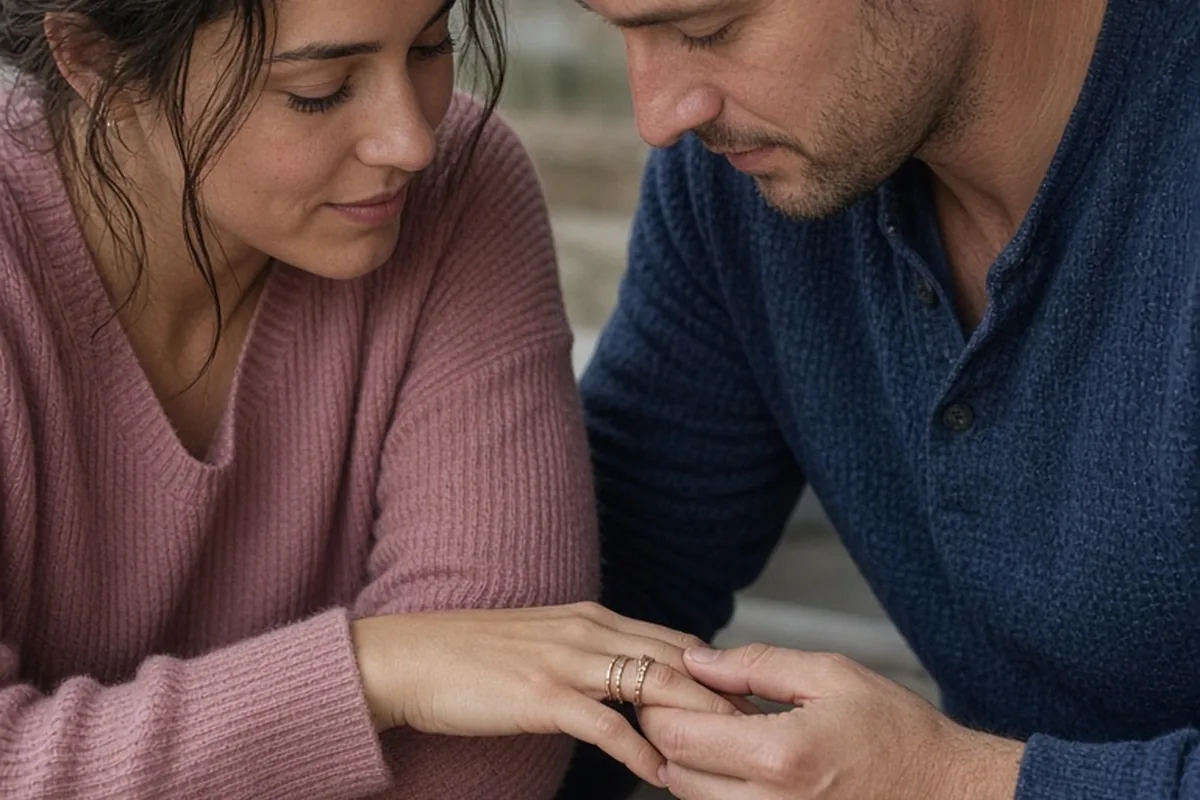
Stackable rings symbolize layered personal milestones, evolving relationships, and individuality. Unlike a standalone ring, each stacked band represents a distinct chapter, such as an engagement, wedding day, childbirth, career accomplishment, or personal commitment. Wearing multiple rings together allows you to create an ongoing visual autobiography that adapts over time through mixed metals, gemstones, textures, and custom engravings.
While single rings traditionally mark single events, ring stacking transforms fine jewelry into an evolving narrative. Whether you are assembling an extended bridal set or curating a collection of fashion bands, understanding the mechanics, symbolism, and retailer options helps you build a comfortable, lasting collection.
Symbolic Meaning Behind Milestone and Narrative Ring Stacking
At its core, stackable jewelry turns abstract memories into tangible, everyday objects. In bridal traditions, the stack typically begins with an engagement ring representing the promise of marriage, followed by a wedding band sealing the vows. Over time, partners often introduce eternity bands or bezel-set bands to commemorate major anniversaries, personal renewals, or the arrival of children, often incorporating birthstones to represent family members.
Beyond romantic commitments, stackable rings carry deep personal significance as tokens of self-celebration. Many people collect individual bands to mark personal achievements, such as earning a degree, securing a major promotion, overcoming a life obstacle, or commemorating a transformative journey. Because each band retains its separate identity while contributing to a harmonious whole, the stack becomes a modular portrait of who you are and what you value.
The aesthetic versatility of stackable bands also holds meaning. A stack can be rearranged, separated across different fingers, or augmented as life develops. This fluidity represents adaptability and growth, allowing the wearer to honor the past while leaving physical and symbolic room for future memories.
Traditional Bridal Stacks vs. Modern Fashion Stacks: A Comparative Evaluation
Bridal stacks and fashion stacks serve fundamentally different purposes, influencing how they should be constructed and evaluated. A bridal stack is designed for continuous, decades-long wear. It requires high structural durability, secure stone settings, and metals that resist daily friction. Bridal stacks usually prioritize precious metals like platinum or solid fourteen-karat to eighteen-karat gold, pairing a primary center stone with complementary accent bands.
Fashion stacks, by contrast, prioritize stylistic experimentation, modularity, and artistic expression. These sets are often worn intermittently and rotated based on outfits, moods, or occasions. As a result, fashion stacks can incorporate a wider variety of materials, including vermeil, sterling silver, mixed finishes, and alternative gemstones like tourmaline, garnet, or turquoise that might require more delicate handling than bridal-grade diamonds or sapphires.
When comparing the two, consider longevity versus flexibility. Bridal stacks must be engineered to prevent uneven wear between bands rubbing together every day, requiring precise matching of metal hardness and profile heights. Fashion stacks offer lower long-term maintenance constraints and greater aesthetic freedom, but they may lack the structural permanence required for nonstop daily wear.
Stacking Silhouettes: Straight Bands, Contoured Bands, and Open Rings
Selecting the right band silhouette determines both how comfortably your stack sits on your finger and how visually balanced it appears. Straight bands are the most classic and versatile option. They rest flush against low-profile center stones if the head is elevated, or they create intentional negative space if paired with wider basket settings. Straight bands are the easiest to swap, wear alone, or stack with unrelated pieces in the future.
Contoured and chevron bands, often referred to as curved or tiara bands, are shaped to wrap around the contours of a prominent center stone. These silhouettes solve the problem of protruding engagement ring baskets by eliminating awkward gaps and keeping the rings aligned. However, heavily contoured bands are difficult to wear alone on a single finger because their asymmetrical curves look incomplete without the accompanying centerpiece.
Open bands, which feature a small gap flanked by two decorative stones or metal accents, offer a modern alternative that physically accommodates protruding center stones without requiring custom curvature. When evaluating silhouettes, inspect the height profile of your primary ring. High-set prong baskets generally accommodate straight bands without modification, while low-set cathedral or bezel mountings typically require contoured bands or open silhouettes to sit flush.
Sizing, Width Mechanics, and Preventing Long-Term Friction
A common mistake when assembling a ring stack is assuming your single-band ring size applies to a three- or four-band stack. As you add bands, the jewelry covers a wider portion of the finger toward the knuckle, where the finger naturally widens. A stack that measures more than four to six millimeters in total width often feels noticeably tighter than a single two-millimeter band of the exact same size.
To ensure long-term comfort, jewelers generally recommend sizing up by a quarter to a half size on bands intended for the upper or wider portions of a tall stack. Trying on bands together rather than individually prevents restricted circulation and skin chafing. Daily environmental factors like temperature, hydration, and humidity also cause fingers to expand and contract, making a slightly relaxed fit preferable for multi-ring arrangements.
Mechanical friction is another critical durability factor. When rings of differing metal hardness sit side by side, the harder metal will gradually wear away the softer metal over years of friction. For instance, platinum rubbing against fourteen-karat gold will slowly abrade the gold band. Similarly, exposed diamond girdles from an eternity band can scratch the plain metal prongs or sides of an adjacent ring. Choosing smooth bezel or channel settings for stacked bands protects neighboring mountings from structural thinning.
Buying Channel Guide: Bespoke Studios vs. Online Direct Retailers vs. Chain Jewelers
Where you purchase stackable rings affects customization, pricing transparency, and ongoing servicing. Independent bespoke jewelers and custom studios provide the highest level of precision. If you have an unconventional engagement ring shape or want custom contouring that sits perfectly flush without gaps, working with an independent bench jeweler allows for direct 3D modeling and wax casting. While custom production requires longer lead times and tailored design consultations, it guarantees structural compatibility between delicate prongs and heavy bands.
Online direct-to-consumer retailers offer extensive catalogs of pre-designed stackable bands, eternity rings, and curved bands with clear specifications regarding metal purity, diamond carat weights, and band widths. These platforms generally provide competitive pricing by bypassing brick-and-mortar overhead, alongside convenient digital visualizers. However, online shopping requires careful attention to return policies and measurement verification, as subtle differences in basket height between your existing ring and a new band cannot always be assessed through photos alone.
Traditional retail chain jewelers offer the advantage of immediate physical trials, allowing you to test how several bands feel together on your hand before buying. They also frequently provide package maintenance plans covering periodic polishing, prong retipping, and ultrasonic cleaning. However, their selection of contoured and open bands is often limited to standard inventory calibrated for mass-market shapes, meaning unusual stone cuts may require custom modifications.
Design Strategy: Harmonizing Metals, Textures, and Gemstone Spacing
Creating an intentional ring stack requires balancing visual harmony with contrast. Rather than matching every ring identically, combining varied textures adds depth and sophistication. You can pair a high-polish plain metal band with a delicate milgrain-edge vintage band, a hammered band, or a pavé eternity ring. The variation creates visual separation, allowing each piece to stand out rather than blending into a solid, indistinct block of metal.
Mixing metal colors—such as combining yellow gold, rose gold, and white gold or platinum—is a classic way to achieve an eclectic, curated look. To make mixed metals appear deliberate rather than mismatched, establish a recurring anchor. For example, sandwiching a white-metal eternity band between two thin yellow-gold bands creates symmetrical balance, while pairing a two-tone engagement ring with monochrome bands ties the palette together naturally.
Gemstone proportions and spacing also dictate the longevity of your design. Stacking multiple heavy, wide eternity bands can look bulky and feel cumbersome for everyday movement. Alternating a gemstone-heavy band with a slim, solid metal spacer band cushions the stones, protects prongs from inter-ring collision, and introduces subtle breathing room that lets individual diamonds and colored gemstones catch the light properly.
Frequently asked questions
Can I wear stackable rings on any finger?
Yes. While stackable rings are frequently worn on the left ring finger as bridal sets, they are equally suited for index, middle, or pinky fingers as statement or milestone pieces. Make sure to measure the specific finger where the stack will sit, as dominant hand fingers are often slightly larger.
Will stackable rings damage each other over time?
Rings worn flush against one another naturally experience micro-friction. Softer metals can wear down against harder metals, and exposed diamond edges can scratch adjacent metal bands. Choosing flush bezel settings or adding a thin, plain metal spacer band prevents stones from grinding against prongs.
How do I know what size stackable band to buy?
For stacks exceeding four millimeters in combined width, consider choosing a quarter or half size larger than your standard single-ring size. Finger tissue shifts when covered by a wide band, so testing the total width together ensures the rings do not feel overly tight.
Can I solder my stackable rings together?
Yes. A jeweler can solder your rings into a single unified piece, which stops metal-on-metal spinning and reduces long-term friction wear. However, soldering permanently removes the flexibility to wear the bands individually or rearrange their order.
Your next step
Examine the basket height and metal profile of your primary ring, then consult a jeweler to test whether a straight, contoured, or spacer band provides the most secure and comfortable fit for your daily routine.