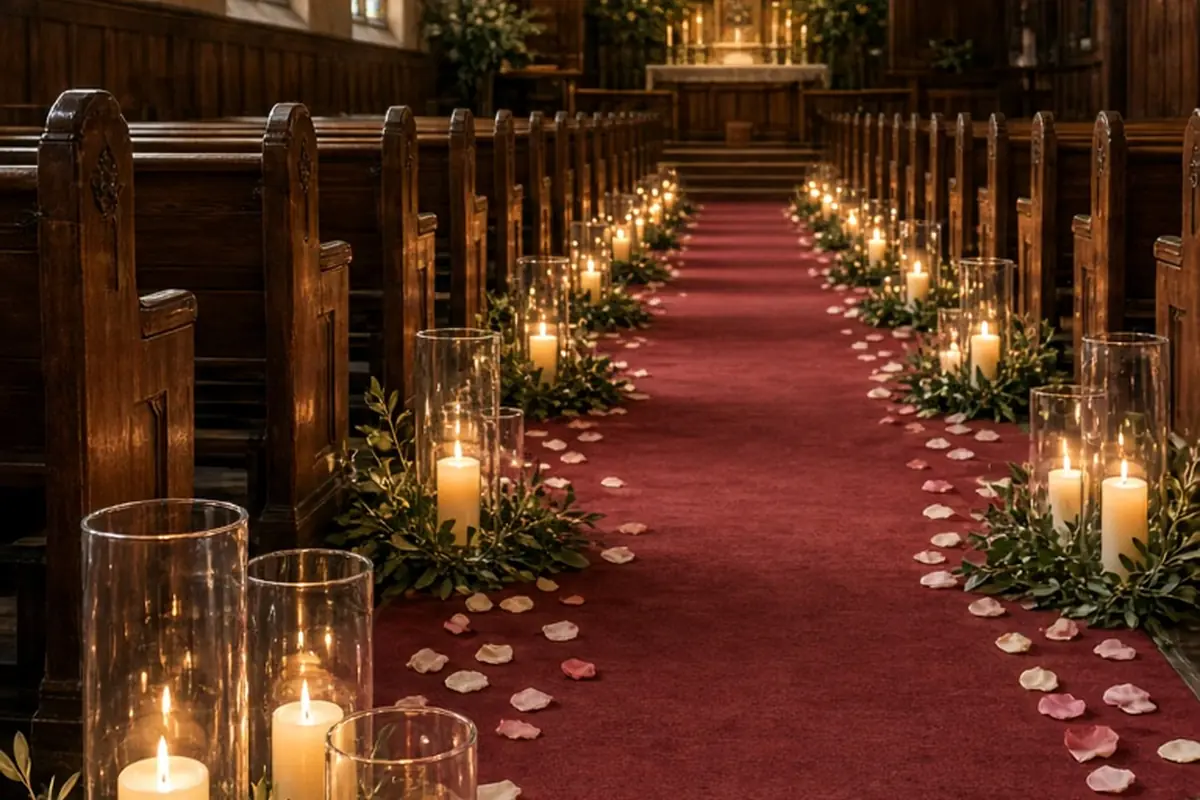
To decorate a church wedding beautifully on a modest budget, focus your funds where guests naturally look: the altar, the center aisle markers, and the welcome entryway. Instead of attempting to disguise the building, treat historic woodwork, vaulted ceilings, and stained glass as built-in design assets. Pair potted foliage, high-volume branches, and battery-operated candles with transferable floral arrangements that move straight from the sanctuary to your reception tables after the service.
Historic and modern sanctuaries carry an inherent ceremonial gravity, but decorating a vast spiritual space can quickly strain a couple's finances if approached like a blank ballroom.
Working With Sanctuary Architecture Instead of Covering It Up
The most effective way to protect your decoration budget in a house of worship is to treat the existing structure as your primary backdrop rather than an obstacle to mask. Traditional sanctuaries frequently feature warm hardwood pews, exposed timber beams, brick facades, carved stone, and vibrant stained glass. Modern auditoriums offer clean architectural lines, deep stages, and built-in theatrical lighting. Attempting to blanket these massive surfaces in fabric swatches, synthetic wall coverings, or oversized rental backdrops is cost-prohibitive and often conflicts aesthetically with the room's proportions.
Take an honest inventory of your venue's strongest visual elements before choosing a color palette or shopping for decorative pieces. If your church features warm cherry wood and golden uplighting, opting for crisp emerald greens, brass accents, and creamy whites will enhance the natural warmth of the room without fighting it. Conversely, if your church has cool gray stonework or towering stained glass windows with rich sapphire and ruby hues, neutral botanicals and warm candle glows prevent visual competition. When you let the room do the heavy architectural lifting, you only need to dress the focal points where your ceremony rituals physically take place.
Framing the Church Altar With Potted Greenery and Statement Branches
The altar or communion platform commands the attention of every guest throughout the service, making it the most important decorative zone in the building. Cut-flower installations created entirely from florist stems like garden roses, hydrangeas, and lisianthus carry steep wholesale costs and labor fees because they require water reservoirs, specialized foam mechanics, and hours of on-site assembly. You can produce an equally majestic visual footprint at a fraction of the cost by leaning heavily into potted plants, nursery shrubs, and leafy structural branches.
Potted foliage like Boston ferns, ficus trees, palms, and silver-dollar eucalyptus shrubs offer substantial volume, deep color, and lush texture without wilting during pre-ceremony photos. Place these plants in textured stone urns, terracotta pots painted in matte neutrals, or woven seagrass baskets, clustering them in tiered groupings on either side of the communion rail or minister's podium. After the wedding, these plants can landscape your home garden, serve as housewarming gifts for family, or be returned to friendly local plant shops that offer short-term staging rentals.
To introduce dramatic vertical scale without buying out a florist's cooler, gather tall woody branches such as birch, curly willow, blossoming dogwood, or olive boughs. Set them into weighted glass hurricane cylinders or tall ceramic urns filled with wet sand. Adding just a handful of open seasonal blooms or trailing jasmine vine around the base of the branches yields an organic, garden-inspired altar arbor that fills expansive vertical cavern space cleanly.
Aisle and Pew Accents That Avoid Repetitive Line-Item Costs
A common budget misstep in church ceremonies is purchasing a separate floral cluster or custom bow for every individual pew along a lengthy center aisle. In a venue with twenty or thirty rows, buying twenty to thirty matching arrangements quickly consumes hundreds of dollars for items guests only glimpse as they walk to their seats. A strategic alternative is alternating your accents or decorating only select rows to achieve high visual rhythm at half the expense.
Consider placing decorative accents exclusively on the first two rows reserved for immediate family, the middle transition row, and the two final pews where the bridal party enters. For the intervening rows, you can leave the woodwork bare or connect the pews with gentle swathes of neutral fabric, wide satin ribbon, or delicate ruscus garland. Alternatively, keep the pew ends untouched and place decorative elements on the floor along the aisle perimeter, which creates an uninterrupted visual runway down to the altar.
For floor-level aisle decor, groupings of clear glass cylinder vases fitted with battery-powered LED pillar candles provide an elegant, warm glow without the fire hazard of live flames. Surround the candle bases with modest rings of loose lemon leaf, salal, or olive leaves rather than dense floral wreaths. If your church allows petals, scattering loose rose or hydrangea petals along the carpet edges produces a romantic corridor effect with minimal material costs compared to continuous floral runners.
Transforming the Vestibule and Entryway on a Modest Budget
The vestibule, narthex, or foyer sets the emotional tone for your guests as they step out of the parking lot and transition into a contemplative, celebratory mindset. Because guests linger in this transitional space while signing guest books, picking up ceremony programs, and greeting ushers, modest decorative details here receive prolonged attention. You do not need towering floral installations to create an inviting entrance; thoughtful staging with existing furniture and personal paper goods works remarkably well.
Repurpose a foyer console table or a borrowed wooden console to hold a framed welcome sign, a simple arrangement of seasonal stems in an antique pitcher, and your ceremony stationery. Incorporating framed family wedding photographs or engagement portraits alongside small tea lights adds immediate warmth and personal meaning that elaborate commercial decorations cannot duplicate. If the church has heavy wooden exterior doors, hanging twin greenery wreaths tied with trailing velvet or silk ribbons offers a timeless, welcoming statement that costs very little to construct.
Repurposing Ceremony Florals and Decor at the Evening Reception
One of the fastest ways to stretch a wedding decoration budget is mandating that every non-permanent item used in the church serves a second function at your dinner reception. The typical church ceremony lasts between thirty and sixty minutes, meaning single-use ceremony flowers represent an exceptionally poor return on investment if they are left behind on the altar after the recessional. Planning smooth logistics for moving pieces between venues lets you effectively cut your decor procurement list in half.
Design your sanctuary arrangements from the beginning with dual-purpose mechanics. Altar urn arrangements can be designed in lightweight, drop-in plastic liners that lift cleanly out of heavy decorative urns and slide into matching vessels on your reception buffet, sweet-heart table, or bar area. Pew-end floral posies can be tied with removable ribbons and redirected to dress the cocktail tables, cake display, or restroom vanities. Glass aisle hurricanes and battery-operated candles can instantly migrate to the reception perimeter or line the perimeter of the evening dance floor.
To make this transition successful, assign specific responsibilities ahead of time to trusted helpers who are not in the formal wedding party. Wedding party members and immediate parents are usually occupied with post-ceremony portraits, receiving lines, or transportation schedules. Designating two capable family friends or hiring day-of service assistants to pack the church pieces into protected transport boxes ensures your reception tables are fully dressed before the first guests arrive for cocktail hour.
Navigating Sanctuary Facility Guidelines, Fasteners, and Clean-Up Windows
Before purchasing ribbons, stands, or candle wax, you must review your church's decorating policies in detail. Houses of worship maintain strict rules designed to preserve historic architecture, respect sacred furnishings, and ensure fire safety. Investing in decor that violates building policies leads to last-minute confiscation by the facility coordinator or forfeiture of your venue security deposit.
Fastener restrictions represent the most common operational surprise for couples. Nearly all churches forbid tape, pushpins, staples, glue, nails, or adhesive putty on finished wood pews and plaster walls because they strip protective varnishes and leave permanent blemishes. Instead, request permission to use padded pew clips, broad velvet ribbon ties, magnetic hooks for metal fixtures, or freestanding easels. If you plan to hang garlands or drapery, confirm whether your team will have access to stepladders or if high-level rigging is strictly off-limits.
Inquire specifically about open-flame guidelines and turnover timeframes. Many historic chapels ban real wick candles outright or require that live flames remain enclosed within glass hurricane chimneys that rise at least two inches above the flame tip. Furthermore, check the weekend service schedule. If your wedding falls on a Saturday afternoon prior to evening vigil masses or early Sunday worship, the facility may grant only a tight sixty-minute setup window before your ceremony and a strict thirty-minute clean-up window afterward. Choosing self-contained, easy-to-move decor items protects your schedule and eliminates panic during post-service breakdown.
Frequently asked questions
Can I use real candles down the church aisle?
This depends entirely on the specific church's safety policies and local fire codes. Many congregations ban open flames along walking aisles to prevent fabric catches on long gowns, requiring either tall glass hurricane shades or flameless LED pillar candles. Always obtain written approval from your venue coordinator before purchasing wax candles.
How do you attach decorations to church pews without damaging the wood?
Never use tape, wire, or adhesives, which strip delicate wood finishes. Instead, use soft felt-lined plastic pew clips designed specifically for church woodwork, or tie your floral bundles securely using wide grosgrain, velvet, or satin ribbons wrapped gently around the pew end.
What is the most affordable greenery to use for church wedding decor?
Hardy, voluminous foliage like salal (lemon leaf), silver dollar eucalyptus, Italian ruscus, and leatherleaf fern offer exceptional coverage at reasonable wholesale costs. Potted Boston ferns or nursery ficus plants also provide massive visual volume and can be kept or planted after the wedding.
Your next step
Schedule an on-site walkthrough with your church coordinator to review decorating rules, measure pew dimensions, and note existing architectural focal points before buying any supplies.