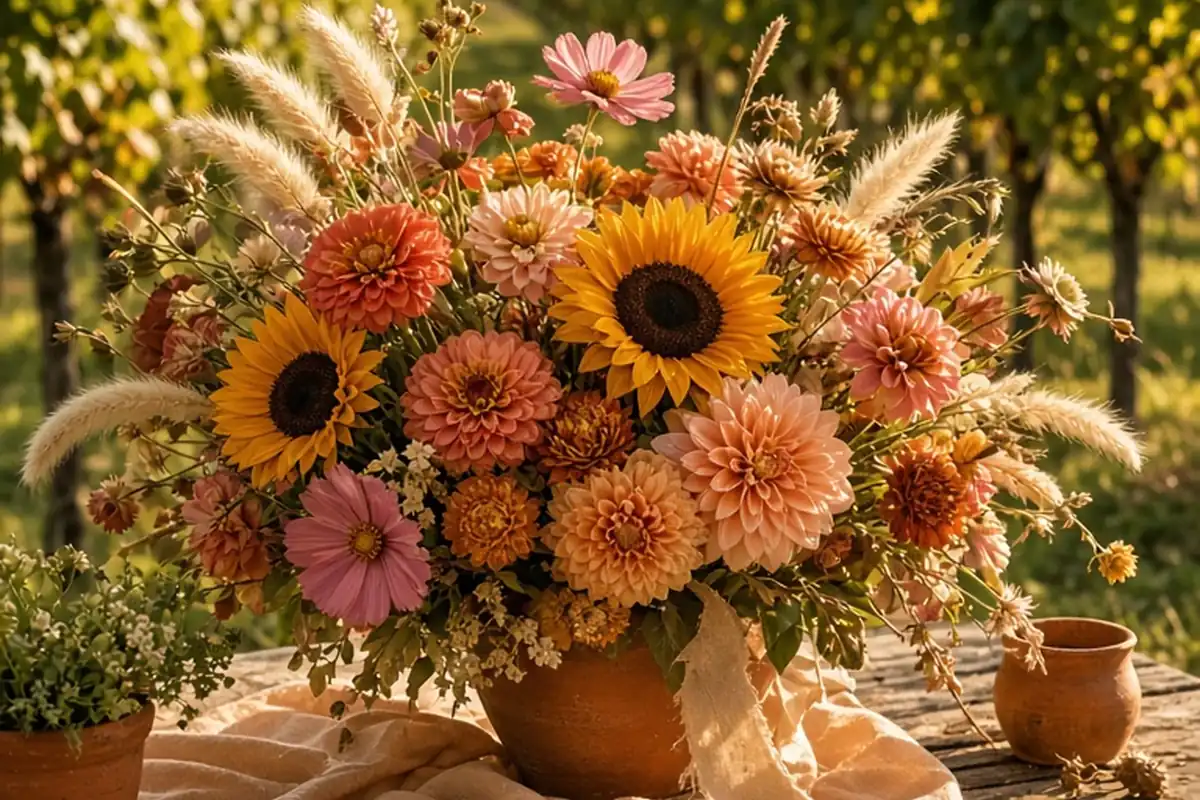
August weddings thrive on palettes that bridge late-summer vibrancy with early autumn depth. The most effective color themes include sun-drenched terracotta, peach, and honey; crisp French blue paired with muted sage and ivory; deep fig, olive, and antique rose for late-month celebrations; and warm oat, linen, and bronze neutrals. Your best choice balances harsh midday sun, floral availability, and venue temperatures.
August holds a unique place on the wedding calendar, sitting directly on the threshold between the luminous ease of midsummer and the moody richness of impending autumn. Choosing a palette for this month requires balancing intense natural sunlight, elevated temperatures, and a shifting floral harvest.
Navigating the August Shift Between High Summer and Early Autumn
August does not behave like a single uniform season. Early August often brings peak summer humidity, expansive daylight hours, and intense direct sunlight that can bleach out delicate pastels during outdoor afternoon ceremonies. By contrast, the final ten days of August introduce cooler twilight hours, noticeably shorter golden hours, and an organic shift toward richer textures in both landscape foliage and floral markets. A color scheme that feels completely organic on August second might feel disconnected by August thirtieth, which makes timing within the month your primary framing decision.
To navigate this calendar transition, evaluate whether your overall celebration leans into peak summer vibrancy or foreshadows the richness of autumn. If your wedding occurs in the first half of the month, prioritize breathable color groupings anchored by crisp neutrals, sun-washed tones, or coastal hues that keep the visual atmosphere light and refreshing. If your date falls in late August, you have the flexibility to introduce deeper grounding notes, such as blackened plum, aged brass, or forest moss, while retaining enough bright accent color to honor the lingering summer warmth.
Venue environment also dictates how heavily you should lean in either seasonal direction. An open-air vineyard, a coastal bluff, or an untamed garden naturally complements airy, sunlight-reflective palettes that harmonize with golden grasses and bleached wood. Conversely, historic indoor ballrooms, industrial brick lofts, or mountain lodges benefit from richer transitional tones that echo darker architecture and intimate evening lighting. Before committing to specific swatches, observe your venue at the exact time of day your ceremony and reception will occur to see how the natural light behaves.
Terracotta, Apricot, and Honeycomb: The Sun-Drenched Earthy Palette
Warm, sun-baked palettes feel entirely native to August because they echo the natural landscape at the height of its warmth. Combining baked terracotta with soft apricot, creamy butter, and accents of deep honeycomb creates an aesthetic that feels organic, celebratory, and intentionally rustic without becoming heavy. This palette performs exceptionally well in outdoor settings such as rustic barns, vineyards, and desert venues where the late-afternoon sun amplifies red and golden undertones.
The secret to keeping a terracotta and apricot palette modern is preventing it from skewing into a traditional October rust theme. Maintain a seventy-percent ratio of light and mid-tones, using pale apricot, bleached sand, and sheer linen as the dominant base for tablecloths, bridesmaid dresses, and invitations. Save the denser terracotta and burnt amber shades for tactile accents, such as glazed ceramic bud vases, taper candles, menus, and floral focal points like dynamic garden roses or burnt-orange dahlias.
This color direction also allows for easy floral sourcing during the late summer months. August is prime harvest season for local zinnias, cosmos, sunflowers, strawflowers, and early-blooming dahlias, all of which naturally produce intense shades of coral, apricot, and deep gold. Pairing these lively blooms with dry elements like bleached fountain grass, dried seed pods, or raw silk ribbons gives the entire setting a refined, sun-ripened sophistication that captures the spirit of late summer.
Coastal Slate, French Blue, and Olive: Beating the Midday Heat Visually
When outdoor temperatures and humidity peak in August, cool color palettes offer an immediate psychological respite. Pairing dusty French blue and slate with muted olive and chalky ivory establishes a serene, refreshing atmosphere that counterbalances intense heat. This theme is particularly effective for waterfront ceremonies, historic estates with manicured boxwood gardens, and tented receptions where couples want an elegant, timeless visual tone.
Cool palettes require careful curation to prevent them from feeling clinical or disconnected from the summer landscape. Pure baby blue can easily read as chilly or juvenile under bright sunlight, whereas slate and French blue contain subtle gray and green undertones that ground the space. Integrating olive green as a supporting color bridges the blue tones with outdoor surroundings, ensuring that centerpieces look grounded rather than artificial against natural backdrops.
To implement this theme successfully across tablescapes, consider using pale slate blue raw-linen runners over natural wood tables, paired with matte white stoneware and olive-leaf garlands interspersed with white lisianthus, gardenias, and delphinium. For wedding party attire, dusty blue bridesmaid gowns in airy fabrics like chiffon or silk crepe allow the bridal party to remain visually cohesive and physically comfortable in outdoor heat, while suiting in light gray or textured tan linen prevents the overall aesthetic from feeling stiff.
Ripe Fig, Antique Rose, and Moss: Introducing Transitional Jewel Tones
Couples hosting mid-to-late August weddings who prefer dramatic, romantic aesthetics often find standard summer pastels insufficient. A palette built on ripe fig, dusty antique rose, deep forest moss, and brushed pewter delivers opulent depth without prematurely launching into holiday winter colors. This combination takes inspiration from late-summer fruit harvests and woodland clearings, making it an exceptional match for winery cellars, botanical conservatories, and evening garden dinners.
The primary challenge with deeper tones in August is avoiding a dark, claustrophobic atmosphere while the sun is still high. The solution lies in strategic color layering: use muted antique rose, mauve, and soft ivory as your dominant canvas, applying the concentrated fig and deep burgundy tones strictly as puncturing accents. In floral installations, let ninety percent of the structure feature lush greens, dusky blush roses, and quicksand tones, accented by dark chocolate cosmos, trailing blackberries, or deep purple scabiosa for graphic interest.
Paper goods and tablescape details provide ideal homes for these richer pigments. A deep plum envelope liner paired with delicate letterpress calligraphy establishes formal luxury from the initial invitation suite. On reception tables, dark smoke-tinted glassware, moss-green velvet napkin ties, and plum-hued figs split open on charcuterie displays ground the light summer air with an enticing preview of autumnal luxury.
Papaya, Marigold, and Soft Sage: Bold Citrus for Playful Outdoor Receptions
For couples seeking high energy and joy, saturated citrus tones celebrate the peak exuberance of August without apology. Anchoring bright papaya, marigold, and warm guava with a grounding wash of dusty sage green keeps the aesthetic sophisticated rather than chaotic. This palette suits vibrant poolside celebrations, private residential estates, and colorful courtyard weddings that extend late into warm starry nights.
To execute a bold citrus palette with restraint, establish clear boundaries between where intense color lives and where the eye is allowed to rest. Avoid using saturated orange or bright marigold for full-table linens, as large fields of intense pigment can overwhelm guest photos and clash with dinnerware. Instead, dress tables in crisp white, natural unbleached canvas, or very pale sage, and unleash the saturated color through organic floral clusters, hand-painted place cards, and citrus-forward cocktail presentations.
Sage foliage plays a vital structural role in this theme, acting as a visual buffer between fiery tones. Using silver dollar eucalyptus, olive branches, and dusty lamb's ear softens the transition between hot orange zinnias and sunny yellow ranunculus. Adding tactile elements such as wooden chargers, rattan lighting fixtures, and hammered brass flatware prevents the vibrant palette from looking like a children's party, elevating it into a chic Mediterranean or tropical-inspired dinner party.
Linen, Floral, and Stationery Selection Under Harsh August Sunlight
Natural lighting in August poses distinct challenges that can fundamentally change how your color palette looks in person versus on a digital screen. Direct midday sunlight has a flattening effect that washes out extremely pale neutral tones like blush, cream, and faint lilac, turning them virtually indistinguishable from bright white in photographs. Conversely, golden hour sunlight in August is intensely amber, which can cast a yellow cast over cool blue and lavender tones.
When choosing paper goods and stationery, opt for textured stocks that absorb rather than bounce harsh light. Matte cotton cardstock, deckle-edged handmade paper, and blind debossing handle high-contrast outdoor shade much better than glossy or high-sheen finishes. When selecting envelope and typography shades, step outside into bright sunlight to confirm that your accent colors maintain sufficient contrast against the base paper, ensuring legibility for older guests reading ceremony programs or seating charts outdoors.
Table linens require equal scrutiny because synthetic fabrics frequently take on an unflattering reflective sheen in full afternoon sun. Natural materials such as washed linen, gauze runners, and matte cotton duck absorb the bright summer light and lend an artisanal, grounded texture to the room. When hiring rental linens, request physical fabric swatches rather than relying on digital catalogue PDFs, and hold those swatches against your floral samples under outdoor daylight to confirm they harmonize naturally.
Balancing Wedding Party Attire Across Variable August Temperatures
A color palette must translate realistically into wearable clothing for attendants who will spend hours standing, walking, and being photographed in summer heat. Dark colors absorb radiant heat rapidly, meaning navy or charcoal wool suits can quickly become deeply uncomfortable during an outdoor ceremony. If your palette incorporates deeper shades like fig, navy, or emerald, reserve those tones for stationery, ties, or dinner table details, selecting breathable light gray, sand, or soft blue linen-wool blends for the suiting.
For bridesmaid dresses, fabric weight and breathability dictate how graceful the colors appear in practice. Heavy satin fabrics often reveal sweat stains under arms and along the back, while ultra-sheer pastels can look translucent when backlit by strong late-afternoon sun. Mid-weight silk crepe, high-grade georgette, and layered matte chiffon provide the best drape while keeping the bridal party cool and confident throughout the afternoon.
A mismatched tonal wedding party offers an excellent solution for complex August themes. Instead of requiring all attendants to wear an identical shade of terracotta, provide a tight color story ranging across peach, desert rose, warm sand, and spiced apricot. This approach gives each attendant the freedom to choose a cut and color that flatters their individual complexion while creating a layered, dimensional look in group photographs that mirrors the natural variation of late-summer landscapes.
Frequently asked questions
Can I use dark colors like emerald or navy for an early August wedding?
Yes, but you should use them as grounding accents rather than dominant fields of color. Balance deep navy or emerald with plenty of crisp ivory, champagne, and fresh greenery so the overall atmosphere remains open, summery, and comfortable in the heat.
Which flowers naturally match an August color palette?
August is the peak season for dahlias, zinnias, cosmos, sunflowers, lisianthus, garden roses, and celosia. These blooms offer incredible natural variety across sunset oranges, deep jewel reds, warm yellows, and soft antique pinks.
How do I prevent my late August wedding colors from looking like Halloween?
If you are using orange, rust, or deep berry tones, avoid pairing them with stark black or flat primary orange. Instead, incorporate soft apricot, dusty blush, cream, and soft olive greens to keep the palette romantic, multidimensional, and clearly tied to late summer.
Does August sun wash out pastel wedding colors?
Direct overhead midday sun can easily make very pale pastels look faded or bleached out. If you love pastels, choose medium-saturation variants like dusty French blue, warm peach, or sage rather than near-white blush or pale baby blue.
Your next step
Request physical fabric and paper swatches today, then review them outdoors under mid-afternoon and golden-hour sun at your wedding venue to verify how your favorite palette handles natural summer light.