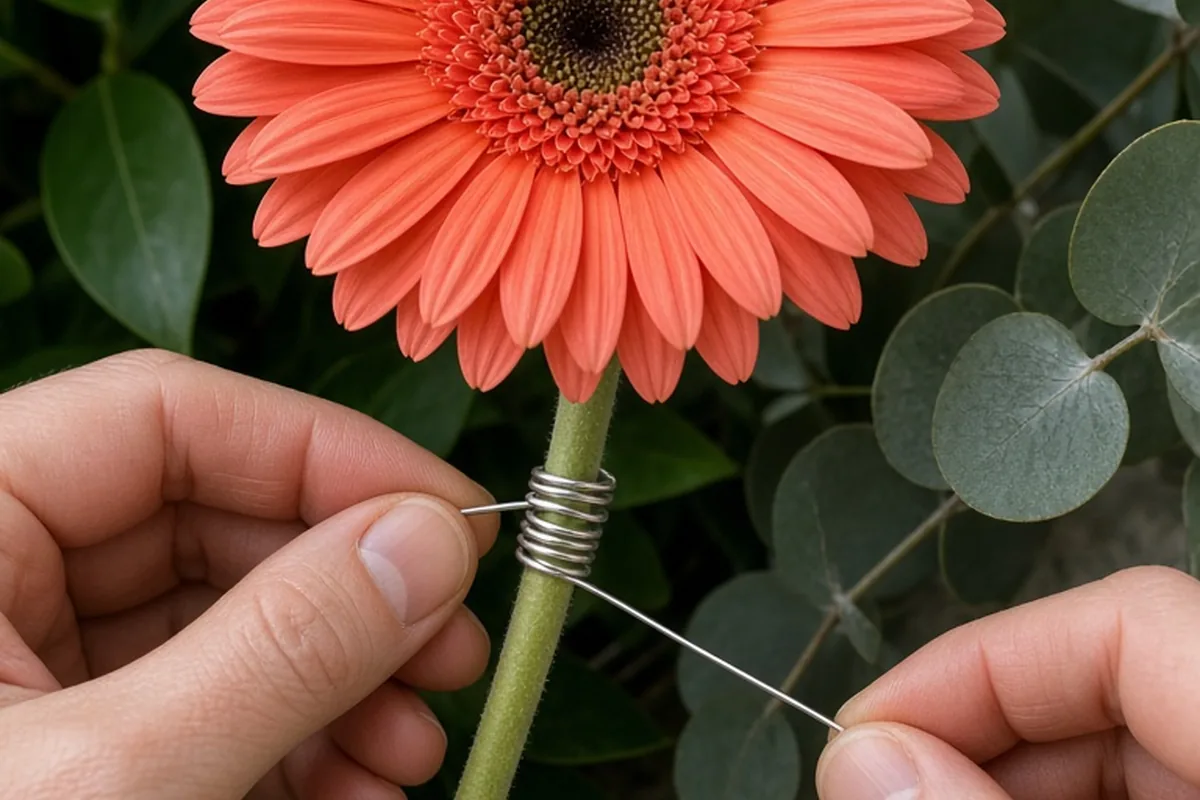
Gerbera daisies create stunning wedding bouquets through bold geometry, vibrant color options, and cheerful silhouettes. To build a long-lasting arrangement, select firm blooms with tight centers, mechanically support the hollow stems using floral wire or plastic sleeves to prevent bent necks, and pair them with textured companion blooms like spray roses and fine foliage to balance their graphic scale across different wedding aesthetics.
Gerbera daisies offer a distinctive graphic presence that sets them apart from traditional ruffled wedding flowers. Their clean lines, symmetrical petals, and extensive color spectrum make them a versatile focal bloom for celebrations ranging from casual backyard gatherings to modern minimalist formal events.
Selecting the Right Gerbera Daisy Varieties for Bridal Bouquets
Choosing the ideal gerbera daisy begins with understanding the distinct cultivars available through wholesale florists and local growers. Standard gerberas feature wide, single-layer ray petals measuring four to five inches across, surrounding a prominent central disc. These large blooms provide substantial visual weight and work exceptionally well as dominant focal points in medium to large bridal bouquets. When selecting standard varieties, look for petals that sit firmly horizontal or slightly cupped upward rather than drooping downward toward the stem.
Miniature gerberas, commonly known as germinis, measure roughly two to three inches in diameter and offer greater flexibility for intricate, multi-layered arrangements. Because of their smaller scale, germinis blend seamlessly into mixed bouquets without overwhelming delicate filler flowers, and they are the practical standard for boutonnieres and corsages. Beyond size, consider petal architecture: spider gerberas feature slender, needle-like petals that introduce striking modern texture, while double or semi-double varieties have multiple overlapping petal rows that mimic the fullness of dahlias or zinnias.
Center disc coloration dramatically shifts the mood of the bouquet. Black-center gerberas create a bold, high-contrast, graphic look that works well in modern, art-deco, or minimalist industrial wedding themes. Green- or cream-center gerberas, in contrast, project a soft, romantic, garden-style aesthetic that integrates gently with traditional pastels and neutral palettes. Inspect each bloom before assembly to confirm that the central disc is tight and free from powdery pollen, which indicates peak freshness and maximum vase life.
Color Palettes and Seasonal Pairing Strategies
Gerbera daisies are cultivated in virtually every hue except true blue, giving couples complete freedom to match their wedding color story. For spring weddings, soft blush, buttercream, peach, and lavender gerberas paired with pale ranunculus and silver dollar eucalyptus create a gentle, airy aesthetic. The key to keeping pastel gerbera arrangements sophisticated is incorporating tonal variation; combining two or three related pastel shades prevents the bouquet from looking flat or overly uniform in natural lighting.
Summer weddings naturally embrace the saturated strengths of the flower. Vibrant coral, tangerine, fuchsia, and sunshine yellow gerberas can be combined for a dynamic citrus palette, or paired with crisp white accent flowers to let individual primary colors pop. For outdoor garden or beach ceremonies, combining warm coral gerberas with sea holly, craspedia billy balls, and textured succulents yields a resilient bouquet that holds up well against warm midday sunshine.
Autumn and winter aesthetics benefit from deep, moody gerbera selections. Terracotta, burnt orange, rich burgundy, and deep plum gerberas ground fall arrangements beautifully when paired with bronze amaranthus, dark hypericum berries, and copper-tinted foliage. In winter celebrations, pure white or cream double-gerberas with dark black centers create striking contrast against dark green velvet ribbons, winter berries, and dusty cedar sprigs, providing a crisp modern alternative to traditional winter roses.
Essential Stem Wiring and Mechanical Support
The primary mechanical challenge of using gerbera daisies in handheld bouquets is their hollow, soft stem structure. Unlike woody stems, gerbera stems contain a sponge-like internal pith that weakens quickly under the weight of the flower head. Without structural reinforcement, blooms can develop bent necks within hours of leaving water, causing the flower heads to droop forward awkwardly during the ceremony and portrait sessions.
To prevent drooping, florists rely on external or internal stem wiring. External wiring involves gently inserting an 18-gauge or 20-gauge floral wire into the base of the flower head where the calyx meets the stem, then spiraling the wire down the outer stem in wide, smooth loops before securing it with floral tape. This creates an invisible internal skeleton that keeps the heavy flower head perfectly upright while allowing designers to bend the stem slightly for artistic positioning in a hand-tied clutch.
An alternative technique uses clear plastic gerbera straws or supportive stem sleeves. These rigid tubes slide directly over the cut stem from the bottom up to the base of the flower head, providing rigid support without puncturing the botanical tissue. Whichever method you choose, reinforcement should be applied during initial processing rather than waiting until assembly, ensuring the stems remain straight while hydrating in storage buckets.
Pairing Gerberas with Complementary Flowers and Foliage
Because gerbera daisies possess broad, flat, circular faces, pairing them exclusively with other flat-faced blooms can create visual monotony. A balanced bouquet requires contrasting geometric forms, including spires, spray clusters, and trailing textures. Spire-shaped flowers like snapdragons, delphinium, veronica, or stock add vertical movement that draws the eye upward and outward from the round gerbera centers.
Secondary companion blooms should offer textural contrast without competing for focal dominance. Garden roses, lisianthus, and carnations provide soft, ruffled layers that cushion the graphic edge of gerbera petals. Smaller accent elements like waxflower, baby's breath, feverfew, and astrantia fill negative space between larger stems, creating depth and bridging transitions between high-contrast colors.
Foliage selection fundamentally defines the silhouette and formal tone of the arrangement. Broad leaves like monstera or aspidistra reinforce a modern, tropical feel, while fine-textured greens like Italian ruscus, plumosa fern, and seeded eucalyptus soften the edges for an organic, hand-picked garden style. Using greenery to collar the base of the bouquet also shields the fragile gerbera petals from rubbing against the bridal gown.
Bouquet Architecture for Brides, Attendants, and Boutonnieres
Designing a bridal bouquet with gerbera daisies requires deliberate layering so flower heads do not crush one another. In a classic hand-tied round bouquet, establish a foundational nest of mixed greenery and secondary blooms first, then insert wired gerbera stems at varied heights throughout the dome. Placing blooms on slightly staggered planes adds dimensional shadow, preventing the arrangement from looking like a flat disc.
For bridesmaids, simplicity and proportion are essential. While the bridal bouquet may feature five to nine standard gerberas surrounded by abundant companions, bridesmaid bouquets often use three to five stems balanced with uniform foliage. Alternatively, a minimalist mono-botanical posy consisting entirely of five to seven crisp white or tonal gerberas wrapped in satin creates a clean, editorial look that is both striking and budget-friendly.
Translating gerberas to personal flowers like boutonnieres and corsages requires miniature germinis rather than standard varieties. A standard five-inch bloom is far too heavy and broad for a lapel, whereas a two-inch germini sits flat against the fabric. Pair a single miniature bloom with a sprig of seeded eucalyptus, a pod of hypericum, or a textural spray of dried bunny tails, wiring all elements together closely to keep the finished piece compact and lightweight.
Managing Budget Variables, Sourcing, and Stem Counts
Gerbera daisies are generally among the most economical focal flowers in wedding floristry, offering broad surface coverage per stem compared to costly blooms like peonies or garden roses. However, final floral expenses depend on specific sourcing channels, color rarity, and labor requirements. Standard shades like red, white, yellow, and hot pink are widely cultivated and cost-effective, while specialty designer tones such as dusty terracotta, antique mauve, or bicolored spider cultivars carry higher wholesale premiums.
When purchasing bulk flowers for DIY assembly, ordering an overage of roughly twenty to twenty-five percent is standard practice. Gerbera petals can bruise during transit if packaging boxes shift, and stems with natural curvature may not suit rigid bouquet structures. Sourcing through a local retail florist ensures that damaged stems are culled and blooms are fully conditioned prior to pickup, whereas direct-from-wholesaler shipments require you to handle unboxing, trimming, wiring, and hydrating from scratch.
Labor time is another critical factor in your overall budget planning. While the raw stem cost of gerberas is modest, each bloom requires individual inspection, stem sleeve installation or wiring, and tape wrapping. If you are hiring a professional florist, factor in the mechanical preparation time required to make these delicate stems last, which is reflected in professional design and assembly fees.
Day-of Assembly Timeline and Hydration Care
Gerberas are highly prone to bacterial blockage in water vessels, which accelerates stem deterioration. When stems arrive, recut the bottom inch under clean running water using a sharp floral knife or bypass shears rather than dull scissors that crush water-conducting channels. Place stems in clean buckets with only one to two inches of room-temperature water mixed with floral preservative. Deep water creates hydrostatic pressure that softens the outer stem wall, accelerating rot.
Bouquet construction should ideally occur twenty-four to thirty-six hours before the ceremony. Once the bouquet is assembled and tied with waterproof floral tape, trim the stem ends evenly and place the arrangement in a sturdy vase with just enough water to submerge the bottom two inches of stems, keeping ribbon wraps dry. Store the finished arrangements in a cool, dark room away from direct air conditioning drafts, heating vents, and ripening fruit, which emits ethylene gas that causes premature petal drop.
On the morning of the wedding, keep bouquets in their hydration vases until photography begins. Prepare a small hydration station at the venue with portable cups, paper towels to dry dripping stems before contact with dresses, and a spray bottle for misting accompanying greenery. If temperatures exceed comfortable indoor levels during outdoor summer photo sessions, rotate the bouquets back into water in an air-conditioned staging area during breaks to preserve petal turgidity.
Illustrative Scenarios
Composite Scenario: Outdoor Summer Ceremony Palette Balancing
A couple planning an outdoor July wedding wanted vibrant coral and peach tones without having their bouquets wilt under midday heat. The floral team selected heat-tolerant coral standard gerberas and peach germinis, pairing them with hardy succulents, spray roses, and silver dollar eucalyptus. Every gerbera stem was reinforced with 20-gauge wire and hydrated in shallow floral preservative solutions prior to assembly. The finished bouquets were transported in chilled floral boxes and returned to shallow hydration vases between formal photo sessions.
Key point: Pairing hollow-stemmed focal flowers with drought-tolerant companion elements and maintaining rigorous mechanical support ensures vibrant, clean lines throughout long summer outdoor celebrations.
Frequently asked questions
How long will a gerbera daisy wedding bouquet stay fresh without water?
A properly conditioned and wired gerbera daisy bouquet can easily last three to six hours out of water during photos and ceremony events. To keep petals firm, return the bouquet stems to a shallow vase of clean water whenever you are resting between photo sessions.
Can I make my gerbera daisy bridal bouquet the day before the wedding?
Yes, building your bouquet one day in advance is standard and recommended. Keep the finished bouquet in a cool room in two inches of preservative-treated water, and add the decorative handle ribbon wrap on the morning of the wedding to prevent moisture damage.
Why do gerbera daisy stems bend and how can I fix them?
Gerbera stems bend because their hollow center lacks structural woody tissue, making the heavy flower head droop when cells lose water pressure. Reinforcing each stem with floral wire or clear gerbera sleeves during prep keeps the flower upright regardless of hydration shifts.
What is the best way to transport gerbera daisy bouquets to the venue?
Transport bouquets upright in secure floral transit boxes or heavy-bottomed vases weighted with stones so they cannot tip over in transit. Ensure the flower heads do not press directly against vehicle windows, box walls, or adjacent arrangements, which can bruise the outer petals.
Your next step
Inspect your chosen gerbera blooms for firm petals and tight central discs, then wire each stem with 20-gauge floral wire before assembling your bouquet in shallow, preservative-treated water.