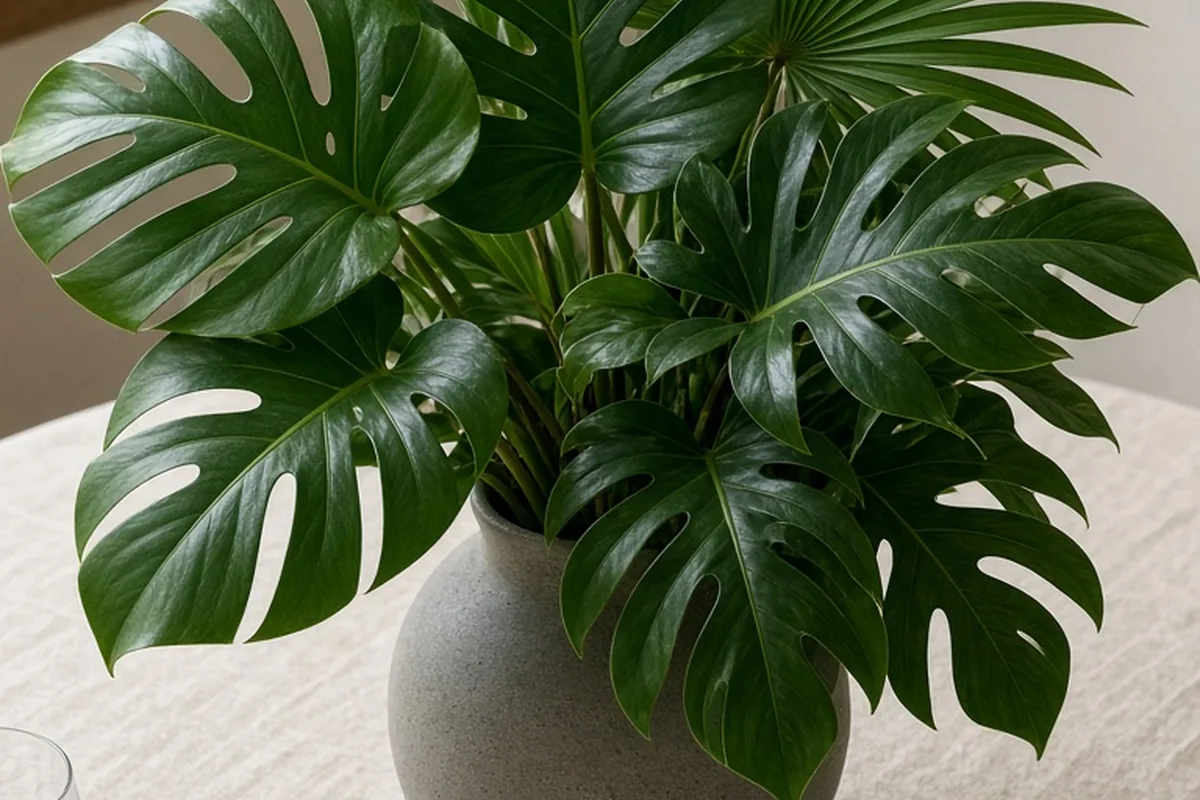
Stunning tropical wedding centerpieces balance architectural foliage with expressive, heat-tolerant florals. Popular design directions include structural palm and monstera leaf displays, vibrant arrangements featuring anthuriums and king proteas, airy single-stem ikebana groupings, and rich fruit-and-botanical tablescapes. To achieve an intentional aesthetic, pair distinctive textures with balanced vessel heights, preserve visual sightlines across reception tables, and use proper water mechanics to keep cut blooms fresh in warm indoor or outdoor environments.
Tropical wedding design has evolved far beyond novelty decor into a refined, versatile design language that fits beachfront gatherings, modern industrial lofts, and classic ballroom receptions alike.
Sculptural Foliage Arrangements Using Monstera, Palm, and Banana Leaves
Focusing purely on foliage creates an architectural, modern tablescape that highlights the bold silhouettes of tropical greenery. Large monstera deliciosa leaves, fan palms, split-leaf philodendrons, and broad banana leaves offer deep emerald tones and distinct natural geometry. Because these leaves possess strong individual shapes, an arrangement made entirely of varied greenery feels intentional rather than unfinished. Grouping three to five leaf varieties of contrasting scales creates depth without cluttering the tabletop.
To execute this look effectively on round tables, use a solid ceramic or matte stone vessel with enough weight to anchor top-heavy stems. Fan palm fronds can be fanned outward to establish width, while upright areca or fishtail palm stems add clean vertical lines. On long rectangular banquet tables, lay flat banana or monstera leaves directly along the runner line as an organic base, tucking in smaller accents like umbrella papyrus or glossy rubber tree leaves. This approach delivers high visual impact while keeping material lists concise.
Greenery-dominant centerpieces also offer exceptional durability. Sturdy tropical leaves hold up against indoor air conditioning drafts and outdoor warmth far better than delicate petals. To keep leaves vibrant throughout the event, mist them lightly before guest arrival and ensure stems sit in deep, clean water or secure mechanics such as heavy pin frogs rather than dry foam.
Vibrant Floral Statements with Anthuriums, Proteas, and Birds of Paradise
Couples seeking intense color and striking form often turn to high-character tropical blooms. Anthuriums provide glossy, heart-shaped spathes in shades ranging from crisp white and blush terracotta to deep burgundy and classic coral. Pairing anthuriums with the dramatic, spiked texture of king proteas and the angular silhouette of orange or white birds of paradise creates an energetic centerpiece that draws the eye across the entire room.
Color curation is essential when combining high-impact tropical flowers. Rather than mixing every available bright shade, select two dominant colors and one bridge tone. For example, pairing warm peach anthuriums with sunset-orange bird of paradise blooms and muted dusty-rose proteas produces a cohesive, modern palette. Ground these vibrant blossoms against muted dusty green palms or dark ti leaves so the flowers stand out cleanly against the table linens.
Because these flowers have rigid, woody stems, mechanics matter. Use wide-mouthed compote bowls fitted with coated floral wire cages rather than compact vases. This allows you to angle stems horizontally and vertically, showcasing the unique bends and face angles of individual blooms without forcing them into a rigid, crowded dome.
Cascading Orchid Centerpieces for Elevated Formal Tables
Orchids bring an effortless sense of elegance, fluidity, and movement to formal wedding tablescapes. Varieties like Phalaenopsis offer wide, fluttery petals that drape softly downward, while Dendrobium and Cymbidium orchids provide structural sprays that hold their form across long stretches of the table. A cascading arrangement works especially well when elevated on slender metal stands, acrylic risers, or tall fluted glass pillars that keep table surfaces uncluttered.
When designing elevated orchid centerpieces, ensure the lowest point of the floral cascade either finishes safely above eye level or tapers gently down to meet low votive candles on the tablecloth. This prevents stems from obstructing conversation between seated guests across the table. Blending crisp white Phalaenopsis with trailing jasmine vine, hanging amaranthus, or soft asparagus fern softens the architecture of the arrangement and introduces dynamic, natural movement.
Orchids are sensitive to sudden dehydration when cut short, but full sprays drinking from water vials or elevated floral wells will last effortlessly through a full evening reception. For a balanced ballroom design, alternate tall elevated orchid displays with lower, low-profile bowl arrangements on every other table to add visual rhythm across the reception layout.
Fruit and Botanical Tablescapes with Citrus, Coconuts, and Pomegranates
Integrating fresh, whole, and halved fruits into tropical centerpieces introduces rich organic textures, natural gloss, and painterly color variations. Whole coconuts, halved papayas showing glossy seeds, opened pomegranates, cut dragon fruit, and clusters of small key limes create a tactile tablescape reminiscent of a classical still-life painting. The natural hues of fresh fruit effortlessly bridge bold floral colors with textured wooden tables or raw linen runners.
To build a fruit-forward centerpiece, start with low wooden, terracotta, or marble plinths along the center of the table. Scatter flat foliage such as croton or monstera leaves to protect table linens from natural juices, then arrange heavier fruits like small green coconuts and pineapples first to anchor the composition. Layer halved citrus, fresh passionfruit, and loose floral blooms around the fruit cluster to fill negative space organically.
Cleanliness and freshness are critical when working with cut produce. Cut wet fruits no more than two hours before the reception starts to avoid oxidation, weeping, or attracting insects in outdoor settings. Lightly patting cut surfaces with a paper towel and styling them slightly angled upward keeps the display appetizing and visually pristine throughout the event.
Minimalist Single-Stem Ikebana-Inspired Tropical Vessels
For modern, contemporary, or micro-wedding settings, a minimalist approach inspired by Ikebana principles highlights the singular beauty of each botanical element. Instead of dense, packed bouquets, this style relies on thoughtful clusters of small ceramic vases, bud vases, or exposed metal kenzan pin frogs placed on shallow ceramic dishes. Each vessel holds only one or two striking stems, celebrating negative space, asymmetry, and intentional line placement.
An ikebana-style grouping might feature a single angled red ginger stem in one dish, two reflexed blush anthuriums in an adjoining vessel, and a solitary curved monstera leaf in a third small vase. Spacing these three distinct vessels across the center of a round table creates a light, sculptural centerpiece that feels curated and artistic. Guests can appreciate the natural curve, texture, and geometry of each individual stem without visual overwhelm.
This style is particularly cost-effective and low-waste because it requires significantly fewer floral stems while delivering high stylistic impact. The secret to success lies in choosing interesting, imperfect stems with natural curves or dramatic leaf fenestrations rather than perfectly straight, uniform cuts.
Low Lush Garden-Style Centerpieces for Long Family-Style Tables
Long banquet tables and family-style seating arrangements require low-profile centerpieces that foster intimate, unbroken conversation while providing continuous visual texture down the length of the table. A lush, garden-style tropical arrangement combines soft, rounded elements like garden roses, lisianthus, or ranunculus with the bold structure of heliconias, mini calathea leaves, and ginger blossoms.
To maintain proportion on narrow rectangular tables, arrange florals in low, elongated ceramic troughs or shallow footed compotes measuring no more than twelve to fourteen inches in total height. Interlock these vessels along the table center with loose greenery runners, tucking in delicate accents like trailing philodendron vines, begonia leaves, and small spray orchids to bridge the gap between individual vessels.
This hybrid garden-tropical aesthetic bridges traditional romantic wedding design with vibrant destination flair. It is especially suitable for historic estates, garden pavilions, or indoor spaces where full tropical themes might otherwise feel out of place against classical architecture.
Atmospheric Tropical Candlelight Displays with Floating Florals and Hurricane Glass
Evening receptions benefit dramatically from warm, layered illumination that catches the glossy surfaces of tropical leaves and translucent petals. Combining warm candlelight with water-immersed botanicals creates an inviting, romantic atmosphere that transforms the venue as natural daylight fades. Cylindrical glass hurricanes filled with clean water, submerged dendrobium orchid sprays, and topped with floating wax discs produce soft, flickering light across the table plane.
For open-flame candle designs, pair enclosed glass hurricanes containing pillar candles with clusters of ribbed taper candles in protective glass chimneys. Nestle the bases of these glass cylinders among dark broad leaves, loose hibiscus blossoms, or scattered plumeria heads. The protective glass shields flames from outdoor coastal breezes or indoor air conditioning currents, ensuring steady, safe illumination throughout dinner.
When planning candlelight alongside tropical centerpieces, pay close attention to spacing and wax safety. Keep open flame points at least four to six inches away from dry foliage edges, and ensure floral vessels do not cast harsh, distracting shadows across place settings. Warm white or amber candle glow flatters bold orange, magenta, and emerald green tones far better than cool LED alternatives.
Sourcing, Conditioning, and Climate Considerations for Cut Tropicals
Tropical flowers and greenery possess unique physiological needs that differ significantly from standard temperate flowers like peonies or hydrangeas. Most tropical stems originate in warm, humid climates and are exceptionally sensitive to cold temperatures. Storing tropical blooms in standard floral walk-in coolers set below fifty-five degrees Fahrenheit can cause rapid petal bruising, blackening of leaf edges, and premature chilling injury.
Proper conditioning requires giving stems a clean angled cut with sharp floral shears and placing them immediately into room-temperature water mixed with professional flower food. Broad leaves like monstera, palm, and ti leaves can be washed gently with water and a soft cloth to remove dust and enhance their natural glossy sheen before styling. Submerging whole anthurium heads in cool water for ten to fifteen minutes upon arrival can also revive hydration after transport.
When planning centerpieces for an outdoor summer or beach wedding, evaluate ambient wind and direct sun exposure. Sturdy stems like proteas, birds of paradise, ginger, and monstera endure direct heat remarkably well, while delicate varieties like sweet peas or trailing ferns wilt quickly. Always communicate the exact venue layout and climate expectations with your floral designer to ensure the chosen varieties thrive seamlessly from the ceremony through the late-night reception.
Frequently asked questions
Which tropical flowers hold up best in high summer heat?
King proteas, anthuriums, birds of paradise, ginger blooms, and orchids exhibit exceptional natural heat tolerance. Their thick, waxy petal structures and sturdy woody stems allow them to retain internal moisture far longer than thin-petaled garden flowers in warm indoor or outdoor settings.
How do I prevent tall tropical centerpieces from blocking guest sightlines?
Keep low centerpieces under twelve to fourteen inches in total height, or elevate tall arrangements on slender stands that lift the bulk of the foliage above twenty-four inches. This leaves the intermediate zone between fourteen and twenty-four inches open so seated guests can easily see and speak with one another across the table.
Can tropical centerpieces work for a formal ballroom wedding?
Yes, tropical centerpieces adapt beautifully to formal ballrooms when paired with refined elements like polished ceramic or fluted glass compotes, crisp monochromatic palettes, and cascading Phalaenopsis orchids. Combining structural foliage with generous candlelight and elegant table linens creates a sophisticated, modern aesthetic.
Your next step
Choose two or three complementary tropical varieties, select a vessel height that protects guest conversation, and confirm your florist stores materials above fifty-five degrees Fahrenheit for long-lasting vibrancy.