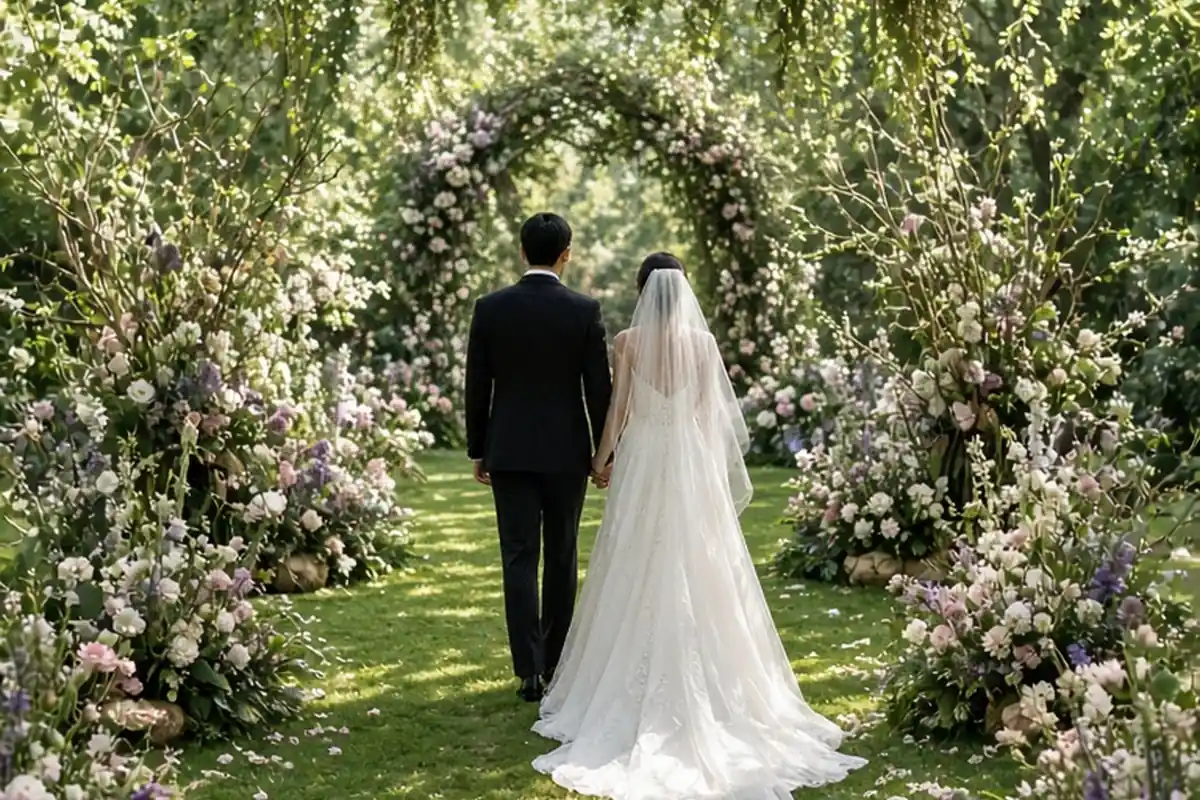
Stunning wedding aisle decor balances visual framing, safe footing, and ceremony scale. The most effective designs use grounded floral meadows, clustered hurricane lanterns, woven runners, or suspended greenery to draw the eye toward the altar without crowding walking space. To create an unforgettable walk, prioritize adequate aisle width for your attire, select materials suited to your flooring or terrain, and plan how to repurpose ceremony arrangements at your evening reception.
Your walk down the aisle marks the formal emotional transition of the wedding day, making the ceremony path one of the most photographed focal points of the entire celebration.
Matching Ceremony Aisle Concepts to Your Venue Architecture
Aisle styling should always complement the existing lines, scale, and surface materials of your ceremony setting. Historic chapels with carved wood pews and ornate stained glass require a very different decorative approach than an open-air coastal lawn, a converted industrial warehouse, or a carpeted hotel ballroom. In spaces with heavy architectural detail, minimalist accents such as tailored fabric pew ties, low clusters of seasonal greenery, or polished brass lanterns prevent the walkway from feeling cluttered. The goal in an ornate venue is to draw the eye forward toward the vow area rather than competing with the surrounding craftsmanship.
Conversely, open outdoor spaces, blank industrial lofts, and wide lawns often lack natural structural framing, which leaves the aisle feeling unbounded if treated too sparsely. In these environments, broad grounded floral runners, dense earthen planters, or substantial wooden pillars anchored with cascading foliage help define the corridor. Pay close attention to underfoot textures as well. Deep grass, gravel, uneven garden flagstones, and polished marble each present specific challenges for footwear, floor runners, and vessel stability that must inform your decor plan early in the design process.
Building Grounded Floral Meadows and Organic Aisle Borders
Grounded floral meadows have become one of the most versatile ways to bring natural drama to the ceremony path. Instead of elevated arrangements on tall stands that obstruct seated guests' sightlines, growing meadows sit directly on the floor. Florists arrange blooms, branches, and leafy textures at varying heights to create the illusion that lush botanical beds are sprouting naturally alongside the chairs. These installations look striking in wide-angle processional photographs because they soften harsh chair lines and ground the couple within a continuous, living frame.
When planning a meadow installation, consider both continuity and guest access. Continuous floral borders look opulent, but they effectively wall off rows, forcing guests to enter from outside perimeters rather than stepping into the center aisle. If your layout requires interior aisle access, design your floral borders as modular pods clustered at chair ends with intentional breaks every few rows. Ensure the floral mechanics rely on weighted bases or heavy ceramic containers that will not tip over if brushed by a bridesmaid's hem or a guest's coat.
Selecting Runners, Carpets, and Bare Floor Finishes
The aisle base sets the tonal foundation for your entrance, yet it is also the decorative element most prone to physical mishaps if chosen carelessly. Traditional white fabric runners made of lightweight synthetic materials often bunch, wrinkle, or tear under high heels. If you want a fabric runner, choose heavy-weight custom canvas, woven linen, or textured sisal rugs secured with industrial double-sided carpet tape on hard floors or flush ground pins on turf. Outdoor runners require seamless securing along both lateral borders to prevent wind from catching the edges before the processional begins.
Leaving the floor bare is frequently the cleanest, most sophisticated choice, especially when your venue features heritage hardwood, patterned tile, or smooth stone. A bare walkway removes trip hazards, allows dresses with dramatic lace trains to glide without friction, and directs attention to flanking floral accents. If your venue floor is plain concrete or worn commercial carpeting that you prefer to conceal, consider layering vintage kilim rugs, natural jute mats, or wide custom-cut painted floorboards that establish an intentional, grounded aesthetic.
Creating Safe Atmosphere with Candlelight and Lantern Groupings
Candlelight lends an immediate sense of warmth, reverence, and intimacy to afternoon and evening ceremonies, but safety and venue compliance must dictate the execution. Open flames along a busy walkway present genuine hazards for cascading veils, tulle trains, and moving guests. Most commercial venues mandate that all living flames remain completely enclosed within tall glass hurricane cylinders or secure metal lanterns, with the wick sitting several inches below the top rim of the vessel to contain heat and wax splatter.
To achieve a rich, dimensional lighting effect, arrange lanterns in asymmetrical groupings of three or five at the ends of selected rows rather than placing single candles in a rigid, spaced-out line. Blend varying pillar heights within each cluster to produce a soft wash of light across the floor. In venues that prohibit real flames entirely, high-grade LED wax candles with realistic flickering wicks and natural warm color temperatures provide an authentic glow without fire risk or draft sensitivity, making them particularly dependable for drafty cathedrals or breezy outdoor terraces.
Elevating Sightlines with Pew Markers and Suspended Installations
While low aisle borders emphasize the ground plane, elevated markers and overhead installations direct the visual focus upward and accentuate ceiling height. Pew markers and chair-back accents provide classic elegance when kept compact. Consider trailing velvet ribbons, dried lavender bundles, delicate olive branch swags, or structured floral posies affixed securely to the inner aisle chairs. Avoid oversized horizontal arrangements that protrude directly into the walking path, as they narrow the corridor and catch on garments during the processional.
For venues with architectural beams, pergolas, or structural trusses, suspended floral clouds and greenery garlands hung directly above the aisle create an immersive canopy effect. This design choice keeps the floor completely clear for walking while transforming vast spaces like barns or high-ceilinged galleries into cozy environments. When pursuing overhead decor, always verify your venue's rigging limits, structural attachment policies, and ladder setup access with your floral team well before finalizing structural concepts.
Repurposing Ceremony Aisle Decor for the Evening Reception
Ceremony aisle decor represents a significant portion of a wedding floral budget, yet the ceremony itself usually lasts less than an hour. Maximizing that investment through intentional repurposing ensures your arrangements enhance the entire day. Grounded meadow pods, heavy floral urns, and lantern clusters are ideal candidates for secondary placement. During the cocktail hour, your floral or planning team can transfer these floor pieces to border the front of your sweetheart table, frame the band stage, accent lounge seating, or line the perimeter of the cake display.
Successful repurposing requires advance logistical coordination rather than an impromptu decision on the day. Your florist or event coordinator must have a designated breakdown window, safe transport carts, and an exact floor plan showing where each ceremony piece will live in the reception room. Ensure that aisle flowers intended for reuse are hydrated in concealed water reservoirs or water tubes rather than exposed floral foam, preserving their crisp appearance under reception lights late into the night.
Managing Aisle Width Dimensions and Flow Logistics
A visually stunning aisle can quickly turn frustrating if practical spacing is overlooked during layout planning. The standard minimum aisle width for a single person is roughly four feet, but wedding ceremonies demand considerably more room. If an escort will walk beside you, or if you are wearing a gown with a voluminous petticoat, ballgown skirt, or cathedral-length veil, the clear walking corridor should measure at least five to six feet wide between decor elements. Measuring from chair leg to chair leg is insufficient; you must measure the clear distance between the widest protruding floral stems or lanterns.
Factor in ceremony vendor operations as well when finalizing your layout. Photographers and cinematographers often kneel or step into the aisle perimeter to capture processional entrances, ring exchanges, and recessional celebrations. If the aisle borders are densely packed with fragile glass vessels or loose petals, movement becomes precarious. Establishing dedicated buffer zones, keeping the first row and final row walkways clear, and conducting a physical walk-through during your rehearsal guarantees your entrance looks effortless and remains entirely stress-free.
Frequently asked questions
How wide should a wedding aisle be when accounting for decor?
A comfortable wedding aisle should provide five to six feet of clear, unobstructed walking width between the innermost edges of your decor. This clearance allows two adults to walk side by side without brushing against floral arrangements, lanterns, or seated guests, while accommodating broad bridal gowns and formal trains.
Can real candles be used outdoors along an aisle walkway?
Real candles can be used outdoors only when housed inside sturdy, wind-resistant glass hurricanes or heavy lanterns with secure latches. Even modest outdoor breezes will extinguish exposed pillar wicks or blow wax onto fabric runners, making high-quality LED flameless candles a far more dependable choice for open-air settings.
When should aisle decor be set up before the ceremony begins?
Non-perishable items like runners, lanterns, and framework structures are typically installed two to four hours before guest arrival. Living floral meadows and delicate cut blooms should be positioned roughly sixty to ninety minutes prior to the processional to prevent wilting from direct sun exposure, wind, or dry indoor air conditioning.
What is the best way to keep a ceremony aisle runner from slipping or bunching?
On hard surfaces like wood, tile, or stone, secure runners using professional-grade, residue-free double-sided carpet tape along every edge and seam. For outdoor grass installations, use flat metal landscaping sod pins placed flush against the runner borders every few feet to keep the fabric taut and prevent tripping.
Your next step
Measure your ceremony space and confirm whether your venue permits open flame, ground pins, or structural hanging before committing to specific decor rentals or floral concepts.