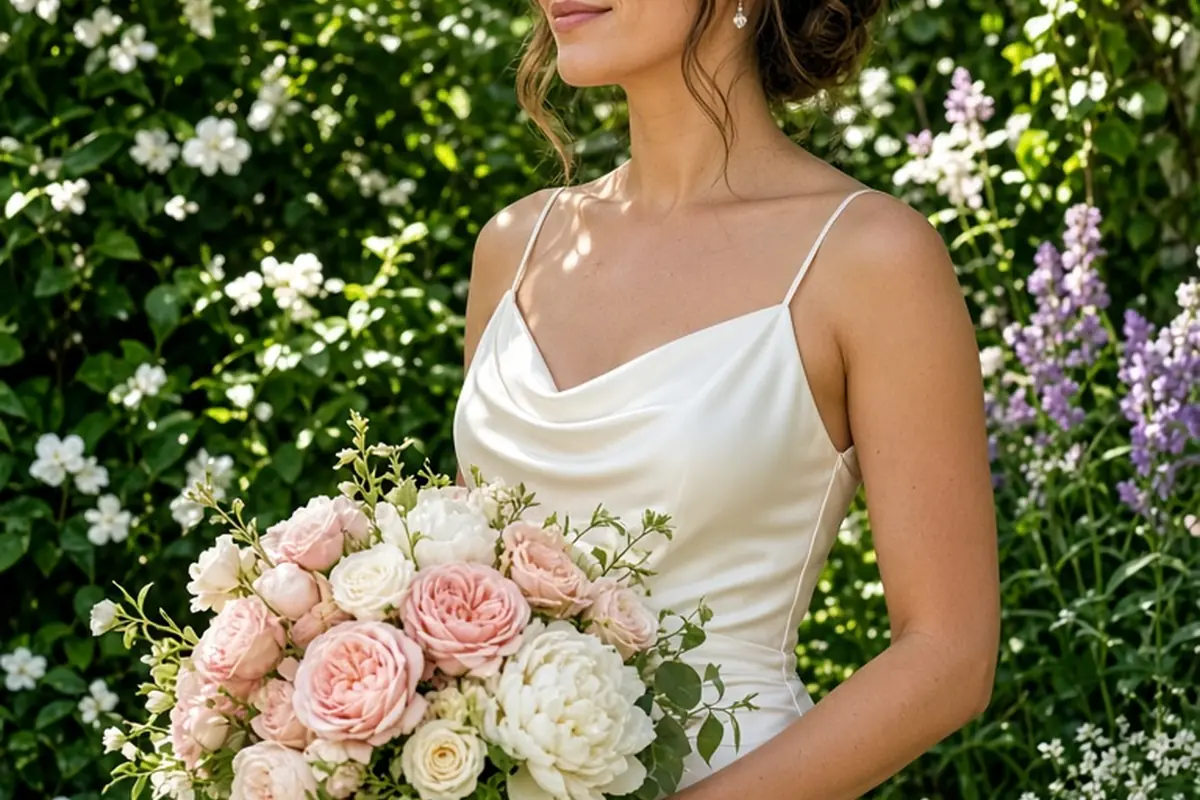
The most successful wedding bouquet balances your personal aesthetic with seasonal availability and practical durability. Classic styles range from structured round bouquets and cascading arrangements to loose, organic hand-tied garden designs. Spring favors delicate blooms like sweet peas, peonies, and ranunculus, while summer supports heat-tolerant dahlias, garden roses, and lisianthus. Autumn highlights textured foliage, berry accents, and rich tones, whereas winter relies on structured evergreens, hellebores, amaryllis, and textural seed pods to withstand changing venue temperatures.
Selecting wedding flowers involves far more than clipping inspiration images to a digital mood board. A bouquet must physically hold up through hours of photography without water, feel comfortable to hold, and complement your outfit without competing for visual attention.
Choosing a Bouquet Silhouette That Complements Your Attire
The overall shape of your bouquet establishes how your flowers interact with the silhouette of your gown, suit, or separates. A round hand-tied posy, tightly clustered with minimal greenery, offers a neat and tailored profile. This shape works exceptionally well with detailed ballgowns, heavily beaded bodices, or sharp contemporary tailoring where an unruly arrangement might snag on delicate fabric or obscure intentional design lines. Because round posies rely on consistent stem lengths and uniform densities, they feel grounded, balanced, and easy to hold with one hand during transition moments.
Organic, wide-sprawling arrangements take the opposite structural approach by incorporating staggered stem heights, asymmetrical greenery, and negative space between blossoms. These garden-inspired bouquets complement relaxed silhouettes like fluid silk slips, A-line skirts, and soft tulle. However, an arrangement that spreads too wide can widen your frame in straight-on photographs. As a practical sizing guideline, a standard hand-tied bouquet should rarely extend wider than your waistline when held at resting level, ensuring your waist remains defined and the flowers serve as an accent rather than a physical barrier.
Cascading bouquets and presentation arm bouquets introduce deliberate vertical movement. Cascades drape gracefully downward using trailing vines, jasmine, clematis, or cascading phalaenopsis orchids, making them a striking match for cathedral-length veils and traditional gowns with long trains. Presentation bouquets, sometimes called pageant or arm-sheaf bouquets, rest across one forearm using long-stemmed blooms like calla lilies, French tulips, or delphinium. While visually dramatic and editorial, presentation bouquets require deliberate posture and make carrying other items or greeting guests more cumbersome.
Spring Wedding Bouquet Ideas: Delicate Textures and Ephemeral Blooms
Spring offers some of the most sought-after wedding blooms of the year, characterized by soft petals, fresh scents, and nuanced pastel tones. Early spring brings bulb flowers like sweet-smelling hyacinths, muscari, and delicate narcissus, which transition into mid-spring staples such as ruffled ranunculus, butterfly ranunculus, and garden tulips. Late spring delivers tree blossoms, fragrant lilacs, and the opening chapter of peony season. A romantic spring bouquet often pairs pale blush peonies with lavender sweet peas, ivory spiraea branches, and soft grey-green eucalyptus to create an airy, waking-garden impression.
Working with spring flowers requires careful attention to cellular water retention and stem mechanics. Bulb blooms like tulips and daffodils continue to grow and bend toward light even after being cut and wired, meaning a tulip bouquet can shift shape between morning preparation and evening vows. Furthermore, sweet peas and lilacs possess soft, woody, or hollow stems that demand constant hydration. If your ceremony takes place outdoors in warming late-spring weather, request that your floral designer hydrate these varieties thoroughly in specialized floral holding solutions and provide a small hydration vase for holding periods between photography sessions.
Summer Wedding Bouquet Ideas: Heat Resistance and Vibrant Movement
Summer weddings invite vibrant color palettes, ranging from citrus yellows and coral pinks to bold saturated jewel tones. Outstanding summer bouquet centerpieces include dinnerplate dahlias, garden roses, lisianthus, zinnias, scabiosa, and cosmos. To give a summer arrangement natural texture, designers frequently interweave blooming herbs like flowering mint, chamomile, and scented geranium foliage. A striking midsummer concept combines peach and apricot garden roses with deep coral dahlias, white feverfew, and trailing blackberry bramble for an abundant, sun-drenched feel.
The primary challenge of summer bouquets is ambient heat and direct sun exposure. Delicate blooms like traditional hydrangeas or field poppies wilt rapidly once removed from standing water, often drooping irreversibly within twenty minutes of direct afternoon sun. When planning a warm-weather event, choose naturally resilient species like lisianthus, which closely resembles a rose but possesses a far sturdier cellular structure, or zinnias and spray roses that handle dry air reliably. Keep your bouquet stored in a cool room out of direct sunlight until you step outside for portraits, and blot the wet cut stems thoroughly with a clean towel before holding the arrangement against your clothing.
Autumn Wedding Bouquet Ideas: Architectural Foliage, Berries, and Earth Tones
Autumn floral design moves away from airy pastels toward grounded, rich depth, utilizing complex color transitions such as terracotta, ochre, plum, cinnamon, and espresso. This season shines through high-texture elements rather than petal count alone. Designers combine late-season garden dahlias and heirloom chrysanthemums with architectural elements like hypericum berries, snowberry branches, privet berries, and ornamental grasses. Pairing café au lait dahlias with burgundy calla lilies, bronze smokebush, and trailing amaranthus produces a warm, moody composition that reflects the changing natural landscape.
To keep a rich autumn bouquet from looking heavy or muddy, establish intentional tonal contrast. A bouquet built entirely of dark burgundy and chocolate tones can turn into a solid, unreadable dark blob in wedding photography, especially against dark suits or in dim indoor reception lighting. Integrating mid-tone transitional flowers, such as dusty rose carnations, honey-toned garden roses, or pale cream ranunculus, gives the eye a pathway to navigate the composition. Dried accents like bleached ruscus, bunny tails, or preserved palms can add modern contrast, though they should be mixed carefully with fresh blooms to avoid a brittle texture.
Winter Wedding Bouquet Ideas: Enduring Textures and Crisp Color Palettes
Winter bouquets create visual impact through contrast, structure, and endurance. While imported flowers make many out-of-season blooms accessible, embracing winter-specific textures results in designs that feel deeply connected to the atmosphere. Velvet-petaled amaryllis, winter hellebores, paperwhites, and pieris japonica form an exquisite botanical base. A classic winter palette does not have to be limited to holiday red and green; consider crisp white garden roses paired with silver brunia berries, blue-toned spruce tips, deep olive foliage, and trailing dark velvet ribbons for an understated, elevated cold-weather look.
Environmental shifts are particularly intense during winter events, where flowers repeatedly transition between sub-freezing outdoor air during portraits and bone-dry, heated indoor venues. Thin-petaled blooms like gardenias or hydrangeas turn translucent and brown when exposed to sudden frost. Amaryllis and hellebores, by contrast, tolerate cooler outdoor temperatures much better, though heavy amaryllis stems require careful internal doweling by your florist to support their large blossom heads. For outdoor winter ceremonies, lean into hardy evergreen foliage, magnolia leaves with velvet brown undersides, and structural dried seed pods that remain impervious to freezing breezes.
Matching Floral Styles to Venue Settings and Wedding Themes
A bouquet should feel native to the environment where you carry it. In an architectural city loft or modern industrial warehouse, an overly rustic bundle of field flowers can feel disconnected from the sleek concrete and steel surroundings. For modern spaces, mono-botanical arrangements—bouquets constructed entirely from a single flower type, such as an architectural clutch of white calla lilies, reflexed long-stem roses, or sculptural anthuriums—deliver clean lines and high artistic impact without visual clutter.
Conversely, historic estates, coastal bluffs, and botanical garden venues welcome looser, naturalistic arrangements that reflect organic surroundings. For a coastal setting, you might choose wind-tolerant stems with movement, such as sea holly, airy grasses, and dynamic cosmos that dance in the sea breeze. For a traditional formal ballroom or cathedral ceremony, a structured, symmetrical arrangement with a dense dome of fragrant garden roses, stephanotis, and trailing satin ribbons mirrors the grand architectural proportions and formality of the venue. Evaluate your venue's ceiling height, lighting conditions, and predominant color scheme before finalizing your bouquet's palette and scale.
Practical Mechanics, Stem Care, and Day-of Handling
A gorgeous bouquet can quickly become a burden if practical ergonomics and mechanics are overlooked. Bouquets built with dozens of water-heavy stems, wet floral foam, or extensive wiring can weigh several pounds, leading to shoulder fatigue and awkward posture within an hour of photos. During your initial floral consultation, discuss the target weight of your bouquet, especially if you have wrist or joint concerns. Choosing hollow-stemmed or woody stems that require minimal wiring keeps the bundle light and comfortable to hold throughout the day.
How you physically carry your flowers directly impacts your wedding photos and overall comfort. Anxious or excited couples often subconsciously lift their bouquet upward toward the chest, which tenses the shoulders, blocks intricate neckline detailing on clothing, and angles the blooms away from the camera lens. The ideal carrying position rests at your belly button or hip line, with your elbows relaxed and angled slightly outward. Tilt the face of the bouquet subtly forward toward the photographer rather than pointing straight toward the ceiling so the camera captures the full face of each bloom rather than just stem ends and greenery rims.
Coordinate day-of logistics to keep stems hydrated without damaging your attire. When the delivery arrives, confirm with the floral team that transport vases are filled with only an inch or two of water—enough to touch stem ends without wetting the ribbon wrap. Assign a wedding attendant or coordinator the task of carrying a hand towel specifically for the bouquet. Every time the bouquet is pulled from its holding vase for photos or the ceremony walk, the cut ends must be blotted dry to prevent dirty water droplets from dripping down the front of light-colored clothing.
Frequently asked questions
How far in advance should I finalize my wedding bouquet design with a florist?
Most professional florists recommend confirming your overall color palette, style, and focal flower preferences between six and nine months before your date. Because wholesale floral markets face seasonal crop shifts and weather fluctuations, expect to confirm final stem substitutions approximately four to six weeks prior to the wedding.
What is the best way to preserve a wedding bouquet after the celebration?
If you plan to preserve your bouquet through professional freeze-drying, silica gel drying, or resin casting, keep the stems in fresh water in a cool room immediately after the reception ends. Professional preservation specialists typically require receiving the flowers within forty-eight to seventy-two hours of the event to prevent irreversible browning or petal drop.
How do I choose bouquet colors if my wedding party wears patterned or bold attire?
When wedding party attire features busy patterns or bold hues, anchor your personal bouquet in creamy neutrals, ivory, or soft tonal tints of the predominant dress color to maintain clear visual separation. Alternatively, select one subtle secondary accent color pulled from the pattern to tie the aesthetic together without visually competing.
Are silk or wooden flowers a reliable alternative to fresh wedding bouquets?
High-grade faux florals made of silk or polyurethane offer excellent durability for extreme weather conditions, destination travel, or severe pollen allergies. However, premium faux stems often cost as much as fresh blooms due to manufacturing detail, so evaluate them primarily for longevity and weather resilience rather than assumed cost savings.
Your next step
Review your venue's lighting and temperatures, select two or three must-have seasonal focal blooms, and schedule an initial consultation with your florist to review stem weight and hydration logistics.