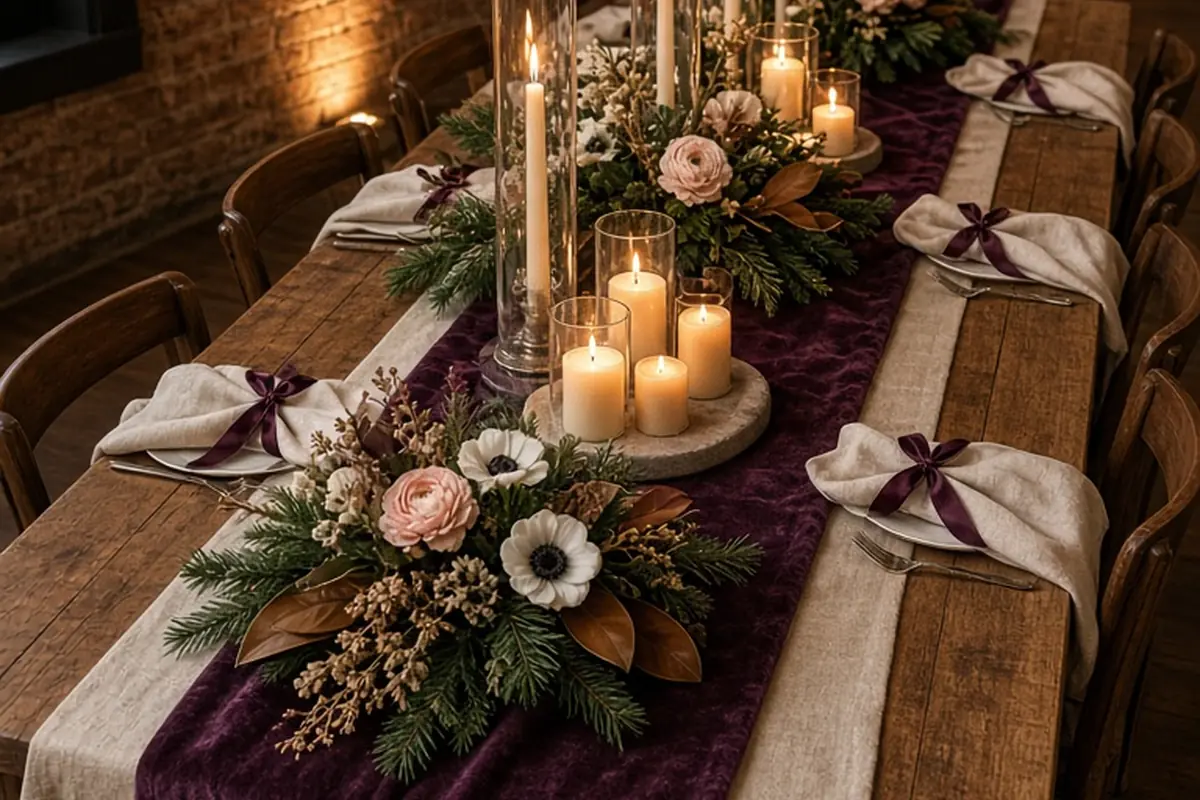
To make a winter wedding feel stylish and genuinely cozy, balance rich seasonal textures with intentional physical warmth. Anchor your aesthetic in tactile materials like velvet, wool, and unvarnished wood, paired with low-set amber lighting from taper candles and architectural uplights. Keep guests comfortable through heated arrival zones, welcome drinks served hot, and enclosed transit paths between spaces. Layering seasonal botanical choices like cedar, winterberry, and dried citrus brings refined luxury without relying on seasonal clichés.
Planning an event during the coldest months introduces unique design opportunities alongside distinct logistical demands. A successful cold-weather celebration blends thoughtful hospitality with design choices that make winter feel like an intentional, romantic backdrop rather than an obstacle.
Heating, Transit, and Flow: Solving Winter Wedding Logistics First
Before selecting velvet linens or cocktail menus, the foundation of a cozy gathering is physical comfort. A visually stunning reception space quickly loses its charm if guests are shivering during dinner or navigating icy walkways in formal footwear. When touring venues, inspect the heating infrastructure specifically. Ask venue management how the space maintains ambient warmth when exterior doors open repeatedly for guest arrivals, catering load-ins, and departures. Large historic venues, industrial lofts, and glasshouses often suffer from drafts near tall windows and high ceilings. Identify whether the venue provides auxiliary forced-air heating, working fireplaces, or perimeter radiators, and confirm whether you need to rent commercial-grade portable heaters for transition areas like entryways and restrooms.
Smooth circulation between spaces is equally vital during winter. If your ceremony and reception take place in separate rooms or buildings, minimize the time guests spend exposed to the elements. Create a fully covered or enclosed walkway whenever possible. If an outdoor transition is unavoidable, establish a sheltered breezeway equipped with radiant overhead heaters. Place clear wayfinding signage near doors so attendees do not wander outside in search of cocktail hour. You should also coordinate with your venue or a private valet service regarding parking and sidewalk maintenance. Pre-treating stone steps with pet-safe melting salts and stationing staff with oversized umbrellas transforms an otherwise stressful, freezing arrival into an organized, welcoming entry.
Tactile Textiles and Rich Fabrics for Cold-Weather Tablescapes
In spring and summer, airy chiffon and crisp cotton dominate tablescapes. Winter calls for visual and physical weight through layered textiles. Heavy linen, brushed twill, and matte velvet table runners instantly ground a dining room, absorbing ambient sound and lending tactile warmth to place settings. Instead of defaulting to plain white tablecloths, consider rich undertones such as slate gray, moss green, espresso, deep plum, or warm oatmeal. These tones provide high contrast against classic white porcelain plates and polished silverware, giving the tablescape an intimate, grounded presence.
Layering extends beyond tablecloths to dinner napkins, chair treatments, and peripheral lounge furniture. Heavyweight linen napkins tied with hand-dyed silk ribbon or leather cord offer guests a distinct sensory experience as they sit down. If your venue uses bare wooden farmhouse tables or industrial metal chairs, soften the seating with draped sheepskin pelts, boiled-wool throws, or custom-fitted velvet cushions. This design decision serves a practical dual purpose: it prevents cold surfaces from chilling seated guests while softening the room's overall acoustics, transforming an echoey banquet hall into a room that feels like a private, firelit dinner party.
Curating Ambient Lighting When Winter Daylight Fades Early
Winter days offer limited natural daylight, with the sun often setting well before the evening reception begins. Rather than treating early dusk as a limitation, use it to your advantage by establishing a dramatic, multi-tiered lighting plan. Bright, direct overhead lighting can feel clinical and harsh, highlighting empty space. Warm ambient light, conversely, visually draws the perimeter inward, making a cavernous room feel snug and secure. Combine low-level flame lighting on tables with soft perimeter wash lighting along architectural features like exposed brick, wood paneling, or stone walls.
Candlelight remains the most effective tool for establishing cold-weather intimacy, but execution requires attention to venue regulations and table safety. Verify your venue's open-flame policy well in advance; many historic spaces require candles to sit entirely within glass hurricane cylinders or tall votives. Cluster pillar candles of varying heights on non-flammable stone trays, and run taper candles down the center of long tables inside glass chimneys. To prevent glare at eye level, place tapers above or below normal seated eye height. Complement living flame with warm-white fairy lights woven subtly into suspended greenery, or use Edison-bulb chandeliers dimmed to a gentle amber glow to cast flattering light across the room.
Winter Wedding Floral Design Beyond Standard Evergreens
While pine boughs and red berries have their place, relying exclusively on holiday foliage can make a winter wedding look like an office seasonal party. Sophisticated cold-weather floral arrangements embrace texture, architectural shape, and subtle tonal variation. Deep foliage such as blue spruce, magnolia leaf with its velvet brown underside, Italian ruscus, and cedar can be balanced with delicate blooms like ranunculus, garden roses, hellebores, and anemones with striking dark centers. The contrast between sturdy evergreens and paper-thin petals creates an organic, sophisticated tension.
Incorporate non-floral botanical elements to build depth and seasonal relevance without feeling predictable. Dried elements—such as bleached bracken fern, seeded eucalyptus pods, lotus pods, and dried lunaria—catch candlelight beautifully. For a grounded, earthy aesthetic, bring in bare branches like birch, curly willow, or fruiting branches such as winterberry and persimmon. These taller branches draw the eye upward toward high ceilings without blocking across-table conversation. If you want a minimalist look, consider table installations composed primarily of potted ferns, moss mounds, and sculptural branches set in rough-hewn ceramic vessels rather than conventional cut-flower foam arrangements.
Warm Hospitality: Curating Seasonal Menus, Sip Stations, and Midnight Snacks
A thoughtful winter menu centers on food and drink that restore bodily warmth. Transition away from chilled canapés and raw bars during cocktail hour in favor of rich, temperature-hot appetizers. Demitasse cups of roasted butternut squash soup, wild mushroom arancini, miniature braised short rib pies, and warm brie crostini provide immediate culinary comfort to guests who have just arrived from the cold. For the seated meal, structured entrées like slow-braised meats, root vegetable gratins, pan-roasted trout with brown butter, and creamy polenta offer hearty satisfaction that fits the season.
Interactive beverage stations provide an engaging focal point while keeping guests warm throughout the evening. Greet guests before the ceremony with an arrival station serving spiced apple cider, mulled wine, or hot ginger-pear toddies in heat-retaining glassware. During the reception, expand this into an upscale dessert beverage bar featuring single-origin hot chocolate, espresso, and herbal teas. Provide house-made flavor syrups, toasted marshmallows, cinnamon sticks, and optional liqueur pairings like bourbon, amaretto, or Irish cream. Later in the evening, send guests into the night with hot, handheld comfort foods—such as soft pretzel bites with beer cheese or miniature grilled cheese sandwiches—to fuel their journey home.
Dressing for the Temperature: Layered Bridal and Wedding Party Styling
Winter bridal fashion allows for statement outerwear and luxurious fabrics that feel out of place during warmer months. If you love a sleeveless or backless gown, pair it with structured layering pieces designed specifically for photography and outdoor transitions. Tailored wool coats, cashmere wraps, faux-fur stoles, or cropped velvet jackets add visual texture while keeping you comfortable. Heavier bridal fabrics like silk mikado, brocade, and heavy crepe hold their shape crisply in cool air and provide greater thermal protection than lightweight tulle or organza.
Keep the comfort of your wedding party in mind as well. Expecting bridesmaids to stand in thin, strapless chiffon dresses in freezing conditions leads to forced smiles and genuine discomfort during photo sessions. Consider floor-length velvet gowns, long-sleeved silhouettes, or providing coordinated knit shawls, tailored blazers, or capes that complement the color palette. For suits and tuxedos, explore heavier materials like wool flannel, tweed, or velvet dinner jackets in rich tones of midnight navy, forest green, or burgundy. Make sensible footwear plans for outdoor photo locations; keep thermal boots on hand for walking between portrait spots, changing into formal shoes only once positioned on dry ground.
Managing Guest Comfort Through Wardrobe Storage and Weather Contingencies
A detail frequently neglected in winter planning is the substantial volume of winter clothing guests bring with them. Heavy parkas, wool coats, hats, and wet umbrellas will quickly clutter dining chairs and lounge seating if there is no dedicated storage system. Plan for a fully staffed coat check immediately adjacent to the entrance. Ensure the venue has sufficient heavy-duty hangers and sturdy racks capable of holding the weight of wet winter coats without bowing. Supply coat check claim tags that match your stationery aesthetic, and provide discrete boot mats and umbrella stands where wet items can dry without creating slip hazards on polished floors.
Weather volatility requires an explicit communication plan. Winter storms can disrupt flights, ground transportation, and vendor delivery schedules. Set up a wedding website with real-time updates and collect mobile phone numbers for an automated text notification system in case timing shifts due to road conditions. Discuss snow removal contingencies directly with your venue and key suppliers: verify who is responsible for plowing the parking lot, clearing pathways, and laying down ice melt. Additionally, confirm your vendors' backup policies if bad weather prevents a specific team member from traveling, ensuring that your celebration proceeds smoothly regardless of what occurs outside.
Frequently asked questions
What colors look best for a cozy winter wedding without looking like a holiday party?
Focus on sophisticated, muted palettes rather than bright primary reds and greens. Earthy tones such as charcoal slate, olive green, warm taupe, and deep plum paired with brushed gold or copper accents feel deeply seasonal without resembling seasonal holiday decor.
How can we take outdoor photos in the winter without freezing?
Scout exact photo locations in advance with your photographer to keep outdoor sessions under 10 to 15 minutes at a time. Wear hidden thermal layers under full-length garments, keep hand warmers in your pockets, and have attendants stand by with heavy coats and warm drinks between shots.
Are winter weddings generally less expensive than summer weddings?
Winter dates outside of the peak holiday weeks in late December and New Year's Eve often feature lower venue rental fees and seasonal vendor discounts. However, costs can be offset by higher expenditures on auxiliary heating rentals, transportation contingencies, and heavier catering menus.
How do we handle guests tracking snow and water into the reception area?
Set up an extended absorbent runner mat at the main entrance that captures moisture before guests reach hardwood or stone flooring. Staff the entrance with attendants who take wet umbrellas immediately, and place non-slip mats near restroom entries and bar areas where water collects.
Your next step
Review your venue contract today to confirm who handles snow removal, walkway salting, and auxiliary heating, then establish a dedicated coat check plan before finalizing your reception layout.