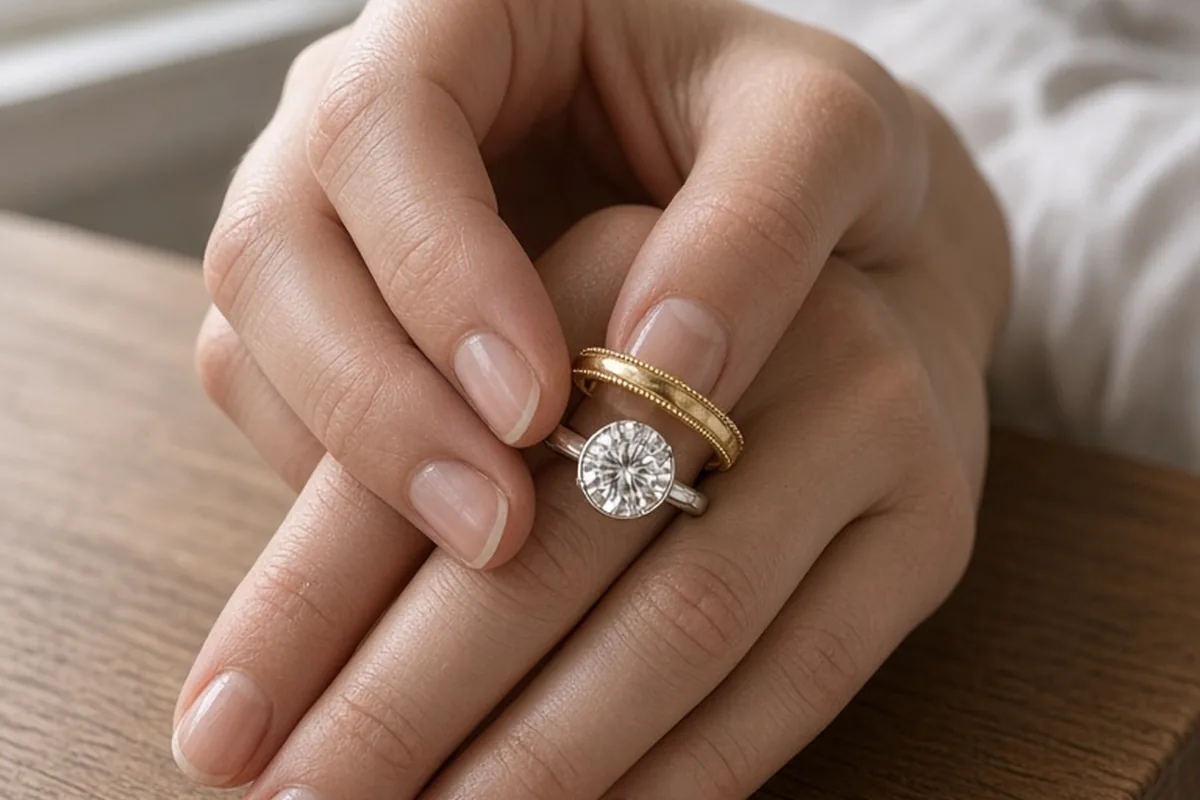
The charm of smaller engagement rings centers on everyday comfort, enduring style, and freedom from commercial expectations. A modest center stone allows for low-profile settings that suit active lifestyles without catching on fabrics, lets couples prioritize exceptional diamond cut quality or artisanal metalwork over sheer carat weight, and opens up creative styling options like intricate band stacking. Choosing a smaller ring celebrates personal values and understated elegance over performative display.
Engagement ring traditions have long been influenced by marketing campaigns that equate devotion with stone dimensions. However, an increasing number of couples are stepping away from the belief that bigger automatically equals better, choosing instead designs that genuinely fit their daily lives, personal aesthetic, and shared financial priorities.
Unmatched Daily Wearability and Practical Lifestyle Comfort
A primary appeal of a smaller engagement ring is how effortlessly it integrates into daily movement. High-profile rings with towering center stones frequently snag on knitwear, scratch delicate fabrics, catch on winter gloves, or twist sideways during basic chores. For anyone who uses their hands constantly, a large prong-set jewel quickly turns from a sentimental heirloom into a physical inconvenience that spends more time tucked away inside a jewelry dish than resting comfortably on the finger.
Smaller center stones sit significantly lower on the hand, allowing for streamlined, protective mountings like bezel or flush settings. Whether your day involves typing at a keyboard, caring for young children, training at the gym, or gardening, a modest stone moves seamlessly with your hand. You rarely have to worry about knocking the setting against a hard surface, loosening prongs during routine errands, or pulling threads while dressing for work.
This level of ease extends directly to specialized professions. Healthcare workers, veterinarians, laboratory technicians, chefs, and artists regularly wear latex gloves, wash their hands dozens of times a shift, or handle delicate instruments. In these environments, an oversized gem can tear protective barriers or trap dirt and sanitation solutions. A petite, smooth ring lets professionals wear their symbol of commitment every single day without compromising workplace safety or hygiene.
Prioritizing Superior Cut Quality and Ethical Craftsmanship Over Carat Weight
Jewelry budget allocation is always an exercise in trade-offs. The four foundational grading factors of diamonds—carat weight, cut, color, and clarity—all compete for the same financial ceiling. When the primary goal is maximizing stone diameter, buyers are frequently forced to compromise on cut precision, accept noticeable internal inclusions, or settle for faint body color to keep the price within reach. A poorly cut large diamond often appears dull, glassy, or windowed, failing to reflect light back to the viewer.
Choosing a smaller gem inverts this dynamic entirely, placing the priority firmly on optical performance and craftsmanship. A meticulously cut stone of modest dimensions will often outshine a substantially larger diamond with mediocre proportions. Superior cut angles allow light to bounce cleanly through the facets, creating vivid scintillation and fire that catches the eye from across a room. A clean, brilliant smaller gem commands attention through lively sparkle rather than sheer surface area.
Furthermore, easing the demand for high carat weight frees up resources to invest in ethical sourcing, sustainable lab-grown gems, antique mine-cut diamonds, or rare colored centerpieces such as untreated Montana sapphires. It also leaves ample room to partner with independent bench jewelers who produce hand-carved wax molds, milgrain details, and custom metalwork that mass-market commercial retailers simply cannot match.
Distinctive Design Possibilities Unique to Smaller Engagement Rings
Massive center stones tend to dominate ring architecture, forcing the band and head to serve primarily as structural supports rather than expressive design elements. When the stone occupies the entire width of the finger, the surrounding metalwork necessarily takes a back seat to ensure stability. The aesthetic conversation begins and ends with the diamond's sheer presence, leaving little space for nuanced artistry.
In contrast, a delicate center stone acts as an artistic anchor that harmonizes with the entire piece. Jewelers have immense creative freedom when styling rings with modest gems. They can incorporate sculptural bezels with soft curves, vintage-inspired hand engraving, intricate filigree, or subtle open-gallery profiles that would feel clumsy beneath a heavy gem. The stone becomes part of a cohesive sculptural object rather than an isolated centerpiece propped above a generic band.
Smaller gems also lend themselves beautifully to non-traditional layouts. East-West orientations—where an elongated oval, marquise, or emerald cut is set horizontally across the finger—look exceptionally chic and balanced when executed with delicate proportions. Similarly, multi-stone clusters, asymmetric toi-et-moi pairings, and celestial arrangements thrive on the delicate scale of smaller stones, resulting in an original design that feels intentionally curated rather than pulled from a standard showroom display.
Versatile Wedding Band Stacking Without Overcrowding the Hand
Many people view an engagement ring as an isolated purchase, forgetting that it will ultimately share finger real estate with a wedding band, anniversary bands, or personal stack rings. Large center gems often present significant stacking hurdles. Due to their wide footprints and low baskets, standard straight wedding bands cannot sit flush against them, leaving an awkward gap unless the wearer commissions a deeply curved contour band or accepts a high-sitting setting that catches on everything.
A smaller center stone acts as a natural collaborator within a ring stack. Its compact footprint leaves generous room on the proximal phalanx, welcoming varied textures, mixed metal colors, and alternating widths. You can easily pair a petite solitaire with a classic polished wedding band, a shared-prong diamond eternity band, or an engraved vintage keeper without crowding the knuckle or overwhelming your hand.
This versatility allows the ring stack to evolve over decades. Wearers can celebrate milestones, personal achievements, or family additions by adding delicate bands over time. Because the engagement ring retains a modest silhouette, the overall composition remains balanced, intentional, and comfortable, turning the bridal set into an evolving tapestry of memory rather than a single frozen aesthetic.
Financial Autonomy and Freedom to Fund Tangible Future Goals
An engagement marks the beginning of a shared life, a transition that commonly coincides with major financial investments such as buying a home, relocating for a career, funding an emergency reserve, or planning a wedding celebration. Pouring an outsized portion of personal savings into a single piece of jewelry can create silent underlying stress at the very moment a couple needs financial agility.
Choosing a smaller ring is a pragmatic declaration of autonomy over commercial pressure. Bypassing the conventional expectation to spend several months of income on jewelry lets a couple allocate their funds where it matters most to their partnership. A lower jewelry expenditure might fund a restful honeymoon, eliminate high-interest debt, or provide the seed capital for a retirement portfolio, creating a stable foundation for the marriage itself.
Financial peace of mind also alters how you interact with the physical piece. An engagement ring that represents a sustainable, comfortable purchase brings pure joy rather than latent worry. Wearers rarely experience the anxiety of loss, damage, or theft that frequently accompanies rings with immense monetary price tags, leaving them free to enjoy the ring as an intimate symbol rather than an insured liability.
Understated Elegance and Low-Stress Travel Security
There is an enduring sophistication in quiet luxury. A dainty ring carries a timeless, poetic quality that outlasts cyclical fashion trends. While jewelry aesthetics periodically swing between maximalist statements and sleek minimalism, delicate, well-proportioned rings maintain their refinement across decades. They never feel dated, loud, or out of place, blending as naturally with a casual weekend sweatshirt as they do with formal black-tie attire.
Beyond aesthetics, understated rings offer unparalleled ease during travel and active leisure. Traveling through bustling transit hubs, exploring international street markets, or enjoying beach vacations can feel nerve-wracking when wearing high-profile jewelry that attracts unwanted scrutiny. Many owners of large rings choose to leave their actual jewelry in home safes and wear inexpensive silicone or cubic zirconia bands while away.
A modest, beautifully designed ring rarely requires such precautions. It rests discreetly against the hand, attracting admiring glances from those close to you while remaining completely unobtrusive in public spaces. You can pack your bags, explore unfamiliar cities, and go about your adventures with your genuine engagement ring intact, keeping your actual token of commitment on your finger wherever your travels take you.
How to Select Proportions and Settings That Make Modest Stones Shine
When designing or buying a smaller engagement ring, proportional balance is the secret to creating an exceptional piece. The width of the metal band directly dictates how the center stone reads to the human eye. Placing a 0.50-carat diamond on a wide 3.0-millimeter shank can visually drown the gem, making it look smaller than it actually is. Pairing that same diamond with a slender 1.5-millimeter to 1.8-millimeter tapered band makes the stone pop cleanly, giving the overall design an airy, delicate presence.
The choice of setting style also plays a pivotal role in maximizing the stone's presence and character. A classic four-prong head exposes the sides of the gem to surrounding light, highlighting its natural brilliance and fire. If you prefer a more defined, contemporary border, a fine-wire bezel or milgrain-edged collar creates a distinct outline that frames the stone cleanly while protecting its girdle from accidental impacts.
Pay careful attention to the diamond or gemstone shape as well. Certain fancy cuts naturally present a larger visual surface area per carat weight than standard round brilliants. Oval, pear, and marquise cuts distribute their mass across a longer plane, creating an elegant, elongating effect on the finger. Exploring these varied silhouettes allows you to find a balanced, flattering piece that honors your exact hand shape without requiring a massive carat weight.
Navigating External Comments and Centering Personal Meaning
Despite evolving bridal tastes, modern couples still occasionally encounter unsolicited opinions from well-meaning family members or acquaintances whose views were shaped by traditional jewelry marketing. A family member might remark on a stone's size or ask if you plan to upgrade in the future, projecting their personal values onto your ring. Navigating these interactions smoothly requires remembering that an engagement ring is an intimate symbol between two partners, not a community referendum.
When someone makes an unprompted comment about size, a brief, gracious response centered on personal choice easily redirects the conversation. Phrases like, 'I specifically chose this because it suits my daily life perfectly,' or 'I love how lightweight and delicate it is,' acknowledge the comment without inviting debate. You never owe anyone a defense of your personal budget, ring specifications, or styling decisions.
Ultimately, the true value of any engagement piece comes from the relationship it represents and the shared intention behind it. A ring chosen deliberately for its comfort, beauty, and harmony with your lifestyle carries a profound, authentic charm. By keeping your focus rooted in what feels right for your partnership, you can wear your ring with effortless pride and quiet confidence.
Frequently asked questions
What carat weight is typically considered a smaller engagement ring?
While perceptions vary by region, culture, and social circle, center stones between 0.25 carats and 0.75 carats are generally considered modest or delicate in contemporary bridal jewelry. Stones under 0.50 carats are especially popular for minimalist solitaires, vintage filigree designs, and active lifestyles.
Does choosing a smaller engagement ring look cheap or insincere?
Not at all. Quality is communicated through precise diamond cut, lustrous precious metalwork, clean symmetry, and thoughtful craftsmanship rather than surface area alone. A delicate, high-grade stone set in a custom or well-engineered band projects refined taste and understated sophistication.
Can I upgrade my smaller engagement ring later if our priorities change?
Yes, many couples choose to reset their original stone, incorporate it into a multi-stone cluster, or add ornate anniversary bands down the road. However, many wearers find that they grow deeply attached to the comfort and sentimental history of their original ring and prefer keeping it exactly as it was given.
What setting styles best protect a smaller diamond from wear and tear?
Full bezel settings, semi-bezel wraps, and low-profile flush or gypsy mounts offer the best everyday protection for modest center stones. These styles encase the outer rim of the gem in precious metal, preventing chips and eliminating prongs that could catch on clothing.
Your next step
Try on rings with varying center stone sizes and band widths in person, noticing how each profile feels against your fingers when making a fist and moving naturally.