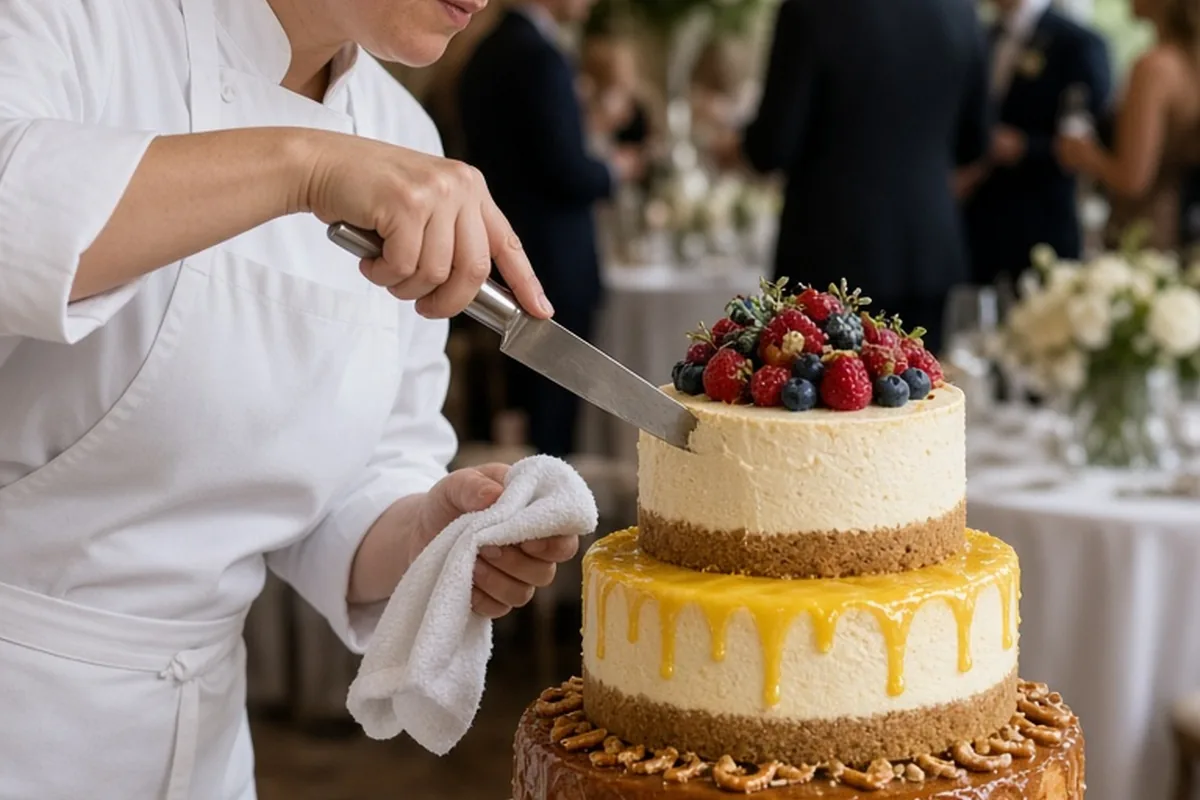
A cheesecake wedding cake replaces traditional sponge cake with rich, custard-style baked cheese layers, offering an indulgent, velvety texture and distinct flavor profile. Because cheesecake is inherently dense, moist, and temperature-sensitive, serving it at a wedding requires specialized internal tier supports, strict refrigeration planning until display, and careful venue temperature monitoring. Couples can choose stacked supported tiers, tiered pedestal stands, or assorted mini cheesecake displays paired with complementary seasonal fruit compotes and glazes.
While airy sponge cakes wrapped in fondant or American buttercream have long defined reception dessert tables, more couples are turning to cheesecake to anchor their celebration with memorable richness and unexpected texture.
Structural Realities of Stacking Dense Cheesecake Tiers
Traditional layer cakes rely on light flour structures that support their own weight relatively easily when balanced with standard wooden dowels. In contrast, baked cheesecake consists primarily of cream cheese, eggs, sugar, and cream, resulting in a dense, custard-like crumb with high moisture and zero gluten framework. If you attempt to set one chilled cheesecake directly on top of another without an independent support system, the bottom tier will compress, bow outward along the sides, and eventually collapse under the sheer downward pressure.
To achieve the visual silhouette of a traditional multi-tiered wedding cake, professional bakers rely on heavy-duty internal structural hardware. Each tier sits on a rigid, greaseproof cake board cut exactly to the diameter of that tier. Beneath each board, food-safe hollow plastic pillars, heavy wooden dowels, or interlocking central support dowels are driven completely through the lower cake down to the base drum. This architectural framework transfers the entire physical load of the upper tiers directly to the serving platter or table, completely bypassing the delicate, creamy body of the bottom cake.
Couples who love the aesthetic of tiering without the engineering risks often choose separated tier stands. High-quality metal, acrylic, or wooden tier stands hold individual cheesecakes on staggered plates or stacked arms. This presentation delivers the vertical drama of a traditional tall wedding centerpiece while ensuring that each cake remains completely unburdened by exterior weight, simplifying both setup and service when it comes time to cut.
Temperature Management and Timeline Coordination with Venues
Unlike butter-based sponge cakes that can sit comfortably at room temperature for six to eight hours, cheesecake is perishable and structurally volatile in warm conditions. Dairy fats soften rapidly when exposed to ambient heat, which alters the texture from silky to unpleasantly greasy and causes delicate crusts to turn soggy. Furthermore, food safety standards require that dairy-rich custards remain chilled until shortly before consumption, making temperature control a critical logistical factor in your reception planning.
Before committing to a cheesecake wedding centerpiece, confirm your reception venue's walk-in refrigeration space and policies. Your caterer or baker needs guaranteed, odor-free refrigerator shelf space tall enough to store your assembled tiers or individual rounds until shortly before the reception begins. Venues without adequate cold storage, or outdoor venues with high ambient summer heat, require deliberate mitigation strategies such as keeping the display indoors until the cake-cutting moment or opting for an air-conditioned reception room.
A practical display timeline involves bringing the cheesecake out of refrigeration roughly thirty to forty-five minutes before the ceremonial cutting. This window allows the cake to warm slightly so the texture reaches optimal silkiness and the flavors become fully expressive without softening to the point of instability. Plan to stage the cake away from direct sunlight, radiant heat from patio heaters, drafty HVAC return vents, and warm spotlights that can quickly melt external garnishes or soften the perimeter.
Designing Balanced Flavor Profiles Across Multiple Tiers
Cheesecake presents a naturally rich, tangy canvas, which makes flavor curation an essential part of the design process. If every tier features a heavy, dark chocolate or peanut butter filling, guests can easily feel overwhelmed after just a few bites following a multi-course dinner. Balancing intense, rich selections with bright, acidic, or botanical components ensures that the dessert remains refreshing and accessible to a wide variety of guest palates.
A proven design strategy involves offering contrasting profiles across different tiers or cutting stations. For example, a classic New York-style vanilla bean cheesecake with a buttery graham cracker crust serves as an approachable base tier that pleases traditional tastes. An upper tier might feature a bright, fruit-forward composition like lemon curd swirl, raspberry-marbled mascarpone, or passionfruit glaze. For a third tier, deeper notes like salted caramel with a pretzel crust, spiced pumpkin with gingersnap base, or dark chocolate espresso can provide seasonal warmth.
You can also use different base crusts to build contrast and texture throughout the dessert. While traditional graham crackers are standard, alternatives such as speculoos cookie crumbs, toasted pecan-graham blends, crushed chocolate sandwich cookies, or gluten-free almond flour crusts introduce distinct aromatic depth. Coordinating the crust flavor with the filling ensures every layer feels intentional rather than repetitive.
Finishing and Decorating Styles for Cheesecake Wedding Cakes
Standard wedding cake decoration leans heavily on rolled fondant, crisp royal icing, and thick borders of American buttercream, none of which adhere well to the moist, chilled surface of a cheesecake. Fondant in particular absorbs moisture from the cheese base, turning sticky and melting down the sides. To create an elegant exterior, professional bakers use finishing techniques tailored specifically to the characteristics of baked dairy cakes.
One popular exterior approach is masking the chilled cheesecake in a stable crumb coat of stabilized mascarpone frosting, white chocolate ganache, or Italian meringue buttercream. Stabilized frostings adhere smoothly to cold cake surfaces and withstand several hours at moderate room temperature without slipping. Alternatively, many couples embrace an unfrosted, rustic look by showcasing the naturally golden, baked edge of the cheesecake, finishing the top surface with glossy fruit glazes, mirror glazes, or carefully drizzled salted caramel.
Garnishes require careful selection because moisture from the cake can quickly wilt delicate elements. Fresh, organic edible flowers, whole fresh berries, candied citrus peel, toasted nuts, and chocolate curls hold their shape beautifully against a chilled surface. If you plan to use fresh florals, ensure your florist provides untreated, food-safe stems and wraps each stem in floral tape before inserting them, preventing direct contact between stem juices and the cake surface.
Serving Formats: Multi-Tier Showpieces Versus Dessert Tables
When choosing how to present cheesecake at your reception, you must decide between a single grand centerpiece and a diversified dessert station. A large multi-tiered cake provides the classic focal point for photographs, the formal cake-cutting ceremony, and a dramatic visual anchor for the reception room. However, slicing large cheesecakes during a fast-paced dinner service requires skilled catering staff, specialized hot-water slicing stations, and precise portion control.
Individual miniature cheesecakes or cheesecake bars offer an increasingly popular alternative. These individual portions allow guests to sample several distinct flavor pairings without committing to a single large slice, and they eliminate the logistical bottleneck of kitchen staff carving down dense tiers during dessert service. You can pair a small two-tier cutting cake for the couple's ceremonial slice with tiered stands of matching mini cheesecakes for the broader guest count.
Individual formats also provide seamless solutions for dietary accommodations. Bakeries can prepare individual gluten-free, nut-free, or vegan dairy-free cheesecakes in matching decorative ramekins or greaseproof liners, keeping allergen-friendly options separated from the main display while maintaining an identical aesthetic across the dessert spread.
Vetting Bakers and Clarifying Delivery Specifications
Not every wedding bakery that creates towering sponge cakes has the technical expertise to bake, chill, assemble, and transport a multi-tiered cheesecake. Similarly, a specialty dessert shop that makes outstanding single cheesecakes may lack the logistical experience needed to deliver and install a tiered centerpiece at a high-pressure wedding venue. Finding the right vendor requires vetting candidates on both baking technique and event execution.
During your initial vendor consultations, ask whether the baker has specific experience building tiered cheesecakes or whether they recommend an architectural stand system. Ask how they transport the cake to the venue: do they deliver the tiers pre-chilled in individual refrigerated boxes and assemble on-site, or do they transport the assembled cake in a climate-controlled vehicle? On-site assembly is generally the safest approach for tiered cheesecakes because it eliminates the risk of structural shift on transit roads.
Ensure your contract clearly outlines the delivery arrival window, responsibility for staging the cake on the display table, provision of tier hardware, and return policies for any rented stands or support plates. Confirm whether the baker coordinates directly with your venue coordinator regarding refrigeration timing, or if your wedding planner will manage the transition from kitchen chiller to display table.
Essential Slicing and Catering Protocols for Clean Service
Cheesecake behaves very differently under a knife than light sponge cake. Its dense, creamy emulsion tends to cling to the blade, which can drag through the cake, tear the crust, and leave plates looking ragged and unappetizing. To ensure clean, professional presentation for every guest, you must provide your catering team with explicit slicing guidelines.
Clean slicing requires three tools at the service station: a tall pitcher of hot water, a supply of clean lint-free towels, and a long, thin-bladed chef's knife or specialized baker's cheese wire. The server dips the knife blade into hot water, wipes it clean and dry on a towel, makes a single decisive downward slice through the center, and pulls the knife straight out along the bottom crust rather than sawing upward. Repeating this dip-and-wipe process before every single cut preserves razor-sharp edges on each slice.
Catering staff should also be briefed on sauce and garnish distribution. Rather than pre-drizzling fruit compotes or warm caramel over plated slices an hour before service, glazes and sauces should be ladled over each slice immediately before it is handed to the guest or carried to the table. This keeps crusts crisp and prevents sauces from bleeding into the delicate cheese curd.
Frequently asked questions
Can a cheesecake wedding cake sit outside during an outdoor summer reception?
Cheesecake should not sit outdoors in warm weather for extended periods, as ambient temperatures above 70 degrees Fahrenheit will soften dairy fats and compromise the cake's structural integrity. If your reception is outdoors, keep the cake safely refrigerated indoors until roughly twenty minutes before the formal cutting ceremony, then immediately transition it back to refrigeration or serve it.
How far in advance can a baker make a cheesecake wedding cake?
Cheesecakes actually benefit from resting in cold storage, as their flavors deepen and their texture sets firm over twenty-four to forty-eight hours after baking. Most bakers complete the baking process two days before the wedding and apply final glazes, fresh frostings, or fruit toppings on the day of delivery to maintain peak freshness.
What is the best way to calculate portion sizes for wedding cheesecake?
Because cheesecake is substantially richer and denser than flour-based sponge cake, standard serving portions are typically smaller, usually around three to four ounces per guest. Discuss your dinner menu with your baker; if you are serving a heavy, multi-course meal, guests will often prefer modestly portioned slices paired with a bright, tart berry coulis.
Can you freeze the top tier of a cheesecake wedding cake for a first anniversary?
Yes, classic baked cheesecakes freeze exceptionally well if protected properly from freezer burn and ambient odors. Chill the tier thoroughly, remove fresh fruit or delicate toppings, wrap it tightly in multiple layers of plastic wrap followed by heavy-duty aluminum foil, and thaw it slowly in the refrigerator for twenty-four hours before serving on your anniversary.
Your next step
Schedule a specialized tasting consultation with a baker who has documented experience building tiered cheesecakes, and request a detailed overview of their internal support system and venue refrigeration protocols.