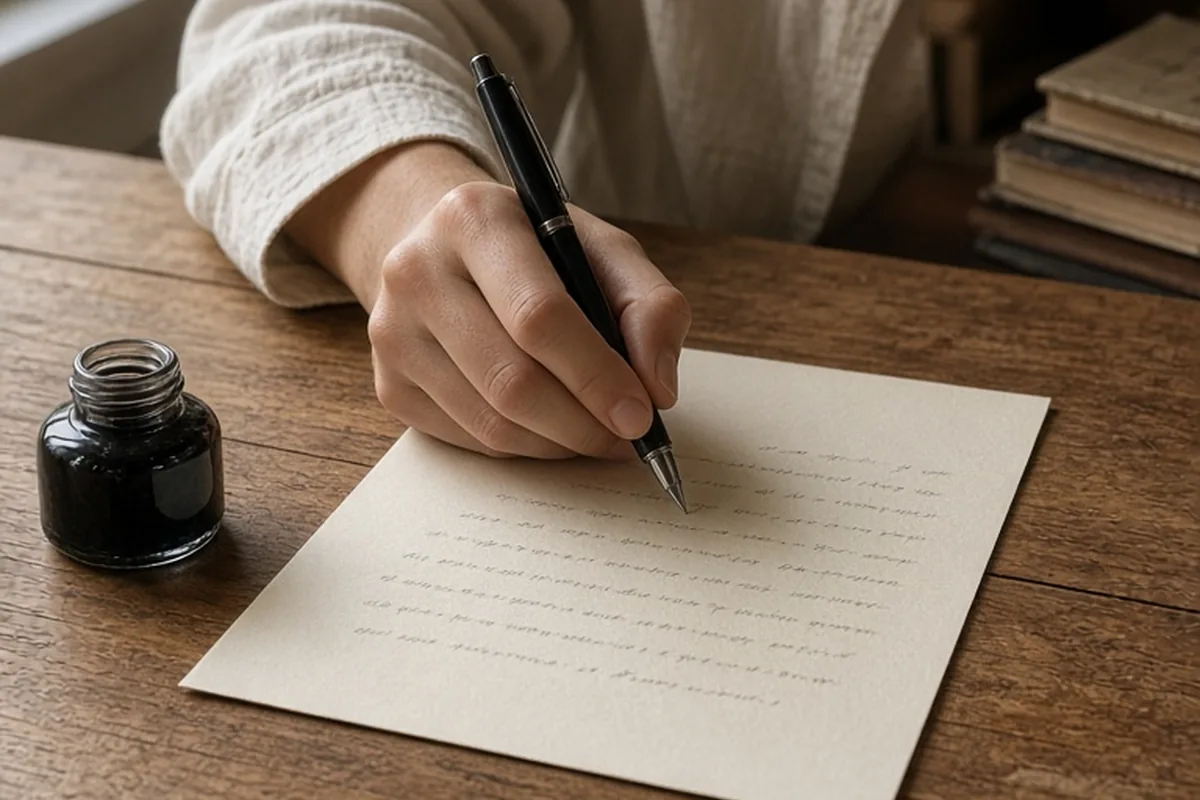
Wedding vows are the formal verbal commitments exchanged between partners during a marriage ceremony, defining the promises, ethics, and mutual intentions that will guide their shared life. Couples typically choose between traditional civil or religious liturgies, fully personalized declarations, or a hybrid of both. Writing your own vows requires selecting a balanced tone, articulating tangible everyday commitments rather than purely abstract sentiments, and coordinating delivery logistics with your officiant so both sets feel cohesive without spoiling the surprise.
Standing before an officiant and a gathering of family and friends to declare your commitment can feel both deeply meaningful and creatively intimidating. Whether you choose centuries-old phrases or original prose, the words you exchange establish the emotional centerpiece of your wedding day and the moral framework for your marriage.
Deciding Between Traditional, Personal, or Hybrid Wedding Vows
The first practical decision in planning your ceremony is determining what format best reflects your shared values, your personal comfort with public speaking, and any institutional guidelines governing your union. Traditional vows draw from long-standing religious liturgies or standardized civil scripts, providing time-tested language that places your partnership within a broader cultural or spiritual lineage. These vows often follow a call-and-response format led by the officiant, which substantially reduces performance anxiety because neither partner has to memorize long passages or worry about writing polished prose under pressure.
Personal vows, by contrast, allow you to articulate the distinct character of your relationship, highlighting individual memories, shared values, and private milestones that no standardized text could capture. Writing original vows offers profound emotional resonance, but it requires significant advance effort, vulnerability, and mutual alignment on boundaries. If one partner writes a three-page poetic monologue while the other delivers two humorous sentences, the ceremony can feel unintentionally lopsided.
Many couples find their best solution in a hybrid structure that combines the security of tradition with the intimacy of personal reflection. In this approach, you might read personal reflections to each other first, detailing what you value about your partner and what you look forward to building together, followed immediately by standard, legally binding consent statements or traditional religious declarations. This format satisfies institutional, familial, or legal obligations while preserving room for genuine individuality.
Structuring Personal Vows from First Memory to Lifetime Promise
A well-crafted set of personal vows benefits from a clear narrative architecture. Without a basic framework, writers often drift into stream-of-consciousness storytelling that recounts an entire dating history without ever making tangible commitments. A reliable progression moves deliberately through three distinct movements: acknowledging who your partner is to you, grounding your connection in an illustrative shared experience, and articulating forward-looking promises.
Begin by naming your partner and defining what their presence brings to your life. Rather than relying on generic compliments like calling them your best friend or the kindest person you know, identify specific character traits you respect, such as their patience during difficult decisions, their quiet steadiness, or the way they encourage your independence. From there, introduce a brief, concrete vignette that illustrates those qualities in action. A single snapshot—such as navigating a stressful move together, establishing a quiet Sunday morning ritual, or supporting one another through a career shift—anchors your speech in reality far better than abstract praise.
The final and most crucial component is the transition into actual vows. An exchange of vows is not merely a toast or a love letter; it is a declaration of future intent. Shift your language explicitly to the future tense using direct phrasing like 'I promise,' 'I commit,' or 'I vow.' Dedicate at least half of your word count to these actionable pledges, ensuring that your ceremony leaves no doubt about the responsibilities you are actively accepting.
Drafting Concrete Promises Instead of Vague Sentiments
The primary challenge when drafting promises is finding the balance between grand, unconditional commitments and grounded, everyday realism. Sweeping phrases such as 'I promise to never get angry' or 'I vow to make you happy every single day' set an impossible standard that ignores the normal friction of long-term domestic life. Healthy marriages encounter fatigue, grief, disagreement, and external stress, and your vows should reflect an awareness of those realities rather than romanticizing absolute perfection.
Strong vows pair overarching moral commitments with practical, recognizable behaviors. For example, instead of promising never to argue, you might promise to listen without defensiveness when you disagree and to prioritize repair over winning a point. Instead of promising perpetual joy, you can commit to offering comfort during grief, celebrating professional milestones with equal enthusiasm, and remaining emotionally present during mundane routines. Blending solemn marital duties with gentle, affectionate humor—such as promising to share the household labor or make the morning coffee—can bring warmth to the moment, provided the lighthearted notes do not overshadow the gravity of the occasion.
Consider including explicit pledges regarding personal autonomy and teamwork. Promising to support your partner's individual pursuits, encourage their friendships, and face external family pressures as a unified team signals a mature understanding of partnership. Grounding your words in observable actions shows your partner and your community that you view marriage as an active, daily practice rather than a static legal status.
Aligning Tone, Length, and Boundaries with Your Partner
Even when couples choose to keep the exact wording of their vows a secret until the ceremony, they should always agree on the structural parameters beforehand. Mismatched expectations can cause genuine discomfort at the altar. If one person approaches the task with solemn reverence while the other leans heavily into inside jokes, teasing, or theatrical performance, the contrast can make one partner feel exposed or misunderstood in front of an audience.
Set clear parameters around length and reading time early in the drafting process. A comfortable standard for spoken personal vows is roughly 250 to 450 words, which translates to two to three minutes when read at a deliberate, conversational pace. Agreeing on a strict target window prevents one person from delivering a brief thirty-second note while the other reads an extensive five-minute essay. Additionally, decide together whether any topics are strictly off-limits, such as past relationships, private health issues, financial strains, or inside jokes that guests would find confusing or alienating.
If you want to maintain the surprise of your specific wording while ensuring balance, enlist a trusted neutral reader, such as your officiant, wedding planner, or a mutual friend. Both partners can submit their drafts to this designated person two weeks prior to the ceremony. The reviewer does not need to rewrite the vows, but they can verify whether the two drafts match in length, emotional depth, and general tone, suggesting adjustments to either partner if the balance feels skewed.
Refining Your Draft to Sound Natural When Spoken Aloud
Writing for the spoken ear is fundamentally different from writing an essay or a printed letter. Sentences that look elegant and balanced on paper often sound convoluted or breathless when read aloud in front of a microphone. As you complete your initial draft, shift your focus from literary polish to conversational rhythm, eliminating dense clauses and tongue-twisting phrasing that might trip you up under emotional stress.
Read your draft aloud multiple times at various speeds to evaluate its cadence. Notice where you naturally run out of breath, where pauses feel appropriate, and where phrasing feels stiff or overly formal. Replace complex syntax with direct, punchy sentences. If you find yourself stumbling over a specific transition during practice, rewrite it immediately; ceremony nerves will only amplify that awkwardness on the day itself.
Mark your physical reading copy with intentional visual cues. Insert clear line breaks between thoughts rather than printing a solid block of text. You can use subtle forward slashes or bold text to remind yourself to pause, breathe, look up at your partner, and smile. Practicing these intentional pauses prevents the common tendency to rush through meaningful statements in an unconscious effort to escape the spotlight.
Managing Ceremony Logistics, Emotional Delivery, and Stage Fright
How you physically hold and present your vows on the wedding day matters just as much as what you write. Relying on a smartphone screen is widely discouraged by wedding professionals: screens can sleep mid-reading, reflect glare in ceremony photographs, display distracting notifications, or feel emotionally casual in a formal setting. Instead, write or paste your final draft into a pocket-sized vow booklet, onto clean cardstock, or within a designated folio that you can comfortably hold with one hand.
Coordinate with your officiant regarding hand placement, microphones, and staging. If your venue uses a handheld microphone, decide who will hold it while you read. Many couples find it easiest for the officiant to hold the microphone near the speaker's mouth so both of the speaker's hands are free to steady their notes and occasionally reach for their partner's hand. If you are wearing a dress without pockets or a fitted suit jacket, arrange for your officiant or wedding attendant to hold your vow booklet until the exact moment in the ceremony when you need it.
Prepare emotionally for the possibility of tears or temporary loss of composure. Crying, pausing, or needing a deep breath is completely normal and welcomed during a marriage ceremony; guests expect and appreciate genuine emotion. If you feel overwhelmed, stop speaking, look down at your notes, take one full breath, and proceed. Give your attendant or officiant a handkerchief ahead of time, and remember that an imperfect, heartfelt delivery is far more memorable and meaningful than a rehearsed, clinical performance.
Frequently asked questions
How long should wedding vows be when read out loud?
Personal wedding vows typically take between two and three minutes to read aloud at a steady, relaxed pace. This corresponds to approximately 250 to 450 written words. Keeping both partners within this range ensures the ceremony flows smoothly without either person feeling rushed or overshadowed.
Can we write our vows together or should they be a total surprise?
Both approaches work well depending on your goals. Writing vows collaboratively allows you to create identical or mirrored promises that emphasize shared philosophy, whereas keeping individual drafts secret preserves spontaneous emotional discovery during the ceremony. If keeping them secret, establish common guidelines for word count and tone beforehand.
What should I do if I start crying while reading my vows?
Pause completely, breathe slowly, and do not try to speak through heavy tears. Have a handkerchief ready with your attendant or officiant, take a sip of water if available, and resume reading once your throat relaxes. Guests and your partner will patiently support your pause, so there is no need to apologize or rush.
Do wedding vows have to include legal language to make a marriage official?
Most jurisdictions require a distinct declaration of intent, such as answering 'I do' to standard legal consents, which is separate from your personal romantic vows. Consult your officiant to confirm your local marriage license requirements; you can typically exchange personal vows first and follow with the required statutory language.
Your next step
Sit down with your partner this week to agree on your target word count, tone, and whether to use a neutral reviewer before writing your first draft.