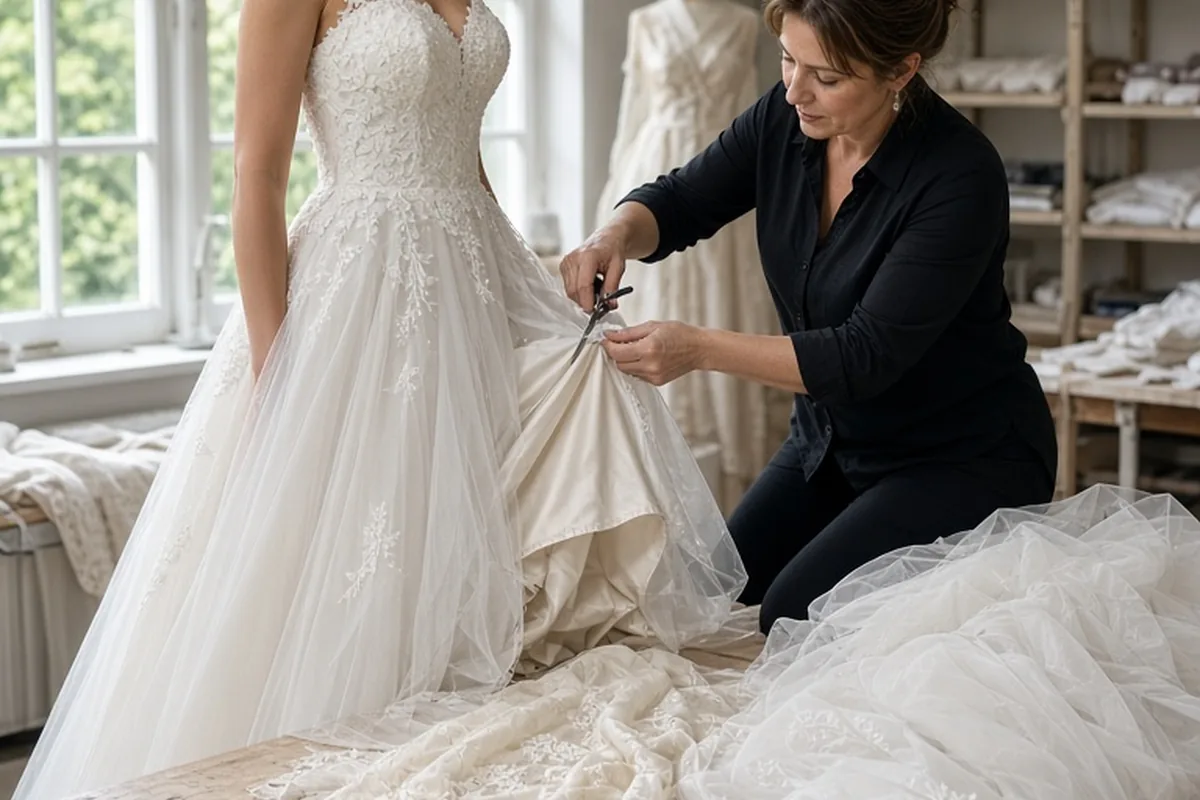
You can repurpose a wedding dress by tailoring it into wearable wardrobe pieces like cocktail dresses or separate skirts, converting the lace and satin into family keepsakes such as christening gowns or decorative pillows, donating it to charitable bridal foundations or bereavement programs, or framing preserved lace fragments as textile art. The best choice depends on your gown fabric, construction, emotional attachment, and whether you prefer everyday utility, display, or heirloom preservation.
A wedding gown is often one of the most thoughtfully chosen garments a person ever wears, yet most dresses spend decades enclosed in garment bags, hidden away in dark closets or attic boxes. Rethinking the life of your gown after your wedding day allows you to honor the memories attached to the fabric while giving the materials a renewed, practical purpose tailored to your personal style and household needs.
Assessing Fabric, Structure, and Condition Before You Cut
Before making any cuts or selecting a repurposing project, you must inspect the structural integrity and fiber content of your gown. Modern wedding dresses incorporate diverse materials ranging from natural silks and cotton laces to synthetic polyesters, nylon tulles, and rayon linings. Check the interior care tag to identify the exact composition, because synthetic fibers react differently to heat, dye, and stitching than organic fibers. For instance, heavy polyester satin holds crisp pleats well for structured projects, whereas lightweight silk chiffon requires delicate handling, specialized fine needles, and gentle tension settings to prevent snagging or fraying.
Condition is another critical factor that dictates project viability. Inspect the train, hemline, and underarms in natural lighting. Hemlines frequently pick up fine grit, outdoor debris, and asphalt grease, while underarms and bodices may harbor invisible sweat residues or body oils that oxidize into yellow stains over time. Even if a dress looks clean to the naked eye, it must undergo professional cleaning or gentle, fiber-appropriate hand washing before you begin cutting or sewing. Cutting into dirty fabric permanently sets stains into new seams, and existing fabric weakening around delicate lace or aged mesh can cause tears during construction.
Transforming the Gown into Wearable Modern Attire
One of the most practical ways to enjoy your gown after the wedding is converting it into wearable everyday or special-occasion clothing. A floor-length ballgown or A-line silhouette can be hemmed into a chic midi dress, knee-length cocktail dress, or tailored sheath suitable for anniversary dinners, rehearsal attendance, or formal parties. If the dress features a distinct bodice and skirt joined by a waist seam, a seamstress can separate the pieces to create a versatile two-piece ensemble. The structured corset or lace top can be paired with high-waisted trousers, jeans, or dark pencil skirts, while the skirt can be altered with a clean waistband to wear with seasonal knitwear.
Color transformation provides an entirely new aesthetic if you want to eliminate the bridal appearance of white, ivory, or champagne fabrics. Dyeing a wedding dress requires careful planning because garments are rarely constructed from a single uniform fiber. While silk, rayon, and cotton readily absorb acid or reactive fiber dyes, the polyester threads, synthetic zippers, and nylon mesh illusion panels often resist standard dyes and remain their original pale shade. If you decide to dye the garment, test an inconspicuous swatch or hem trimming first, or work with a professional dye house that can calculate the correct chemical formulations and temperatures needed to avoid fabric shrinkage or uneven color saturation.
Crafting Family Heirlooms and Keepsakes for Children
For couples planning a family or looking to create meaningful gifts for relatives, bridal fabric offers ample yardage for timeless heirloom garments. A wedding dress train and skirt provide generous expanses of silk, satin, organza, and lace that can be tailored into traditional christening gowns, baptismal rompers, infant blessing outfits, or baby dedication capes. Because babies have sensitive skin, soft cotton linings are typically added underneath the bridal satin or structured lace to ensure comfort while preserving the elegant external details from the original wedding garment.
Beyond christening wear, bridal textiles can be fashioned into smaller commemorative keepsakes that stay in the family across generations. Seamstresses can use satin panels and embroidered trims to construct ring bearer pillows, flower girl sashes, or delicate bonnet sets for future family ceremonies. You can also craft heirloom bridal handkerchiefs, wrap scraps of beaded lace around floral bouquets for siblings or future children on their own wedding days, or integrate patches of the gown into a multi-generational memory quilt alongside other meaningful family textiles.
Designing Custom Home Accents and Preserved Textile Art
If you prefer keeping your gown visible in your living space rather than tucked away in a closet, converting portions of the dress into home decor bridges the gap between memory preservation and functional design. Embroidered lace appliques, intricate bodice beading, and illusion back panels make striking visual displays when mounted inside shadow boxes or floating frames. To protect delicate lace from fading or yellowing over the years, use acid-free mounting boards and install museum-grade glass or acrylic with ultraviolet protection, hanging the finished frame away from direct sunlight and high-humidity areas.
Textile accents for living spaces can also be constructed from the sturdier sections of the gown skirt and train. Tailors can cut and stitch smooth satin panels into decorative throw pillows accented with original covered buttons, lace overlays, or delicate pintucks. For annual traditions, smaller offcuts of velvet, lace, and satin can be wrapped around holiday ornaments, tailored into festive tree skirts, or sewn into fabric covers for wedding photo albums and guest books. These decor pieces keep the sentimental value of your ceremony present in everyday life without occupying the substantial physical footprint of a full gown.
Donating Your Gown to Meaningful Charitable Causes
Donating your wedding dress allows you to support charitable causes and provide meaningful assistance to individuals and families during pivotal life moments. Several nonprofit organizations accept gently used bridal gowns to create bereavement attire for families experiencing infant loss. Known as angel gown programs, volunteer seamstresses deconstruct donated wedding dresses into miniature burial garments, offering comfort and dignity to grieving parents at no financial cost. These organizations often accept a wide variety of bridal styles, as even vintage or heavily altered gowns yield usable satin, tulle, and lace appliques.
Other philanthropic avenues include nonprofit bridal salons that resell donated designer and contemporary wedding dresses to fund charitable initiatives such as cancer research, housing assistance, or financial support for military families. In addition to bridal charities, local community theater companies, university drama departments, and high school stage arts programs frequently welcome wedding dress donations to expand their costume wardrobes. Before shipping or dropping off your dress, verify each organization's specific acceptance criteria, including their rules regarding professional cleaning receipts, maximum gown age, and current inventory needs.
Consigning, Reselling, or Renting to Extend the Garment Life Cycle
If you want to recover a portion of your original financial investment while promoting sustainable fashion, reselling or consigning your gown is an effective path. The secondhand bridal market values dresses that reflect recent fashion trends, typically within two to three years of their original release date. Prominent designer labels, standard sizing, and minimal permanent alterations generally command higher resale interest. Take detailed, high-resolution photographs showing the front, back, train, neckline, and any delicate embellishments, and clearly disclose your exact post-alteration body measurements so prospective buyers can assess the fit accurately.
Consignment offers two primary models: online peer-to-peer bridal marketplaces and local brick-and-mortar bridal consignment boutiques. Online platforms give your listing broad geographical exposure, though you are responsible for packaging, safe shipping, and customer communication. Brick-and-mortar consignment shops handle customer fittings, marketing, and transaction processing in exchange for a percentage of the final sale price. Alternatively, some owners choose to list their gowns on peer-to-peer garment rental platforms, generating recurring rental income over several years while retaining eventual ownership of the dress.
Choosing Between DIY Projects and Professional Seamstress Alterations
Deciding whether to tackle a repurposing project yourself or hire a professional depends on your sewing skill level, your equipment, and the structural complexity of the dress. Simple home projects like crafting throw pillows, assembling lace-filled holiday ornaments, making basic bouquet wraps, or mounting fabric inside a display frame require minimal specialized tools and make great weekend craft activities. If your project involves only straight cuts and basic seams on stable fabrics like polyester satin or medium-weight cotton lace, you can achieve clean results using standard sharp fabric shears, fine pins, and a domestic sewing machine.
Complex garment alterations, on the other hand, demand the expertise of an experienced bridal tailor or custom seamstress. Redesigning a boned bodice, resizing intricate illusion netting, moving hand-sewn beadwork, or reshaping armholes requires industrial-grade tension control and pattern drafting skills. If you plan to hire a professional, ask to see examples of previous dress alterations or reconstruction work. Bring clear reference photographs of your intended design, discuss how your gown's existing seam allowances and interior support structures will adapt to the new pattern, and request a written quote outlining labor, materials, and turnaround timelines before cutting begins.
Illustrative Scenarios
Repurposing a Ballgown into a Cocktail Dress and Heirloom Blanket
A bride with an A-line wedding dress featuring an embroidered lace bodice and a four-layer tulle skirt wanted to reuse her dress rather than store it in a box. She brought the gown to a local tailor, who detached the voluminous skirt from the bodice. The tailor hemmed the interior satin lining to knee length and created a tailored two-piece cocktail set by adding a clean waistband to the shortened skirt. The remaining fabric from the discarded train and surplus tulle layers was used to sew an infant baptismal blanket lined with soft organic cotton, edged with the original scalloped lace trim.
Key point: Deconstructing a multi-layered dress into separate components allows you to fulfill multiple goals at once, creating both a wearable modern garment and a cherished family heirloom from a single gown.
Frequently asked questions
Can any wedding dress fabric be dyed a darker color at home?
Not every wedding dress is suitable for home dyeing. Natural fibers like pure silk, cotton, and rayon absorb standard household dyes well, but synthetic polyester fabrics require specialized high-temperature disperse dyes. Additionally, synthetic construction threads and interior boning channels often do not absorb dye at the same rate as the main fabric, which can result in mismatched thread colors along the seams.
How should I prepare an older wedding dress before repurposing it?
An older dress should be carefully inspected for fabric degradation, dry rot, and oxidized yellow stains before you make any cuts. Take the gown to a professional dry cleaner experienced in vintage bridal fabrics to remove dust and body oils safely, or hand-wash sturdy synthetic fabrics in cool water using a gentle, pH-neutral textile detergent.
Is it possible to repurpose only part of the dress while keeping the rest intact?
Yes, you can selectively repurpose elements of your gown without destroying the entire garment. Many people choose to remove non-essential decorative elements, such as detachable trains, belt sashes, or a few lace appliques from an under-layer, using those smaller fragments for keepsakes while keeping the primary dress structure preserved.
What organizations accept wedding dress donations for infant bereavement garments?
Volunteer angel gown programs and nonprofit bereavement organizations across the United States accept bridal gowns to sew burial attire for infants. Check the specific donation guidelines on the organization's website before sending your gown, as some groups pause intake during periods of high inventory or require advance registration.
Your next step
Check your wedding gown's interior care label to confirm its fiber content and construction, then select either a simple starter craft like a framed lace display or book a consultation with a bridal seamstress to map out custom tailoring.