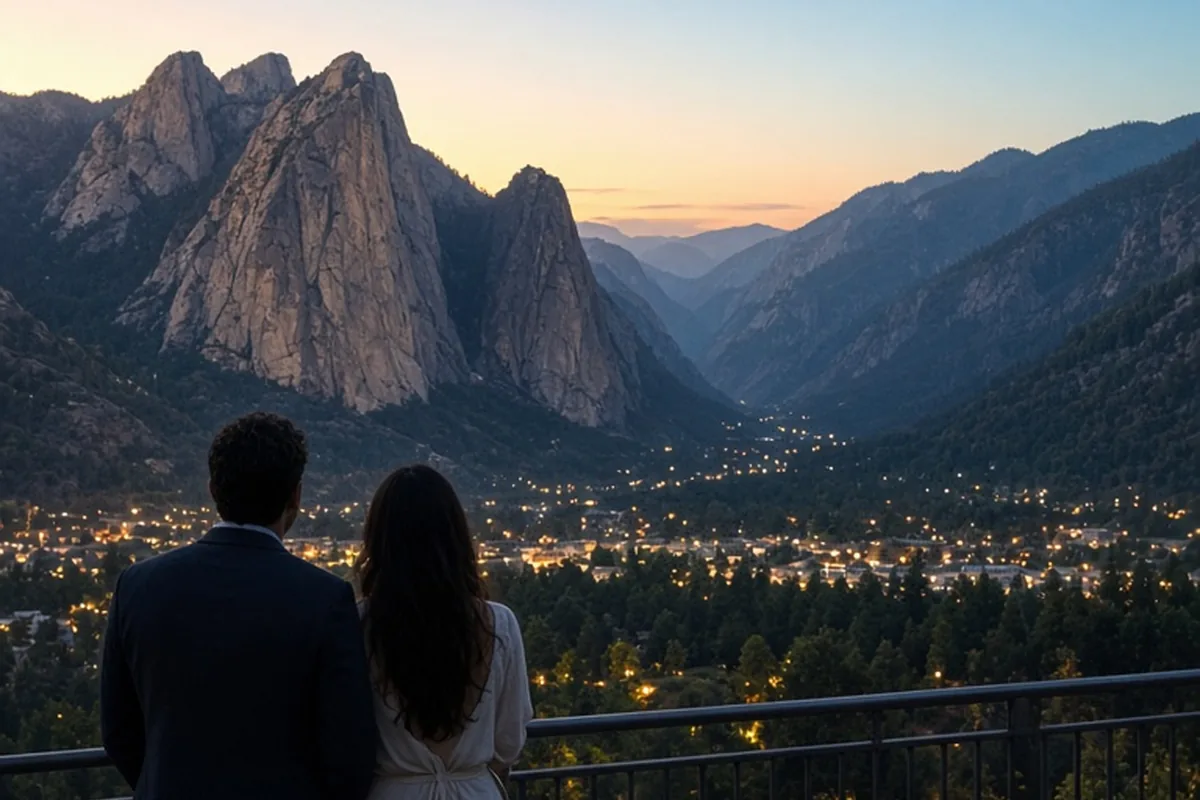
A wedding at a national park requires selecting an approved ceremony site, securing a Special Use Permit from the specific park administration, and adhering strictly to conservation rules like Leave No Trace. Because national parks remain open to the public, celebrations prioritize natural scenery, minimal infrastructure, and flexible timing over private venue amenities. Planning involves balancing seasonal weather, vendor vehicle access, guest travel, and site capacity caps set by federal rangers.
Exchanging vows against a backdrop of ancient granite cliffs, deep canyon valleys, or old-growth forests offers an unforgettable setting, but public lands operate under fundamentally different rules than traditional private venues. Planning a national park wedding requires a shift in mindset from designing a fully customized space to adapting your celebration to a protected natural environment.
Navigating National Park Special Use Permits and Ranger Regulations
Every national park in the United States manages commercial activities, gatherings, and ceremonies through a formal Special Use Permit system. This permit is a legal document granting permission to hold a gathering at a specific time, date, and designated location within federal boundaries. The permitting process exists primarily to protect sensitive natural and cultural resources while ensuring that general park visitors can still access public spaces without unreasonable disruption. Applying for this permit is typically the first concrete logistical step once you decide on a park, as dates and specific ceremony locations cannot be reserved informally.
The application process varies substantially between parks. High-visitation parks like Yosemite, Rocky Mountain, Great Smoky Mountains, and Zion frequently receive hundreds of wedding applications annually and maintain strict application windows, often opening between six and twelve months in advance of the event date. Smaller or more remote parks may accept applications on a rolling basis with shorter lead times. When you apply, the park wedding coordinator or special park uses office reviews your requested location, group size, proposed setup, and schedule against existing park maintenance, wildlife migration patterns, and seasonal road work.
Permit costs are divided into distinct administrative components: a nonrefundable application fee, an administrative processing fee, and, in many cases, a per-hour ranger monitoring fee if your group size or location requires on-site federal supervision. These fees do not rent or privatize the land. Even with an approved permit in hand, you are granted permission to hold an orderly ceremony in a shared public space, meaning rangers and park visitors retain standard access rights across adjacent trails, viewpoints, and roadways.
Choosing Between Designated Ceremony Sites and Gateway Venues
Most national parks restrict weddings to an explicit list of pre-approved ceremony locations. These sites are chosen by park biologists and rangers because they feature durable surfaces—such as wooden amphitheaters, paved overlooks, or hardened gravel pads—that can accommodate groups without trampling fragile alpine tundra, biological soil crusts, or rare plant habitats. Before building a design around a specific viewpoint seen on social media, you must verify that the viewpoint is currently on the park's authorized ceremony roster, as off-trail spots and sensitive wilderness areas are strictly prohibited for organized events.
Capacity limits at designated sites are strictly enforced and include everyone present: the couple, wedding guests, the officiant, photographers, videographers, and any accompanying musicians. If a designated overlook has a posted limit of twenty people, having twenty-one individuals present constitutes a permit violation. For couples planning a gathering larger than thirty to fifty guests, options inside park boundaries narrow quickly to historical amphitheaters, concessionaire-operated lodges, or developed picnic grounds.
Because national parks almost universally ban post-ceremony celebrations involving catered meals, alcohol service, dancing, and late-night lighting in outdoor natural zones, many couples adopt a split-location strategy. Under this model, the intimate ceremony occurs inside the park at an authorized natural overlook, followed by a full reception hosted at a private lodge, historic inn, event space, or restaurant in a nearby gateway town outside federal borders. This hybrid approach delivers the natural ceremony aesthetic while eliminating the logistical strain of managing dinner service under strict wilderness restrictions.
Managing Guest Access, Transportation, and Park Logistics
Transporting guests into a national park introduces unique variables that do not exist at urban or resort venues. First, a wedding permit does not automatically waive regular park entrance fees or vehicle pass requirements for your attendees. Every vehicle entering the park must pay the standard recreational entrance fee or present an applicable federal recreation pass. Furthermore, an increasing number of popular parks utilize timed-entry reservation systems or mandatory shuttle corridors during peak visitor months. You must communicate these requirements clearly to guests months in advance so they do not get delayed at entrance gates.
Parking at scenic trailheads and overlooks is limited and operates on a first-come, first-served basis for all park visitors. A Special Use Permit does not reserve designated parking spots for wedding parties unless specifically arranged with park staff at a developed group facility. To prevent guests from circling crowded lots or missing the ceremony, hiring a chartered commercial shuttle or organizing high-capacity carpooling from a central gateway meeting spot is often the most practical solution. Ensure that any commercial transportation company you hire holds the necessary Commercial Use Authorization required to operate within that specific park unit.
Accessibility must also be carefully evaluated when selecting your ceremony spot. While some designated locations are directly adjacent to paved parking areas with smooth ramps suitable for wheelchairs and elderly family members, other authorized sites require walking along uneven dirt trails with moderate elevation changes. Be direct with guests about walking distances, footing conditions, trail grades, and altitude. High-elevation parks like Rocky Mountain or Grand Teton can cause rapid dehydration, fatigue, and altitude sickness in visitors unaccustomed to mountain environments.
Adapting Decor and Floral Choices to Leave No Trace Principles
Environmental stewardship is central to national park regulations, and weddings must strictly conform to Leave No Trace principles. Traditional wedding decor elements are heavily restricted or entirely banned in federal parks. Items that can introduce foreign organic matter, litter the landscape, or harm native wildlife are universally forbidden. This includes throwing rice, birdseed, confetti, glitter, real or silk flower petals, and lighting sparklers or paper lanterns. Releasing live animals, such as butterflies or doves, is prohibited under federal environmental protection guidelines.
Floral arrangements face rigorous scrutiny to prevent the spread of invasive species and non-native seeds into protected ecosystems. Many parks prohibit dried floral installations, pampas grass, and seeded eucalyptus, which can shed viable non-native seeds onto the ground. Fresh bouquets and boutonnieres are generally permitted, but they must be assembled off-site without fragile elements that might drop during the ceremony. Additionally, floral arches, freestanding arbors, heavy drapery, and ground-staked structures are commonly restricted because inserting stakes into the ground can damage cultural resources, root systems, or fragile soils.
Furniture placement is similarly regulated. Most parks operate under a 'standing-room-only' guideline for outdoor scenic sites, permitting folding chairs only for elderly or disabled guests who cannot comfortably stand for the duration of the ceremony. Sound equipment faces strict decibel ceilings to preserve the natural soundscape for wildlife and surrounding visitors; amplified speakers, microphones, and generators are rarely permitted at outdoor scenic overlooks, making acoustic instruments or spoken vows the standard practice.
Hiring and Coordinating Park-Permitted Vendors
Working with wedding vendors in a national park requires verifying their professional authorization to operate on federal property. In addition to the couple's Special Use Permit, photographers, videographers, hair and makeup artists, and officiants who conduct business inside the park may need their own Commercial Use Authorization or specific commercial filming permits, depending on individual park policies. Before signing contracts, verify whether prospective vendors have previous experience working under national park regulations and whether they currently hold or are willing to acquire the necessary permits.
Photography schedules require careful coordination around park rules and visitor traffic. Professional photographers must stay on established trails and durable surfaces at all times; stepping off-trail into wildflower meadows, cryptobiotic soil fields, or past safety barriers to capture dramatic portraits is a violation of federal park rules and can result in citations or permit revocation. Photographers must also operate with portable, handheld equipment, as large lighting umbrellas, generator-powered setups, and extensive reflector arrays often require separate commercial filming permits.
Catering within primitive park sites is generally restricted to self-contained, cold-pack lunches or simple refreshments, provided all food is secured against wildlife. Open flames, charcoal grills, propane warmers, and outside catering setups are typically prohibited at scenic overlooks and restricted to designated group picnic pavilions equipped with bear-proof trash receptacles. If you intend to serve food inside the park, you must have a concrete plan for immediate waste removal, ensuring that every scrap, rind, wrapper, and bottle cap leaves the site with your party.
Building Comprehensive Weather and Environmental Contingency Plans
National park landscapes are subject to rapid, unpredictable environmental shifts that can disrupt wedding plans with little warning. Mountain parks experience sudden summer thunderstorms, lightning hazards, and rapid temperature drops, while desert locations face extreme afternoon heat, flash floods, and sandstorms. Coastal locations frequently encounter dense marine fog and sudden high tides. Furthermore, late-summer wildfires can cause dense smoke plumes, road closures, and localized air quality hazards that make outdoor ceremonies unsafe.
A reliable weather plan for a park wedding cannot simply be an umbrella. It requires identifying an authorized secondary indoor or sheltered location well ahead of time. Because park permits are usually location-specific and cannot be transferred to a different overlook on an hour's notice, having a contracted backup venue outside the park—such as a reserved room at a gateway lodge, a covered pavilion, or a private rental dining hall—is essential. You should also monitor road condition reports and trail closure notices on the official National Park Service website daily in the weeks leading up to your date.
Prepare yourself and your guests for environmental realities through practical attire choices. Long trains and delicate lace will collect dirt, pine needles, and dust on outdoor trails; sturdy footwear with adequate traction is necessary for navigating rocky paths before changing into formal shoes at the ceremony spot. Providing guests with weather-appropriate accessories, such as blankets, hand warmers, insect repellent, sunscreen, and plenty of drinking water, ensures that everyone remains safe and comfortable regardless of sudden weather swings.
Optimizing Ceremony Timing for Lighting, Solitude, and Public Sharing
Because national parks belong to the public, you cannot rope off an overlook or ask general visitors to leave the area during your ceremony. Expect hikers, families, and sightseeing groups to be present nearby. While most park visitors are polite and respectful when they encounter a wedding, tourists will occasionally pause to take photos or walk along adjacent paths. Embracing the shared nature of the park creates a relaxed atmosphere, while expecting total privacy in a popular national park viewpoint will lead to frustration.
To maximize intimacy and avoid heavy crowd density, schedule your ceremony during shoulder hours. Sunrise ceremonies offer distinct advantages: parking areas are virtually empty, trail traffic is minimal, wildlife activity is high, and the early morning light provides optimal conditions for photography without harsh midday shadows. If sunrise is impractical, late afternoon or early evening ceremonies just prior to golden hour also avoid the peak midday rush, though parking may still be constrained by lingering daytime visitors.
Choosing your wedding date during shoulder seasons—such as late spring before school vacations begin, or mid-autumn after summer travel winds down—significantly reduces overall visitor traffic. Midweek dates from Tuesday through Thursday consistently offer a quieter experience than holiday weekends or summer Saturdays. Combining a midweek date with an early morning timeline is the single most effective way to secure a tranquil, intimate national park ceremony.
Frequently asked questions
Can you have alcohol at a national park wedding ceremony?
Alcohol regulations vary by park and specific zone. While some concessionaire lodges and designated group picnic areas permit beer and wine, open containers and alcohol consumption are strictly prohibited at most outdoor scenic overlooks, trails, and sensitive wilderness ceremony sites.
Can we fly a drone to take aerial photos of our ceremony?
No. The National Park Service maintains a system-wide ban on launching, landing, or operating unmanned aircraft (drones) on all lands and waters administered by the agency to protect wildlife, ensure visitor safety, and preserve natural soundscapes.
How far in advance should we apply for a national park wedding permit?
Most parks accept applications up to twelve months in advance, though some operate on shorter seasonal or quarterly windows. Because popular sites and dates fill rapidly, submit your application as soon as your park's designated booking window opens.
Are our pets allowed to be part of the wedding ceremony?
In most national parks, pets are restricted to paved areas, parking lots, and developed campgrounds, and are strictly prohibited on unpaved trails and natural overlooks to protect local wildlife. Check your specific park's pet regulations before planning to include animals.
Your next step
Visit the official National Park Service website for your specific park, locate the Special Park Uses permit page, and review their authorized ceremony locations and current application processing timeline.