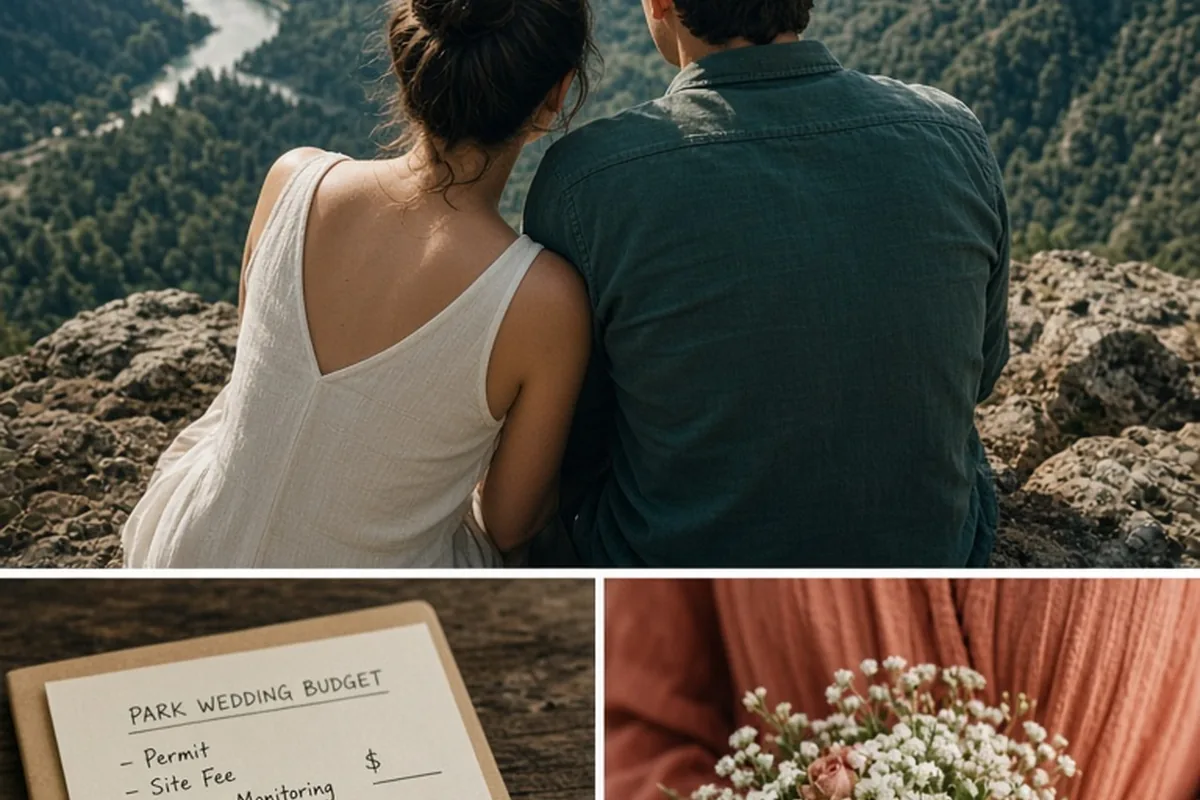
A national park wedding budget splits into park-mandated administrative fees and private event logistics. Park expenses include non-refundable Special Use Permit application fees, designated site reservation charges, hourly ranger monitoring fees, and guest entrance passes. The larger financial commitment stems from private vendor travel surcharges, specialized off-grid equipment rentals, Commercial Use Authorizations for photographers, and reception venue rentals in gateway towns, as full dining receptions are rarely permitted inside natural park zones.
Planning a ceremony on protected federal land offers unmatched scenery, but the financial blueprint differs fundamentally from a traditional all-inclusive wedding venue. Because the National Park Service manages public lands for resource preservation rather than private hospitality, couples do not pay a single venue package fee. Instead, you build a custom budget across administrative permit fees, strict conservation compliance requirements, remote vendor travel costs, and separate reception accommodations in nearby gateway communities.
Special Use Permit Application Fees, Site Fees, and Ranger Monitoring
Every national park requires a Special Use Permit (SUP) to hold an organized ceremony on park grounds, regardless of whether your guest list has five people or fifty. The permit structure generally contains two distinct components: a non-refundable administrative processing fee submitted with your initial application and a separate location impact or site fee once the park approves your date and specific spot. Processing fees cover the administrative labor required for park staff to evaluate environmental impact, crowd congestion, and wildlife disruptions for your proposed timeframe.
In addition to application and site fees, many parks assess an hourly ranger monitoring fee if your gathering reaches a specific guest threshold or occurs in an environmentally sensitive zone. A designated park ranger accompanies your party to manage public foot traffic, enforce trail preservation, monitor sound levels, and ensure you remain within your permitted boundary. When budgeting, contact the specific park's special park uses office to ask whether monitor fees are billed as a flat rate or calculated per hour from the ranger's dispatch time until the site is cleared.
Guest Park Admission, Vehicle Passes, and Group Transportation Costs
A standard Special Use Permit grants authorization for the ceremony itself, but it almost never waives general park admission fees for you or your guests. Each vehicle entering the park must pay the standard per-vehicle entrance fee or present a valid interagency pass at the entrance station. If your ceremony includes twenty cars, those cumulative entrance fees become an unexpected friction point and line item. Couples often choose to purchase digital entrance passes in advance for their attendees or provide pre-paid commercial shuttle transport to minimize traffic and guarantee smooth entry through busy gates.
Renting private group transportation, such as a passenger van, mini-bus, or commercial charter, introduces a separate cost layer with its own set of park regulations. Many national parks require commercial transport operators to hold an active commercial transit permit or pay a commercial vehicle entry fee at the gate. Furthermore, large passenger buses are restricted from navigating narrow, winding mountain switchbacks or parking at primitive trailheads. Verifying vehicle size limits with park dispatch before booking private transit prevents non-refundable deposit losses on charter buses that cannot legally access your ceremony overlook.
Commercial Use Authorization and Vendor Permit Requirements
Hiring professional vendors to work inside a national park involves administrative costs beyond standard service rates. Photographers, videographers, officiants, and floral stylists operating on federal land must comply with commercial filming and business regulations. In many park units, independent photographers must hold a valid Commercial Use Authorization (CUA) or pay a commercial photography permit fee. If your chosen photographer does not already maintain an annual CUA with that specific park, you or the vendor must cover the application fee to secure legal clearance before wedding day.
Failing to account for vendor compliance can derail a wedding schedule, as park rangers routinely check commercial permits at popular overlooks and trailheads. Vendors operating without active authorizations risk receiving citations or being instructed to leave the park immediately. When interviewing vendors, ask directly whether they currently hold an active permit for that park unit or how they bill for the administrative time and permit fees required to obtain one. Building these CUA expenses into your initial photography and vendor budget prevents sudden last-minute fees weeks before the event.
Off-Grid Ceremony Rentals, Leave No Trace Gear, and Sanitation Logistics
National park ceremony sites rarely provide built-in infrastructure such as chairs, shade structures, electricity, or private dressing areas. However, because parks enforce strict Leave No Trace standards, you cannot simply rent standard event furniture. Many park permits explicitly prohibit folding chairs on fragile tundra, arch structures anchored into the ground with stakes, floral runners with invasive seed potential, and battery-powered amplification systems. Budgeting for ceremony decor therefore requires purchasing or renting lightweight, park-approved, freestanding items that leave zero physical imprint.
Sanitation and waste management represent another critical operational cost for remote ceremony sites. If your selected overlook lacks public vault toilets, or if your guest count exceeds the capacity of primitive trailhead facilities, park regulations may require you to contract portable restroom trailers placed in designated parking areas outside the park boundary. Additionally, couples must supply dedicated trash packing supplies, shade umbrellas for elderly guests, and all-weather blankets. These individual utility purchases add up quickly compared to a traditional venue where climate control and restrooms are standard amenities.
Gateway Town Accommodations, Peak-Season Premiums, and Lodging Minimums
Lodging often represents one of the largest single budget line items for a national park wedding. In-park historic lodges and private cabins have limited availability, frequently booking out a full year in advance. If you and your guests stay in adjacent gateway towns, room rates fluctuate drastically based on tourist season, holiday weekends, and park visitation peaks. Summer and early autumn dates command substantial per-night rates, often accompanied by strict two- or three-night minimum stay policies that drive up overall travel expenses.
Securing group hotel room blocks in gateway towns requires careful timing and flexible contract terms. Many mountain and desert gateway hotels operate independently without corporate discount programs, meaning couples may need to guarantee a percentage of unbooked rooms through attrition clauses. When evaluating total accommodation costs, account for lodging tax surcharges common in tourism-heavy resort towns, mandatory resort fees, and early check-in fees needed to accommodate morning hair and makeup schedules before heading into the park.
Reception Venue Separation: In-Park Concessions vs. Private Gateway Spaces
National park permits allow couples to exchange vows, but they almost universally prohibit catered banquets, dance floors, open bar setups, and late-night music in natural outdoor areas. Consequently, your budget must account for a distinct, dedicated reception venue. The primary financial decision lies between booking a private event room through an authorized in-park concessionaire lodge or renting a private restaurant, event hall, or lodge dining room in an adjacent gateway town.
In-park historic dining rooms and concessionaire banquet spaces offer scenic convenience without requiring guests to exit the park gates after the ceremony. However, these concessionaire properties typically charge mandatory food and beverage minimums, service gratuities, and historic preservation surcharges. Conversely, booking a private gateway town venue may offer greater culinary flexibility and lower rental fees, but it introduces secondary transportation costs and extended travel time for guests navigating back through park checkpoints during peak tourist traffic hours.
Remote Vendor Travel Fees, Mileage Surcharges, and Per Diems
Couples frequently hire specialized wedding professionals—such as adventurous elopement photographers, mobile hair and makeup artists, and acoustic musicians—who travel from metropolitan areas several hours away. Bringing external vendors into remote national park regions adds travel-specific billable items that do not appear in standard local wedding contracts. These line items include standard mileage rates, round-trip drive-time hourly fees, regional flights, rental cars, and mandatory overnight lodging accommodations.
When collecting quotes from non-local vendors, request an itemized travel breakdown upfront rather than accepting a vague flat-rate estimate. Inquire whether their rate accounts for early-morning park departures for sunrise ceremonies, additional scouting days, and unpredictable traffic delays at park gates. Clarifying per diem food allowances and lodging arrangements in advance eliminates surprise post-event balance invoices and ensures your creative team arrives on-site rested and prepared for remote conditions.
Weather Contingency Deposits, Back-Up Venues, and Seasonal Gear
Outdoor environments in national parks are vulnerable to severe weather shifts, including unexpected snowstorms, high mountain wind gusts, sudden summer downpours, flash flooding, and seasonal wildfire smoke closures. Because the National Park Service does not provide indoor backup spaces or refund permit fees when weather makes a specific trail inaccessible, couples must budget for an independent weather contingency plan. This usually requires placing a non-refundable deposit on a covered pavilion, private lodge room, or indoor private dining space outside the park.
Beyond venue deposits, weather planning demands line items for functional outdoor gear to keep everyone safe and comfortable. This includes clear umbrellas for rain photography, wool wraps or parkas, rugged footwear changes, hand warmers for cold-climate overlooks, and specialized bridal gown alteration choices such as durable bustles that withstand dirt trails and granite rock surfaces. Allocating a dedicated five to ten percent contingency reserve within your total budget ensures you can pivot gracefully without unmanageable financial stress if trail conditions shift.
Frequently asked questions
Can I save money on a national park wedding by not pulling a Special Use Permit?
No. Holding an unpermitted wedding ceremony on National Park Service land violates federal regulations and risks park ranger intervention, immediate ceremony stoppage, and financial citations. Permit fees directly fund site management and protect your scheduled spot from conflicting commercial or park activities.
Are park admission passes included in the Special Use Permit fee?
Generally, no. A Special Use Permit covers only the administrative authorization to conduct your ceremony at a designated site. All entering vehicles, including those of couples, guests, and hired vendors, must pay standard park entry fees or show a valid interagency pass unless explicitly stated otherwise by park administration.
Why do vendors charge higher travel fees for national park weddings?
Vendors must account for long driving distances, poor cellular reception requiring manual navigation, pre-event site scouting, specialized off-grid equipment packing, and potential park gate delays. Additionally, vendors often need to stay in nearby gateway hotels the night before to ensure timely arrival for early morning lighting.
How far in advance should I submit my permit application and budget for fees?
Most national parks accept Special Use Permit applications between six and twelve months before the requested date, though application windows vary by park. Submitting your application as early as the park allows helps secure your preferred location and locks in current administrative processing fee rates.
Your next step
Contact the Special Park Uses office of your target national park today to request their current Special Use Permit application packet, fee schedule, and approved ceremony site directory before making non-refundable deposits on outside vendors.