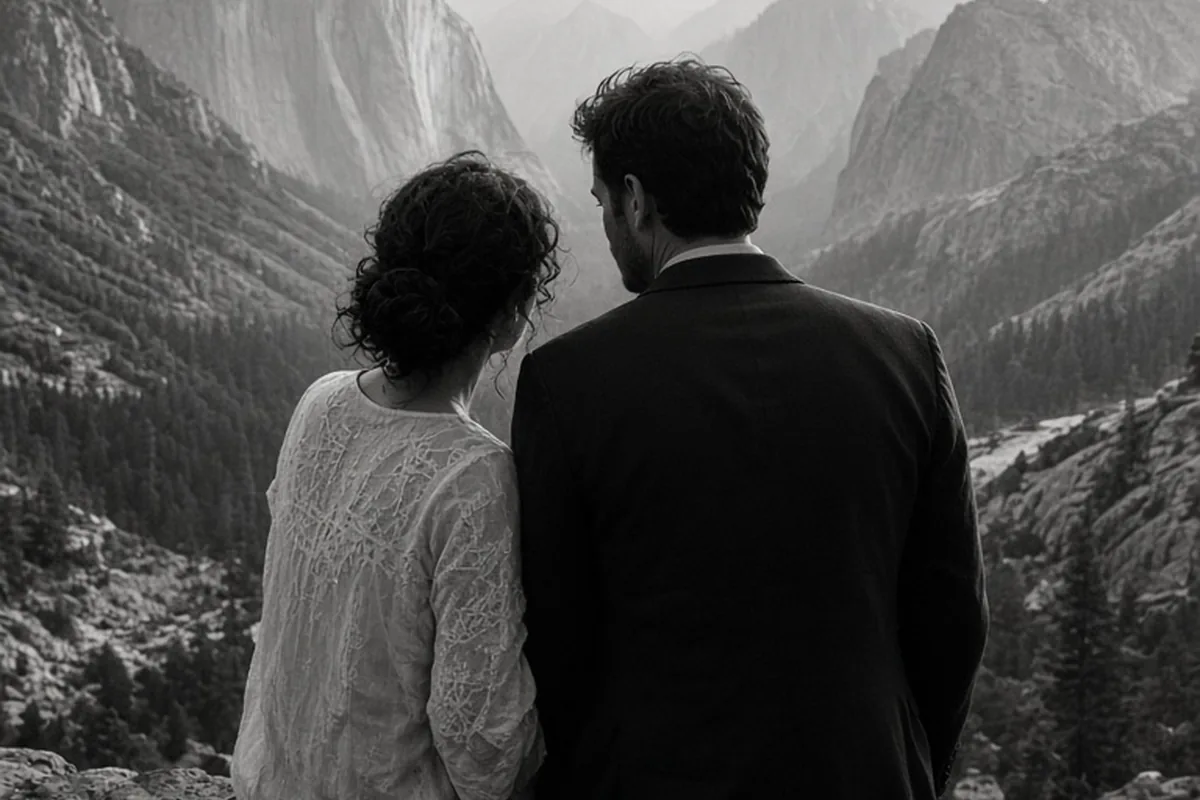
The hidden costs of a national park wedding go far beyond the initial Special Use Permit application. Couples frequently overlook mandatory hourly park ranger monitoring fees, commercial photography permits, per-vehicle guest entrance passes, portable restroom and silent generator rentals, remote vendor travel stipends, comprehensive liability insurance endorsements, and professional waste haul-out services required to comply with strict federal Leave No Trace conservation mandates.
Many couples choose a national park ceremony envisioned as a scenic, budget-friendly alternative to a traditional ballroom or private estate. While the natural vistas require zero decorative drapery, organizing a private event on protected public land introduces logistical layers and regulatory fees that can quickly reshape your bottom line.
Special Use Permits, Hourly Ranger Surcharges, and Application Layers
Securing permission to exchange vows on federal public land requires navigating administrative frameworks that vary significantly by park. Most couples anticipate the non-refundable Special Use Permit application fee, which covers the administrative labor required to process the paperwork. What frequently catches planners off guard is that this initial fee rarely covers the full cost of holding the event. If your wedding involves more than a handful of attendees or includes any temporary decor, parks routinely charge additional location use fees, event impact assessments, and mandatory staff monitoring surcharges.
Ranger monitoring fees are one of the most common budget surprises in federal park spaces. When an event takes place in an environmentally sensitive area, during peak visitor hours, or with a guest count exceeding basic elopement thresholds, the National Park Service may assign one or more dedicated rangers to supervise your ceremony. These rangers ensure attendees stay on designated trails, enforce parking restrictions, and protect native habitats from disturbance. This staffing is typically billed to the permit holder as an hourly rate that includes the ranger travel time to remote trailheads and pre-event site checks, accumulating rapidly for multi-hour gatherings.
Additionally, photography privileges often operate under a separate regulatory umbrella from the marriage ceremony itself. While amateur snapshots taken by guests fall under standard visitor use, hiring a paid professional photographer or videographer may trigger the requirement for a commercial filming or commercial still photography permit. Some parks bundle these permissions into your primary ceremony permit, whereas others demand distinct applications, separate administrative reviews, and independent processing fees for every commercial vendor operating on federal grounds.
Guest Vehicle Entry Passes, Transit Bottlenecks, and Shuttle Mandates
A Special Use Permit grants authorization to hold a structured event at a specified geographic location, but it almost never waives standard park entrance fees for your attendees. Every vehicle driven by a guest, officiant, caterer, or musician must possess a valid park entrance pass, day-use reservation, or digital vehicle pass to clear the entrance station. Expecting your guests to pay their own way can create awkward gate delays, so couples often purchase prepaid group passes or digital passes in advance, creating an administrative cost that scales directly with your guest list.
Physical parking constraints inside national parks introduce additional expenses that frequently mandate private transit arrangements. Most designated ceremony sites, such as scenic overlooks, historic amphitheaters, or pull-outs, possess strictly limited vehicle allocations. If your permit stipulates a maximum allowance of five vehicles at a site where forty guests are expected, your only compliant option is hiring a certified charter shuttle or private passenger van to transport guests in shifts from an external parking lot or gateway town.
Chartering commercial transit into a national park carries its own regulatory demands. Commercial passenger transportation companies operating within park boundaries often must hold commercial use authorizations or pay commercial gate entry tariffs based on passenger seating capacity rather than standard passenger vehicle rates. Coordinating these logistics also requires budgeting for idle vehicle time, since shuttles must wait in designated holding areas while your ceremony and formal group photographs conclude.
Off-Grid Utility Infrastructure: Portable Sanitation, Power, and Potable Water
National park ceremony locations are rarely connected to municipal utility grids. Even developed picnic areas or historic ranger station grounds may offer only basic pit toilets, seasonal cold-water spigots, and no exterior electrical outlets. When bringing guests into remote or semi-remote wilderness areas for an extended period, hosts are responsible for supplying safe, self-contained sanitation and utility systems that satisfy both guest comfort and park health guidelines.
Luxury restroom trailers are a common requirement for gatherings held in areas without plumbed facilities, but delivering them to public land involves extensive logistics. Septic-equipped trailers require level ground, vehicle access, and explicit park authorization before placement. If the park restricts heavy wheeled trailers in natural clearings, you may need to source specialized, self-contained portable units equipped with hand-washing stations and gray-water containment systems, which must be delivered, stabilized, serviced, and removed within tight, permitted access windows.
Power generation introduces another set of technical requirements and financial line items. National parks enforce strict acoustic conservation rules, meaning standard construction-grade generators are strictly forbidden due to wildlife disturbance and visitor experience impacts. If your event requires power for sound amplification, string lighting, or catering warming units, you must procure whisper-quiet inverter generators or high-capacity lithium battery power stations. Renting commercial-grade silent battery arrays or low-decibel fuel generators involves substantial delivery and rental deposits that exceed standard equipment hire costs.
Vendor Travel Stipends, Remote Haul Surcharges, and Strict Operational Windows
Hiring independent wedding vendors to work in a national park involves logistical challenges that private urban venues never present. Florists, hair and makeup artists, musicians, and rental companies must account for unpaved roads, spotty cellular connectivity, long transit times from regional airports, and vehicle wear. Consequently, professional vendors routinely quote higher base rates or add substantial remote service surcharges, mileage fees, and overnight lodging stipends to ensure their operational costs are fully covered.
The regulatory setup window permitted by park authorities further compresses your vendor schedule, driving up labor expenses. Unlike private venues that allow decor delivery early in the morning and teardown the following day, a national park permit often restricts physical site access to a tight block of two to four total hours. This compressed timeline leaves zero margin for error and prevents a lean crew from staging your setup gradually.
To deliver chairs, assemble an approved freestanding arbor, set up audio amplification, and strike everything down before the permit window closes, rental companies must deploy double or triple their standard staffing levels. Paying for additional crew members to achieve rapid setup and teardown within park-mandated hours turns what might seem like a modest equipment rental order into a significant labor expense.
Leave No Trace Compliance, Environmental Deposits, and Waste Hauling
Federal park authorities hold permit holders legally responsible for leaving event spaces in their exact pre-event state. This requirement goes far beyond picking up stray paper napkins; it encompasses strict Leave No Trace environmental standards designed to protect native flora, prevent wildlife habituation, and preserve geologic features. To ensure compliance, many national parks require refundable site restoration deposits that can be withheld if cleanup standards are not met.
Meeting these standards alters your floral and decorative options. Many parks forbid the introduction of cut flowers containing invasive seed heads, live potted plants with non-sterile nursery soil, baby's breath, dried grasses that can shed foreign seeds, or any loose botanicals like real rose petal pathways. Confetti of any kind, rice, sparklers, smoke bombs, and open flames are universally prohibited across federal lands. Choosing certified native blooms or acceptable artificial structures often carries design and sourcing premiums from specialized floral designers.
Trash handling is another significant operational expense. Public park dumpsters and recycling receptacles are strictly reserved for casual visitor use and are legally off-limits for private event waste. You must contract a professional waste removal service or pay catering staff specific hazard rates to bag, secure in wildlife-proof containers, transport, and properly dispose of all ceremony refuse at an off-site municipal waste facility outside the park boundary.
Special Event Insurance Endorsements and Backup Venue Redundancy
Commercial event insurance is a mandatory prerequisite for securing an event permit in almost every national park. Parks routinely require couples to provide a Certificate of Insurance demonstrating comprehensive general liability coverage, often with limits between one and two million dollars per occurrence. Crucially, the policy must explicitly name the United States of America, the Department of the Interior, and the specific National Park Service unit as additional insured parties, using exact statutory legal phrasing.
Securing an endorsement that satisfies federal legal standards requires specialized event liability carriers. Standard homeowner policies or basic single-day umbrella plans rarely include the comprehensive property damage, natural resource restoration, and bodily injury endorsements mandated by federal commercial services offices. Paying for policy revisions, expanded coverage limits, and specialized underwriting endorsements adds an administrative cost that must be finalized weeks before the permit will be officially issued.
Beyond insurance policies, the most substantial hidden expense of an outdoor park ceremony is the necessity of paying for a guaranteed indoor backup venue. Weather in national parks can change rapidly; high-altitude mountain passes experience sudden blizzards, desert basins face flash floods, coastal overlooks encounter dense fog, and western regions periodically close due to active wildfire threats or seasonal air quality emergencies. Furthermore, federal parks can close unexpectedly due to government funding lapses or emergency infrastructure repairs.
Because a national park permit contains no force majeure guarantees, refunds, or indoor contingency options, couples must contractually secure an off-park reception hall, private pavilion, or lodge meeting room to serve as an emergency shelter. Retaining this backup space requires non-refundable reservation deposits and facility rental fees that you must commit to pay regardless of whether you ultimately use the space on the day of the event.
Calculating Real Costs Before Submitting a National Park Permit Application
Before paying a non-refundable permit filing fee to a park commercial management office, prospective couples should build a line-item budget that isolates wilderness-specific logistics from standard wedding purchases. The core exercise involves determining whether the savings generated by using a public landscape outweigh the infrastructure investments required to make that public landscape legally compliant and physically functional for a group gathering.
Begin your planning process by reaching out directly to the special park uses coordinator for the specific park you are considering. Ask for their standard wedding policy packet, which details site-specific guest caps, seasonal access limitations, vehicle maximums, approved commercial vendors, and insurance minimums. Park rules differ substantially; what is permissible at an overlook in one park may be strictly prohibited in a meadow in another, making direct local inquiry the only dependable method for establishing clear financial expectations.
When gathering quotes from caterers, photographers, florists, and equipment rental suppliers, disclose the exact ceremony location coordinates and the specific access restrictions listed on your permit application. Request quotes that explicitly separate base service fees from remote transit line items, staff travel stipends, staging surcharges, and wait-time fees. Gathering transparent proposals up front prevents costly budgetary renegotiations late in your planning timeline.
Frequently asked questions
Can I use an America the Beautiful pass to cover my wedding guests entry fees?
An America the Beautiful pass covers the pass holder and passengers in a single non-commercial vehicle at per-vehicle fee areas. It cannot be used to pay for a convoy of private vehicles or commercial charter buses carrying wedding guests into the park.
Are chairs and arches permitted at national park ceremony sites?
Rules vary by specific park and site location. Many parks allow a limited number of folding chairs only for elderly or mobility-impaired guests, while prohibiting decorative arches or freestanding structures entirely to avoid damaging delicate root systems and vegetation.
What happens to our wedding permit fees if the park closes due to weather or natural disaster?
Permit application fees are universally non-refundable administrative processing charges. If an official closure prevents site access, parks will typically work to reschedule your date or refund site monitoring fees, but they do not reimburse couples for private vendor cancellations, transit, or backup venue expenses.
Your next step
Contact the Special Park Uses office of your target national park to request their current commercial fee schedule, vehicle restrictions, and approved site-specific vendor guidelines before signing any vendor contracts.