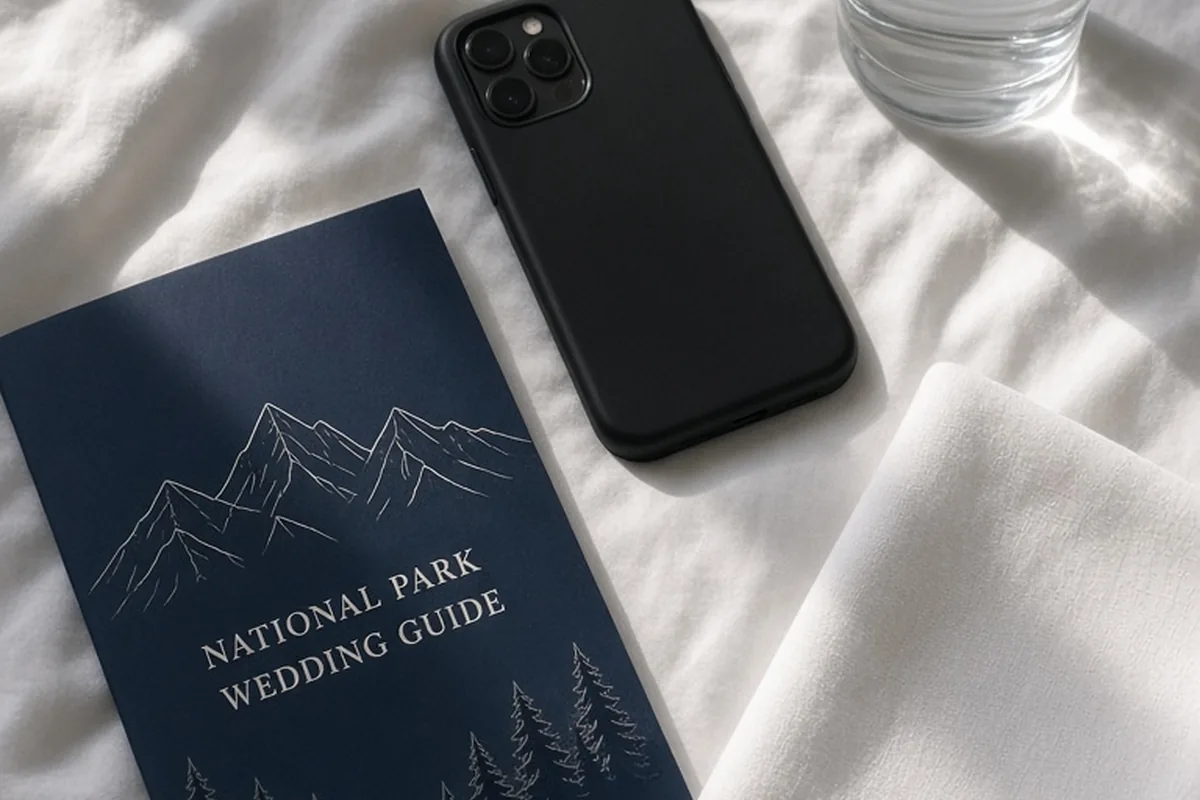
Planning a wedding at a national park requires couples to ask critical questions regarding Special Use Permits, designated ceremony site limits, seasonal road closures, and strict Leave No Trace environmental rules. You must clarify guest capacity caps, commercial photography permitting, amplified sound restrictions, and physical accessibility for guests. Addressing these operational, legal, and environmental constraints early ensures your ceremony is legally compliant, safe, and respectful of public wild lands.
Exchanging vows against the backdrop of dramatic mountain ranges, ancient forests, or desert canyons offers an unforgettable aesthetic, but public lands operate under completely different operational rules than private wedding venues. Because national parks exist primarily to preserve natural resources and serve the general public, hosting a private event requires navigating strict federal guidelines, unpredictable environmental conditions, and complex vendor logistics.
National Park Special Use Permit Regulations and Approved Site Inquiries
The first step in planning any public land ceremony is contacting the specific park's Special Park Uses office to understand their regulatory framework. Every national park establishes its own designated ceremony locations, annual calendar windows, and strict guest limits to prevent soil erosion and protect natural habitats. Couples often assume they can choose any picturesque overlook, only to learn that weddings are restricted to specific amphitheaters, developed picnic areas, or durable rock platforms. Inquiring about exact permit application windows is vital, as popular parks like Yosemite, Rocky Mountain, or Zion frequently book their permitted ceremony sites months or even a full calendar year in advance.
When speaking with the park's permit coordinator, couples must ask specific questions regarding permit processing times, non-refundable administrative fees, and whether a ranger must be present to monitor the gathering. You should ask if multiple permits are required if you plan to hold your ceremony in one sector of the park and take portraits with your photographer in another. Inquire directly about what happens if park maintenance, sudden trail washouts, or wildfire smoke forces a last-minute closure of your approved site, including whether the park offers an alternative permitted location or refunds the application fee.
Guest Transportation, Site Accessibility, and Safety Questions
National park infrastructure varies widely, ranging from paved, ADA-accessible boardwalks to rugged backcountry trails requiring steep hiking. Couples must evaluate their guest list honestly and ask detailed questions about parking limitations, trail terrain, and physical stamina requirements. Many scenic ceremony points have tiny pull-offs that accommodate only three or four vehicles, making carpooling or chartered shuttles mandatory. Asking the park whether chartered commercial buses or passenger vans are permitted on specific narrow switchbacks or scenic drives will prevent transportation bottlenecks on the wedding day.
Safety and comfort inquiries must extend to on-site amenities and environmental hazards. Ask where the nearest permanent or vault restrooms are situated relative to the ceremony spot, as many wilderness points lack running water or sanitation facilities within a mile radius. You must also consider how older relatives, young children, or guests with limited mobility will navigate uneven gravel, exposed tree roots, or steep drop-offs. Inquire about cellular reception at the site, as most remote park areas have zero mobile service, requiring clear offline maps, physical itineraries, and emergency protocols communicated to guests well ahead of time.
Leave No Trace Principles, Floral Restrictions, and Decor Prohibitions
Federal public lands strictly enforce Leave No Trace ethics, which directly impacts traditional wedding styling, floral choices, and decor setups. National park regulations generally ban any decorative element that could introduce invasive plant species, harm wildlife, or leave micro-trash in the ecosystem. Couples must ask park rangers exactly what materials are prohibited before ordering items from florists or rental companies. Traditional customs like throwing rice, birdseed, flower petals, or confetti are uniformly illegal, as are sparklers, smoke bombs, sky lanterns, and open candles due to high wildfire risks.
You must also clarify structural and floral guidelines with both the park office and your floral designer. Many parks prohibit live, non-native flowers or require florists to provide certified weed-free arrangements so invasive seeds do not enter the ecosystem. Ask whether freestanding structures like arches, chuppahs, or arbors are permitted, as stakes, ground-penetrating poles, or heavy bases that damage native cryptobiotic soil or fragile alpine vegetation are strictly prohibited. Inquire whether basic folding chairs are allowed on the ground surface, as some parks only allow chairs for guests with verified medical or physical accessibility needs.
Weather Contingencies, High Altitude, and Microclimate Preparations
Outdoor public land weddings expose couples and guests to rapid, unbuffered weather shifts that require thorough contingency planning. Desert parks can experience extreme heat waves during midday hours and plunge to near-freezing temperatures immediately after sunset, while high-altitude mountain locations are prone to sudden afternoon thunderstorms, lightning strikes, and snow flurries even in midsummer. Couples should ask park staff about typical seasonal microclimates, historic precipitation patterns, and the exact dates when high-elevation mountain passes or seasonal access roads close for the winter.
Planning for guest health at high elevation is an essential practical consideration. If your chosen ceremony overlook sits at 8,000 to 12,000 feet above sea level, unacclimated guests traveling from coastal areas can rapidly experience altitude sickness, severe dehydration, and shortness of breath. Ask yourself how you will supply sufficient drinking water, shade, wind protection, or warming layers when public shelters are unavailable. You must also establish a firm Plan B venue outside park boundaries, such as a rented private lodge or covered pavilion, in case severe weather or hazardous air quality makes an exposed outdoor ceremony dangerous.
Commercial Photography Permitting and Vendor Access Requirements
Hiring professional wedding vendors for a national park event involves an additional layer of commercial compliance that couples must actively manage. Most national parks require professional photographers, videographers, officiants, and hair and makeup artists who operate commercially on federal land to carry commercial general liability insurance and, in many cases, obtain a separate Commercial Filming Permit or Commercial Use Authorization. Couples must ask prospective vendors directly if they have prior experience working inside national parks and whether they hold the necessary commercial credentials.
Logistical constraints on vendors are significantly stricter in parks than at traditional wedding venues. You need to ask park officials whether vendors are allowed to bring auxiliary equipment like heavy lighting tripods, reflectors, drone cameras, or external battery packs onto the trail, noting that recreational drone use is illegal in all U.S. national parks. Inquire about vendor vehicle access during peak tourist seasons when parks utilize timed-entry vehicle reservation systems, ensuring your officiant and photography team have guaranteed gate entry passes that align with your ceremony schedule.
Audio Restrictions, Off-Grid Power, and Reception Logistics
Natural soundscapes are protected by federal law to preserve wilderness tranquility and protect native wildlife behaviors, which directly restricts audio equipment. Almost all national parks prohibit amplified sound, public address systems, microphones, and loudspeakers in natural and backcountry zones. Couples who desire music must ask park authorities whether small, unamplified acoustic instruments like an acoustic guitar, violin, or cello are permitted during the processional, and ensure that background natural noise like roaring rivers or howling wind will not completely drown out spoken vows.
Couples must also confront the reality that full-scale wedding receptions with seated dining, catering buffets, and dance floors are generally prohibited in natural park areas. Inquire whether your permit allows a basic, low-key picnic or if activities are restricted solely to the ceremony itself. If you envision a traditional reception with catering, dancing, and evening festivities, ask local hospitality providers about renting private event space, historical lodges, or private cabins located in gateway towns just outside the park entrance gates, allowing you to separate the scenic outdoor ceremony from the celebration.
Alcohol Policies, Food Storage Rules, and Waste Pack-In Pack-Out Protocols
Food and beverage service inside national parks is heavily regulated to avoid attracting wildlife and maintaining public safety. While toast champagne might sound appealing, open container laws and alcohol prohibitions apply to many park locations outside of licensed concessionaire lodges or specifically designated day-use pavilions. Couples must ask the permit coordinator whether alcohol is legally permitted at their specific ceremony site and what types of liability insurance or special beverage permits are required if service is allowed.
Managing food waste requires strict adherence to pack-in, pack-out protocols and regional wildlife safety rules. In parks populated by bears, ravens, or rodents, leaving food unattended even for a few moments can result in aggressive animal behavior and severe fines. Ask what waste containment measures you must supply, such as odor-proof trash bags, bear-resistant containers, and designated cleaning gear. Because parks rarely provide dedicated trash dumpsters at remote trailheads, you must assign specific individuals or hire a coordinator to pack out all floral debris, packaging, and food scraps immediately after the event.
True Budget Variables, Park Fees, and Operational Cost Calculations
While holding a wedding on public lands is often perceived as a low-cost alternative to traditional venues, the overall budget can escalate quickly once logistical requirements are calculated. The basic Special Use Permit fee generally covers only administrative review costs, meaning couples must ask about supplementary operational charges. These can include hourly monitoring fees for stationed park rangers, site rehabilitation deposits, commercial vehicle entrance fees, and individual per-vehicle gate entry charges for each attending guest who does not own an annual park pass.
Beyond direct park fees, remote wilderness weddings introduce substantial secondary expenses that couples must carefully calculate. Remote vendor travel surcharges, mileage fees, and multi-night lodging stipends for photographers and officiants can add significant expense. Additionally, chartering private guest shuttles to navigate tight parking restrictions, renting portable restroom trailers where permitted, purchasing comprehensive day-of event liability insurance, and reserving an indoor backup venue all factor into the true total cost. Requesting itemized quotes from gateway vendors and explicit fee schedules from park offices ensures an accurate financial forecast.
Frequently asked questions
How far in advance should couples apply for a national park wedding permit?
Most national parks accept Special Use Permit applications between six and twelve months before the requested date. However, popular parks with high demand or strict site caps may open their application windows on specific calendar dates or use lottery systems. It is best to contact the park's permit office at least nine to twelve months in advance to confirm exact application deadlines.
Can we set up chairs, an arch, or a tent for our national park wedding?
Structural setups like tents, covered canopies, and ground-staked arches are almost universally prohibited in natural areas to prevent soil erosion and vegetation damage. Some parks allow a limited number of freestanding folding chairs placed strictly on durable surfaces like rock or pavement for elderly or disabled guests, but broad decorative structures are typically banned.
Are our guests required to pay park entrance fees if they are attending our wedding?
Yes, a wedding permit covers the legal authorization to hold your ceremony at a designated site, but it does not waive standard park entrance fees for individual vehicles. Guests must pay standard per-vehicle entry fees at the gate or present valid federal recreation passes like the America the Beautiful pass, unless the park explicitly includes entrance waivers in a managed commercial shuttle arrangement.
Can we bring our pet to participate in our national park ceremony?
Pet policies vary by park, but most national parks strictly restrict domestic animals to paved areas, developed campgrounds, and parking lots to protect wildlife and prevent trail degradation. If you choose a ceremony site located along a natural dirt trail or in a backcountry zone, pets are generally prohibited from attending.
Your next step
Contact the Special Park Uses coordinator at your chosen national park today to request their official wedding guidelines, approved site list, and current Special Use Permit application form.