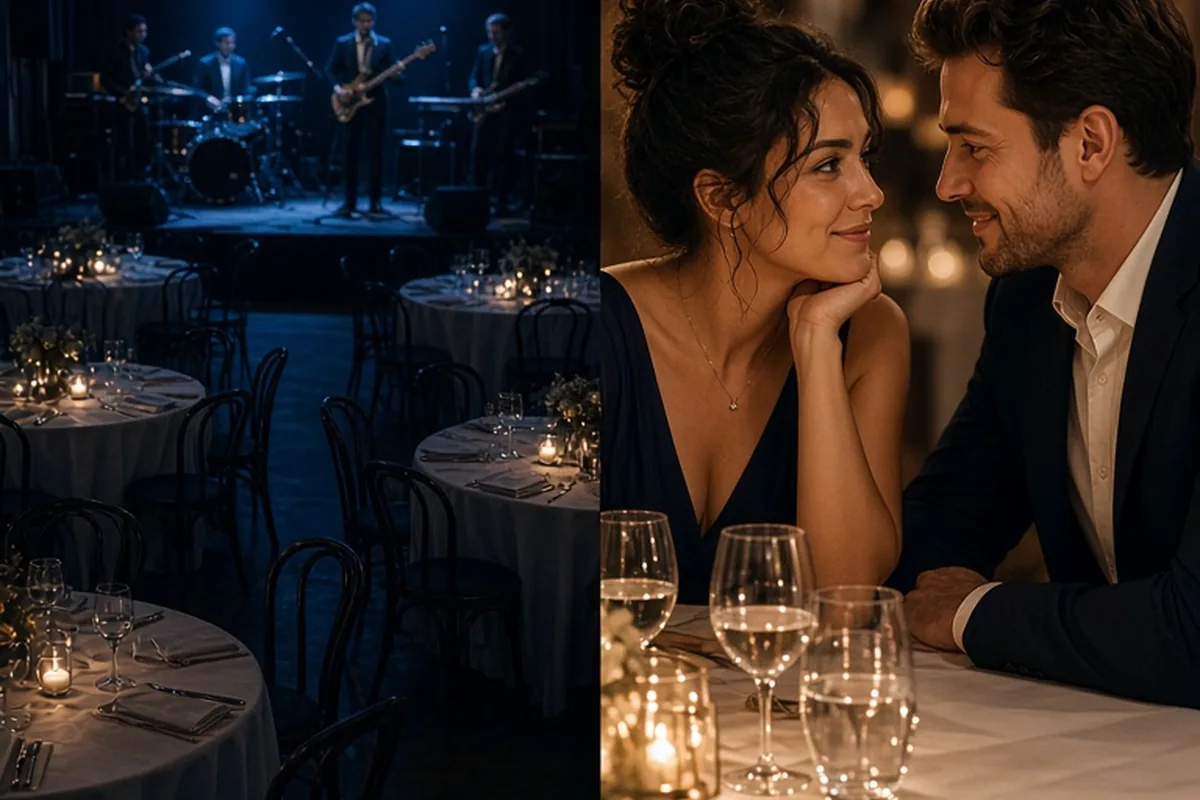
For a 100-guest wedding, a four- to seven-piece band typically provides the ideal balance between full-rhythm dance energy and comfortable volume control. This ensemble size usually includes a rhythm section—drums, bass, and keys or guitar—fronted by one or two lead vocalists. It delivers dynamic live arrangements without overwhelming mid-sized reception halls, occupying excessive floor space, or drowning out conversation at nearby guest dining tables.
A guest list of roughly one hundred people creates an intimate yet vibrant reception atmosphere, but it also introduces specific acoustic and spatial constraints. Choosing live entertainment for this group size requires careful attention to room volume, stage footprint, and musician configurations so your reception feels energetic rather than uncomfortably loud or cramped.
Determining the Right Band Size for a 100-Person Reception
A 100-guest gathering sits squarely in the mid-sized wedding category. For this crowd size, a four- to six-piece ensemble represents the practical sweet spot. A standard four-piece setup features drums, electric bass, electric guitar or keyboards, and a lead vocalist who may also play an instrument. Expanding to five or six pieces usually introduces a dedicated second vocalist and an additional melodic instrument, such as a saxophone or dedicated keyboardist. This range produces a complete, full-spectrum live sound capable of covering pop, rock, funk, Motown, and modern dance hits with authentic drive and rhythmic weight.
Opting for a smaller lineup, such as an acoustic duo or trio, can work well for cocktail hours or laid-back dinner settings, but these groups often struggle to maintain sustained dance-floor momentum during the reception peak. Without a dedicated bassist and full drum kit, smaller ensembles lack the low-end physical energy that naturally invites people to dance. Conversely, hiring an eight- to twelve-piece showband complete with a multi-piece horn section and three vocalists frequently presents practical problems for a 100-person event. Large ensembles can easily overpower a room sized for one hundred people, both visually and acoustically, while leaving guests feeling crowded off their own dance floor.
Vocal flexibility is another crucial factor when choosing your lineup size. Having at least two distinct vocal ranges—typically a male and a female lead vocalist—vastly broadens the variety of genres your band can convincingly cover without resorting to backing tracks. In a five- or six-piece group, shared vocal duties also prevent singer fatigue across a three- to four-hour reception schedule, ensuring vocal quality remains crisp and engaged through the final encore.
Managing Room Acoustics and Decibel Levels in Mid-Sized Spaces
Sound behaves distinctly in spaces designed to host one hundred seated guests. These rooms typically range from 1,800 to 3,000 square feet, depending on whether dancing, dining, and bar service share a single room or occupy adjoining areas. In these environments, hard surfaces like exposed brick, polished hardwood floors, tall glass windows, and industrial concrete ceilings cause sound waves to bounce erratically. Without careful audio management, live cymbals and brass frequencies quickly blend into a harsh wall of noise that discourages older guests from staying in the room.
The acoustic drum kit sets the baseline volume for any live ensemble. Because acoustic cymbals and snare drums cannot simply be turned down with a volume knob, professional wedding bands accustomed to mid-sized events rely on specific dampening techniques. These include using custom acoustic drum shields, hot-rod drumsticks, specialty dampening gels, or electronic hybrid kits. Electronic percussion modules allow the drummer to trigger high-quality sampled drum sounds while giving the sound technician complete control over the master output level, keeping the overall mix balanced and conversation-friendly.
Speaker placement and amplification design also dictate how comfortable the room feels throughout the evening. High-end acts utilize digital sound boards coupled with compact, vertical line-array speaker systems rather than bulky, directional speaker stacks. Line-array towers disperse audio evenly across a wide horizontal field at a consistent volume, preventing the front row of guest tables from being blasted with high decibels while ensuring guests in the rear can still clearly hear speeches and lead vocals.
Venue Stage Footprint, Power Supply, and Floor Plan Logistics
A common pitfall when booking live entertainment for 100 guests is underestimating the physical real estate required by musicians and their gear. As a rule of thumb, each performer requires approximately twenty to twenty-five square feet of operational space. A five-piece band generally demands a stage or clear performance footprint measuring at least twelve feet deep by sixteen feet wide. Adding a sixth or seventh performer or a full horn section pushes that requirement to twelve by twenty feet. If your venue features a fixed stage, measure it carefully; if the band performs flat on the floor, that space directly subtracts from guest circulation and table placement.
Dance floor sizing must coordinate with both the guest count and the band footprint. For a 100-guest wedding, event planners typically anticipate thirty to fifty guests dancing simultaneously at any given point. This requires a dance floor between 144 and 225 square feet (such as a 12x12 or 15x15 foot floor). If your band takes up too much floor area, the dance floor must either be pushed uncomfortably close to guest dining tables or shrunk down, resulting in an overcrowded, awkward layout.
Electrical infrastructure requires direct verification with your venue coordinator well before booking. A full live band with a professional public address system, floor monitors, backline guitar amplifiers, and performance lighting cannot operate safely on a single household circuit. Most professional ensembles require two to three separate, dedicated 15-amp or 20-amp circuits positioned near the staging area. Sharing these circuits with catering warmers, coffee makers, or photo booths risks tripping circuit breakers in the middle of a set.
Structuring Music Across Ceremony, Cocktail Hour, and Reception Sets
Hiring a wedding band for 100 guests does not mean the full ensemble needs to play continuously from guest arrival to the final departure. A practical approach involves contracting a hybrid entertainment package where individual musicians handle early portions of the day before assembling as a full unit for the party. For instance, a solo guitarist or keyboardist can perform prelude and processional music for the ceremony, followed by an instrumental jazz duo or trio providing background texture during the cocktail hour.
When the reception begins, set structuring becomes essential for pacing the evening. Standard contracts typically cover a four-hour reception block divided into distinct performance segments. Bands generally perform two longer sets of 75 to 90 minutes or three shorter sets of 45 to 60 minutes, separated by scheduled breaks. During these breaks, the band should provide curated digital playlist playback through their main audio system, maintaining uninterrupted ambient music so the room never falls completely silent.
You can also coordinate with your bandleader to incorporate live background sets during dinner service. A stripped-down, low-volume set featuring soul ballads, jazz standards, or acoustic arrangements gives guests a live music experience while they dine, without competing with table conversation. Once formal speeches and dessert conclude, the full rhythm section ramps up the energy for high-impact dance sets that carry through the end of the night.
Evaluating Wedding Band Quotes and Key Cost Drivers
Wedding band pricing varies significantly based on geographic market, seasonal demand, day of the week, and the specific composition of the group. Because quotes reflect multiple distinct operational costs rather than a simple hourly rate, evaluating proposals requires understanding what is included in the bottom line. A comprehensive quote generally incorporates the musicians' rehearsal and performance fees, sound and lighting equipment rentals, travel expenses, load-in and soundcheck labor, and administrative coordination.
The presence of a dedicated sound engineer is one of the most critical line items on any live band proposal. While some smaller bar bands mix their sound from the stage using tablet applications, high-end private event bands employ an off-stage sound technician. This technician monitors room acoustics throughout the night, makes immediate adjustments as the room fills with bodies, controls microphone levels for your toasts, and enforces venue-mandated sound limits without interrupting the performance.
When collecting estimates, request itemized breakdowns to avoid unexpected post-booking expenses. Confirm whether the quoted price includes master-of-ceremonies duties, wireless microphones for dinner toasts, custom arrangement fees for special dances outside the band's standard repertoire, and staging or dance floor lighting. Additionally, remember to budget for contractual hospitality riders: standard agreements typically require the client to supply hot vendor meals and non-alcoholic beverages for every performer and crew member during events lasting longer than four hours.
Vetting Live Performance Footage and Auditioning Musicians
Vetting a band requires looking beyond highly polished promotional sizzle reels. Many promotional videos are filmed in controlled soundstages with pre-recorded, auto-tuned studio audio dubbed over lip-synced footage. While these videos demonstrate visual style and stage presence, they provide very little insight into how the ensemble actually sounds during a live, unpredictable wedding reception. Request unedited, single-camera live recordings captured at actual weddings or private events to assess true vocal pitch, timing, and crowd engagement.
Another vital distinction lies between fixed-roster bands and agency collective rosters. A fixed-roster band consists of the same core group of musicians who rehearse and perform together on a weekly basis, resulting in tight transitions, natural stage banter, and intuitive musical chemistry. In contrast, large booking agencies often market a single brand name while assembling rotating rosters of freelance session players depending on who is available on your date. If working with an agency, verify in writing which specific lead vocalists and rhythm players are contracted for your date.
Attending a public showcase or local club gig remains the gold standard for auditioning live wedding acts. Many premier event bands host periodic showcase nights specifically for prospective clients. Experiencing the band in person lets you observe how they handle song transitions, manage volume levels between numbers, read the room, and project enthusiasm. It also gives you an opportunity to meet the bandleader, who will ultimately act as the musical director and public face of your reception program.
Contract Rider Essentials, Sound Curfews, and Cancellation Terms
Before executing a contract, ensure the document clearly defines contingency protocols and local regulatory compliance. Many historic venues, residential properties, and outdoor event spaces enforce strict sound curfews or decibel caps—often limiting volume to between 80 and 85 decibels at the property line after a specific evening hour. Your contract should explicitly state that the band agrees to adhere to all venue-specific sound limiters and curfews without altering their agreed performance schedule.
Cancellation, postponement, and replacement clauses protect your investment against unexpected disruptions. The contract must detail how the company handles illness or emergencies involving key personnel. A reputable group will outline a clear understudy or substitute musician network, guaranteeing that an equally skilled, pre-vetted professional steps in if a lead singer or drummer cannot perform. Verify that the company maintains comprehensive commercial general liability insurance, as most professional venues require a Certificate of Insurance naming them as an additional insured before allowing vendors onto the property.
Finally, review the load-in, setup, and soundcheck timelines stipulated in the agreement. Live bands typically require two to three hours before guest arrival to unload heavy road cases, route cables, assemble drum risers, and conduct line checks. Confirm that your venue rental window accommodates this setup window without incurring early-access facility fees, and ensure soundchecks finish at least thirty minutes before guests enter the space.
Frequently asked questions
Can a 100-guest wedding accommodate a horn section without being too loud?
Yes, provided the venue has adequate square footage and soft furnishings to absorb acoustic reflections. A single saxophone or a two-piece horn section (trumpet and sax) can integrate comfortably into a mid-sized room when the band uses proper microphone baffling and directional sound management.
How much stage space does a standard 5-piece wedding band require?
A five-piece band generally requires an area measuring roughly twelve feet deep by sixteen feet wide. This footprint accommodates the drum kit, keyboard station, amplifier setups, microphone stands, and floor monitors while leaving enough clearance for performers to move naturally.
Is a live band or a DJ better suited for a 100-guest reception?
Neither choice is inherently superior; the decision depends on your musical priorities and budget. A live band delivers visual excitement, acoustic presence, and spontaneous energy that engages smaller crowds, whereas a DJ offers broader genre versatility, continuous playback, and a much smaller equipment footprint in tight venues.
Do wedding bands provide their own audio and lighting equipment?
Most professional wedding bands provide a self-contained production package, including the main public address system, stage monitors, microphones, and basic dance-floor wash lighting. Always verify whether production is included in the base fee or billed as an auxiliary production line item.
Your next step
Request the exact performance footprint and electrical specifications from your venue manager, then ask prospective bandleaders for raw, unedited live performance video before signing a contract.