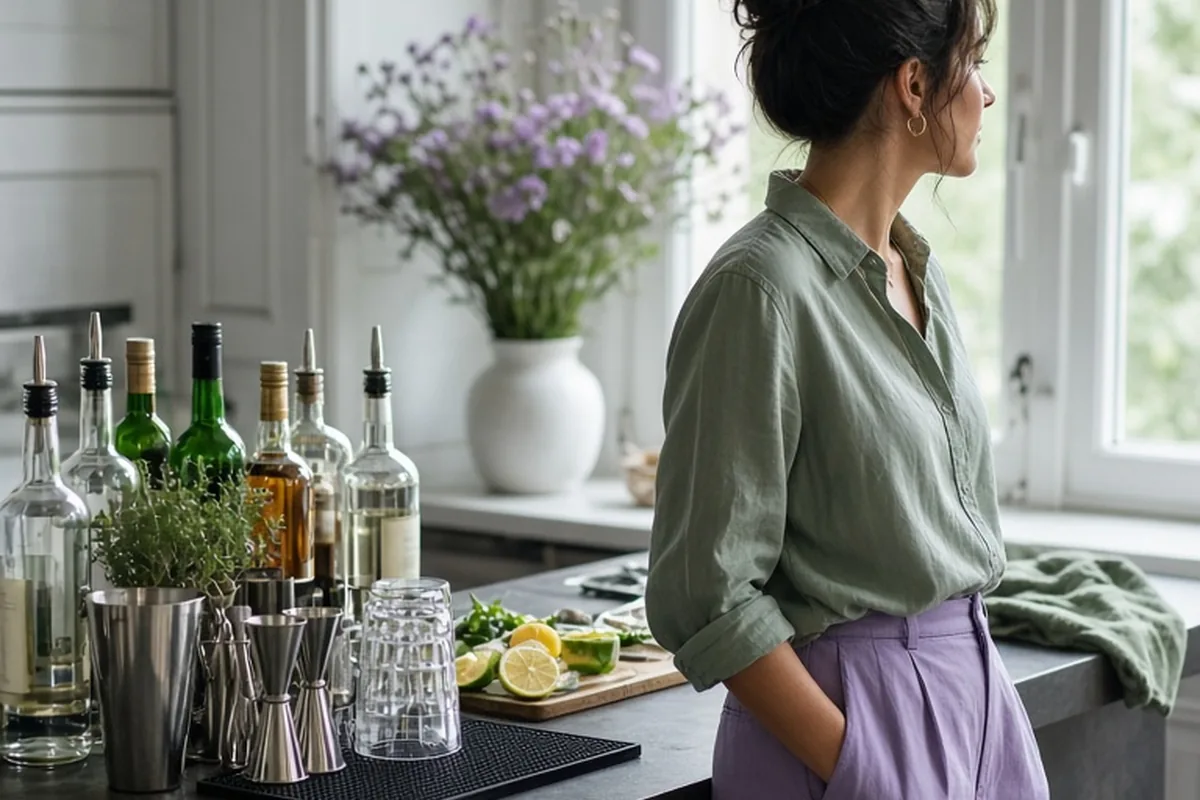
A complete wedding bar checklist covers core beverages (liquor, beer, wine, mixers), fresh garnishes, chilling ice, dedicated glassware or drinkware, and physical service tools (shakers, openers, pourers, ice scoops, and bar mats). It also accounts for non-alcoholic stations, recycling bins, and legal essentials like event permits and licensed bartending staff. Tailoring this checklist to your guest count, reception timeline, and venue policies ensures smooth service without unexpected shortages or surplus.
Organizing bar service for a wedding reception requires balancing guest preferences, venue rules, and practical beverage quantities. Whether stocking a full open bar from scratch at a private estate or coordinating supplementary items with an on-site caterer, having a thorough itemized list prevents frantic day-of store runs and long queues at the bar.
Core Beverage Inventory: Spirits, Wine, Beer, and Non-Alcoholic Mixers
A well-rounded wedding bar balances popular base spirits, versatile wines, crowd-pleasing beers, and a wide array of mixers. For a full open bar, the foundation typically consists of six primary spirits: vodka, gin, light rum, tequila, aged whiskey or bourbon, and triple sec or an orange liqueur. Selecting versatile, mid-range brands rather than top-shelf specialties usually delivers consistent quality in mixed drinks while keeping the overall budget manageable. If you opt for a modified bar instead of a full spirits lineup, you can narrow this selection down to two signature liquors paired with your wine and beer program.
Wine selections should cover broad flavor profiles to complement your dinner menu and please diverse palates. Standard bar setups include at least one dry red wine (such as Cabernet Sauvignon or Pinot Noir), one crisp white wine (such as Sauvignon Blanc or Pinot Grigio), and a sparkling option (such as Prosecco, Cava, or Champagne) for toasts. In warmer weather or daytime outdoor settings, adding a dry rosé provides a refreshing option that guests frequently gravitate toward.
Your beer and cider lineup should feature two to three distinct varieties. A crisp, easy-drinking pilsner or light lager serves as the universal baseline, paired with a popular craft selection such as an India Pale Ale (IPA) or a seasonal wheat ale. Offering a hard cider or hard seltzer provides an essential gluten-free alternative for guests who do not consume malt beverages.
Mixers and non-alcoholic basics tie the entire drink menu together. Ensure your inventory includes club soda, tonic water, cola, diet cola, lemon-lime soda, ginger beer, cranberry juice, orange juice, and grapefruit juice. Foundational bar pantry items such as aromatic bitters, standard simple syrup, grenadine, and fresh citrus juices (lemon and lime) are mandatory for balancing cocktails. For garnishes, stock whole lemons, limes, and oranges for slicing, along with cocktail cherries, green olives, and fresh mint leaves.
Essential Barware, Glassware, and Physical Service Tools
Bartenders require dedicated commercial tools to keep drink service fast, accurate, and hygienic. Behind each active service station, supply two sets of stainless steel Boston shakers, Hawthorne strainers, fine mesh strainers, double-sided jiggers (measuring 1 oz and 2 oz increments), and long-handled bar spoons. Sturdy muddlers, citrus hand presses, channel knives for twists, and paring knives with a cutting board allow staff to prepare fresh elements on demand. Keep multiple heavy-duty bottle openers, churchkey openers, and waiter-style corkscrews at every station so bartenders never waste time searching for an opener.
Glassware planning depends on your venue rules, budget, and aesthetic goals. If using real glassware, plan on distinct glass types: 10-ounce to 12-ounce rocks glasses for neat pours and short mixed drinks, 12-ounce to 16-ounce highball or Collins glasses for tall cocktails and sodas, all-purpose stemmed or stemless wine glasses, and champagne flutes if you are hosting a synchronized toast. If your venue prohibits glass near patios or pools, select high-grade, rigid, clear shatterproof plastic drinkware rather than thin disposable cups that bend under the weight of ice.
Back-of-house utility gear is just as vital as front-facing barware. Bartenders need rubber bar spill mats to line the counter, speed pourers for high-volume liquor bottles, bar towels for constant wiping, and deep bus tubs for clearing dirty glassware. Plan for large commercial trash cans with heavy-duty liners, separate blue recycling bins for glass and aluminum, and sturdy non-slip rubber floor mats to ensure staff safety behind the counter.
Estimating Beverage Quantities and Pour Ratios
Accurate drink estimation prevents the dual risks of running out of alcohol mid-reception or overspending on excess product that cannot be returned. The industry standard formula budgets for one drink per adult guest per hour of reception time, plus one additional drink per guest to account for the initial surge during the cocktail hour. For example, for a five-hour event with 100 drinking guests, you should plan for roughly 600 total servings across all beverage types.
Once you determine total servings, divide that figure across product categories based on your guest demographics. A standard starting baseline for a full bar is 45 percent wine, 30 percent beer, and 25 percent liquor and signature cocktails. If your guests lean heavily toward craft beer or premium cocktails, adjust those percentages accordingly. To translate servings into purchase units, remember that a standard 750-milliliter bottle of wine yields five 5-ounce glasses, a 750-milliliter bottle of liquor yields roughly sixteen 1.5-ounce pours, and a standard half-barrel keg delivers approximately 165 twelve-ounce pours.
Factor in an extra 10 to 15 percent buffer for breakage, spillage, and heavy pours. To manage financial risk, check whether your liquor retailer permits returns of unopened, unchilled cases of wine and liquor with intact labels. Many retailers accept returns on excess unchilled stock, allowing you to buy comfortably above your baseline without absorbing the cost of unconsumed cases.
Ice Logistics, Chilling Infrastructure, and Temperature Management
Ice calculations are among the most frequently underestimated elements of wedding planning. You need two distinct types of ice: serving ice, which goes directly into glasses for mixed drinks, and chilling ice, which is used in coolers and troughs to bring bottled beer, white wine, and mixers down to serving temperature. Plan for 1.5 pounds of total ice per guest in climate-controlled indoor settings, and increase that estimate to 2 to 3 pounds per guest for warm-weather or outdoor summer receptions.
Serving ice must remain completely separate from chilling ice to maintain sanitary standards. Never submerge bottles into the ice chest used for drinks, as dirt and labels from bottles can contaminate the ice. Provide dedicated stainless steel or polycarbonate ice scoops at every ice well. Bartenders must never use glassware to scoop ice, as a chipping glass rim inside an ice well forces staff to discard and burn the entire bin immediately.
Chilling infrastructure requires advance planning. White wines, sparkling wines, and beers must be chilled for at least four to six hours prior to guest arrival to reach optimal drinking temperatures. Ensure all ice troughs, galvanized tubs, and holding coolers have operational drainage plugs or are elevated on gravel or turf. When ice melts without drainage, bottles sit in lukewarm standing water, which causes paper labels to peel and float, creating a messy presentation.
Signature Cocktails, Pre-Batching, and Service Speed
Signature cocktails add a personalized touch to your reception while directing a significant portion of guest orders toward drinks that can be served quickly. Limit signature offerings to one or two options, ideally showcasing different base spirits (such as a bourbon-based old fashioned variation alongside a refreshing tequila or gin spritz). Avoid recipes with lengthy preparation steps, rare ingredients, or complicated multi-step garnishing processes during high-volume periods.
Pre-batching spirits, juices, and syrups prior to the reception dramatically accelerates service speed. When pre-batching cocktails that will be poured over fresh ice without individual cocktail shaking, incorporate a small percentage of filtered water into the batch recipe to account for the natural dilution that shaking usually provides. Never add carbonated ingredients like sparkling wine, ginger beer, or club soda into a bulk batch dispenser; instead, train bartenders to pour the batched base over ice and top each glass with the carbonated element immediately before serving.
Prepare fresh fruit wheels, citrus twists, and herb sprigs ahead of time and store them in chilled, covered condiment trays. Set up your bar workstations so that signature drink glassware, pre-batched pitchers, ice wells, and garnishes sit within arm's reach of the bartender to minimize wasted movement and keep lines moving briskly.
Non-Alcoholic Offerings, Hydration Stations, and Dietary Inclusivity
A hospitable wedding bar caters thoughtfully to non-drinking guests, designated drivers, pregnant attendees, and guests who simply want to pace their alcohol intake. Setting up a dedicated, self-serve hydration station away from the main bar helps guests grab water without waiting in the cocktail line. Use clear glass dispensers filled with ice water infused with cucumber, citrus wheels, or fresh mint alongside a generous supply of clean cups.
Elevate your alcohol-free offerings beyond basic tap water and diet sodas by incorporating intentional mocktails. Using craft botanical sodas, fresh juices, house-made flavored syrups, and non-alcoholic sparkling wines ensures that non-drinking guests receive a beverage that feels just as celebratory as a traditional cocktail. Stocking non-alcoholic craft beer also accommodates guests who enjoy the taste of beer without the alcohol content.
If your reception extends into the evening or features formal dessert service, integrate a hot beverage station into your plan. This requires commercial coffee urns, insulated carafes for regular and decaf blends, a hot water dispenser for assorted herbal teas, dairy creamers, plant-based milk alternatives (such as oat or almond milk), and raw sugar packets. Position this station near the dessert table to prevent crowding around the primary bar.
Venue Permitting, Liquor Licensing, and Professional Bartending Staff
Before finalizing your beverage inventory, thoroughly review your venue contract regarding alcohol policies. Many venues mandate that alcohol must be served exclusively by an insured, licensed bartending company, prohibiting self-service setups or unlicensed friends pouring drinks. Check if the venue charges a corkage fee for outside bottles, imposes restrictions on hard liquor (such as allowing only beer and wine), or enforces a hard cutoff time for last call prior to the event end time.
Staffing levels directly impact the guest experience. As a general rule, hire at least one professional bartender for every 35 to 50 guests when serving a full open bar, or one bartender per 50 to 75 guests for a streamlined beer and wine bar. In addition to primary bartenders, hire dedicated barbacks to restock ice, haul empty bottles, wash or bus glassware, and replenish fresh garnishes so your primary bartenders never have to leave their pouring stations.
Ensure your bartending vendor or catering team carries active general liability insurance and host liquor liability coverage. In many municipalities, private events taking place in public parks, historic properties, or rented community spaces require a temporary special event liquor permit. Confirm who is responsible for securing and posting these permits well in advance of your wedding date.
Frequently asked questions
How many drinks should I budget per guest for a standard wedding reception?
Plan on one drink per guest for every hour of the reception, plus an additional drink per guest during the cocktail hour. For a four-hour reception with 100 guests, budget for approximately 500 drinks; for a five-hour reception, budget for roughly 600 drinks.
Can I return unopened alcohol after the wedding?
Return policies vary by retailer and state liquor laws. Many wholesale liquor suppliers allow you to return unopened, unchilled cases of wine and liquor with undamaged labels and original receipts, but they rarely accept returns on chilled beer, tapped kegs, or open cases.
What is the difference between a full open bar and a modified bar?
A full open bar offers a complete selection of standard spirits, beer, red and white wines, and diverse mixed drinks. A modified bar typically serves beer, wine, and one or two signature cocktails, which simplifies ordering, speeds up service, and reduces the total variety of liquor bottles you need to source.
Do I need separate champagne flutes for the toast?
Dedicated champagne flutes are optional. Many couples allow guests to toast with whatever beverage they are already holding, which eliminates the cost of renting hundreds of extra flutes and prevents half-empty glasses of sparkling wine from going to waste on dinner tables.
Your next step
Review your venue contract to confirm licensing and corkage rules, then create an itemized beverage spreadsheet based on your guest count to share with your bartending service or wholesale supplier for a formal quantity review.