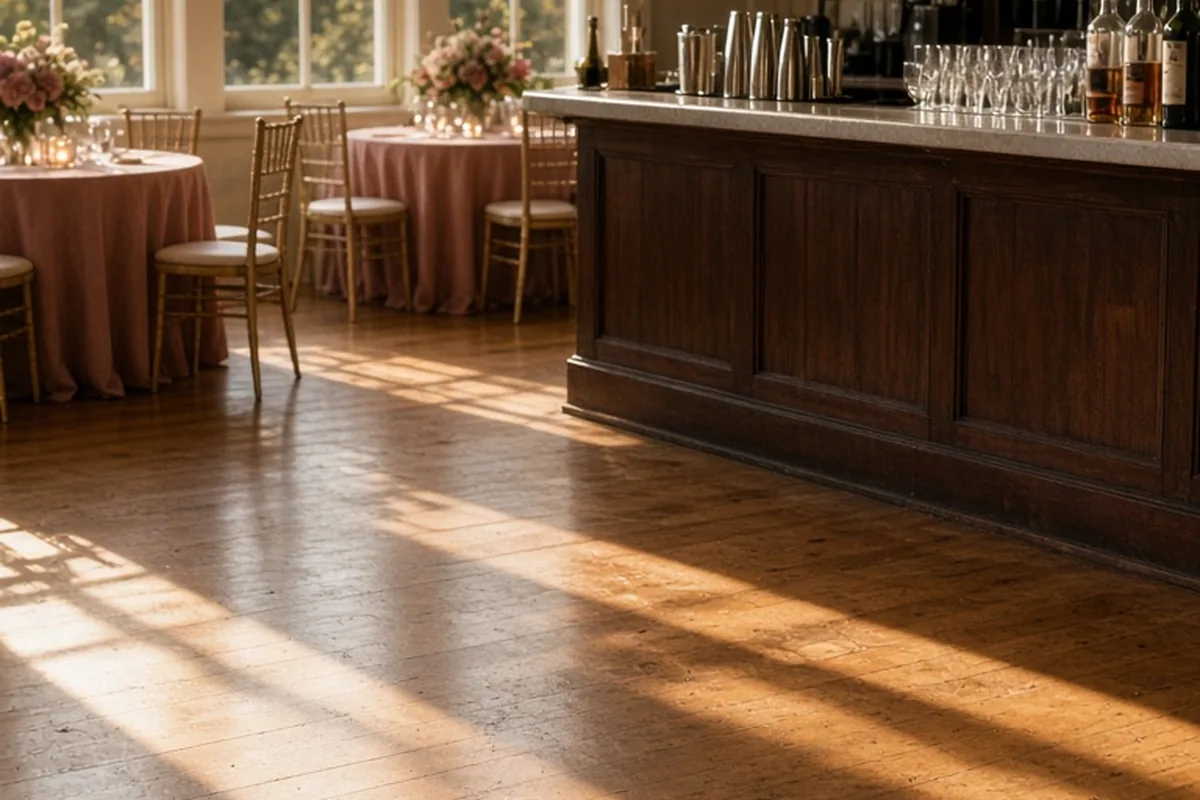
Planning a wedding bar for 200 guests typically requires preparing for roughly 800 to 1,000 total servings across a standard four- to five-hour reception, based on the standard guideline of one drink per guest per hour. For a balanced full bar, this generally translates to roughly 100 to 120 bottles of wine, 300 to 400 bottles or cans of beer, and 14 to 18 standard 750-milliliter liquor bottles, supported by at least two to three professional bartenders across two distinct service stations.
A wedding reception with 200 guests is a major hospitality operation where beverage service sets the pace and atmosphere of the entire evening. Coordinating drinks on this scale requires balancing guest preferences, safety considerations, service speed, and budget realities without running out of staple spirits or creating frustrating bottlenecks during cocktail hour.
Applying the Hourly Drink Formula to a 200-Person Guest List
Standard event planning convention assumes an average of two drinks per guest during the initial cocktail hour and one drink per hour for each subsequent reception hour. For a typical five-hour celebration, this heuristic equates to five to six drinks per person across the entire event, or approximately 1,000 to 1,200 total servings for an attendance of 200. It is important to treat this aggregate figure as a logistical baseline rather than an expectation that every individual will finish six drinks. In any large group, non-drinkers, designated drivers, elderly relatives, and underage attendees consume little to no alcohol, while others consume more over the course of the evening. The aggregate math functions as a reliable buffer that prevents mid-reception shortages while accounting for natural variance across a large crowd.
Beyond baseline attendance numbers, environmental and timing factors substantially shift consumption patterns. An afternoon outdoor reception held on a warm summer lawn naturally encourages guests to consume more total fluid ounces, leaning heavily toward chilled white wines, light lagers, hard seltzers, and refreshing non-alcoholic spritzes. Conversely, an indoor winter banquet held in the evening shifts preferences toward red wines, whiskey, and neat spirits, often with slightly fewer overall servings poured than an extended hot-weather afternoon party. When developing an initial estimate, review your confirmed guest list to adjust the baseline: note the proportion of college friends, families with young children, and older guests to determine whether your crowd leans above or below the standard 1,000-serving benchmark.
Selecting Between Full Open Bar, Beer and Wine, and Signature Menus
Choosing your service model dictates both the complexity of your logistics and how quickly guests can obtain drinks. A full open bar offers comprehensive guest choice, accommodating custom orders from classic gin and tonics to dry martinis. However, broad liquor selections carry distinct operational drawbacks for a 200-person gathering. When bartenders must individually craft diverse cocktails requiring multiple bottles, fresh citrus, and bespoke garnishes, service speed drops significantly. During the initial rush after the ceremony, even a minor delay per transaction can create long, congested lines that keep guests away from dinner and conversation.
A modified open bar—frequently pairing beer, wine, and two curated signature cocktails—provides an efficient alternative that preserves variety while streamlining bar operations. Signature cocktails can be pre-batched in high-volume dispensers or quick-pour carafes by the catering team before guests arrive, allowing a bartender to pour a finished drink over fresh ice in under ten seconds. This approach reduces the variety of high-proof spirits, obscure liqueurs, and specialized bitters you must purchase, preventing the financial waste of half-used bottles that cannot be returned after the reception concludes. Limiting the menu to beer, wine, and signature drinks also simplifies inventory tracking and keeps bartending lines moving rapidly.
Determining Wine, Beer, and Liquor Ratios for a 200-Guest Reception
Once you establish an overall target of roughly 1,000 drinks for 200 guests across five hours, divide that volume into specific beverage categories. A widely utilized starting distribution for a full bar allocates 50 percent of servings to wine, 30 percent to beer, and 20 percent to liquor. Under this model, you need to provide roughly 500 glasses of wine, 300 beers, and 200 cocktail pours. If you elect a beer-and-wine-only bar, the ratio commonly adjusts to roughly 60 percent wine and 40 percent beer, which translates to 600 servings of wine and 400 servings of beer.
Converting these drink servings into actual retail purchasing quantities requires understanding standard bottle yields. A standard 750-milliliter wine bottle holds roughly 25.4 ounces, yielding five standard 5-ounce pours. Supplying 500 wine servings therefore requires 100 bottles, or about eight and a half 12-bottle cases. This wine allocation is typically split into approximately 45 percent red wine, 45 percent white wine, and 10 percent sparkling wine or rosé, adjusted for the season. For beer, 300 servings equates to thirteen 24-can or 24-bottle cases, or alternatively two standard half-barrel kegs, each providing roughly 150 to 165 twelve-ounce pours. For the 200 liquor servings, standard cocktails utilize 1.5 ounces of spirit, meaning a 750-milliliter bottle yields approximately 16 drinks. You would therefore need 13 to 15 bottles of base spirits, commonly distributed across vodka, bourbon, gin, tequila, and rum.
Bartender Staffing Ratios and Service Station Logistics for 200 Guests
Understaffing the bar is the most common operational failure at large weddings. Event planning standards generally recommend one bartender for every 75 to 100 guests when pouring beer and wine exclusively, and one bartender for every 50 to 75 guests when mixing cocktails. For a 200-guest event with a full bar or signature cocktails, you should schedule a minimum of three dedicated bartenders, with four being ideal during the high-demand cocktail hour. Additionally, employing at least one dedicated barback to clear empty glassware, replenish ice bins, restock cold beer, and unpack wine cases keeps your primary bartenders focused exclusively on pouring drinks and interacting with guests.
Physical layout is just as critical as staffing numbers. Funneling 200 guests toward a single six-foot bar table invariably creates an uncomfortable crowd bottleneck. Best practices involve establishing two distinct bar locations in the venue—such as a primary service bar near the dining floor and a secondary satellite bar situated on an outdoor terrace, patio, or cocktail lounge area. One station can be designated for beer, wine, and pre-poured champagne, while the other handles mixed spirits and signature drinks. This split layout encourages guests to spread out across the reception space, shortens individual transaction times, and prevents lines from spilling into dance floors or dining walkways.
Non-Alcoholic Beverages, Ice Quantities, and Mixer Calculations
Ice is a consumable supply that requires rigorous logistics, especially for large gatherings. A reliable rule of thumb for a 200-guest reception is planning 1.5 to 2 pounds of ice per person, which equates to 300 to 400 pounds of ice in total. Ice serves two distinct functions: chilling bottled beer, white wine, and champagne in tubs before service, and cooling poured beverages in individual glasses. If your venue does not have a commercial ice machine capable of sustained high-volume production, you must arrange for heavy-duty coolers or a dedicated commercial ice delivery shortly before the event begins to avoid melting losses.
Mixers and non-alcoholic options represent an essential component of guest hospitality. For a full bar, plan on roughly three to four bottles or cans of carbonated mixers (such as club soda, tonic water, cola, ginger ale, and lemon-lime soda) for every bottle of spirits. Fresh juices—including cranberry, orange, grapefruit, and fresh lime juice—should be stocked in substantial volume for both cocktails and non-alcoholic drinks. Preparing a dedicated zero-proof menu featuring creative mocktails, botanical sodas, or infused sparkling waters ensures that non-drinking attendees, pregnant guests, and designated drivers receive the same caliber of hospitality as those consuming alcohol.
Glassware Counts, Bar Tools, and Rental Planning
Estimating rental glassware for 200 people requires planning for high replacement turnover. Guests frequently abandon half-finished glasses on dining tables, leave them by the dance floor, or request a fresh glass when switching from a white wine to a heavy red. Rental companies and planners recommend ordering 1.5 to 2 wine glasses per attendee, 1.5 to 2 all-purpose rocks or highball glasses per attendee, and 1 dedicated champagne flute per person if a formal sparkling toast is scheduled. For 200 guests, this translates into renting between 600 and 800 total pieces of glassware to ensure bartenders never run out of clean vessels during dinner.
Behind the bar, staff need professional tools and sanitation infrastructure to maintain hygiene and efficiency. A fully equipped mobile bar setup requires speed rails for liquor bottles, spill mats, bar towels, stainless steel cocktail shakers, strainers, citrus squeezers, jiggers, and sturdy plastic bus tubs for clearing glassware. Furthermore, clarify cleanup logistics with your rental company and catering team well in advance. Some rental vendors require all glassware to be fully washed and sanitized before repacking, while others merely ask that glasses be inverted, dumped of remaining liquid, and placed back into their designated plastic crates for next-day pickup.
Venue Restrictions, Liquor Liability, and Supplier Return Policies
Navigating venue policies and local beverage regulations is vital before making retail alcohol purchases. Many wedding venues require all alcohol to be served exclusively by certified bartenders who hold recognized credentials such as TIPS or ServSafe. Bartenders with certified training know how to monitor consumption, manage pacing, and tactfully refuse service to visibly intoxicated guests, protecting the hosts from legal exposure. Additionally, couples should purchase host liquor liability insurance—either as a rider on general wedding event insurance or through a specialized carrier—to safeguard against third-party property damage or injury claims arising from guest overconsumption.
If your venue permits you to supply your own alcohol (BYOB), investigate local retail return laws and wholesale distributor policies before placing large case orders. In several US states, alcoholic beverage control regulations prohibit licensed retailers from accepting returns on any unsold beer, wine, or liquor once it leaves the premises. In other jurisdictions, retailers will refund full, unopened cases with intact seals, though they may charge a modest restocking fee. Always verify these terms in writing with your retailer, inspect corkage fees charged by caterers for serving outside bottles, and confirm whether delivery fees apply to your bulk order.
Frequently asked questions
How many total drinks should you buy for a 200-person wedding reception?
For a standard five-hour reception with 200 guests, plan for approximately 1,000 to 1,200 total drinks. This accounts for an average of two drinks per guest during the cocktail hour and one drink per guest for each subsequent reception hour, providing a safe buffer against shortages.
How many bartenders do you need for 200 wedding guests?
You should hire at least three professional bartenders for 200 guests, or four if serving handcrafted mixed cocktails. Adding at least one barback to wash glasses, replenish ice, and restock bottles keeps bartenders focused on serving drinks and prevents long lines.
Can you return unused alcohol after a 200-guest wedding?
Whether you can return unopened cases depends on state liquor laws and individual store policies. Some states forbid alcohol buybacks entirely, while others allow licensed retailers to refund full, undamaged cases with unbroken seals. Always confirm the return policy in writing prior to purchasing.
How much ice is needed for a wedding bar serving 200 guests?
Plan on roughly 1.5 to 2 pounds of ice per guest, which amounts to 300 to 400 pounds of ice for 200 people. This volume accounts for both chilling canned and bottled beverages in ice tubs and serving cubes in mixed drinks and water glasses.
Your next step
Review your venue contract and catering agreements to confirm bartending certification requirements and corkage fees, then request quotes from local beverage retailers that offer case discounts and clear return policies.